
Four engineered solution lines, each anchored to the driver that actually owns the project: discharge compliance, product specification, yield and recovery, or energy cost and carbon. Start from your driver — not from a technology brochure.
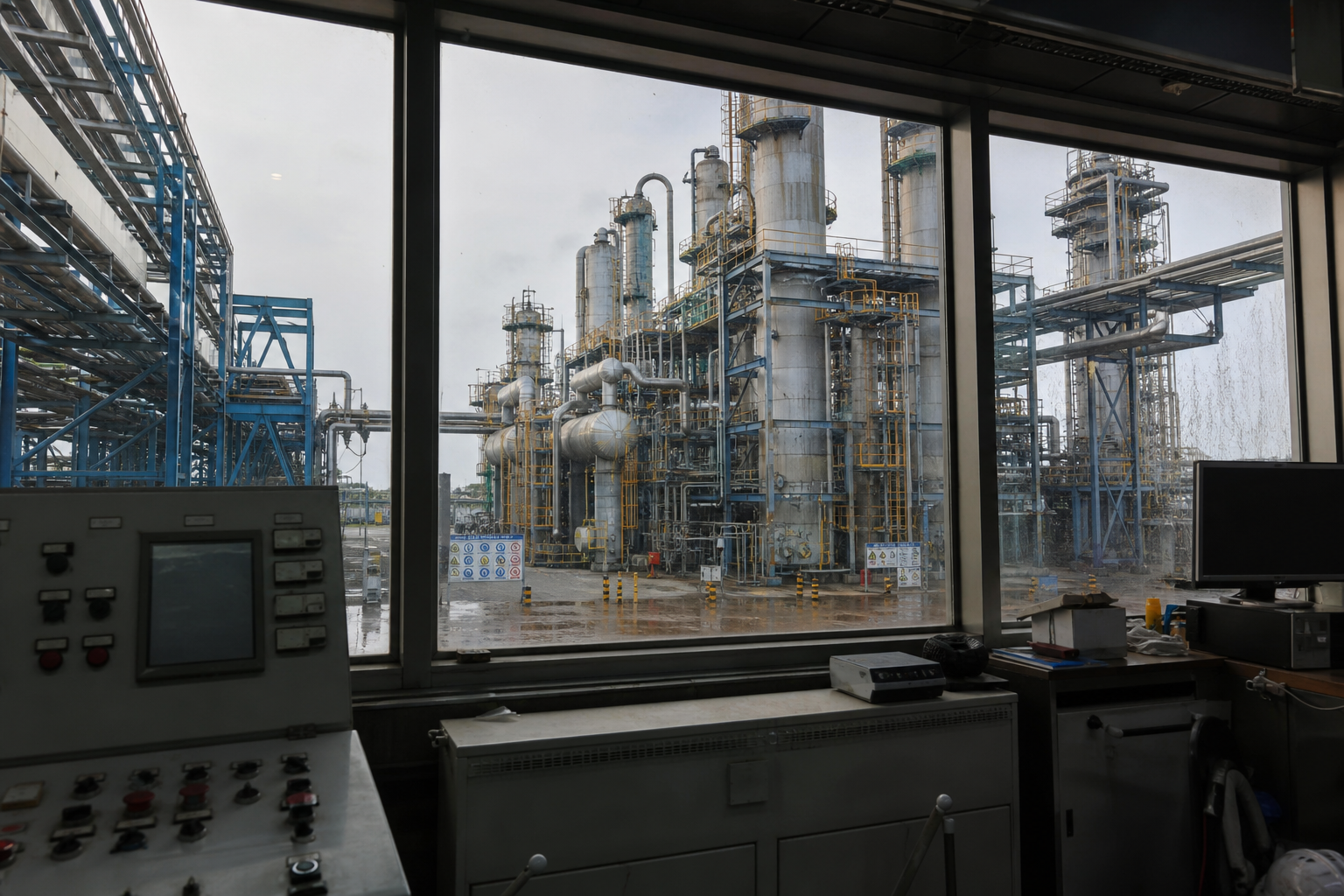
Before comparing technologies, identify the constraint that actually decides the project. Route yourself by driver — the four lines cover the large majority of industrial evaporation and crystallization projects.
Each line packages process design, equipment scope, instrumentation and delivery into one engineered scope — with its own tools, references and verification logic.
Treat the waste stream as the project. Concentrate high-TDS effluents to the edge of crystallization, recover clean condensate for reuse, and deliver a solid or slurry residue that passes disposal — down to full ZLD where the regulation demands it.
The concentrate or the crystal is the product. Design concentration and crystallization around the specification that sells: purity, particle size distribution, morphology, and downstream handling — not just water removal.
Recover the solute that is still dissolved in the mother liquor — product, by-product salt, or process water. Raise yield per ton of feed, cut purge volume, and turn a waste line back into revenue or reusable material.
The evaporator works, but its energy bill does not. Retrofit existing trains through MVR integration, TVR upgrade, heat recovery or adding an effect — lower OpEx and Scope 1 emissions without full system replacement.
Where each solution line typically applies. Filled dot = primary fit; hollow dot = frequent fit. Real projects often combine two lines.
Industry combinations not shown here are evaluated case by case — send the feed analysis and we will confirm feasibility.
The same scoping logic runs under all four lines: characterize the real feed, verify the behavior, design the flowsheet, then deliver and prove it.
Full analysis of the real feed: TDS, individual salts, organics, density, viscosity, and a boiling-point rise measurement at target concentration.
Evaporation rate, scaling rate, crystal habit and PSD verified on your actual liquor — not inferred from handbook data.
Heat-and-mass balance, technology selection, P&ID and 3D layout; utility consumption and instrument list frozen with the offer.
Factory acceptance test, supervised installation and commissioning, site acceptance against the guarantee curve — signed off with data.
Send the feed analysis, throughput target and the constraint that owns your project — discharge limit, product spec, yield, or energy cost. We will tell you which line applies, what to verify first, and what the indicative scope looks like.
Send your feed characterization (TDS, COD, main salts, viscosity), throughput and product targets — we respond with a preliminary process route within two business days.