Project Parameters
| Parameter | Value |
|---|---|
| Process route | Scraped film (wiped film) evaporation under vacuum |
| Industry | Collagen production, food / nutraceutical ingredients (East China) |
| Feed type & key components | Collagen concentrate liquor, high-viscosity, heat-sensitive protein hydrolysate |
| Evaporation capacity | 4 t/h |
| Construction materials | SS316L product-contact surfaces (indicative for food-grade protein duty) |
Representative process configuration compiled from published industry project data. Indicative values, not a process guarantee.
Project Description
Collagen production ends where most protein processing ends: with a liquor that must lose most of its water and a product that punishes heat for every minute of exposure. Collagen feed liquors arrive from enzymatic hydrolysis or extraction already dense with protein, and every percent of concentration multiplies the viscosity. The reference configuration is a 4 t/h scraped film evaporator at an East China collagen producer, finishing the concentration duty at the viscosity extreme where conventional film evaporators stop transferring heat.
The defining constraint is mechanical: above a certain solids content, a liquor will not flow as a film. Falling film distributors cannot spread it; rising film two-phase flow cannot lift it. Processors without scraped film capability either stop concentration early and pay to dry excessive water downstream, or push temperatures up and degrade the product. The scraped wall removes that ceiling — the rotor blades physically renew the film, whatever the liquor’s willingness to flow.
Process Technology
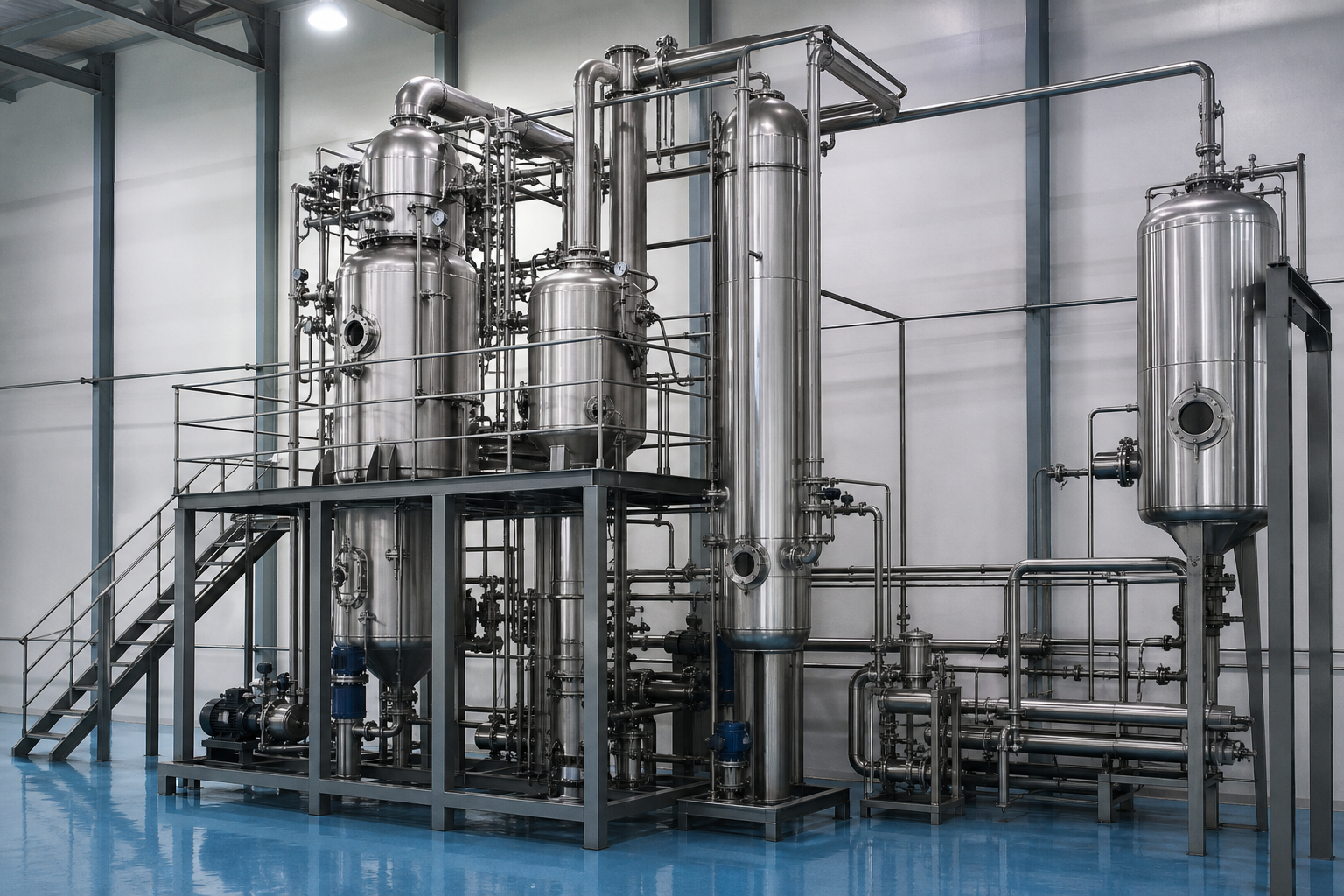
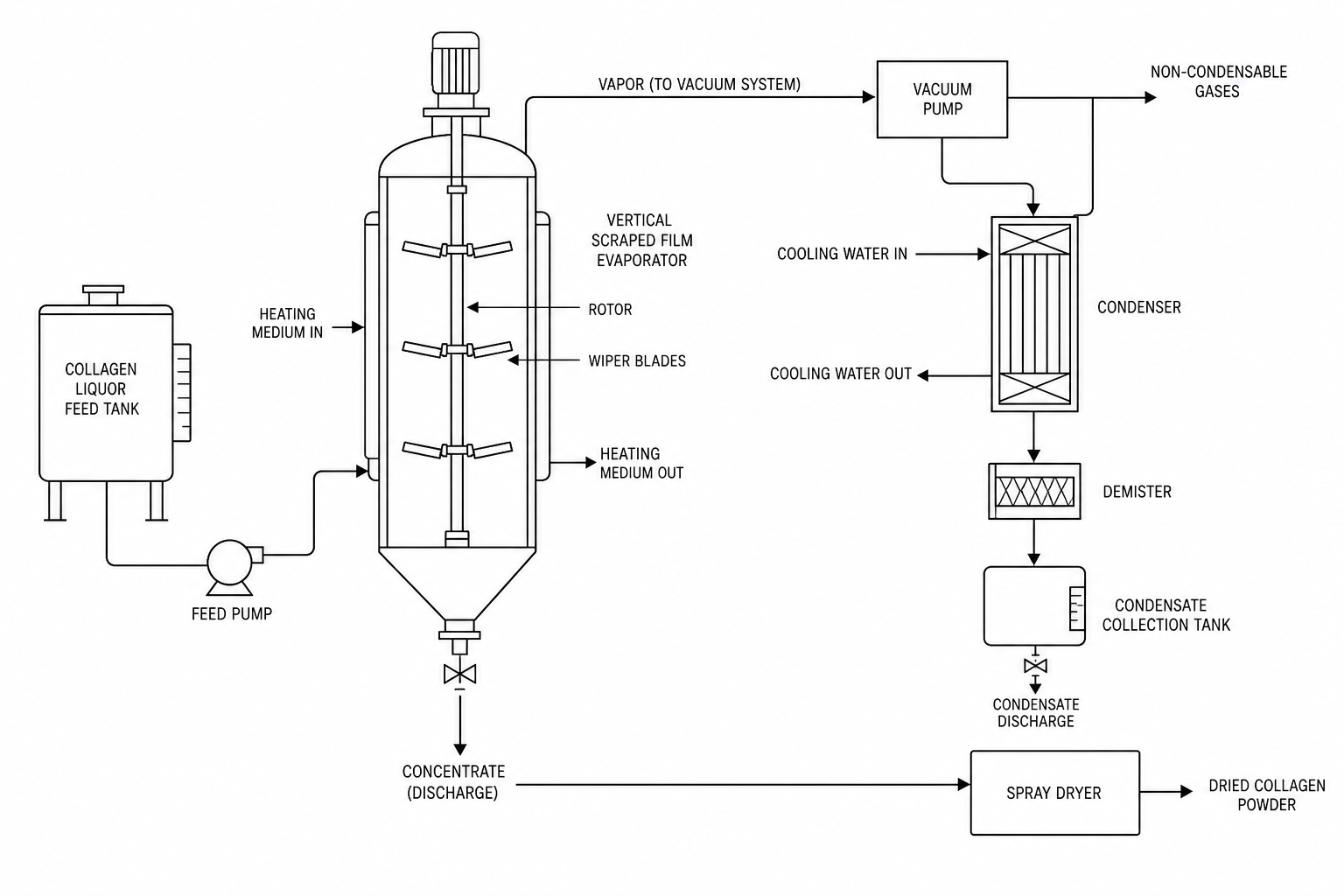
The collagen liquor feeds to the top of the vertical scraped film body. A rotating shaft with blades wipes the liquor onto the heated wall as a thin, continuously renewed film; evaporation from that film happens in seconds of residence time under vacuum, at temperatures the protein tolerates. The wiped film gives two things no passive geometry can at high viscosity: a heat transfer surface that is always freshly wetted, and a residence time distribution narrow enough that no fraction of the product lingers.
Vapor rises through demisters to a condenser, leaving the protein behind; the concentrate — viscous, but now at the solids target — exits the bottom of the body to spray drying or further finishing. Because the body handles slurries and pastes as readily as liquors, the same machine that concentrates collagen hydrolysate serves the neighboring duties of the protein industry: gelatin finishing, peptide polishing, and the high-viscosity tail of plant protein concentration.
Vacuum level is the temperature control: deeper vacuum, lower boiling point, gentler product. Comparable published scraped film configurations across Chinese protein and gelatin producers run exactly this duty at 2–5 t/h scales, frequently paired upstream with MVR pre-concentration that cheaply removes the first 80% of the water before the scraped film takes over for the viscous finish.
Equipment Configuration
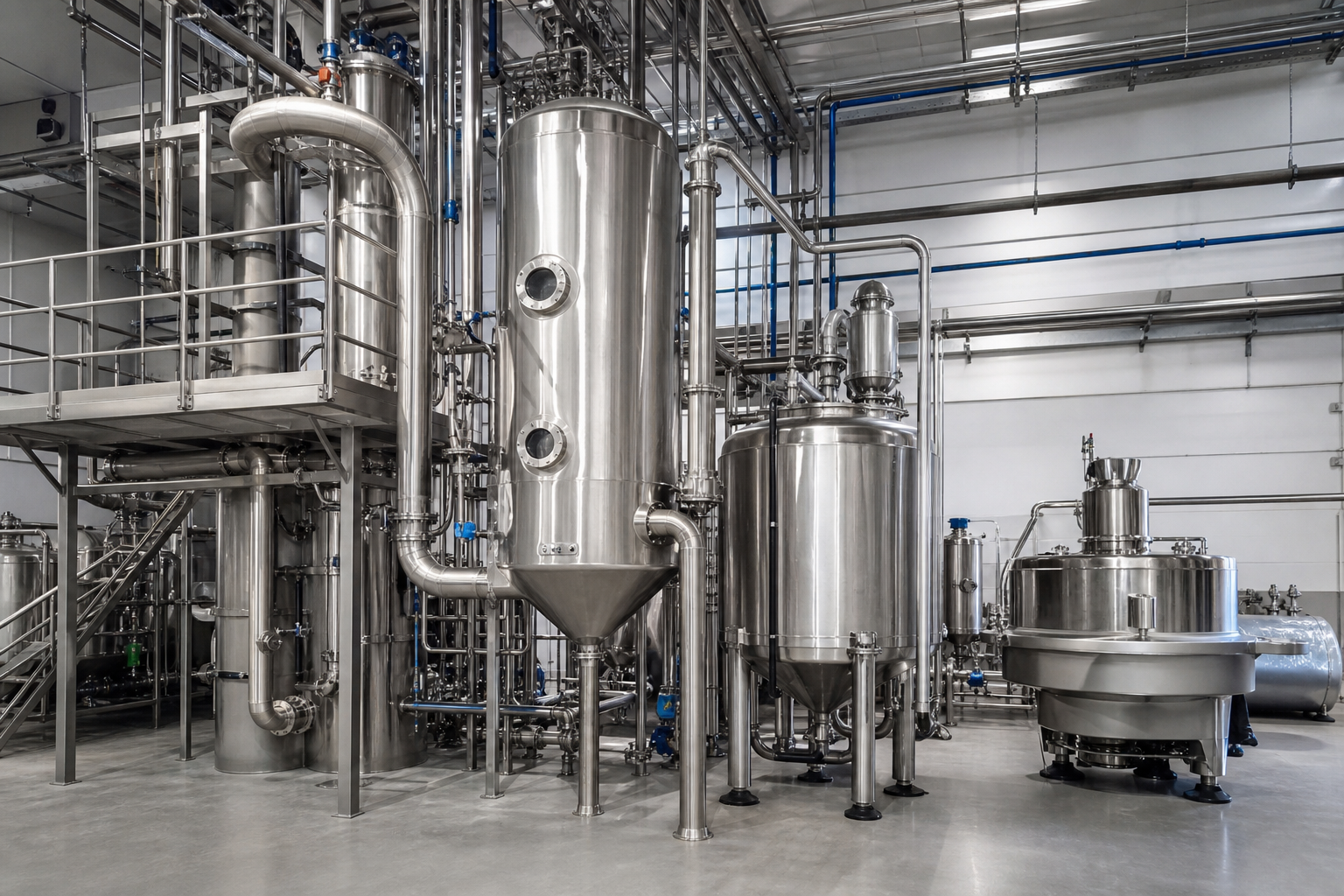
One set of the following equipment is typical for this duty:
- Collagen liquor feed with viscosity-tolerant pumping
- Scraped film evaporator body with rotor and wiper blades, jacketed heating
- Vacuum system with condenser and demister on the vapor path
- Concentrate discharge to spray dryer / finishing interface
- Condensate collection (clean water from the liquor)
- CIP system for hygienic protein-service turnaround
- PLC control of vacuum, wall temperature and feed rate
Performance & Outcome
Compiled from published industry project data, indicative: scraped film systems of this class concentrate heat-sensitive protein liquors at 4 t/h with seconds-scale residence time, reaching solids levels film evaporators cannot approach. Product color, odor and molecular weight retention are quoted per project hydrolysate specification.
Simplified PFD
The simplified process flow diagram above shows collagen feed, the wiped heated wall of the scraped film body, vacuum vapor condensation and concentrate discharge to finishing.