Project Parameters
| Parameter | Value |
|---|---|
| Process route | MVR forced-circulation evaporation + crystallization, plate-type heat transfer surface |
| Industry | Battery cathode materials (LFP / ferrous lithium phosphate) |
| Feed type & key components | Cathode production wastewater; sodium sulfate-rich high-salinity mother liquor from washing and crystallization steps |
| Evaporation capacity | 16 t/h per train |
| Construction materials | SS316L wetted parts (indicative for neutral sulfate service) |
Representative process configuration compiled from published industry project data. Indicative values, not a process guarantee.
Project Description
A cathode material production base in Southern China operating LFP (ferrous lithium phosphate) lines generates a continuous stream of sodium sulfate-bearing wastewater from product washing and mother liquor discharge. The stream is high in dissolved sulfate salts, varies with production campaigns, and carries traces of iron and phosphate species that must be contained on site. Discharge of such a brine is not permitted under local zero-discharge expectations, while purchasing fresh process water for washing adds a second cost pressure.
For this duty the reference configuration is a 16 t/h mechanical vapor recompression (MVR) evaporation train built around forced circulation and plate heat exchangers. The target set for the system is threefold: concentrate the brine to crystallization, recover the sodium sulfate as a manageable solid by-product salt, and return a clean condensate to the washing circuit so that the plant closes its water balance without importing make-up water.
Process Technology
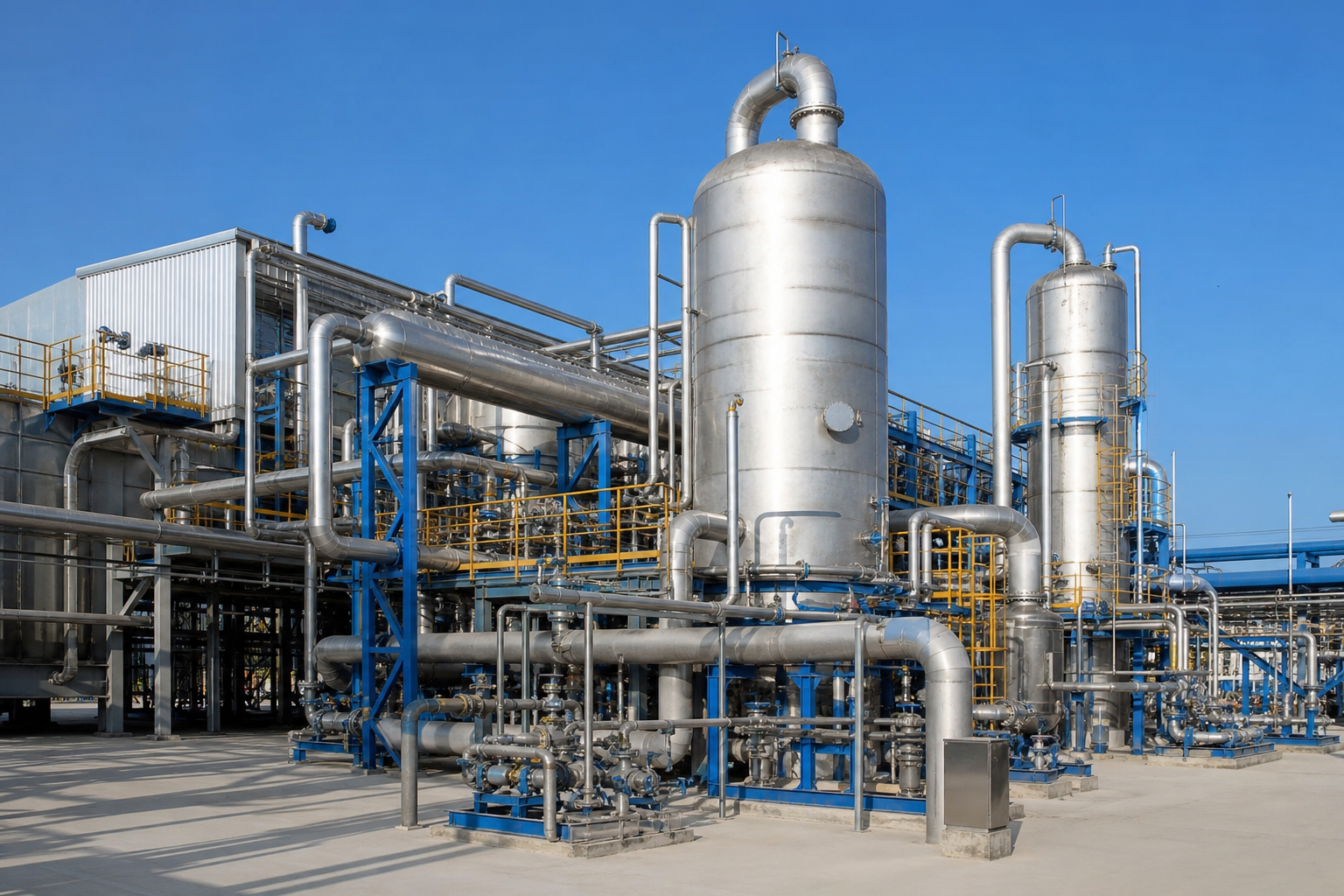
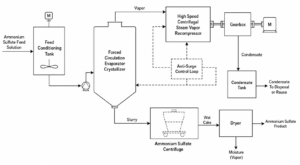
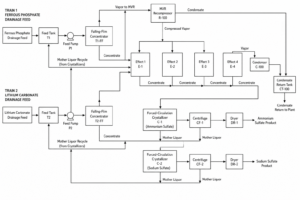
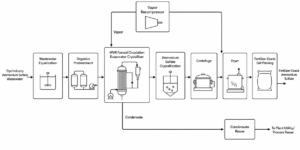
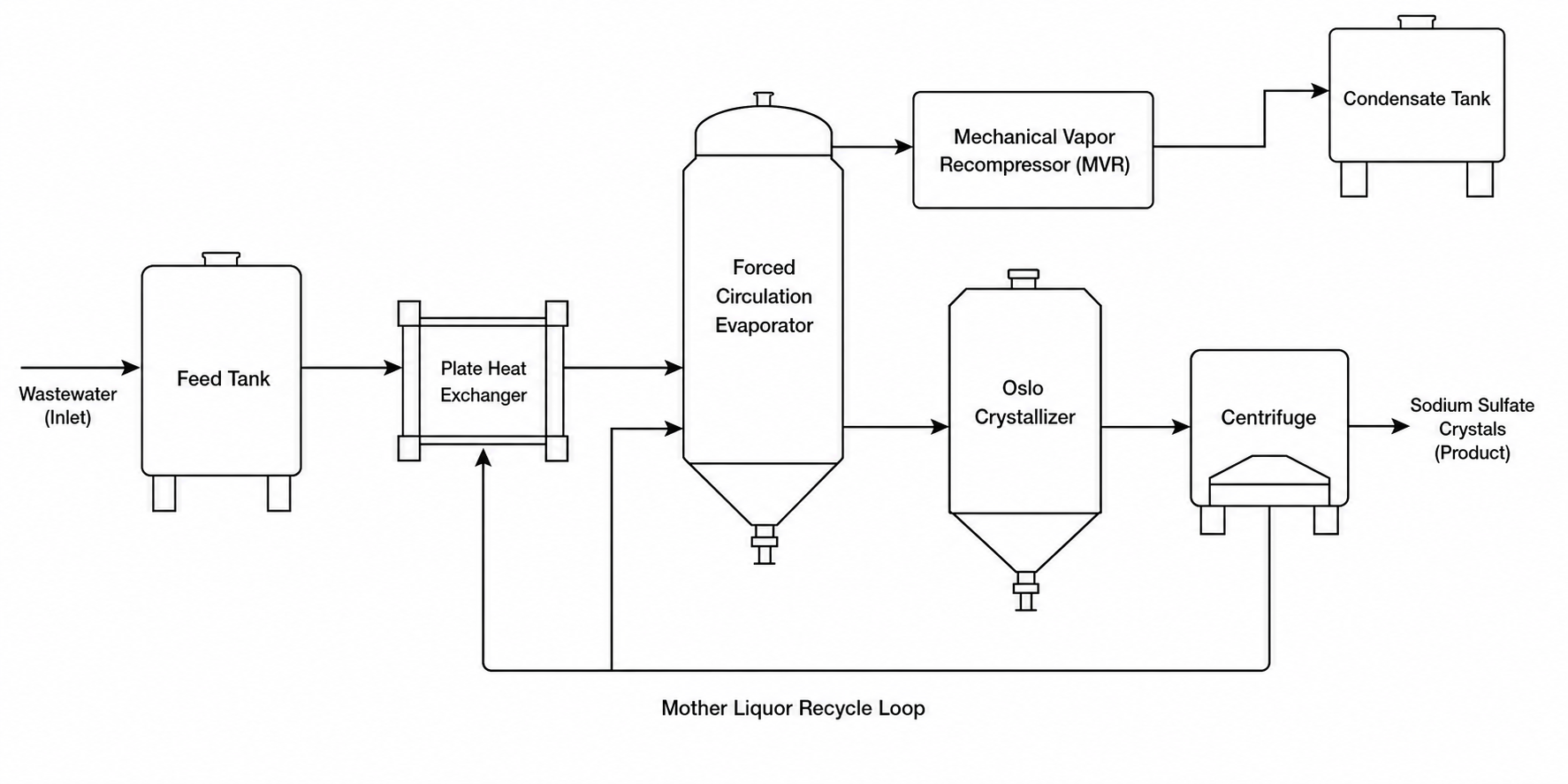
Wastewater is collected in an equalization tank that dampens feed-composition swings between production campaigns, then polished through cartridge filtration to protect the heat transfer surface from iron-rich fines. From there the liquor enters the concentration section.
The evaporation duty is handled by a forced-circulation evaporator under MVR service. Forced circulation is the deliberate choice for this brine: sodium sulfate solutions operate with an appreciable boiling point elevation and a distinct tendency to foul surfaces as sulfate approaches saturation, and a pumped, high-velocity circulation loop keeps the liquor side scrubbed and suppresses local over-concentration on the tube or plate wall. Plate heat exchangers substitute for a conventional tube bundle: their corrugated surface sustains high heat transfer coefficients in a compact envelope, which matters on a battery-materials site where plot space around the evaporation package is tight.
The electrical driver of the train is the MVR compressor. Secondary vapor boiled off in the separator is recompressed to a higher pressure and temperature and returned to the heating side of the exchanger as the driving steam, so the evaporator runs on electric power rather than live steam. A small trim amount of fresh steam is called on only for start-up and load transients.
Concentrated liquor discharges to a crystallization stage where sodium sulfate is precipitated under controlled supersaturation. The salt slurry is dewatered on a centrifuge; solid sulfate salt leaves as by-product, and the mother liquor — still carrying dissolved sulfate and the traces that did not crystallize — is recycled to the evaporator feed rather than discharged. Overhead vapor condenses in a surface condenser; the condensate quality achieved by mechanical vapor recompression of a relatively clean sulfate brine is suitable for reuse as washing water, closing the loop.
Equipment Configuration
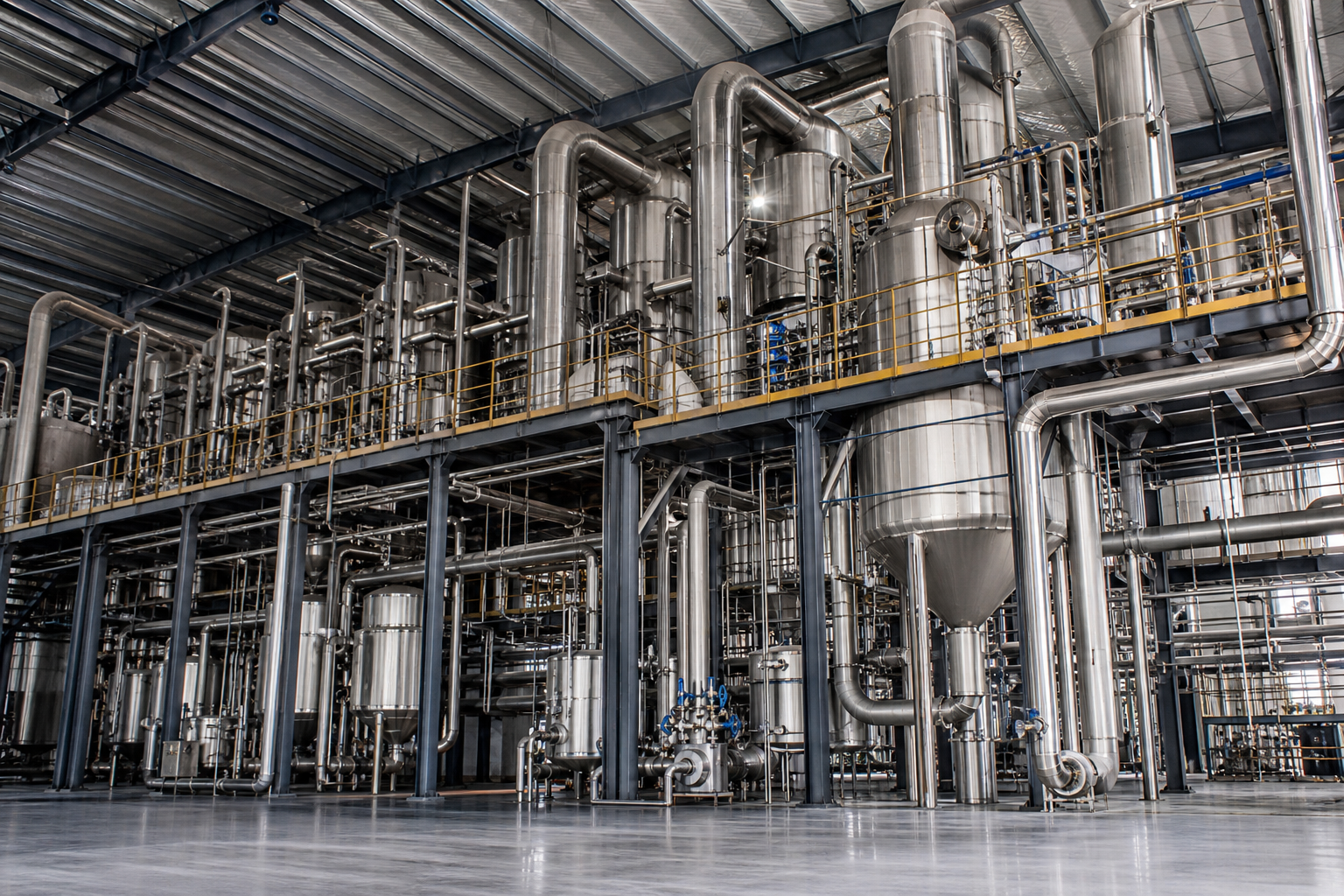
One set of the following equipment is typical for this duty:
- Feed equalization tank and cartridge filtration for iron and particulate control
- MVR forced-circulation evaporator with plate heat exchanger package and mechanical vapor recompressor
- Crystallizer operating on evaporator concentrate, sized for controlled sulfate crystal growth
- Centrifuge for salt dewatering with mother-liquor return pump and piping back to the feed tank
- Surface condenser, condensate tank and reuse pumping to the washing circuit
- PLC-based control of temperature, density and compressor load, with washing sequences for the plate pack
SS316L is the reference wetted material for neutral sodium sulfate service; sites with chloride excursions or polishing requirements beyond sulfate recovery specify higher-alloy wetted parts.
Performance & Outcome
Compiled from published industry project data, indicative: configurations of this class concentrate cathode-washing brine to a dewaterable sodium sulfate salt, hold condensate quality suitable for wash-water reuse, and reduce the wastewater leaving the battery-materials battery limit to a solid by-product stream. Specific energy figures depend on feed TDS and ambient conditions and are quoted per project.