Project Parameters
| Parameter | Value |
|---|---|
| Process route | MVR evaporation + crystallization (salt production) |
| Industry | Inorganic salt production (Uzbekistan, Central Asia) |
| Feed type & key components | Sodium sulfate solution / sulfate brine for salt production |
| Evaporation capacity | 10 t/h |
| Construction materials | SS316L wetted parts (indicative for sulfate service) |
Representative process configuration compiled from published industry project data. Indicative values, not a process guarantee.
Project Description
Sodium sulfate is a commodity salt with regional price geometry: it sells where it is made, and freight sets the radius. Uzbekistan — Central Asia’s industrial heartland — consumes sodium sulfate in detergent, glass and textile processing, and a 10 t/h production plant on local feed changes the region’s supply arithmetic from import-dependent to locally sourced. The reference configuration is the MVR evaporation crystallization plant behind that production.
The MVR selection fits the site’s reality in two ways. Steam infrastructure in the region’s industrial zones is neither cheap nor universal, while electrical supply is reliable — an electrically driven evaporator matches the utility map. And salt production is an energy-margin business: the difference between MVR’s compressor power and a steam plant’s continuous fuel demand is the difference between a competitive and an imported product. Comparable published configurations run sodium sulfate production from sulfate solutions at 10–30 t/h across the exporting Chinese equipment sector, confirming the flowsheet’s standing at this scale.
Process Technology
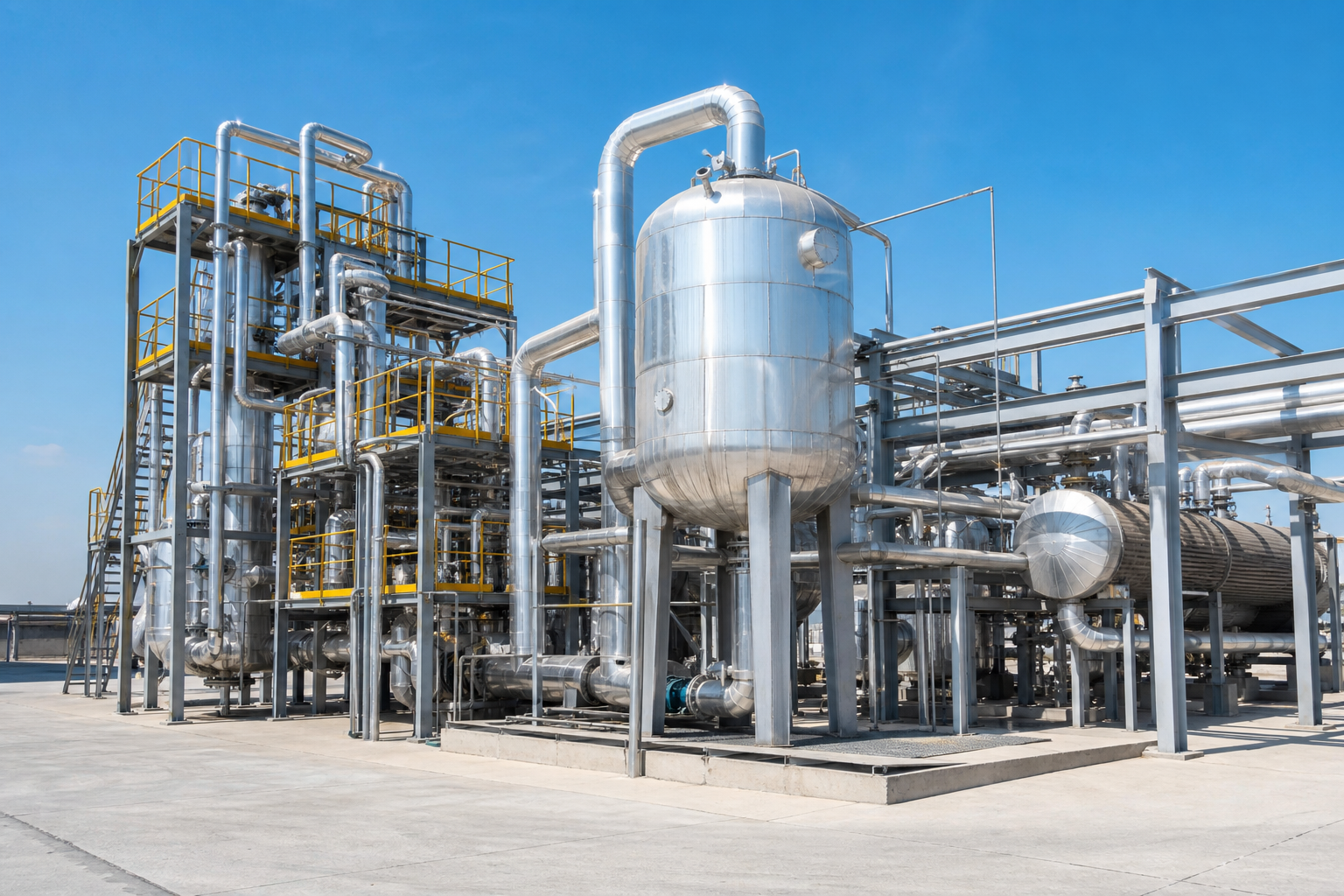
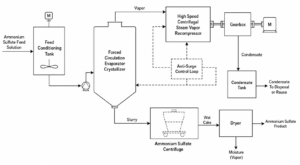
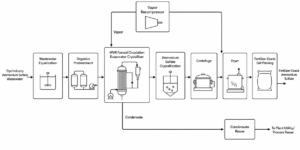
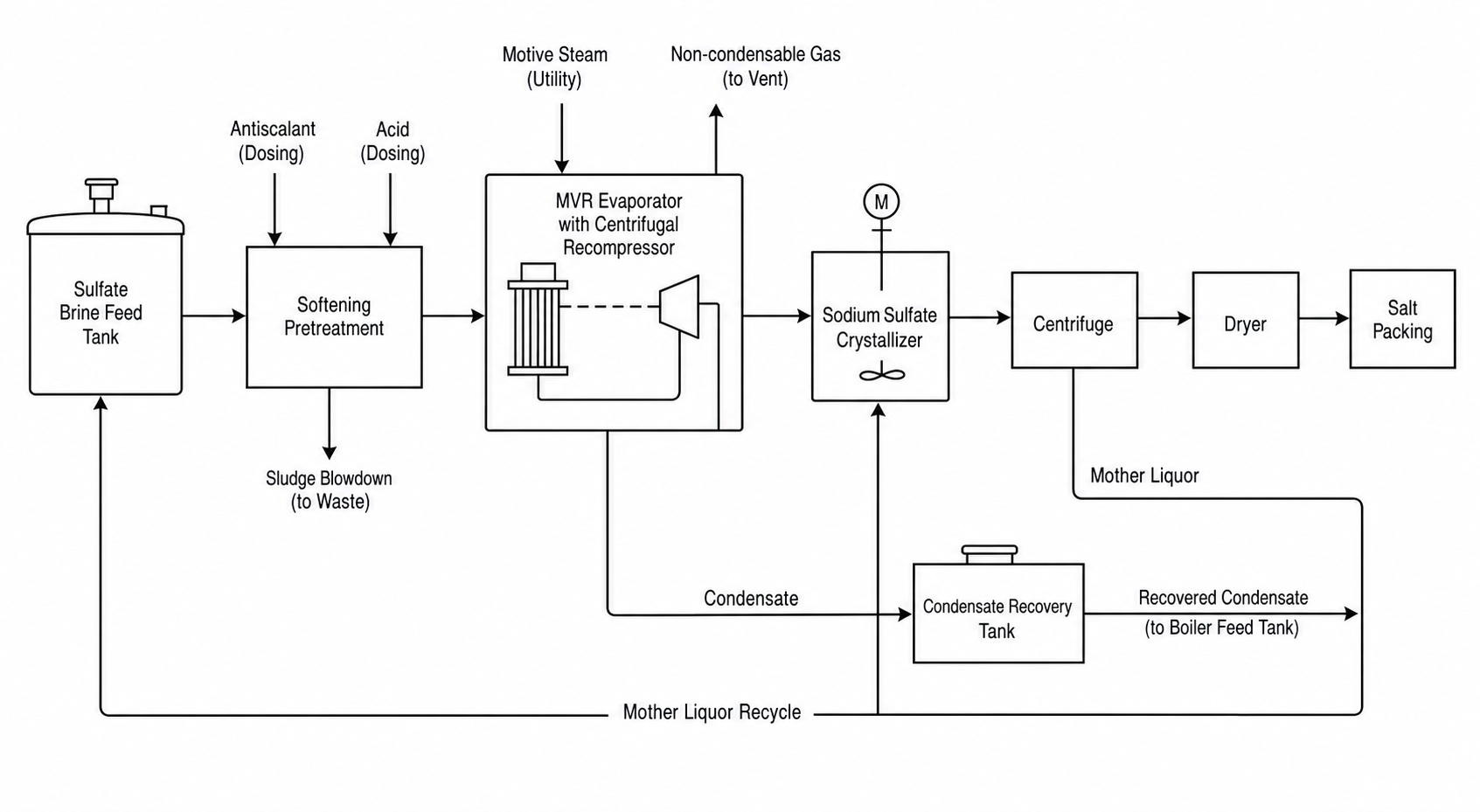
The sulfate solution feed is equalized and filtered; where the brine carries hardness, softening pretreatment protects the heat transfer surfaces from calcium and magnesium scale — sulfate brines scale by nature, and pretreatment is the difference between a seasonal and a continuous plant in a market that buys on consistency.
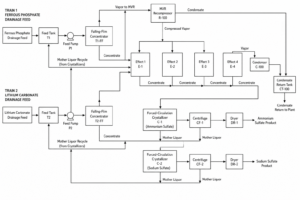
Concentration runs on the MVR evaporator: the centrifugal recompressor lifts secondary vapor to heating duty, and the plant evaporates on electricity. As the liquor approaches saturation, crystallization takes over — sodium sulfate’s phase behavior is distinctive (the decahydrate-to-anhydrite transition near 32.4°C gives the flowsheet its main design decision), and the crystallizer operates on the side of that transition the product specification demands. Anhydrous production runs hot; decahydrate (Glauber salt) production runs the low-temperature zone.
Crystals are centrifuged and dried to product moisture for packing — bagged, palletized and shipped into the regional detergent, glass and textile trades whose plants sit inside the freight radius a local producer now owns. Mother liquor recycles to the evaporator feed with a purge for trace species; condensate — ten tonnes of water per hour, clean and hot — returns to feed preparation and washing duties. The plant’s output is a stacked, bagged industrial salt and a water balance that mostly closes on itself.
Equipment Configuration
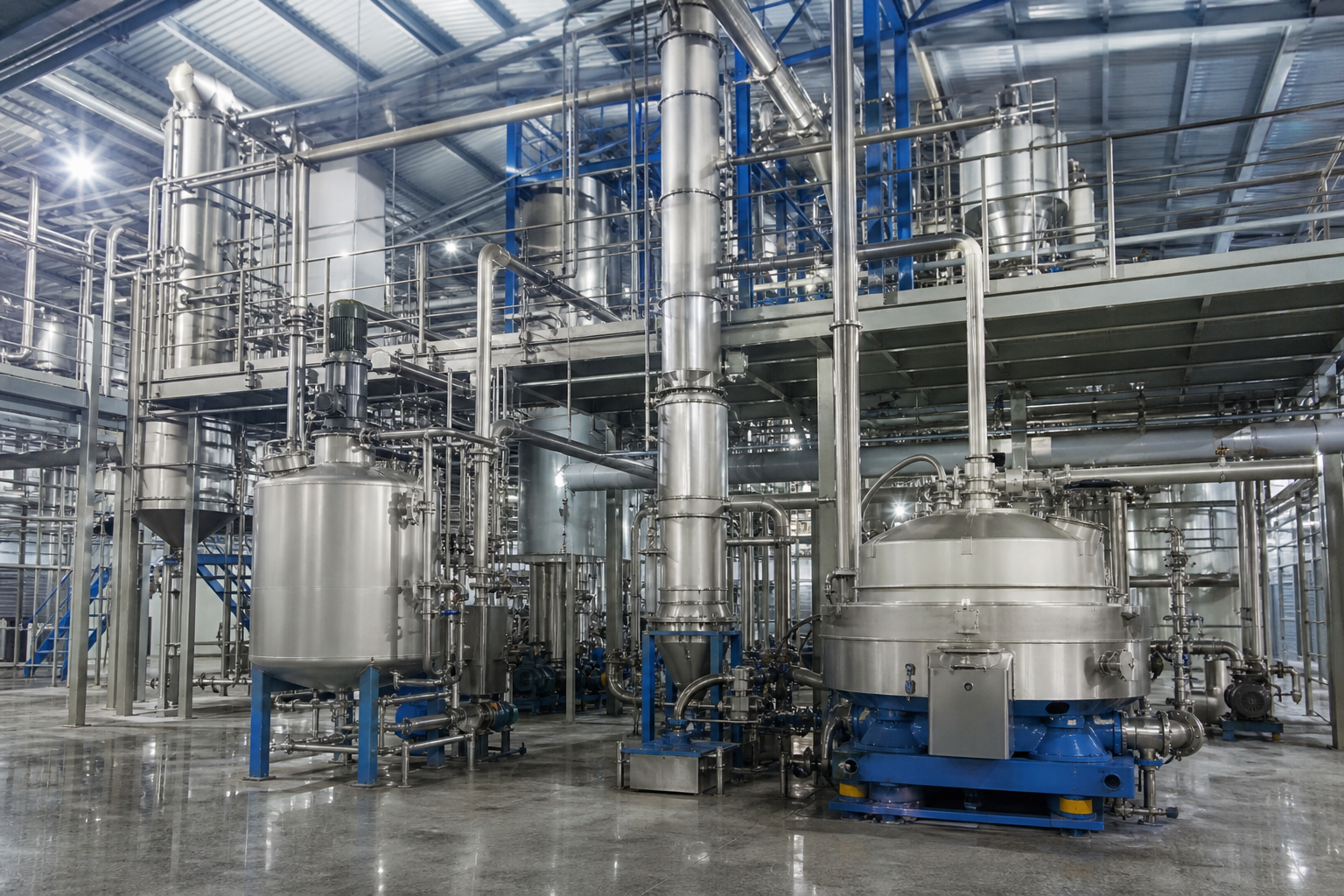
One set of the following equipment is typical for this duty:
- Feed equalization, filtration and hardness control
- MVR evaporator with centrifugal mechanical vapor recompressor
- Sodium sulfate crystallizer selected for anhydrous or decahydrate product phase
- Centrifuge and dryer for product salt finishing
- Mother-liquor recycle with purge; condensate recovery to feed preparation
- PLC control of concentration, crystallizer zone and product moisture
Performance & Outcome
Compiled from published industry project data, indicative: plants of this class produce sodium sulfate salt on MVR energy with condensate reused in feed preparation. Product phase, purity and specific energy are quoted per project feed chemistry and utility prices.