
Project Parameters
| Parameter | Value |
|---|---|
| Process route | Waste-heat integration + single-train MVR evaporation + Na2SO4/NaCl salt separation |
| Industry | Precipitated silica (white carbon black) production |
| Feed type & key components | Silica wash water; high-concentration sodium sulfate with sodium chloride — severely corrosive to common steels |
| Throughput / evaporation capacity | 67 t/h wash water; 70 t/h evaporation |
| Construction materials | TA2 titanium as principal material |
Representative process configuration compiled from published industry project data. Indicative values, not a process guarantee.
Project Description
A precipitated silica producer in East China faced a scale problem in wastewater management: filter washing and process rinsing generate wash water at rates that small parallel trains struggle to follow, and the sulfate–chloride combination in the brine is aggressively corrosive to conventional stainless steels. The site runs a zero liquid discharge policy, so the task is not only to handle 67 tons per hour of wash water but to do it with one coherent evaporation train whose reliability holds year after year.
The reference configuration for this duty is a single MVR train — in the reference class reported as the largest single evaporator of its type in this service domestically — rated 67 t/h throughput with 70 t/h evaporation, integrated with the plant’s waste heat, in TA2 titanium. The single-train architecture is the point: one large machine with one control system and one maintenance plan, instead of several smaller trains each with its own availability and staffing footprint.
Process Technology
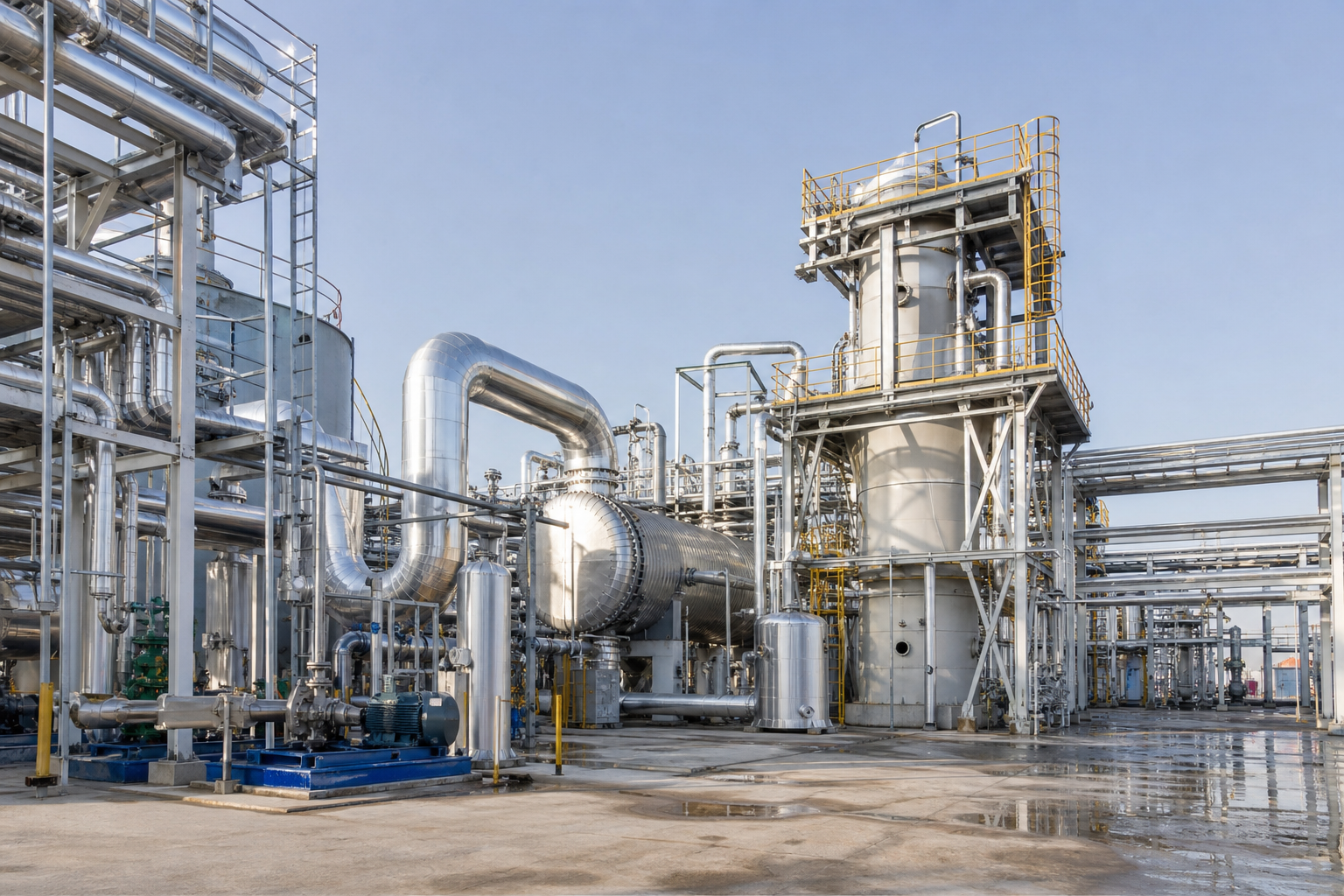
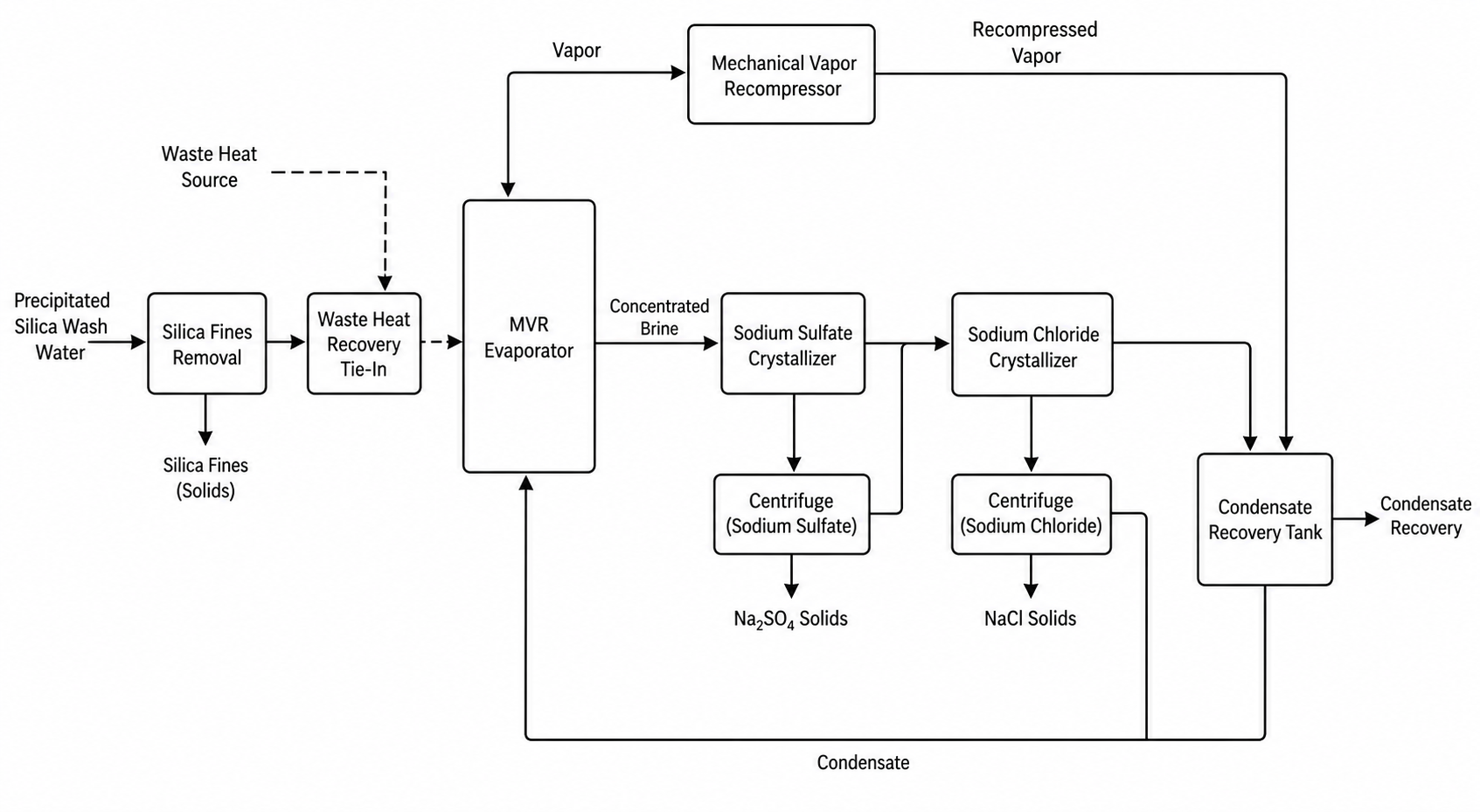
Wash water is equalized and stripped of suspended silica before entering the train, protecting the titanium heat transfer surface from siliceous deposits. The brine then concentrates in the MVR evaporator on recompressed secondary vapor, with plant waste heat carried into the energy balance to preheat feed and trim the first-effect duty.
Salt separation follows the sulfate–chloride phase behavior. Sodium sulfate and sodium chloride crystallize in separate stages: evaporation-driven crystallization recovers one salt while the other remains in the mother liquor, and staged cooling or re-concentration recovers the second. Mother liquor recycles between the stages under density control with a purge for trace species.
Condensate returns to the plant as process water. The operating record is the differentiator of this configuration class: the reference plant reports more than five years of stable operation, with material savings against the previous arrangement — on the order of 90 percent of condensate recovered, 80 percent of the manual attention, and 60 percent of the plot space compared with the multi-train alternative — and about 95 percent of the mixed salt leaving as a resource rather than a waste.
Single-train architecture changes the maintenance conversation. With one large system instead of several small ones, the site carries one set of rotating spares, one control narrative and one annual inspection scope; operators learn one plant thoroughly instead of three superficially. The counterweight is that availability has to be engineered in — generous margins on the compressor and pump selections, planned washing sequences that run without stopping production, and isolation arrangements that allow minor repairs at partial load. In the reference class those measures carried the train through more than five years of continuous service.
Equipment Configuration
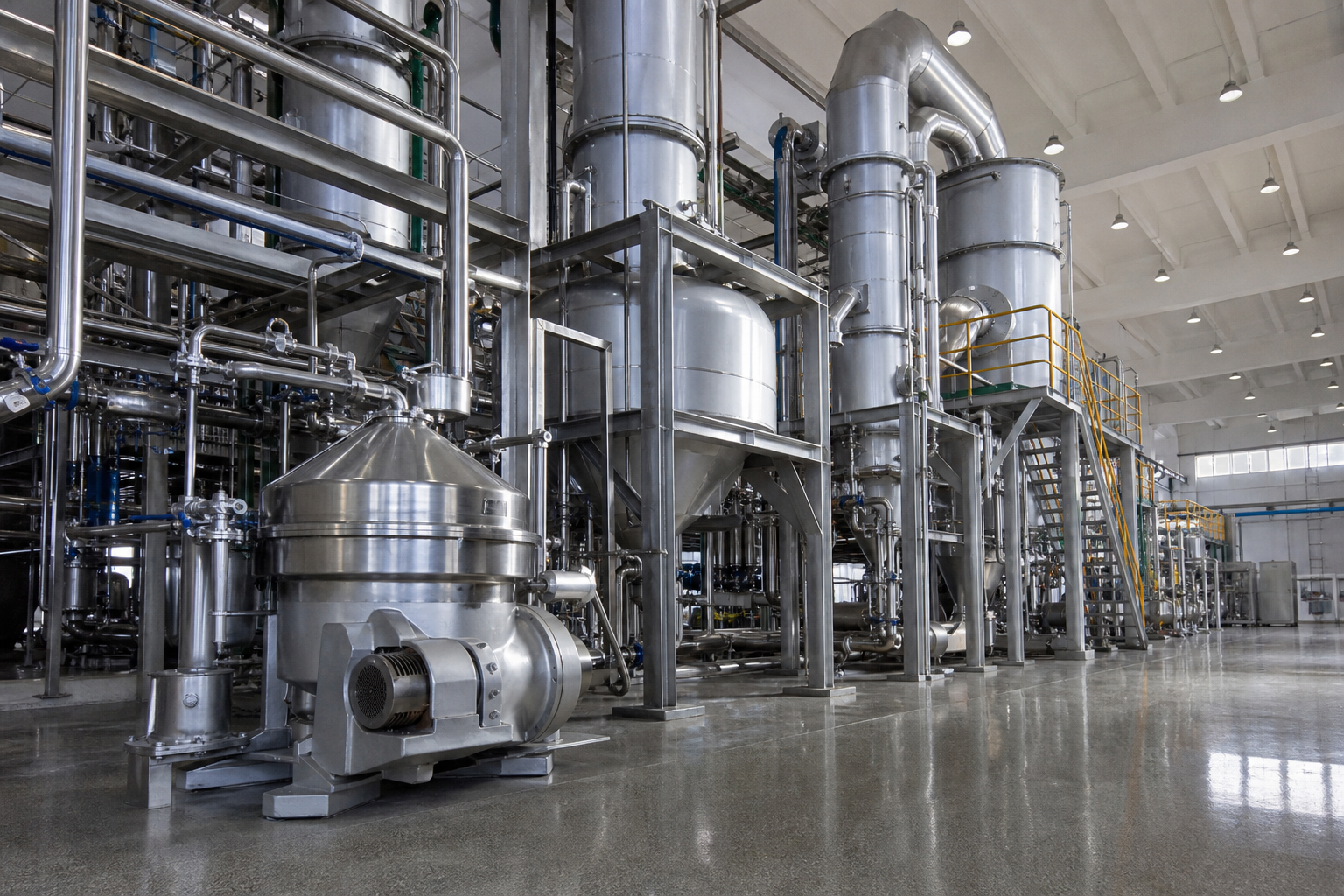
One set of the following equipment is typical for this duty:
- Wash-water equalization with silica fines removal
- Single-train MVR evaporator, 70 t/h evaporation, TA2 titanium wetted parts
- Waste-heat recovery tie-in for feed preheating and first-effect trim
- Staged Na2SO4 and NaCl crystallization sections on fractional service
- Centrifuges for salt dewatering with mother-liquor return and purge control
- Condensate recovery to plant process water; PLC control of densities, temperatures and compressor load
Performance & Outcome
Compiled from published industry project data, indicative: single-train MVR configurations of this class hold treatment cost around 10 RMB per ton of water in the reference class, produce a first-grade industrial by-product salt, and sustain multi-year continuous operation at large silica-plant scale. Figures depend on waste-heat availability and feed salinity and are quoted per project.
Background on the evaporation train selection is available in MVR Evaporation.


