Project Parameters
| Parameter | Value |
|---|---|
| Process route | MVR evaporation: precipitation mother liquor concentration + sodium sulfate by-product crystallization |
| Industry | Battery materials — lithium chemicals (Central China) |
| Feed type & key components | Lithium precipitation mother liquor; lithium-bearing sulfate solution with sodium sulfate co-salt |
| Plant capacity | 20,000 tpa lithium carbonate (comparable published plants: 30,000 tpa in the same segment) |
| Construction materials | SS316L wetted parts (indicative for sulfate service) |
Representative process configuration compiled from published industry project data. Indicative values, not a process guarantee.
Project Description
A lithium carbonate plant is a water machine wrapped around a precipitation reaction: lithium arrives as sulfate liquor from spodumene conversion or recycle streams, is purified to battery grade, and precipitates as Li2CO3 with soda ash — and every stage of that chemistry moves water that has to go somewhere. The reference configuration is a 20,000 tonne-per-year lithium carbonate plant in Central China whose water and salt balance close on an MVR evaporation package: concentrate the mother liquor, return the lithium, crystallize the sulfate by-product, recover the condensate.
The economics of the plant live in two loops. The lithium loop: precipitation mother liquor still carries soluble lithium, and every kilogram lost to effluent is product-grade revenue — concentration and recycle is what lifts recovery to the level lithium economics demand. The sulfate loop: the conversion chemistry’s sodium sulfate by-product crystallizes as a saleable salt instead of a waste liability. A comparable published configuration runs 30,000 tpa in the same segment, and a 20,000 tpa battery-grade lithium hydroxide plant is published in the regional cluster, confirming the flowsheet family’s standing.
Process Technology
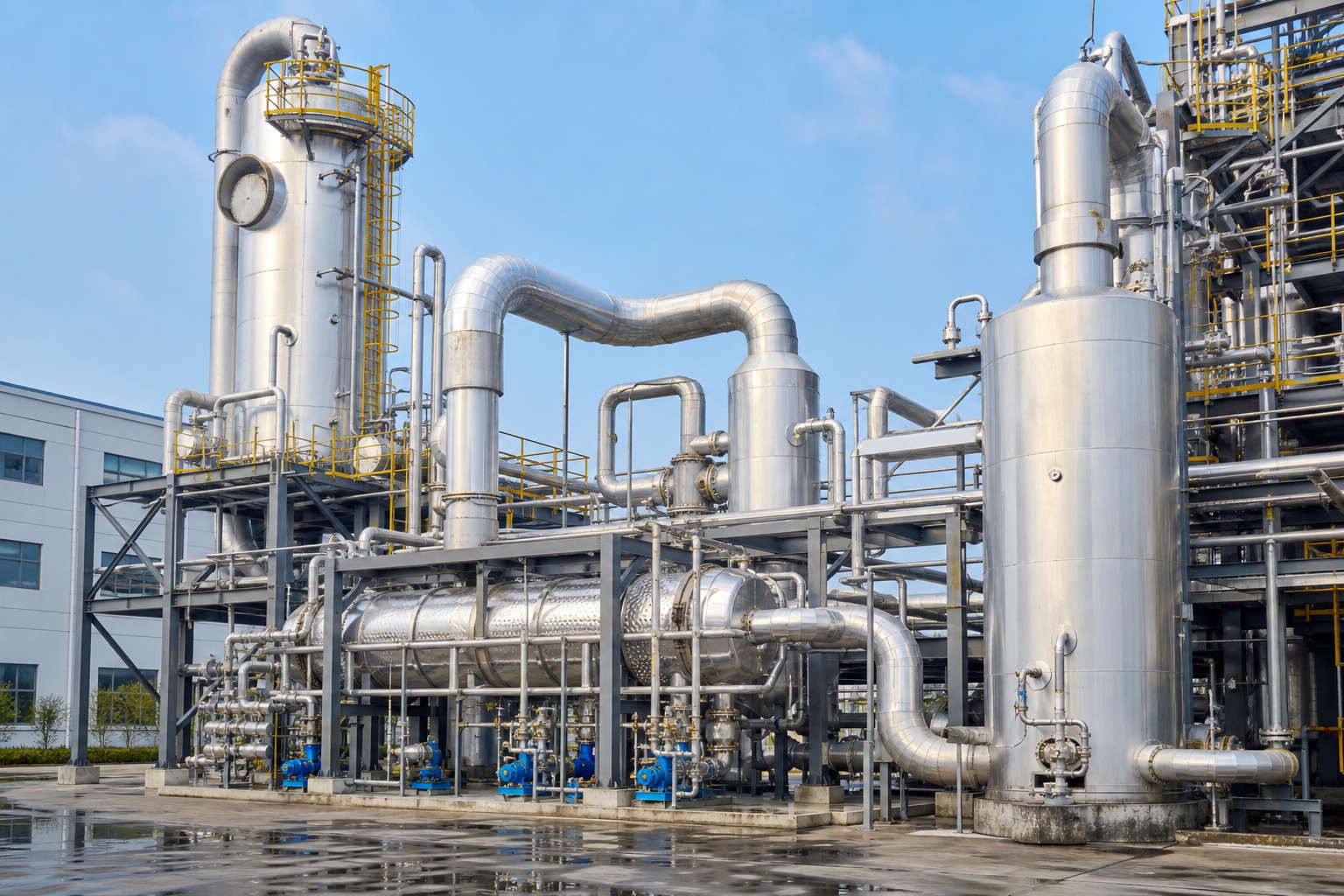
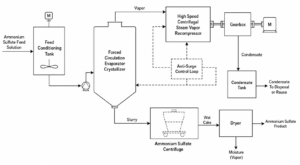
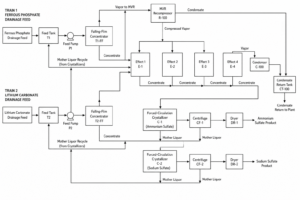
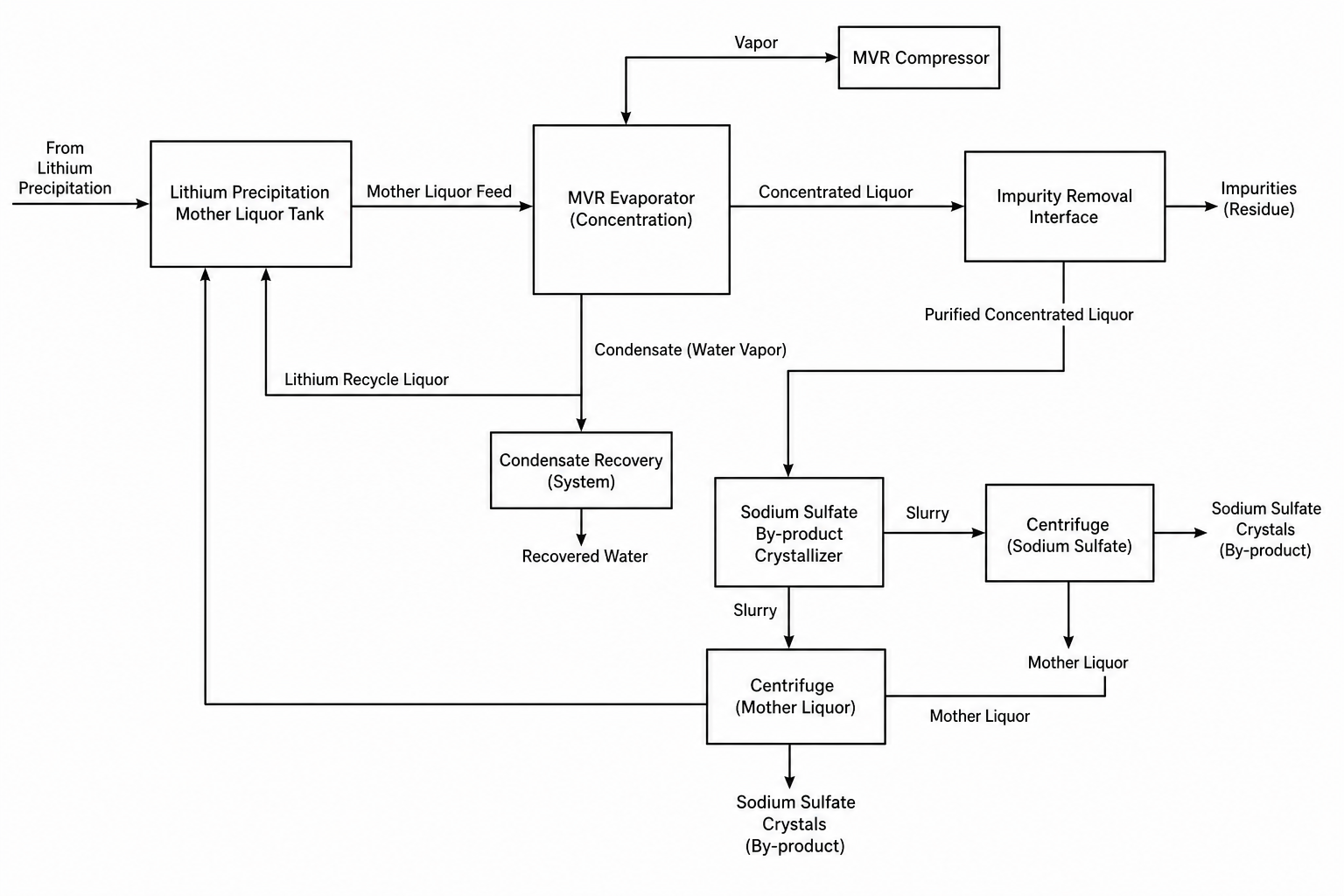
Mother liquor from the precipitation section returns to the head of the evaporation loop. MVR evaporators concentrate it on electrically driven vapor recompression — the secondary vapor recycled as heating steam, no continuous live steam — and the concentrated liquor carries both water and dissolved lithium back toward the precipitation circuit, closing the lithium loop.
Purification runs through the loop: the concentrate passes impurity removal where calcium, magnesium and sodium are stripped before the liquor re-enters precipitation, because battery-grade lithium carbonate is specified at ppm impurity levels and the evaporation loop is where an impurity inventory would otherwise concentrate on itself. Purge management keeps the non-lithium species bounded.
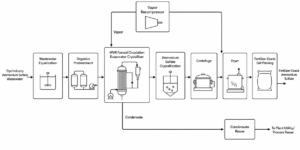
The sulfate train handles the by-product: sodium sulfate solution crystallizes in its own MVR-driven section, recovering Na2SO4 as a dewatered industrial by-product. The two duties share one thermal architecture — compressors on both the lithium liquor and the sulfate salt service, running on the site’s power. Condensate from both trains returns to washing, dissolution and regeneration duties; the plant’s water permit, like its lithium yield, is a designed outcome.
Equipment Configuration
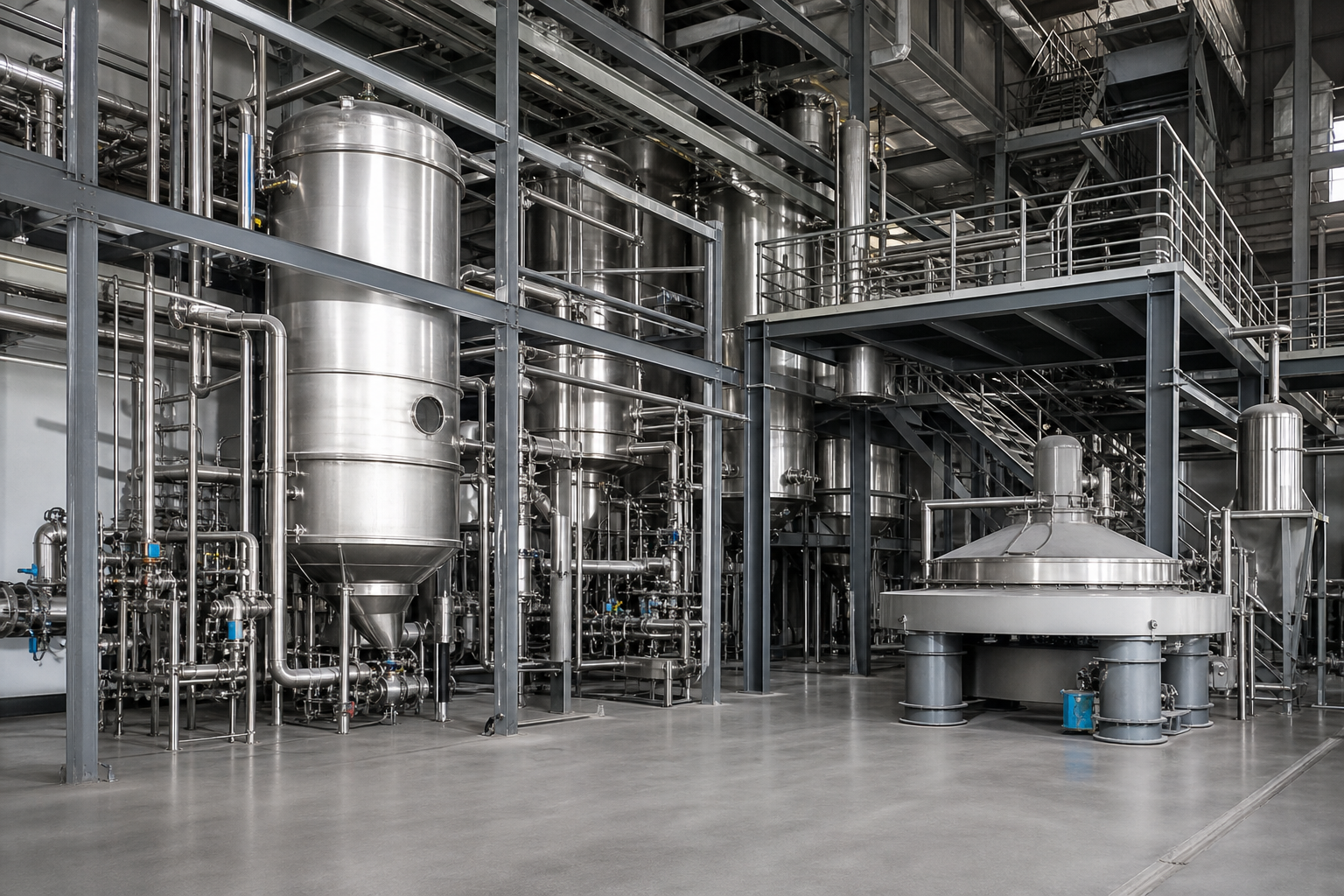
One set of the following equipment is typical for this duty:
- MVR evaporators for lithium precipitation mother liquor concentration and recycle
- Impurity removal interface on the concentrated liquor (ion exchange / deep removal)
- MVR-driven sodium sulfate crystallization train for by-product recovery
- Centrifuge and drying for the sodium sulfate by-product
- Mother-liquor purge management bounding impurity inventory
- Condensate recovery across both trains; DCS control of lithium and salt inventories
Performance & Outcome
Compiled from published industry project data, indicative: plants of this class run 20,000–30,000 tpa lithium carbonate on integrated MVR evaporation, returning lithium through mother liquor recycle, recovering sodium sulfate as by-product and closing the water balance with condensate reuse. Lithium yield and specific energy are quoted per project flowsheet.