Project Parameters
| Parameter | Value |
|---|---|
| Process route | MVR / four-effect evaporation: falling-film concentration + forced-circulation crystallization |
| Industry | Battery materials — iron phosphate precursor and lithium carbonate production drainage |
| Feed type & key components | Stream 1: ferrous phosphate production drainage, dominant salt ammonium sulfate. Stream 2: lithium carbonate production drainage, dominant salt sodium sulfate |
| Evaporation capacity | 74 t/h total (2 × 37 t/h trains) |
| Construction materials | SS316L wetted parts (indicative for sulfate service) |
Representative process configuration compiled from published industry project data. Indicative values, not a process guarantee.
Project Description
The vanadium-titanium industrial belt around Panzhihua in Southwest China has added a second industry to its metals heritage: battery materials. Ferrous phosphate precursor plants and lithium carbonate plants sit alongside the older metalsworks, and both generate high-salt drainage that cannot discharge — ammonium sulfate on the iron phosphate side, sodium sulfate on the lithium side. The published configuration for this park installs two 37 t/h evaporation trains (74 t/h total) covering the two salt systems, with MVR and four-effect technology families selected per stream.
The two salts could hardly behave more differently in a crystallizer. Ammonium sulfate from ferrous phosphate drainage crystallizes readily and has fertilizer market value; the engineering problem is purity — iron traces and sulfate ratio control decide whether the crystal sells. Sodium sulfate from lithium drainage brings the classic Glauber behavior: strong temperature-dependent solubility, tendency to scale heat transfer surfaces as saturation approaches, and a mixed mother liquor that must be purged carefully to stop lithium values accumulating in the loop. One park, two salt chemistries, two crystallization strategies — and the published project data covers both.
Process Technology
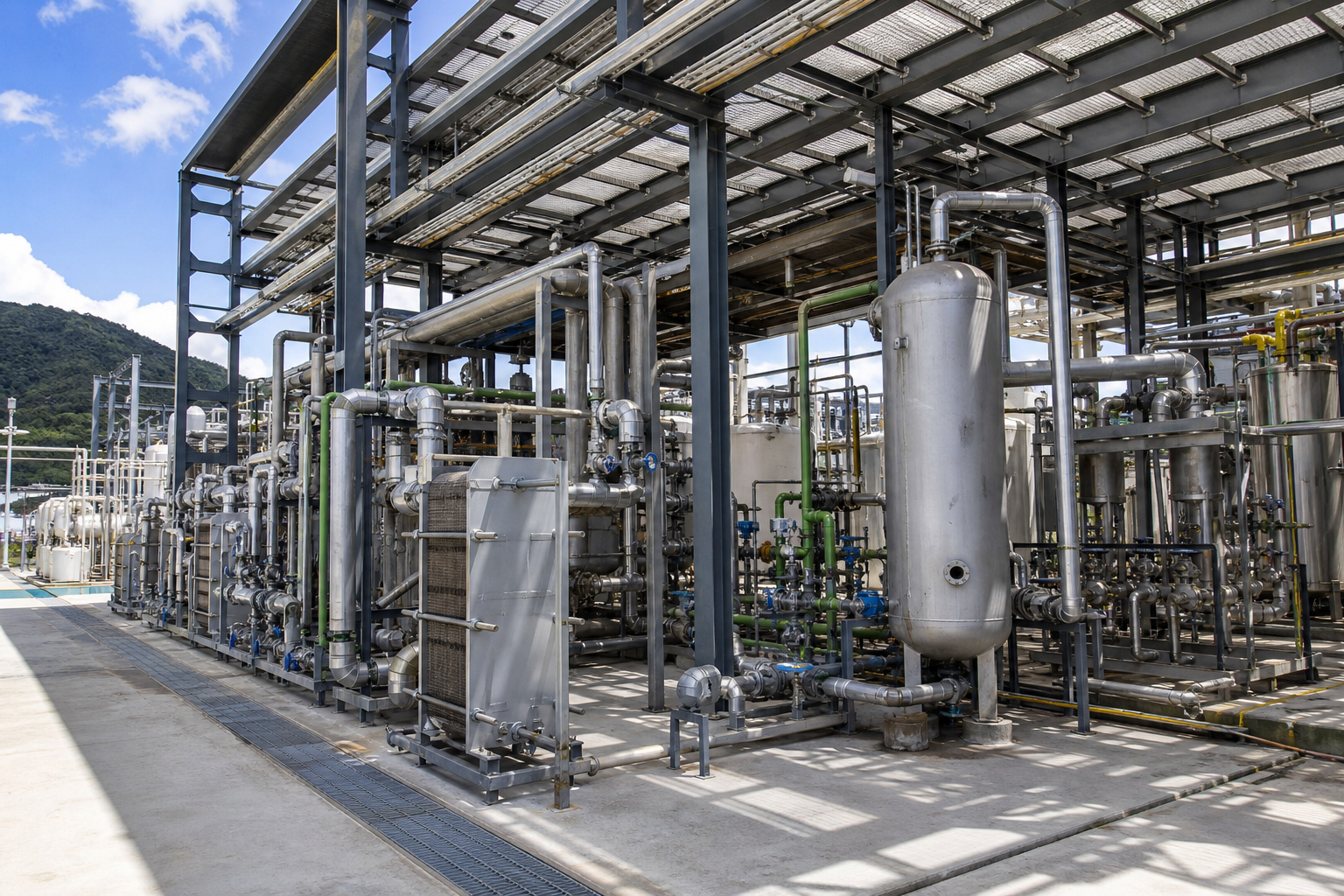
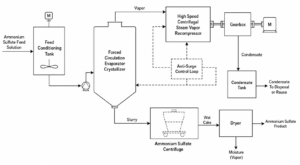
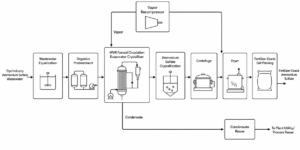
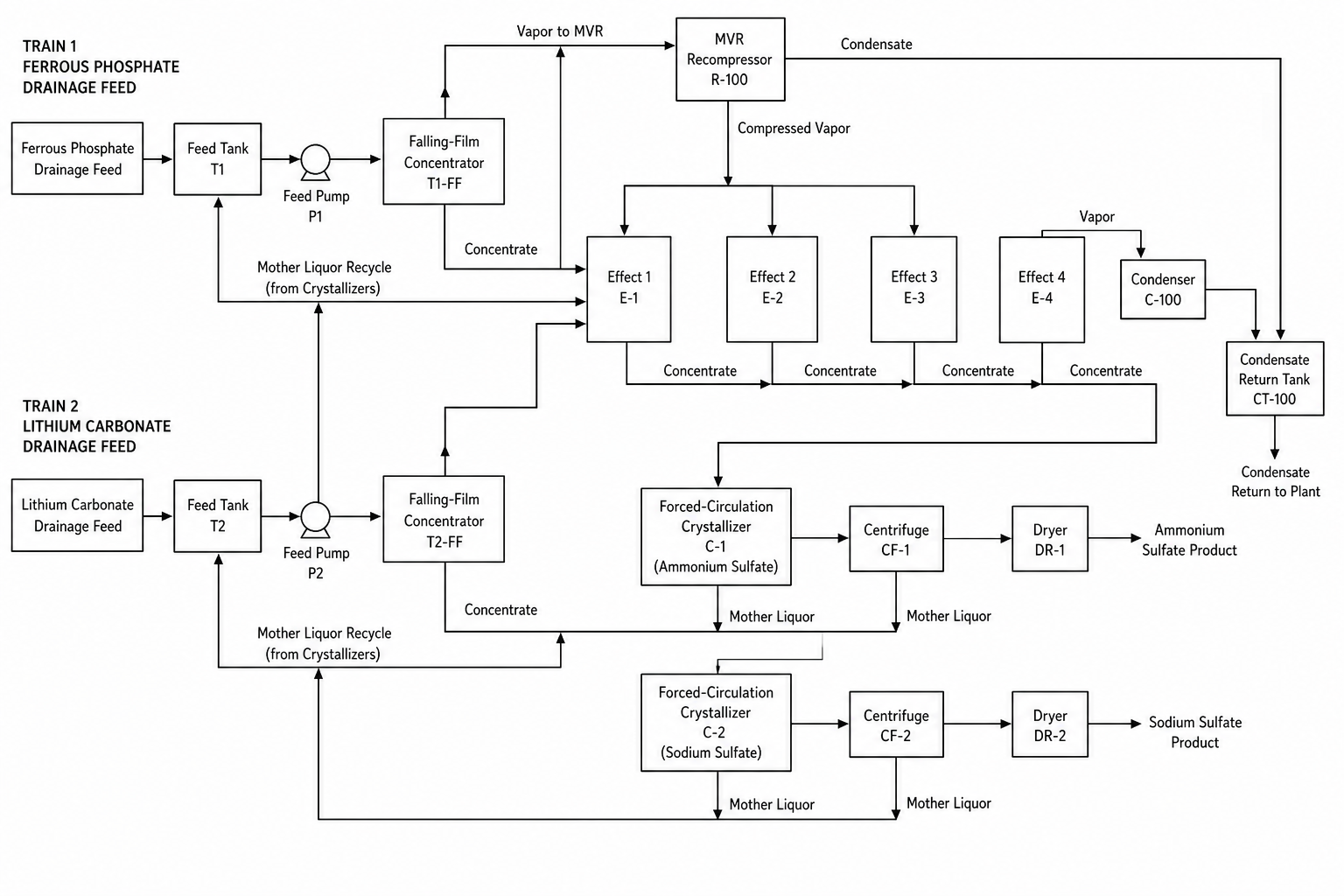
Each train follows the same spine with different internals. Feed is equalized, pH-conditioned and polished for suspended metals hydroxides before any heat transfer surface. The front of the train concentrates in falling-film service — MVR on one stream, four-effect steam-driven on the other per the published configuration — where high coefficients at low temperature difference handle the dilute-to-moderate brine efficiently. The tail of each train runs forced circulation: pumped velocity through the crystallizer heater as saturation approaches, which is where both ammonium sulfate and sodium sulfate would otherwise plate out.
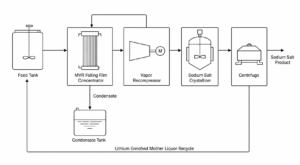
Crystallization is staged per salt. The ammonium sulfate train grows fertilizer-grade crystal under controlled supersaturation with a classified withdrawal, mother liquor returning to the front of the train with a controlled purge that carries the iron and phosphate impurities out of the loop. The sodium sulfate train manages Glauber behavior with temperature staging and crystal-mass inventory control, discharging sodium sulfate decahydrate or anhydrite per the downstream drying route, again with a purge that keeps lithium values from building.
Condensate from both trains — the majority of the 74 t/h water balance — returns to the plants as process water: dissolution, washing and scrubber make-up. The salt products leave as bagged by-products, converting two wastewater obligations into two chemical product lines. This is the economic pattern now standard across China’s battery materials parks: drainage treated to closure, salts recovered to spec, water returned to production.
Equipment Configuration
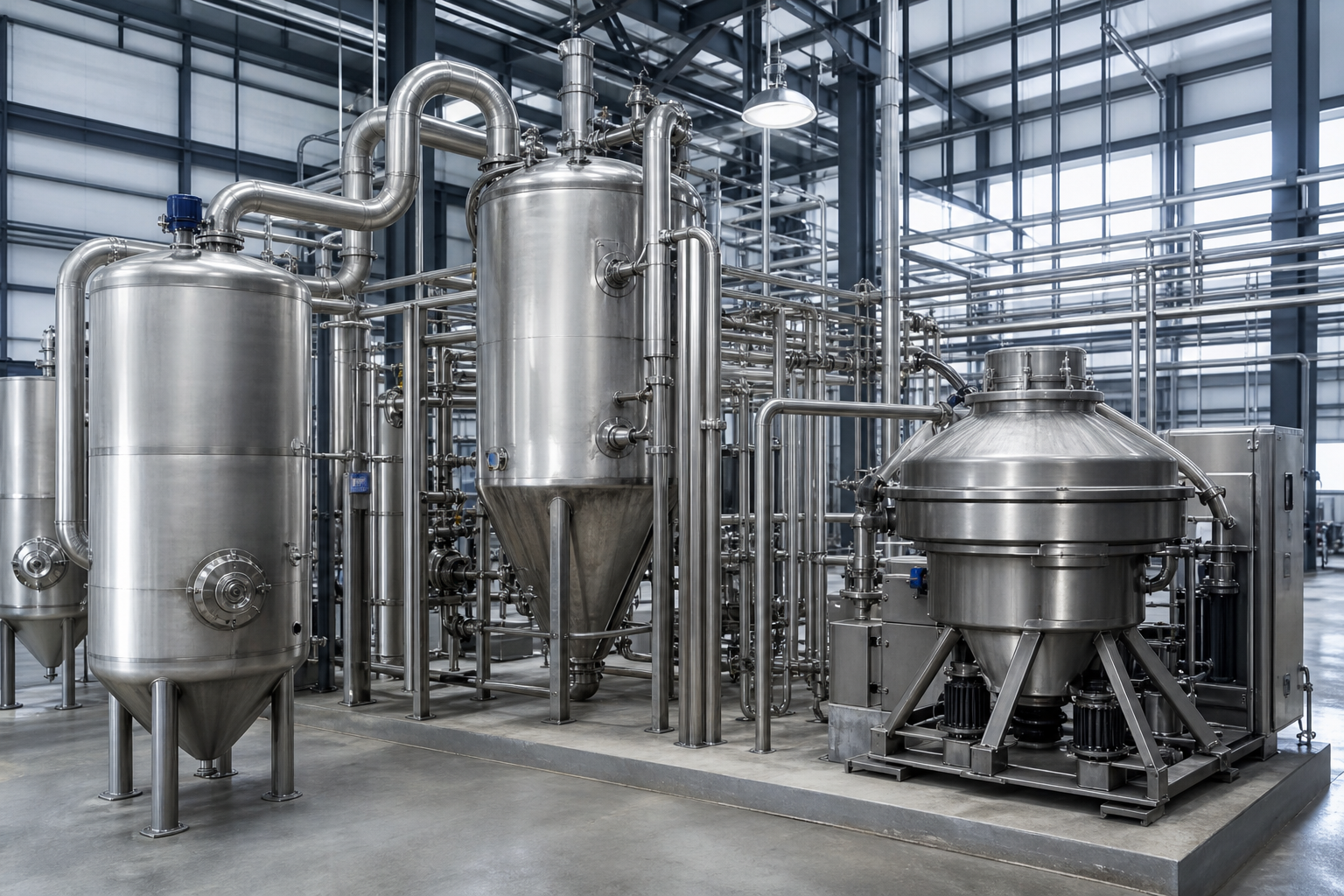
One set of the following equipment is typical per train (two trains for this duty):
- Feed equalization, pH conditioning and suspended-metals polishing
- Falling-film concentrator front end (MVR-driven or four-effect per stream)
- Forced-circulation crystallizer finisher with classified crystal withdrawal
- Centrifuge, dryer and bagging for fertilizer-grade ammonium sulfate / sodium sulfate
- Mother-liquor return with impurity and lithium-value purge control
- Condensate recovery to process water; SS316L wetted parts
Performance & Outcome
Compiled from published industry project data, indicative: two-train parks of this class recover ammonium sulfate and sodium sulfate by-product from battery-materials drainage at 74 t/h total evaporation, returning condensate as process water. Salt grades and specific energy are quoted per project feed analysis.