Project Parameters
| Parameter | Value |
|---|---|
| Process route | Brine clarification & UF/RO preconcentration + evaporation + sodium carbonate precipitation crystallization |
| Industry | Lithium extraction from continental brine (Canada) |
| Feed type & key components | Lithium-bearing continental brine with divalent cations managed by chemical softening |
| Product specification | 99.9% battery-grade lithium carbonate |
| Construction materials | SS316L / duplex wetted parts, titanium at high-chloride stages (indicative) |
Representative process configuration compiled from published industry project data. Indicative values, not a process guarantee.
Project Description
North American lithium supply is shifting from South American salar brines and Australian hard rock toward continental brines in Canada, where winter-deposited salt formations carry lithium at concentrations that reward concentration engineering rather than purely chemical extraction. The reference configuration is a Canadian brine-to-lithium plant targeting 99.9% battery-grade lithium carbonate — the specification cathode makers write into purchase contracts, and the number that decides whether a lithium chemical plant sells into the battery chain or into the industrial-grade commodity pool.
The engineering problem in a continental brine is not the lithium; it is everything sharing the water. Sodium, magnesium, calcium and boron ride along at multiples of the lithium concentration, and battery-grade carbonate tolerates almost none of them in the final crystal. The configuration therefore spends most of its steel on purification duty before the evaporator: hardness is softened out, and the brine is preconcentrated so that the thermal section works on a smaller, cleaner stream. Comparable published lithium flowsheets across the Canadian and South American sectors run the same logic — concentrate first with membranes, polish thermally, precipitate the carbonate last.
Process Technology
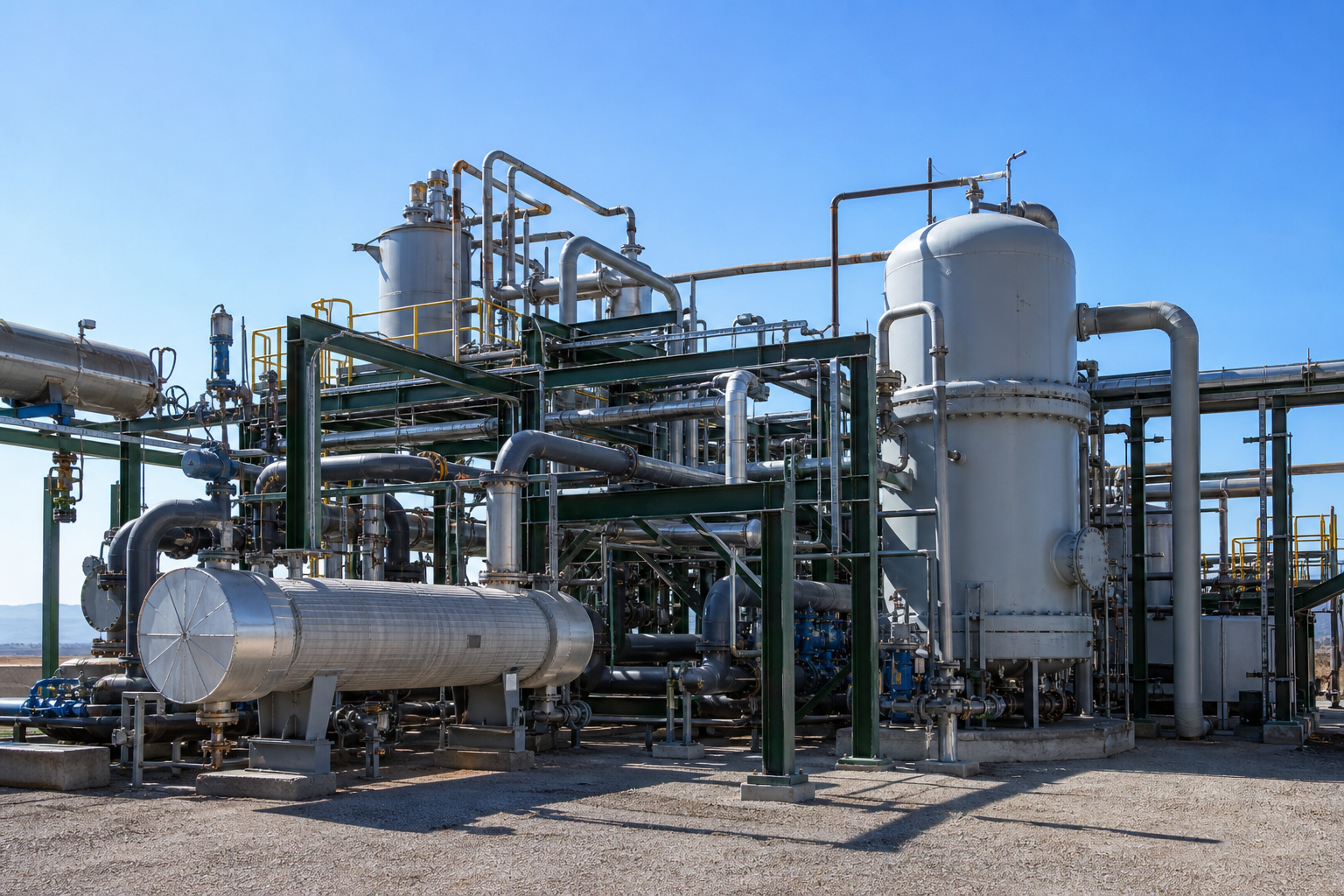
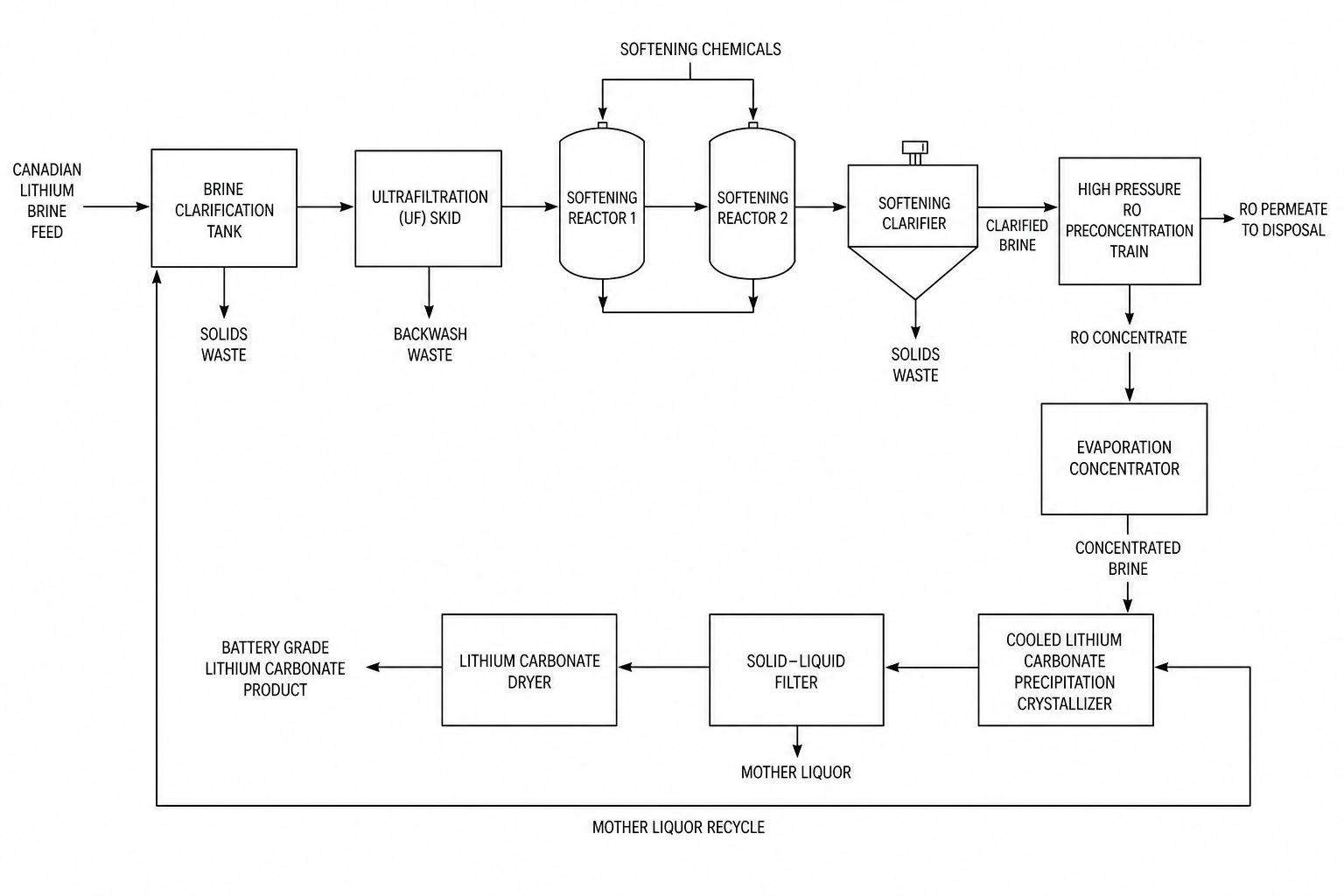
Raw brine passes clarification and ultrafiltration, which strips suspended solids and colloidal silica that would otherwise foul every downstream surface. Chemical softening follows, removing calcium and magnesium — the two cations that both scale heat exchangers and co-precipitate with lithium carbonate, poisoning the product grade. A high-pressure reverse osmosis stage then performs the first concentration lift: pushing a large fraction of the water across a membrane at a fraction of the energy evaporation would spend on it, and lifting the brine toward the concentration where thermal duty becomes economic.
The RO concentrate advances to the evaporation section, which takes the brine to the lithium concentration required for precipitation. Evaporation here is a polishing concentrator — smaller, cleaner and shorter than it would be treating raw brine, because the membrane train has already removed most of the water. Temperature and residence time are managed to avoid lithium losses to scale and to keep boron and other trace species in solution rather than in the salt.
Concentrated lithium liquor meets soda ash, and lithium carbonate crystallizes in a cooled precipitation crystallizer — the final purity gate. Crystals are filtered, washed and dried to the 99.9% battery grade; mother liquor, still carrying lithium, recycles to recover the values that did not crystallize on the first pass. Condensate from the evaporators returns to the front of the plant as wash and dilution water.
Equipment Configuration
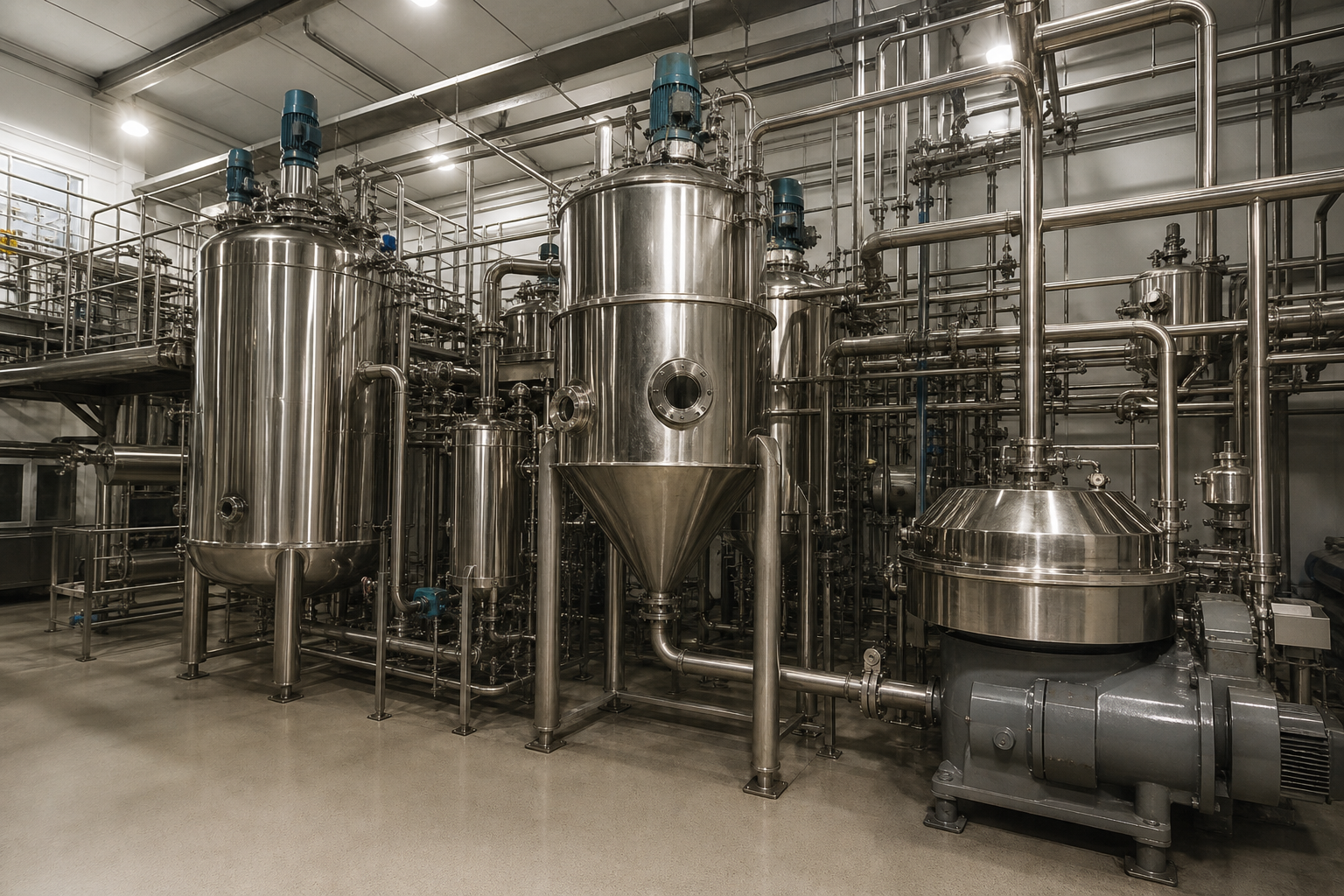
One set of the following equipment is typical for this duty:
- Brine clarification and ultrafiltration package
- Chemical softening (lime / soda ash) with hardness polishing
- High-pressure RO preconcentration train
- Evaporator concentrator sized on RO concentrate flow
- Cooled precipitation crystallizer for lithium carbonate
- Filter, wash and dryer train to battery-grade product handling
- Mother liquor recycle and condensate recovery systems
- PLC / DCS control of concentration endpoints and crystallizer supersaturation
Performance & Outcome
Compiled from published industry project data, indicative: flowsheets of this class reach 99.9% battery-grade lithium carbonate from continental brine by putting membrane preconcentration ahead of evaporation, cutting thermal duty while protecting the precipitation crystallizer. Specific energy and lithium recovery are quoted per project brine chemistry.
Simplified PFD
The simplified process flow diagram above shows brine clarification, UF/RO preconcentration, evaporation and cooled lithium carbonate crystallization with mother liquor recycle.