Project Parameters
| Parameter | Value |
|---|---|
| Process route | Triple-effect evaporation + crystallization (salt and caustic recovery train) |
| Industry | Polymer chemistry — epoxy resin production |
| Feed type & key components | Wastewater bearing sodium chloride and sodium hydroxide from epichlorohydrin condensation and dehydrohalogenation steps |
| Evaporation capacity | 200 t/d feed treatment (approx. 8.3 t/h) |
| Construction materials | Nickel-bearing / duplex alloys on hot caustic-chloride service (indicative) |
Representative process configuration compiled from published industry project data. Indicative values, not a process guarantee.
Project Description
An epoxy resin producer in China makes liquid epoxies by the classical two-step route: bisphenol reacts with epichlorohydrin, then sodium hydroxide closes the ring — and the second step manufactures salt. Every tonne of resin generates sodium chloride in an alkaline mother liquor, carrying residual epichlorohydrin traces, low-molecular organics and residual caustic. This wastewater is the plant’s defining effluent problem: too saline for biology, too alkaline for discharge, and — read the other way — a stream carrying both recoverable salt and recoverable caustic in water. The site’s program is a 200 t/d evaporation train that closes the loop: condensate back to the process, salt out as a solid, and the caustic fraction managed as a recoverable alkaline stream.
The reference configuration is a triple-effect evaporation system with crystallizing finish. Epoxy resin sites run dependable steam utilities and a steady production load, which is the natural habitat of the multi-effect train; three effects balance capital against steam economy at this duty. The liquor’s chemistry — hot caustic with chloride — is among the more demanding corrosion services in polymer plants and sets the metallurgy before it sets anything else.
Process Technology
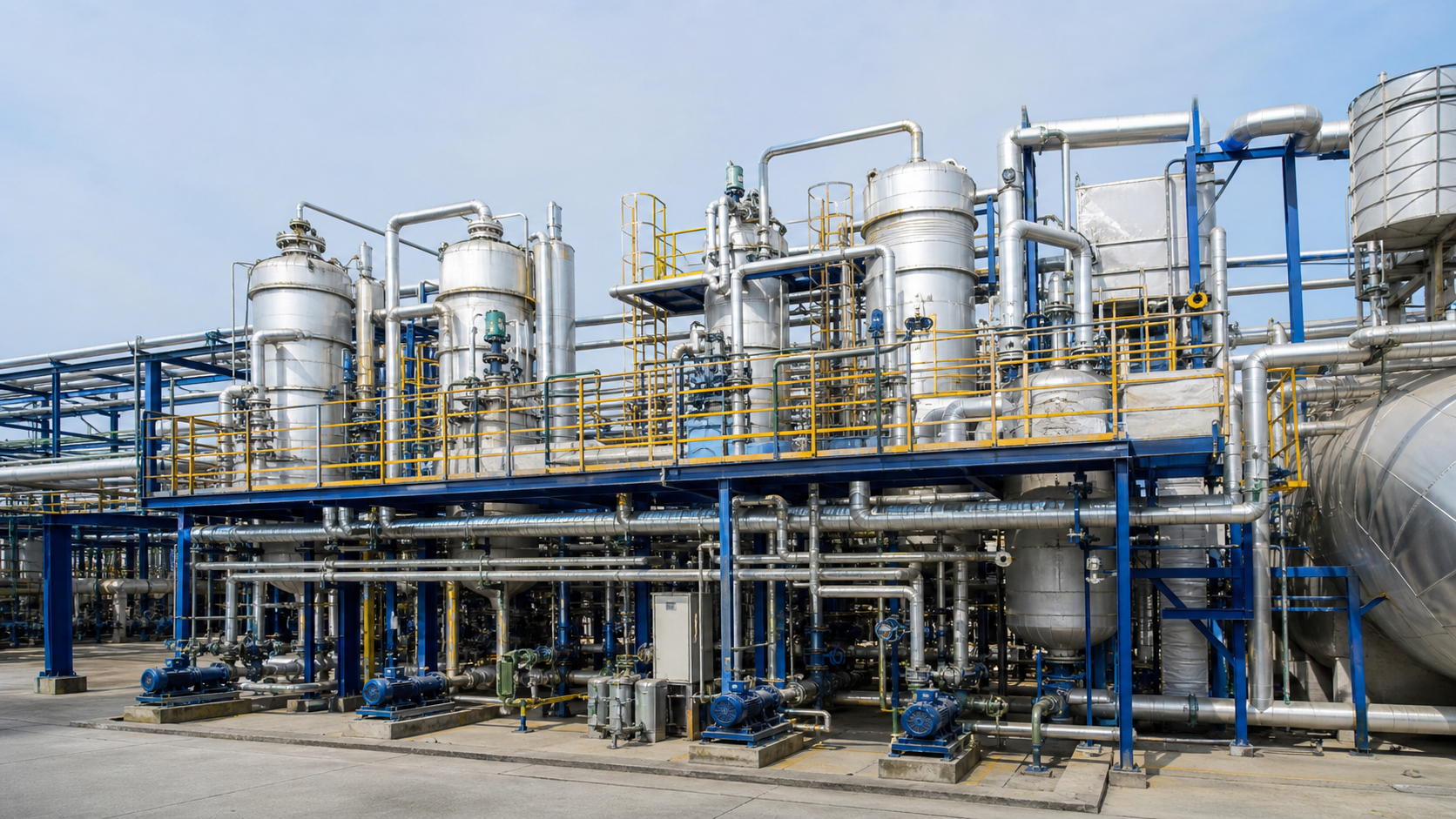
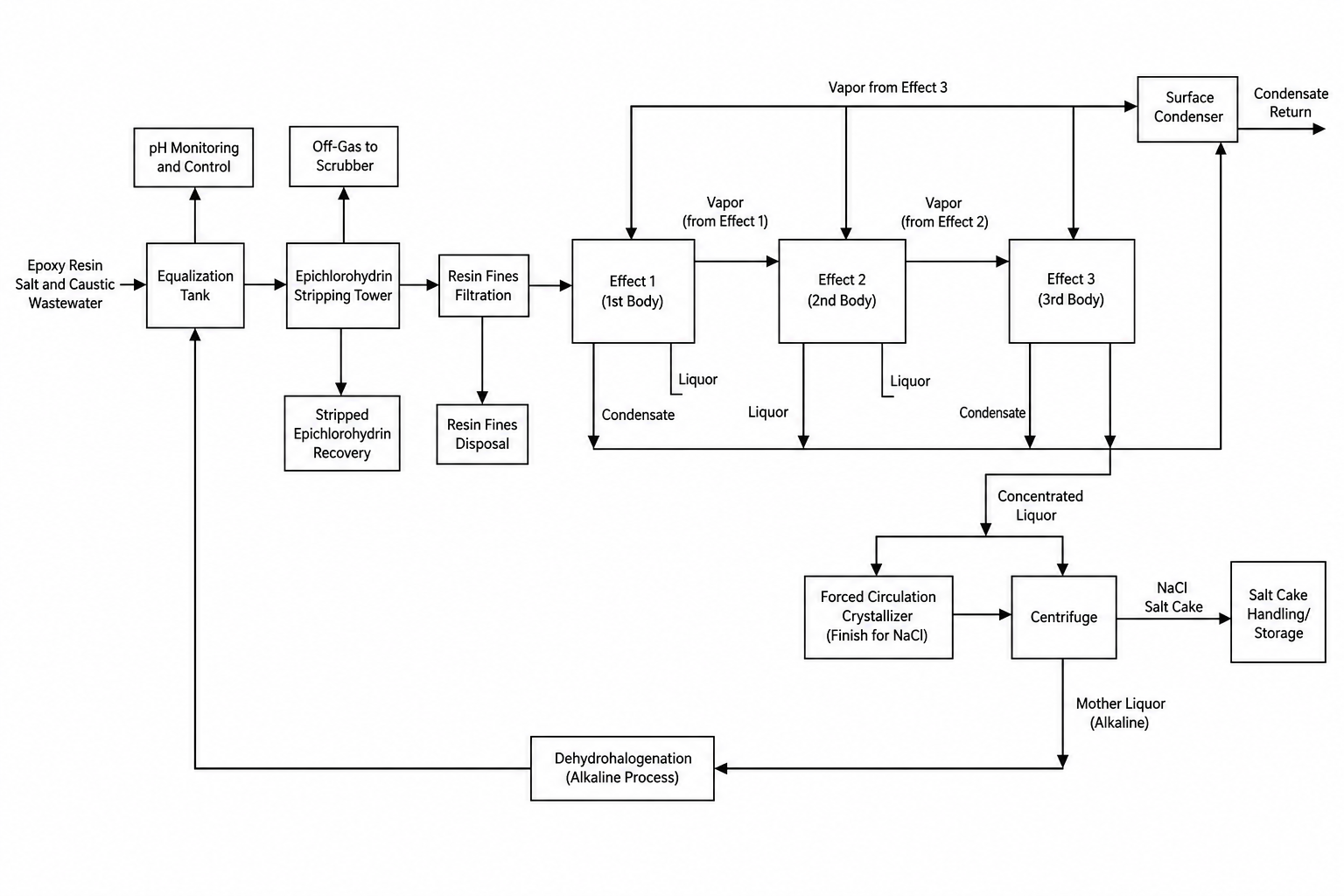
The wastewater is equalized and first stripped of the volatile organics that carry product value and permit weight: residual epichlorohydrin and light organics are removed by steam stripping or recovered upstream, both because they are recoverable product and because they would otherwise contaminate every downstream stream. The stripped liquor is filtered for resin fines and tar particles — epoxy plants shed polymer micro-gel that no evaporator forgives — and forwarded to the train.
The three effects run in a descending temperature ladder, concentrating the alkaline brine step by step. Sodium chloride is the crystallizing species: as concentration crosses saturation, salt leaves solution, and the back of the train operates on forced-circulation principles so that NaCl crystals grow in the moving bulk liquor and report to a centrifuge as a dewaterable cake. Sodium hydroxide, non-volatile and deeply soluble, concentrates in the mother liquor rather than crystallizing — the train produces salt cake and an alkaline mother liquor whose caustic strength and volume are managed by the site’s recycle strategy: returned to the dehydrohalogenation step where specifications allow, or bled to controlled handling. Mother liquor recycles with a purge controlling the organic accumulation that epoxy chemistry inevitably contributes.
Condensate from the surface condenser is the water balance’s answer: stripped of volatiles upstream and boiled from a salt liquor, it returns to the plant’s washing and process water duties. The train’s product set — clean water, salt cake, alkaline recycle — is the epoxy plant’s version of the closed loop, converting a triple-problem stream into three managed outputs.
Equipment Configuration
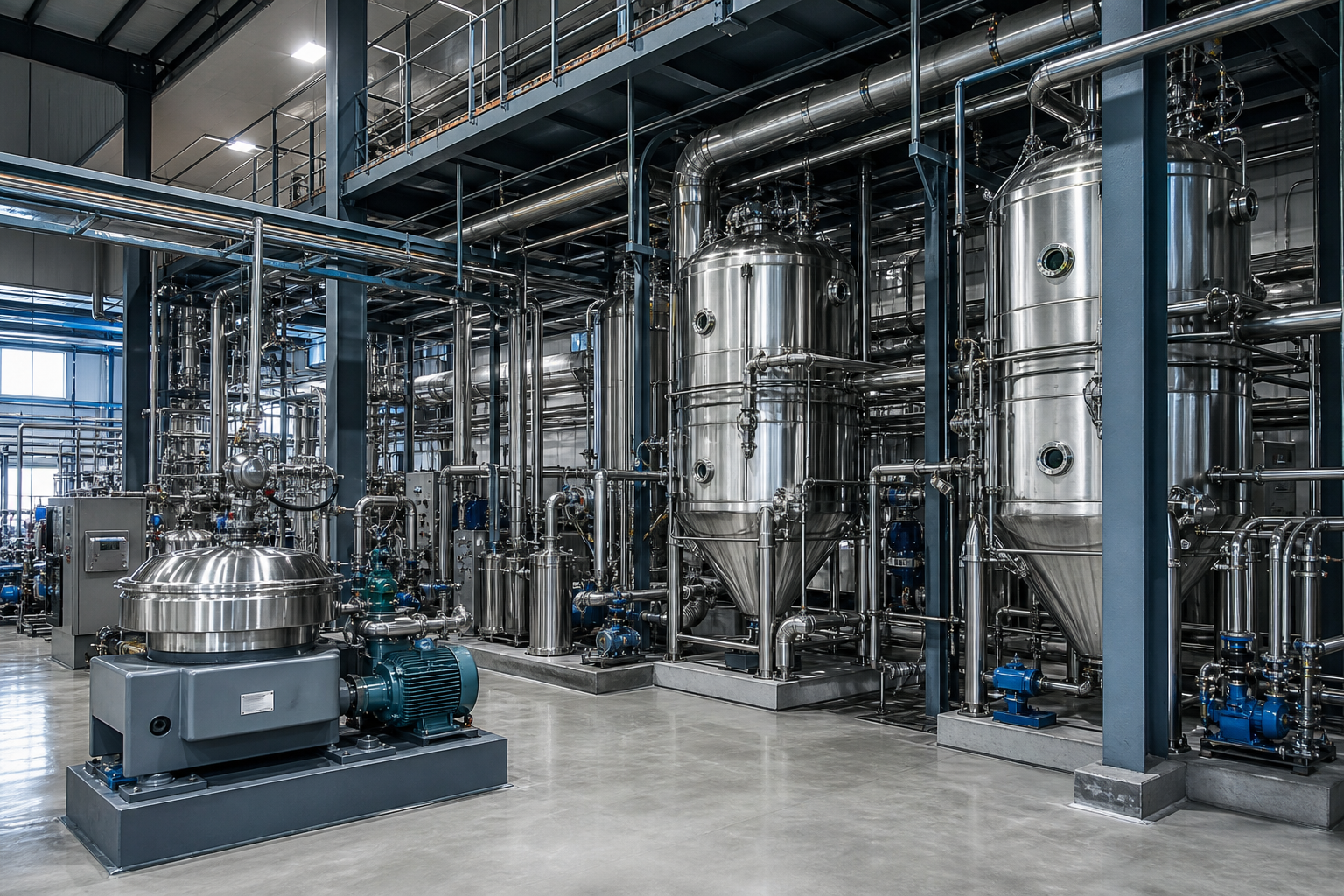
One train of this class comprises:
- Equalization; volatile organic stripping with epichlorohydrin recovery interface; filtration for resin fines
- Triple-effect evaporator bodies with inter-effect vapor transfers, surface condenser and vacuum system
- Forced-circulation crystallizing finish for NaCl draw
- Centrifuge for salt cake; alkaline mother-liquor recycle with purge and caustic recovery routing
- Condensate collection and return to washing and process water duties
- Density-based control with clean-in-place circuits rated for tar and gel fouling service
Nickel-bearing and duplex alloys are indicative for the hot caustic-chloride service; material selection is confirmed effect by effect against the caustic strength-temperature envelope, the regime in polymer-plant evaporation where specification errors announce themselves quickly.
Performance & Outcome
Compiled from published industry project data, indicative: triple-effect trains of this class treat epoxy resin salt-and-caustic wastewater at feed rates around 200 t/d, producing dewaterable sodium chloride, a managed alkaline recycle stream and condensate returned to process water duties. Caustic recovery, salt quality and steam economy depend on feed caustic strength and are engineered per project.
Simplified PFD
The simplified process flow diagram above illustrates the train from stripping and filtration through the three effects to salt cake, alkaline recycle and condensate return.