Project Parameters
| Parameter | Value |
|---|---|
| Process route | MVR + three-effect evaporation, falling-film concentration + forced-circulation crystallization |
| Industry | Battery materials — LFP precursor (ferrous phosphate) production |
| Feed type & key components | Ferrous phosphate production wastewater; sulfate-rich synthesis and washing effluent with phosphate and iron traces |
| Evaporation capacity | 53 t/h |
| Construction materials | SS316L wetted parts (indicative for sulfate-dominant service) |
Representative process configuration compiled from published industry project data. Indicative values, not a process guarantee.
Project Description
A ferrous phosphate producer in Central China’s Hubei province, supplying LFP cathode precursor, operates synthesis and washing steps that generate a large sulfate-bearing wastewater stream. The stream combines sodium sulfate from the reaction chemistry with residual phosphate and iron species from product handling; its volume at 53 t/h makes tankering or disposal economically impossible and its salt content rules out direct discharge. The plant is engineered as zero liquid discharge (ZLD): every tonne of water is either recycled to the process or lost only as evaporation, and the salt load leaves as a solid.
The reference configuration pairs MVR and multi-effect evaporation — a hybrid that assigns each technology to the duty it serves best at this scale. Comparable published configurations run the same 53 t/h capacity in the same region, confirming the segment has converged on this route for LFP precursor effluent.
Process Technology
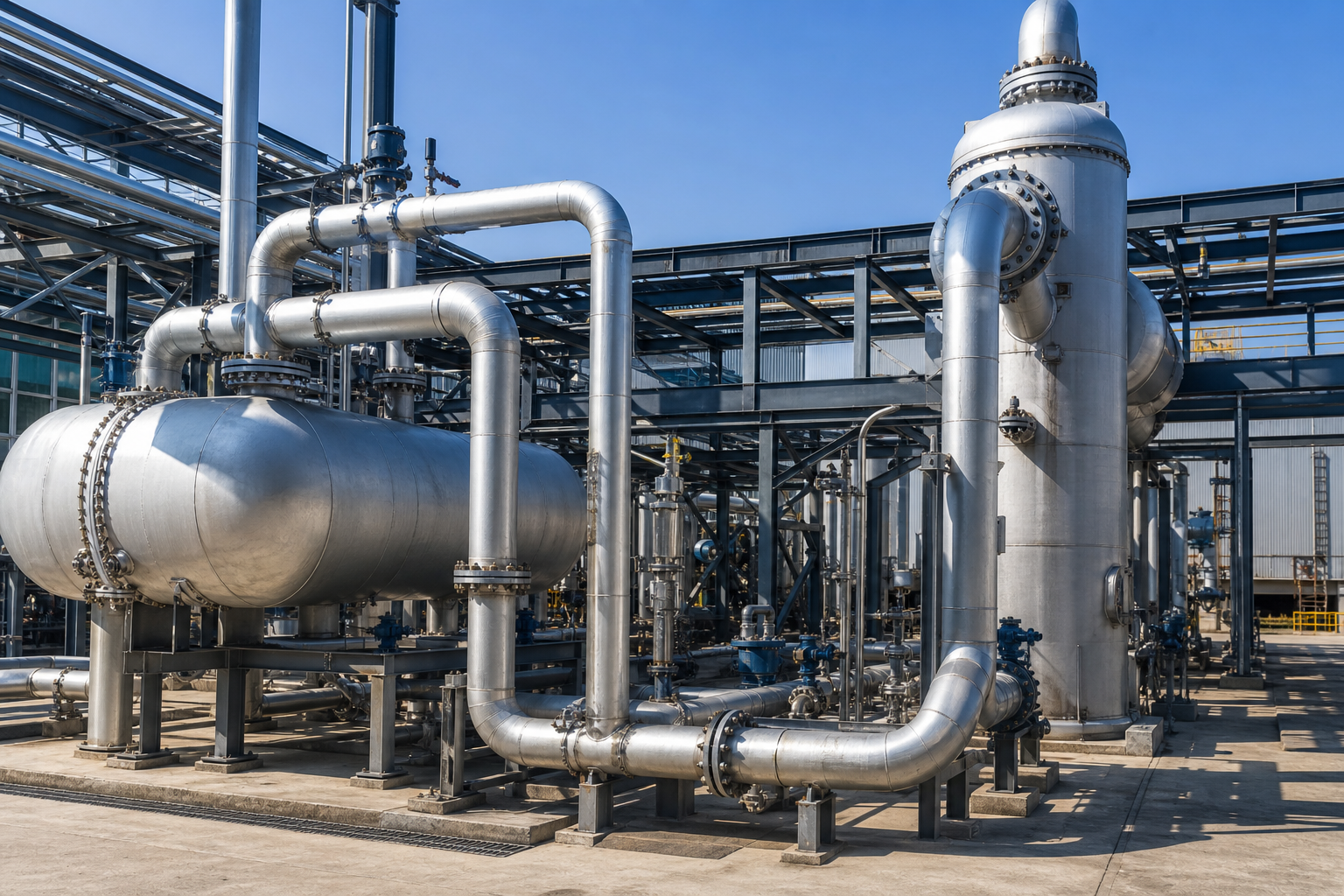
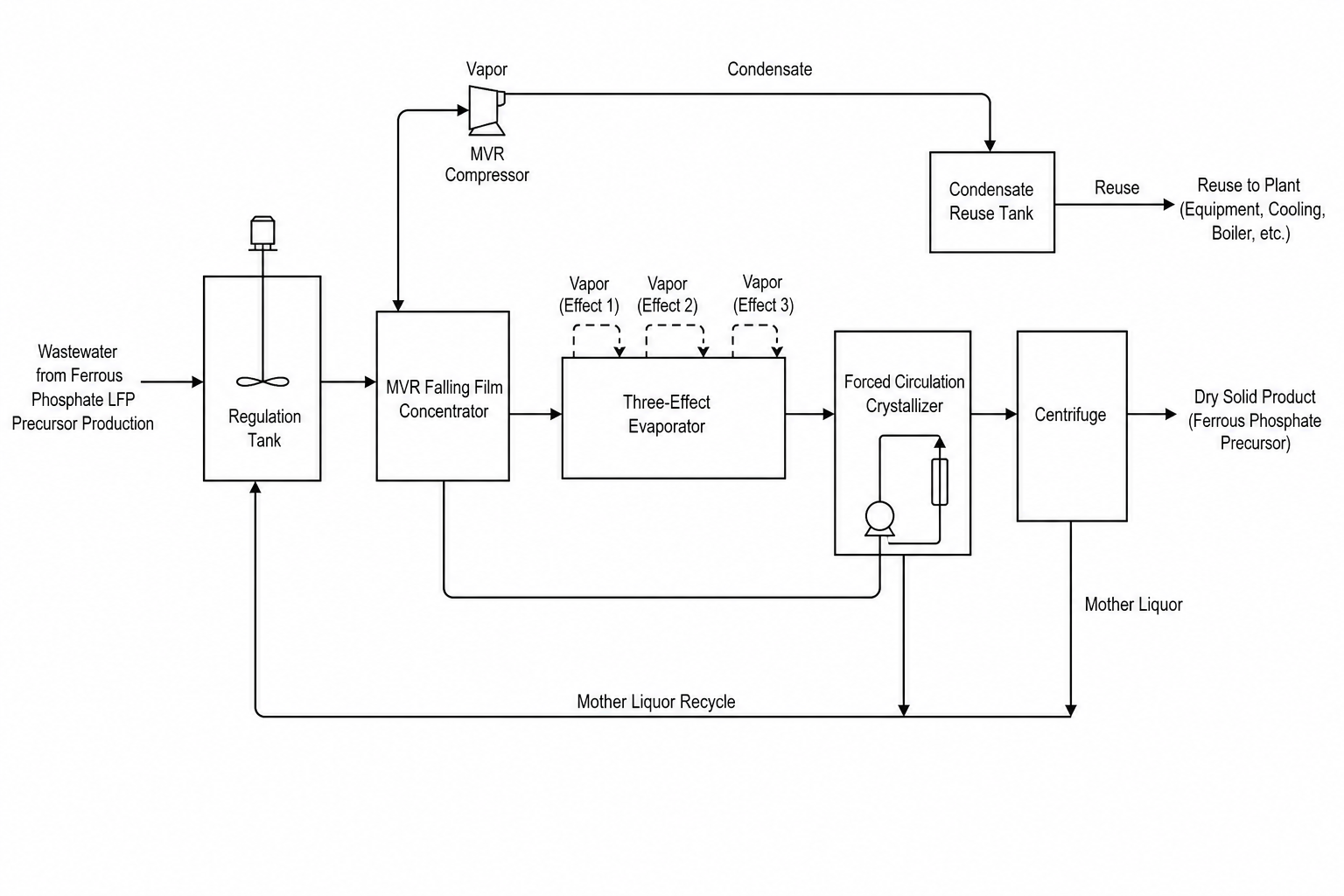
The wastewater is equalized and conditioned: pH is adjusted so that residual phosphate reports to a removable precipitate, and iron traces are oxidized and filtered before the brine reaches the heat-transfer surfaces. Protecting the evaporator from phosphate fouling at the front end is cheaper than cleaning it out of a falling-film bundle.
Concentration then proceeds in two thermally distinct sections. The bulk water removal runs in falling-film service, where the liquor wets the heat transfer surface as a thin film under moderate temperature differences — the right regime for a feed that is still dilute, sensitive to wall deposits, and required to pass in single pass per effect. Three effects are arranged so that vapor boiled in one effect becomes the heating medium of the next, cutting steam demand per tonne of water roughly in proportion to the number of reuses; MVR service with mechanical recompression of the vapor carries the evaporator load electrically where the site steam balance favors it.
As the liquor approaches sulfate saturation the process hands over to forced circulation. This is the deliberate split: falling film for bulk, gentle concentration; forced circulation for the fouling, crystallizing end of the curve, where pumped high velocity and suppressed wall superheat allow sulfate to crystallize in the bulk liquor instead of on the exchanger. In the crystallizer, sodium sulfate precipitates under controlled supersaturation into a centrifugeable crystal.
The salt slurry is dewatered continuously; the sulfate by-product leaves as solid, and mother liquor recycles to the crystallizer feed with a small purge to control impurity build-up. Condensate from the effects and from the crystallizer system is segregated, collected and returned to the plant as process and washing water — at 53 t/h of evaporation, the condensate stream is the plant’s single largest water input.
Equipment Configuration
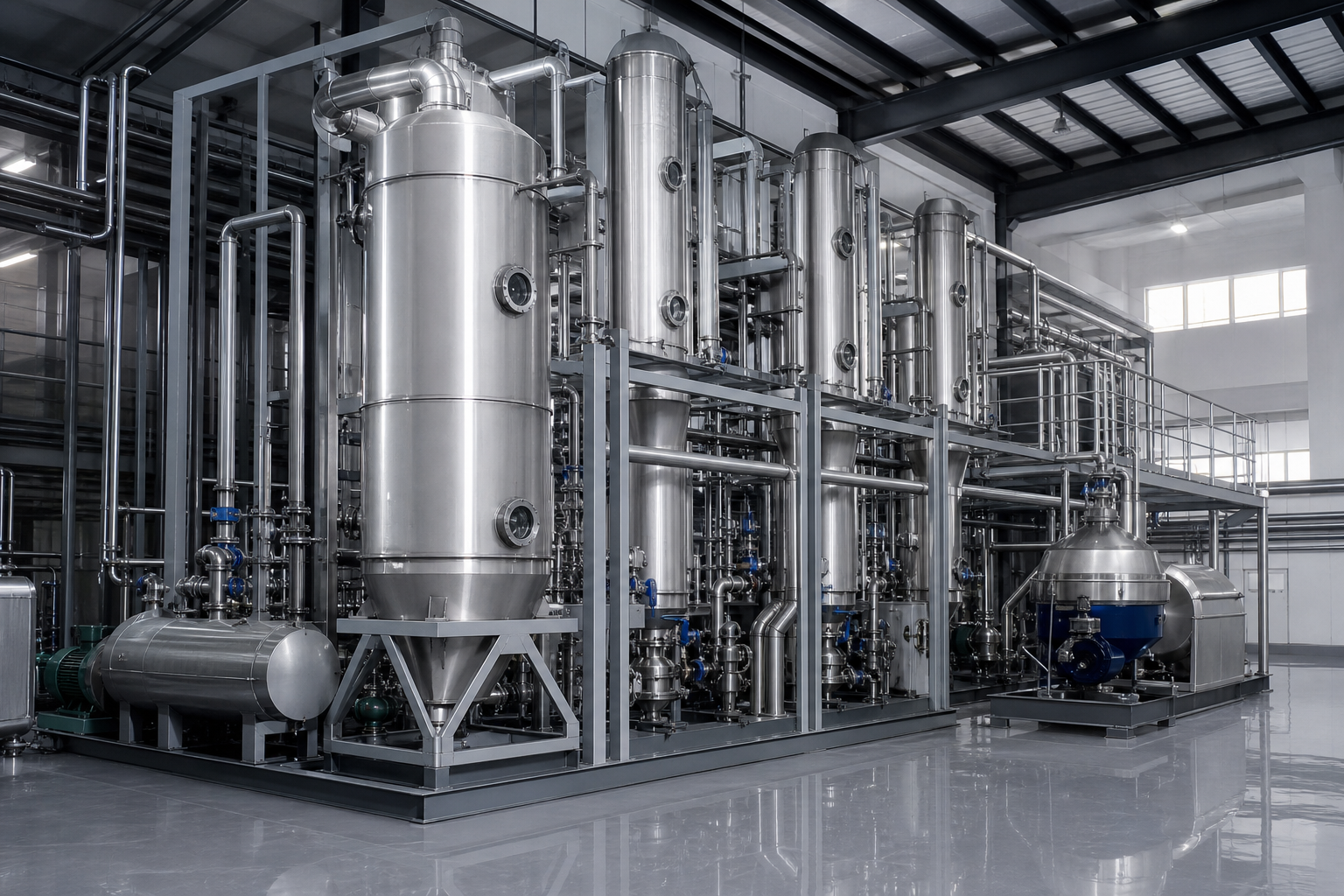
One set of the following equipment is typical for this duty:
- Equalization and conditioning package: pH adjustment, phosphate precipitation and filtration
- Falling-film evaporator bodies (three-effect arrangement) with MVR recompression option on the first effect
- Forced-circulation crystallizer for sodium sulfate recovery from the concentrated liquor
- Centrifuge with wash system; mother-liquor return and controlled purge
- Condensate segregation tanks and reuse pumping to synthesis and washing duties
- DCS-level control of effect temperatures, densities and crystal inventory
Performance & Outcome
Compiled from published industry project data, indicative: trains of this class run LFP-precursor effluent to zero liquid discharge, recover the sulfate load as a solid by-product, and return condensate in quantities that displace the majority of fresh water demand. Specific energy and salt purity figures depend on feed sulfate concentration and are quoted per project.