Project Parameters
| Parameter | Value |
|---|---|
| Process route | MVR evaporation + forced circulation crystallization + cooling crystallization + double-effect finish + drying |
| Industry | Battery-chain hydrometallurgy (Vietnam, Southeast Asia) |
| Feed type & key components | Nickel sulfate solution Ni 8–10%, pH > 2, Cl⁻ ≤ 100 ppm, F⁻ ≤ 10 ppm; cobalt sulfate solution Co 9–11%, pH > 3, same halide limits; feed temperature ≥ 25 °C |
| Evaporation capacity | 3 t/h (nickel sulfate train) + 1 t/h (cobalt sulfate train); design tolerance ±10% |
| Products | Qualified nickel sulfate and cobalt sulfate crystal salts |
| Construction materials | SS316L wetted parts minimum; higher alloys per chloride exposure (indicative) |
Representative process configuration compiled from published industry project data. Indicative values, not a process guarantee.
Project Description
Southeast Asia has become the second home of the battery metals chain: precursor and cathode capacity built in Vietnam and Thailand draws on imported MHP and sulfate intermediates, and every tonne of cathode salt produced there needs a crystallization train to turn purified solution into shippable crystal. The reference configuration is a Vietnamese hydrometallurgy plant operating two parallel crystallization duties — a 3 t/h nickel sulfate system and a 1 t/h cobalt sulfate system — converting purified sulfate solutions into qualified crystal salts for the battery materials market.
The feed chemistry defines the discipline of the design. Nickel solution at 8–10% Ni and cobalt solution at 9–11% Co arrive mildly acidic (pH > 2 and > 3 respectively), warm (≥ 25 °C), and under strict halide ceilings: chloride held below 100 ppm and fluoride below 10 ppm. Those limits matter twice over — product purity for the battery chain tolerates no halide carryover, and the equipment budget tolerates no corrosion allowance abuse, so the specification effectively writes the materials and the operating envelope at the same time.
Process Technology
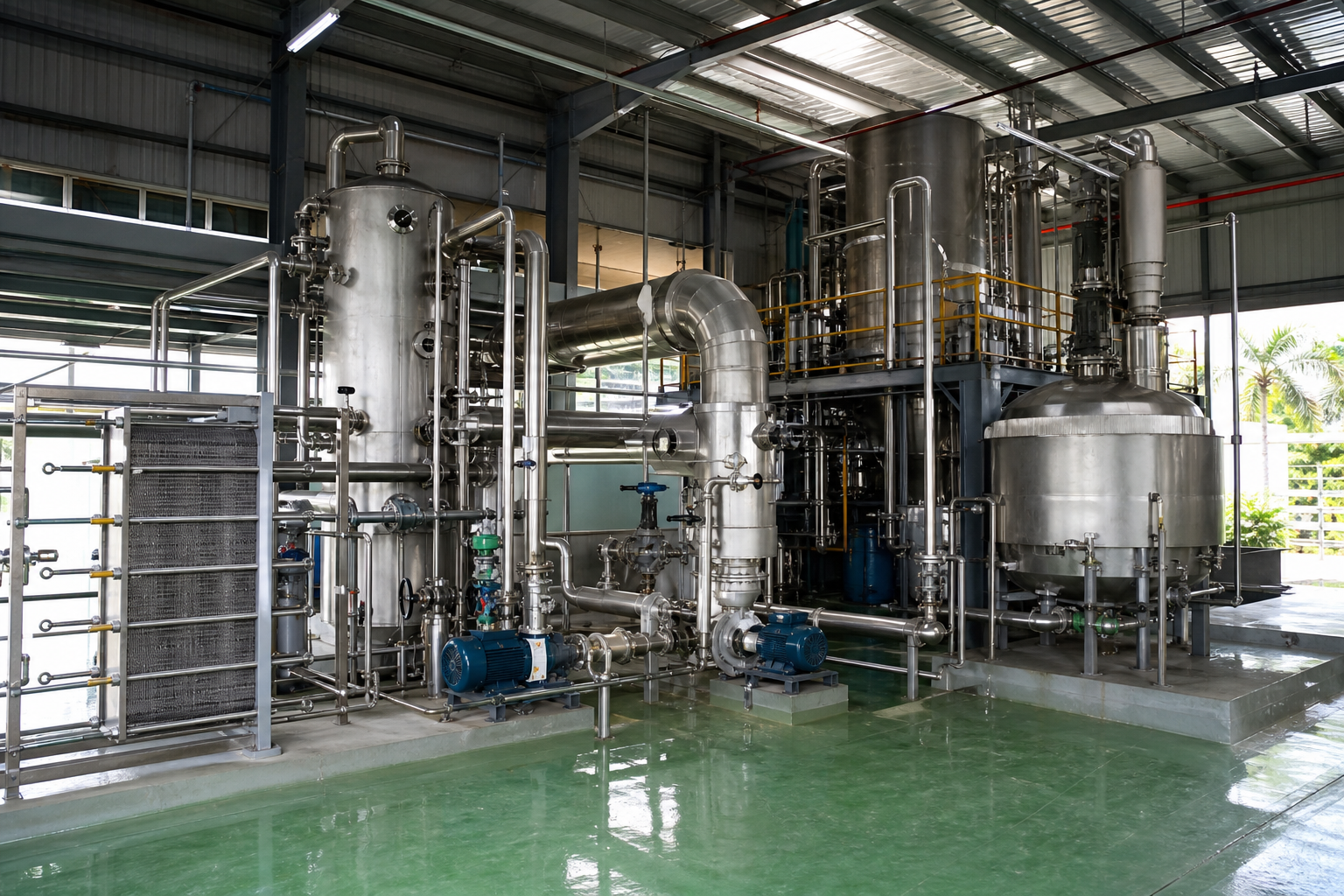
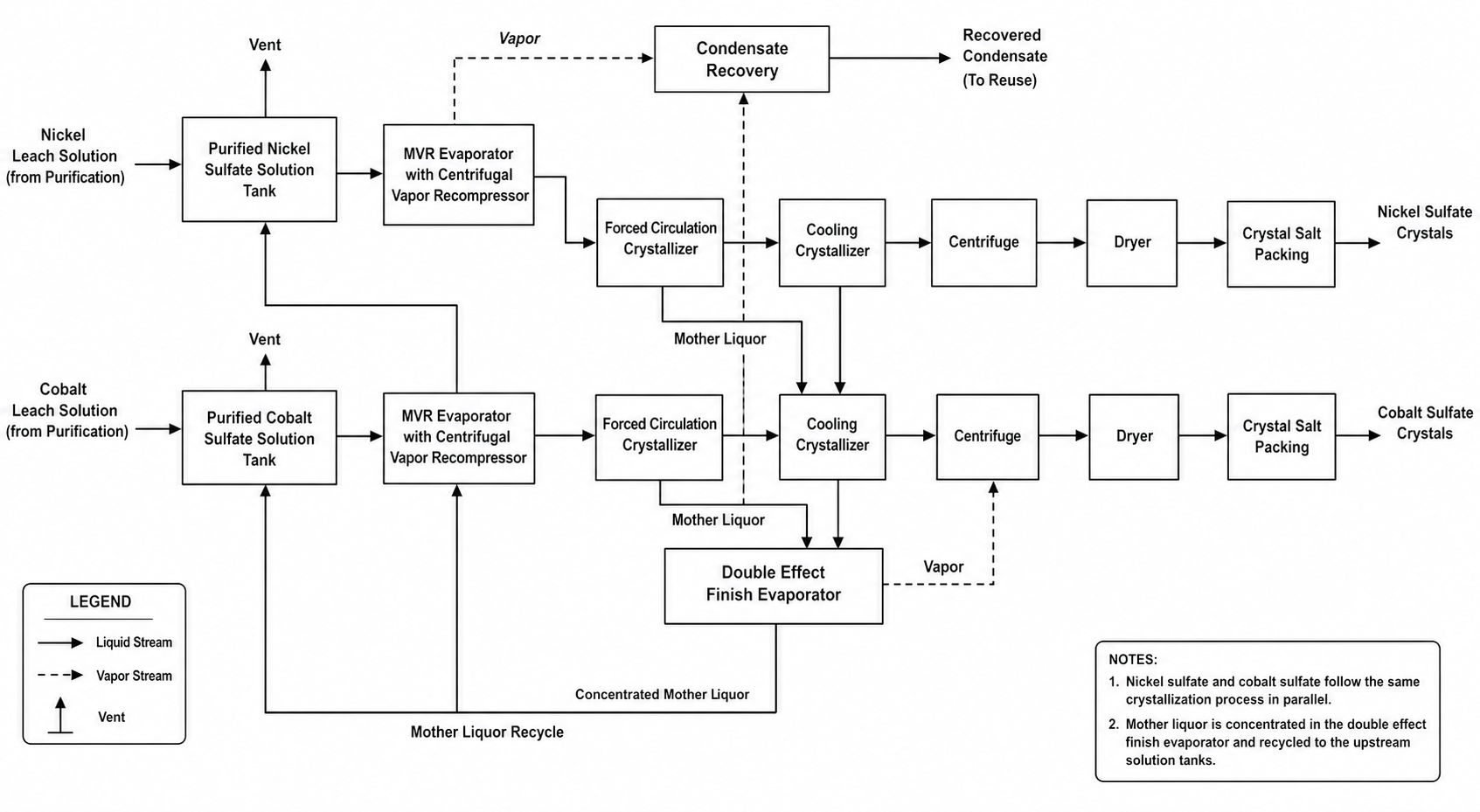
Purified sulfate solution feeds the MVR evaporator, where mechanical vapor recompression recycles the secondary vapor as heating steam on an electrical loop — the standard energy architecture for a plant of this scale, displacing a steam boiler a greenfield Southeast Asian site would rather not build. Concentration proceeds under controlled boiling until the liquor approaches saturation.
Crystallization runs in two stages that match the two sulfate chemistries. The hot stage is a forced circulation crystallizer: liquor pumps through the heater at high velocity and flashes in the body, and the high shear of the circulating flow keeps the heat transfer surfaces clean while crystals grow to the coarse, uniform size that centrifuges and downstream buyers both want. The cold stage is a cooling crystallizer for the sulfate systems whose solubility drops steeply with temperature — yield is harvested from the cooling curve, not from further boiling, which is the cheaper tonne of crystal in any dual-stage train.
A double-effect finish section polishes the mother liquor stream, extracting a second increment of water with live steam reused across two effects before the liquor returns. Crystals from both stages centrifuge to low free moisture and pass to drying, packaging as qualified nickel sulfate and cobalt sulfate salts; condensate from the vapor system returns to the plant water balance. Mother liquor recycles with a purge so that impurities — including the trace halides the specification caps — leave the circuit in a controlled bleed rather than accumulating in the crystal.
Equipment Configuration
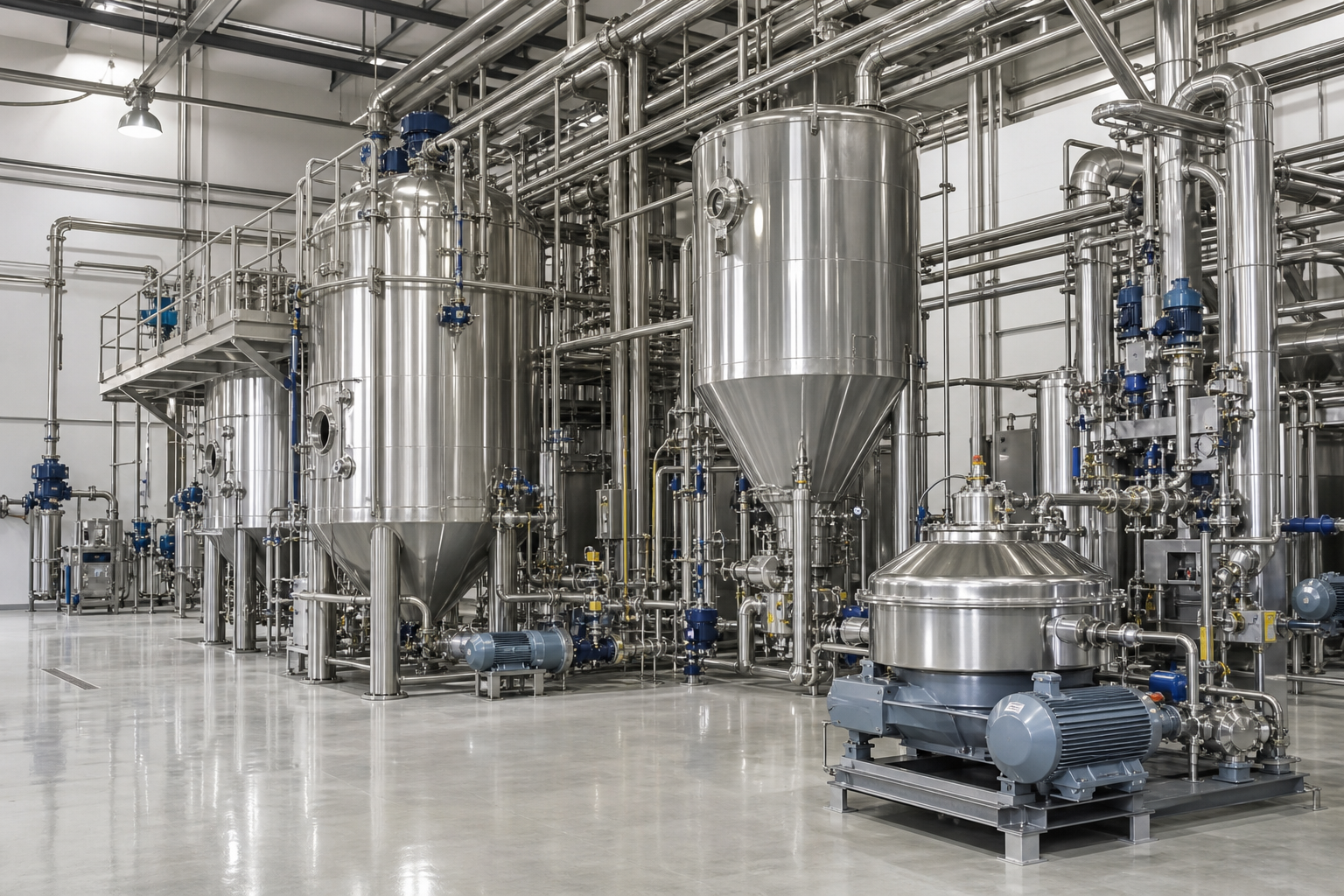
One set of the following equipment is typical for this duty:
- Purified solution feed tanks and filtration (separate Ni / Co circuits)
- MVR evaporator with centrifugal vapor recompressor, per train
- Forced circulation crystallizer with circulation heater and body
- Cooling crystallizer for temperature-driven yield stage
- Double-effect finish evaporator on mother liquor
- Centrifuge and dryer for crystal salt finishing and packing
- PLC control of concentration endpoints, crystal inventory and mother liquor purge
Performance & Outcome
Compiled from published industry project data, indicative: the nickel sulfate train evaporates 3 t/h and the cobalt sulfate train 1 t/h at ±10% design tolerance, producing qualified crystal salts on MVR energy. Halide ceilings (Cl⁻ ≤ 100 ppm, F⁻ ≤ 10 ppm) are held by feed purification and circuit purge rather than by the evaporator itself.
Simplified PFD
The simplified process flow diagram above shows the purified sulfate feeds, MVR evaporation, forced circulation and cooling crystallization, double-effect mother liquor finish, and salt drying.