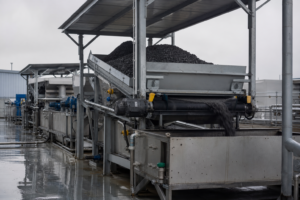
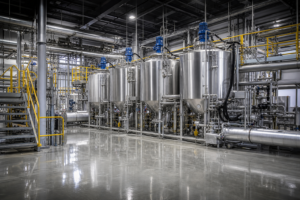
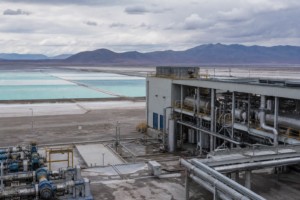
Lithium-bearing industrial waste liquid — salty effluent from battery-material plants, hydrometallurgical circuits and lithium chemical polishing — is increasingly treated as an urban mine rather than a disposal problem. The enabling technology is forced-circulation evaporation: water is boiled off so lithium in a 15–25% sodium chloride brine concentrates from a few grams per liter to over ten, while salt crystallizes out continuously and centrifuges to low moisture as a saleable or landfill-ready solid. In a published vendor case (an external industry reference, not an EvapCryst project), a system on this architecture ran 24/7 and eliminated more than 80% of the salty wastewater previously discharged — a vendor-reported figure for that deployment, indicative rather than a guarantee — while handing downstream precipitation or extraction a mother liquor concentrated enough for lithium carbonate. At the largest scale, a published 110 t/h double-effect forced-circulation MVR train does the same, concentrating lithium sulfate/sodium sulfate mother liquor ahead of lithium deposition while producing washed, dried, packaged sodium sulfate.
Where Lithium-Bearing Waste Liquors Come From
Not every lithium stream is a brine lake or spodumene leach; a surprising share of lithium leaves plants in waste liquors:
| Source stream | Indicative character | Why lithium is lost |
|---|---|---|
| Battery-material plant saline waste liquid | 15–25% salt (mainly NaCl), near-neutral pH, COD 5,000–10,000 mg/L, trace aluminum and calcium, lithium at a few g/L | Lithium rides along with the bulk salt, too dilute for direct recovery |
| Lithium sulfate mother liquor after lithium deposition | Mixed Li2SO4/Na2SO4 solution from the carbonate route | Deposition efficiency limited by lithium concentration; raffinate still carries lithium |
| Hydrometallurgical and recycling rinse waters | Dilute lithium with other metal ions | Volume too large, concentration too low for economic precipitation |
Note: an illustrative envelope from published literature, not a project datasheet.
The common denominator: lithium present but dilute, dissolved in a large mass of cheaper salts. Direct precipitation at a few grams per liter wastes reagent; membranes stall on osmotic pressure and foul on organics. Concentration first, recovery second — that is the flowsheet.
Why Evaporation Is the Enabling Step
Lithium deposition — precipitating lithium carbonate from hot concentrated solution — requires the mother liquor’s lithium ion concentration raised before deposition becomes efficient. Evaporation performs that enrichment while crystallizing the bulk sodium salts into a manageable solid, producing clean condensate for reuse, and collapsing wastewater volume. One unit operation, four outputs.
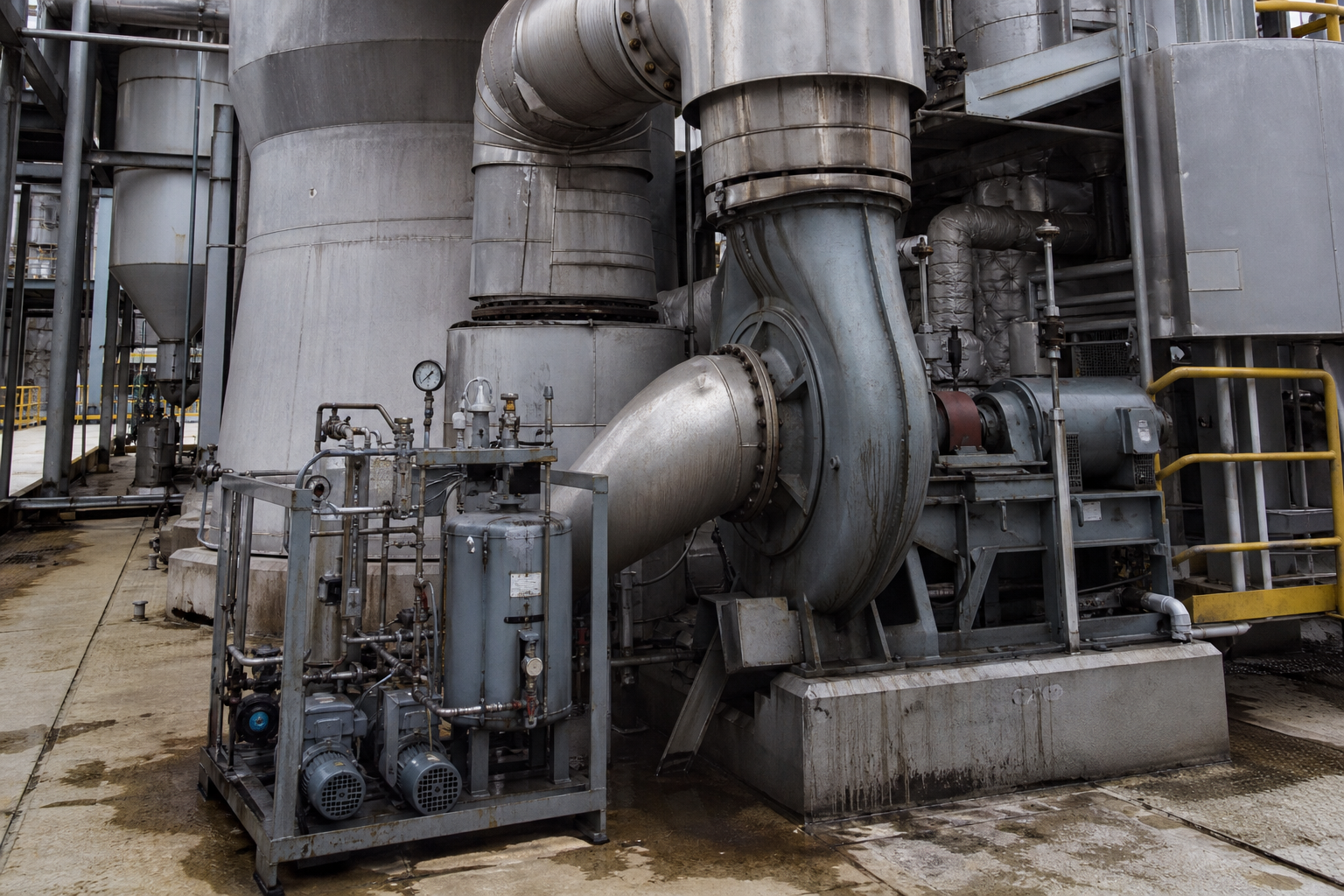
Mechanical vapor recompression makes the energy budget acceptable: secondary vapor boiled from the brine is compressed and returned as heating steam, so after start-up the plant runs on compressor electricity rather than fresh steam — the difference between profitable recovery and mere compliance.
The Urban Mine Flowsheet, Step by Step
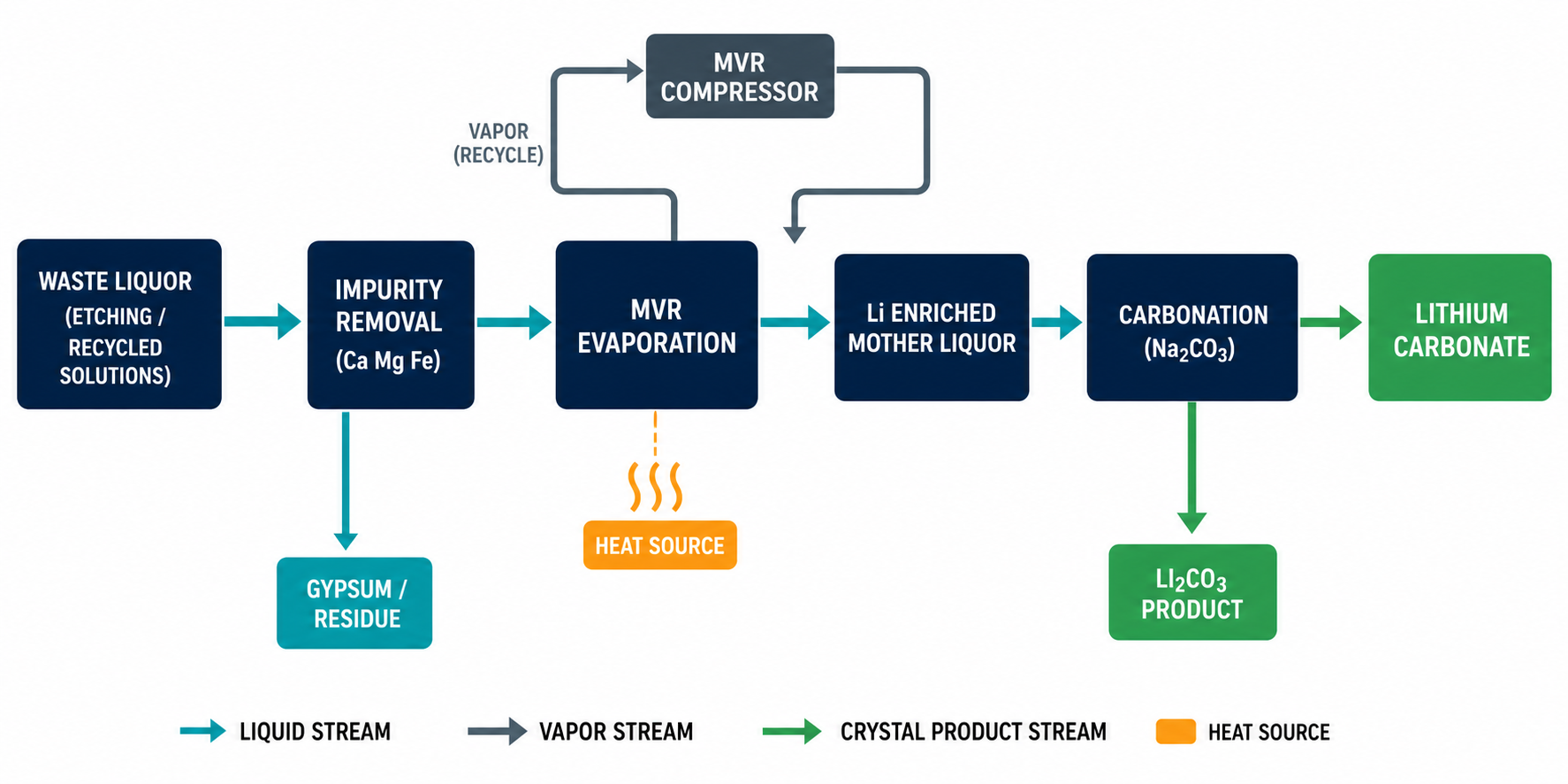
The steps below follow that published vendor case (external industry reference): a new-materials factory’s salty waste liquid — mainly ordinary industrial salt (sodium chloride) with a little lithium and traces of aluminum, calcium, and other elements — run continuously, 24 hours a day, 7 days a week:
Step 1: Feed Preheating
Incoming liquid arrives at no lower than about 25 °C. Before the heater it recovers waste heat from condensate and hot mother liquor in feed preheaters; every degree gained is compressor power saved downstream.
Step 2: Forced-Circulation Evaporation
The solution circulates at high velocity through heating tubes and evaporator body, repeatedly heated and re-flashed. High tube velocity is the anti-scaling weapon: with calcium, magnesium, and organics present, the fast liquor keeps crystals and scale nuclei suspended instead of sticking to heat-transfer surfaces. Water leaves as vapor; salt and lithium concentrate in the liquor.
Step 3: Continuous Centrifugal Salt Discharge
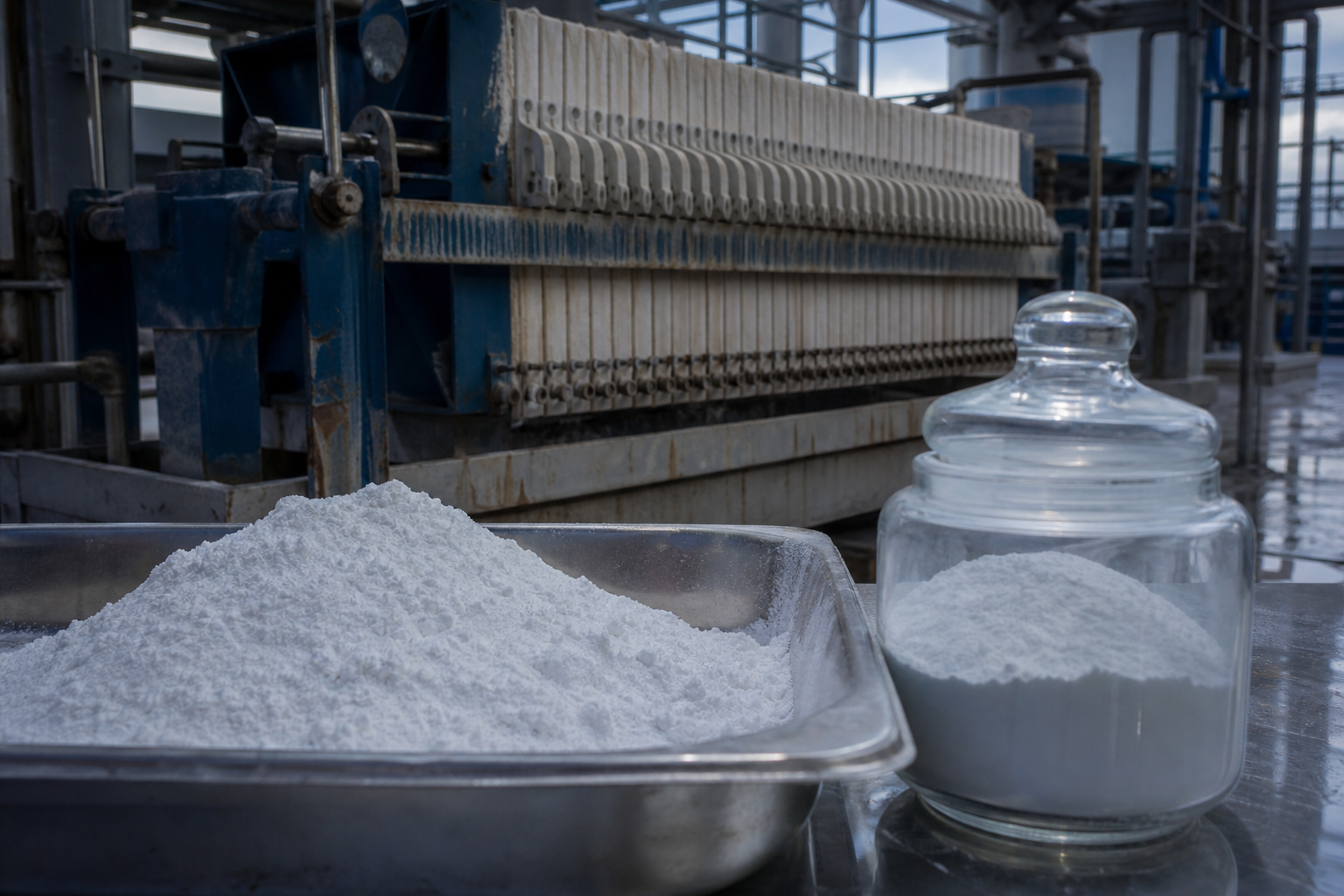
When salt crystals reach target size, slurry discharges automatically into a continuous centrifuge spinning wet salt into dry solid. Dewatered NaCl leaves at very low moisture — sellable as by-product or safe to landfill. Most mother liquor returns to the evaporator; a small metered portion is purged against impurity build-up, as in any well-run crystallization circuit.
Step 4: Lithium Enrichment to Target
Controlling evaporation rate lifts mother-liquor lithium from a few grams per liter to over ten — the level downstream extraction requires. The purge rate is the balance point: too little and impurities (calcium, magnesium, aluminum, organics) climb with the lithium; too much and lithium leaves in the purge. Operation between those limits is the plant’s core control discipline.
Operating Results from the Reference Project
Figures are vendor-reported results for that single external project — indicative reference, not an EvapCryst delivery record or guarantee for other feeds and scales.
| Result area | Achieved performance |
|---|---|
| Evaporation capacity | Several tons of water per hour, fully matching the factory’s daily waste discharge rate |
| Salt quality | Sodium chloride crystals at very low moisture, sellable as by-product or safely landfillable |
| Lithium recovery | Mother liquor reaches target lithium concentration for downstream precipitation or extraction to lithium carbonate |
| Anti-fouling performance | Despite calcium/magnesium and organics, heating tubes saw almost no serious scaling; cleaning intervals greatly extended |
| Environmental benefit | More than 80% of the salty wastewater previously discharged is eliminated |
| Availability | Continuous 24/7 operation since startup with stable performance |
Scaling Up: The 110 t/h Lithium Mother Liquor Case
When the same duty is embedded in a mainstream lithium salt production line, the numbers grow by an order of magnitude. In a published project for a new-energy client (external industry reference), the mother liquor from lithium deposition — a mixture of lithium sulfate and sodium sulfate solutions — required concentration before the lithium deposition step could run efficiently. That system runs at a reported 110 t/h evaporation capacity:
| Item | Value |
|---|---|
| Project | Lithium mother liquid concentration |
| Location | China |
| Evaporator capacity | 110 t/h |
| Process | Double-effect forced circulation MVR |
| Raw material liquid | Lithium sulfate and sodium sulfate mixture solution |
| Product | Sodium sulfate (washed, dried, packaged) |
| Industry | New energy |
| Design standard | GB |
Two choices deserve attention. First, forced circulation was selected to prevent blockage: sulfate mother liquors crystallize aggressively, and high velocity keeps tubes clear. Second, a double-effect arrangement was chosen over single-effect MVR — balancing investment against energy at this scale. Splitting duty across two effects lets each run at lower vapor load with a smaller compressor, reducing capital and electricity draw; the trade-off is extra heat-transfer area and more complex control. The train also integrates salt washing, drying, and packaging, so the by-product leaves as bagged product rather than wet cake.
From Enriched Mother Liquor to Lithium Carbonate
Evaporation does not itself produce lithium chemicals — it produces the concentration that makes recovery economical. Downstream, two routes dominate: precipitation doses sodium or potassium carbonate into hot concentrated liquor, dropping lithium carbonate as crystalline solid; solvent extraction selectively pulls lithium where co-salts interfere. Either way, evaporation-stage purge discipline and impurity control set the carbonate’s purity ceiling — battery-grade demands magnesium, calcium, and sodium held in check through the whole circuit. Our lithium carbonate evaporation and crystallization and lithium sulfate concentration pages follow the chemistry further.
Process Modules and Selection Basis
| Process Module | Candidate Equipment | Selection Basis |
|---|---|---|
| Feed preheating | Exchangers on condensate and hot mother liquor | Waste-heat recovery; compressor power saving |
| Evaporation-concentration | Forced-circulation MVR body (single or double effect) | Scaling-prone, crystallizing liquor; scale versus energy trade |
| Salt discharge | Continuous centrifuge, optional washing-drying-packaging | Salt by-product destination and moisture spec |
| Mother-liquor control | Density/lithium assay instrumentation, metered purge | Lithium target versus impurity climb |
| Downstream recovery | Carbonate precipitation or solvent extraction | Co-salt interference and product purity ceiling |
Note: configurations are indicative; selection depends on actual feed, salt system, corrosion review, and capacity.
Design Considerations for Lithium Waste Liquor Plants
Hardness and organic interference. Trace calcium and magnesium plus COD in the 5,000–10,000 mg/L band define the nuisance of battery-plant waste salt liquors. Forced circulation with small temperature approaches handles them, but feed softening or pH conditioning may still pay in longer campaigns.
Lithium losses to the salt stream.
Lithium inevitably co-crystallizes with the bulk salt and leaves in the purge. Salt washing with recycled condensate recovers entrained mother liquor and returns that lithium; purge liquor is often itself recycled or re-processed. Lithium accounting across salt, purge, and product streams should be a monitoring KPI, not an afterthought.
Material selection. Chloride and sulfate brines at boiling temperature corrode differently: chloride circuits drive toward duplex and higher alloys; sulfate circuits are more forgiving but wash and drying sections still need attention.
Continuous duty. These plants earn their keep at 24/7 availability: compressor redundancy, online density and lithium assay instrumentation, and automated purge control separate a demonstration unit from a production asset.
Where This Fits in a Battery-Material Water Strategy
Lithium recovery from waste liquid is one block in the battery materials water balance. Spent lithium-ion battery recycling generates its own leachate streams — see lithium battery recycling wastewater and salt recovery — and the full vertical is framed on the Battery Materials and Hydrometallurgy crystallization program page. For another case of a NaCl-dominant waste brine turned into separated salts and reusable water, read about fly ash wash wastewater evaporation and crystallization.
When This Route May Not Fit
Evaporative concentration assumes lithium is worth the energy it costs to liberate, and several situations break that assumption. Very dilute rinse waters — lithium at tens of milligrams per liter in large volumes — lose more value to heating water than the recovered lithium returns; adsorption or selective membranes fit that regime better. Streams whose lithium is locked in refractory chemistry rather than riding on bulk salt need a chemical conversion step first, not simply a bigger evaporator. Where lithium prices fall and salt by-products have no local outlet, the revenue side of the case collapses and compliance-only treatment wins instead. And where hardness and organics are extreme, fouling rates can consume the availability margin that 24/7 recovery economics assume.
What Must Be Verified
No independently verifiable external data beyond the vendor cases above is embedded here, so validation before any capital commitment must cover: a full feed characterization — salt system (NaCl versus sulfate), lithium grade and swing, hardness, aluminum, and COD — across representative production campaigns, not single grab samples; a lithium mass balance defining expected losses to salt, purge, and product, with washing and purge-recycle countermeasures sized from it; pilot or bench concentration runs on the real liquor to fix actual scaling rates and achievable cleaning intervals; the downstream recovery route confirmed (precipitation versus extraction) against measured co-salt interference at the target concentration; and a materials review matched to the chloride or sulfate circuit actually present on site. Each input pins a flowsheet number.
Required inputs for screening: feed analysis (salt system, lithium grade, hardness, organics), volume, and the intended downstream recovery route — enough to outline the concentration circuit.
Frequently Asked Questions
Can lithium really be recovered from industrial waste salt water?
Yes. In the published vendor case (external reference, not an EvapCryst project), waste liquid at 15–25% sodium chloride carrying a few grams per liter of lithium was concentrated by forced-circulation evaporation to over 10 g/L lithium, with the NaCl crystallized out as low-moisture solid and over 80% of the wastewater eliminated — vendor-reported figures. The enriched mother liquor feeds precipitation or extraction to produce lithium carbonate.
Why forced circulation rather than falling film for lithium brines?
These liquors crystallize as they concentrate and carry scaling-prone calcium, magnesium and organics. Forced circulation keeps high velocity through the heater and boiling zone, so crystals stay suspended and tubes stay clean — those external reference plants report almost no serious scaling and greatly extended cleaning intervals. Falling film suits clean, heat-sensitive, non-crystallizing duties instead.
What lithium concentration is needed before lithium deposition?
The deposition process requires the lithium ion concentration in the mother liquor to be raised before lithium can be deposited efficiently. In the published reference case, evaporation lifted lithium from a few grams per liter to over ten grams per liter, meeting the downstream requirement.
What happens to the sodium chloride recovered?
It is centrifuged continuously to very low moisture and can be sold as a by-product or safely landfilled. In the 110 t/h sulfate case, the sodium sulfate by-product is washed, dried and packaged directly in the train, leaving as bagged product.
Is a single-effect or double-effect MVR system better?
It depends on scale. At several tons per hour, a single-effect MVR is usually the simplest economic choice. At 110 t/h, the published project chose a double-effect forced-circulation MVR arrangement, balancing investment against energy consumption while also preventing blockage — each effect runs at lower vapor load with a smaller compressor.