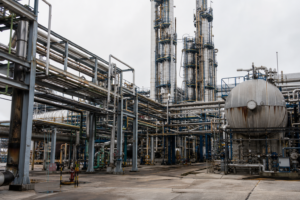
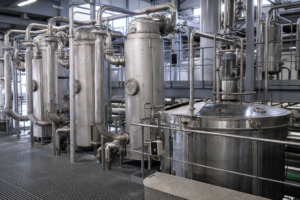
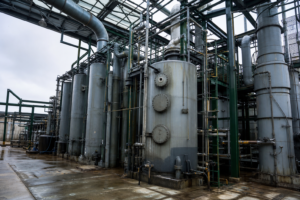
Lyocell fiber is manufactured by directly dissolving cellulose in N-methylmorpholine N-oxide (NMMO) and spinning the solution into a water bath — a closed-loop process whose commercial viability rests entirely on one utility system: solvent recovery. Every kilogram of fiber leaves the spinning line carrying NMMO into wash water, and that dilute wash liquor must be re-concentrated, re-purified and returned to dissolving, typically to a working concentration in the high-seventies percent range, fast enough and cleanly enough to keep the loop closed. Modern plants recover more than 99% of the solvent — published process literature, external industry references rather than EvapCryst project records, reports figures up to 99.7%, indicative rather than guaranteed — and the evaporation and crystallization system is what makes those numbers possible. The problem combines enormous evaporation duty (each ton of NMMO recovered means evaporating several tons of water), a thermally fragile solvent, and a purification train that must strip degradation products before they poison the loop.
Why Solvent Recovery Is the Lyocell Business Model
NMMO is an expensive, high-boiling, water-miscible amine oxide, and it was the discovery of a workable recovery loop — not the solvent — that made Lyocell industrial. The process positions itself against viscose on environmental grounds: no carbon disulfide, and a solvent that recycles. Lose recovery efficiency and the economics invert immediately, since fresh make-up becomes a dominant variable cost; published life-of-plant figures show well-run recovery cutting make-up to a small fraction of circulating inventory. The same loop is the plant’s permit: NMMO and its degradation products in effluent are tightly limited, so recovery is simultaneously profit center and compliance boundary.
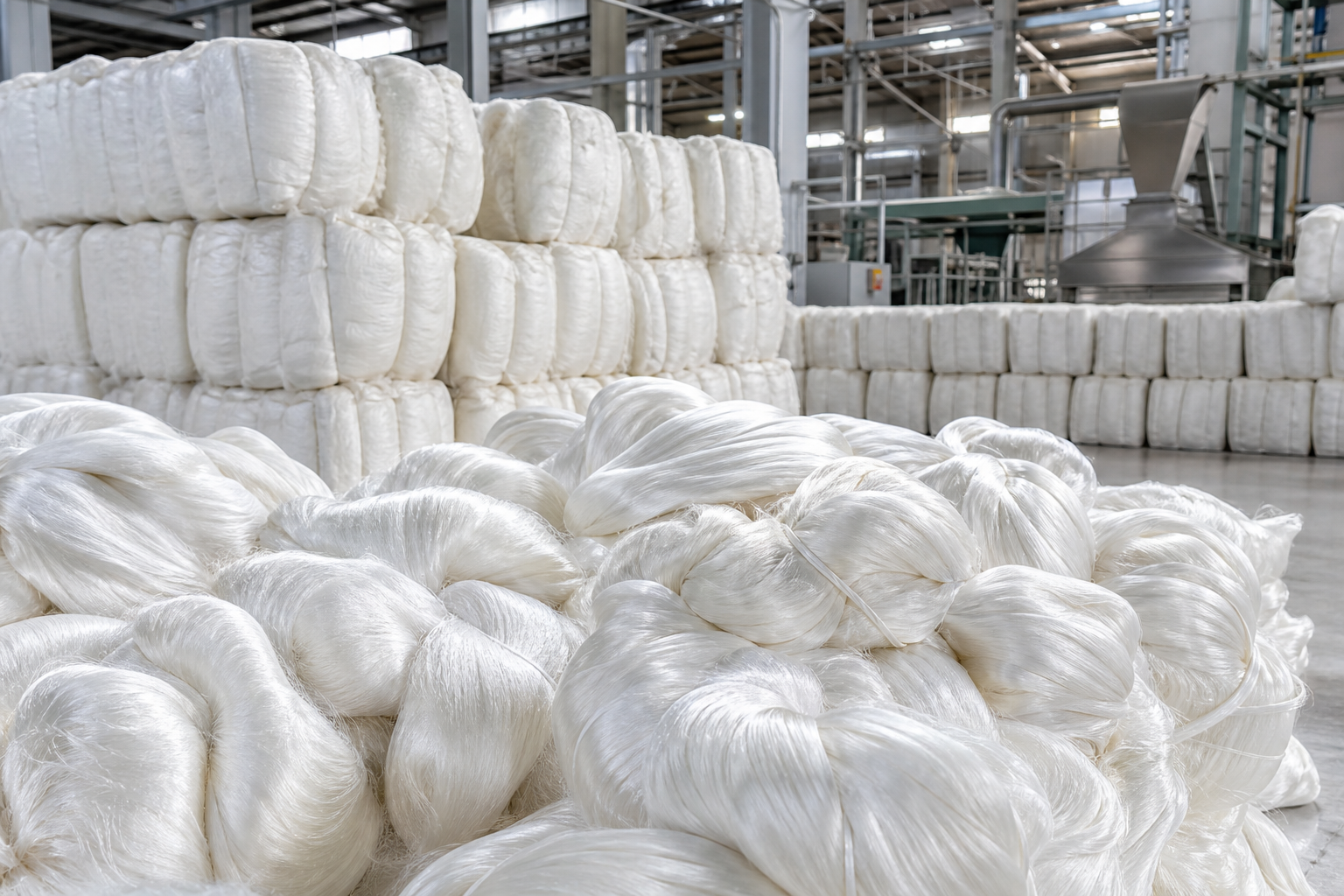
The scale surprises process engineers new to the field: spinning and washing pull large volumes of water, and the wash liquor arrives at recovery in an illustrative envelope of single-digit to low-double-digit percent NMMO. Concentrating back to dissolving strength means evaporating a multiple of the solvent mass as water, continuously, at a plant that runs around the clock. This is the same duty class as the largest pulp-and-paper evaporation trains — Lyocell recovery descends from black-liquor evaporator technology, and suppliers with large falling-film references (multi-hundred-tonnes-per-hour classes exist in that industry) carry directly relevant experience.
Structure of the Recovery Loop
A complete NMMO recovery and recycling system has five blocks in sequence — anion exchange in the purification block is the standard guard against accumulating chromophores, and crystallization of purified NMMO hydrate provides the final impurity-rejection step where the loop needs the highest purity:
| Process module | Equipment candidates | Selection basis | Indicative envelope |
|---|---|---|---|
| Collection & equalization | Spinning-liquor and wash-water tanks | Consistent composition to evaporation | Single-digit to low-double-digit % NMMO (illustrative) |
| Pre-treatment & purification | Filtration, adsorption, anion exchange | Strip fibers, colloids, chromophores | Resin life set by color load |
| Bulk evaporation | Multi-effect or MVR falling-film train | Heat-sensitive liquor: vacuum, short residence | Water removal a multiple of solvent mass |
| Finishing & crystallization | Evaporative crystallization of NMMO hydrate | Selective impurity-rejection ceiling | Mother-liquor recycle managed |
| Make-up & return | Blend tank with metered fresh NMMO | Close the loop against losses | Small fresh make-up fraction |
Configuration, materials, and operating ranges depend on the actual wash liquor, thermal-stability limits, corrosion review, utilities, and project capacity.
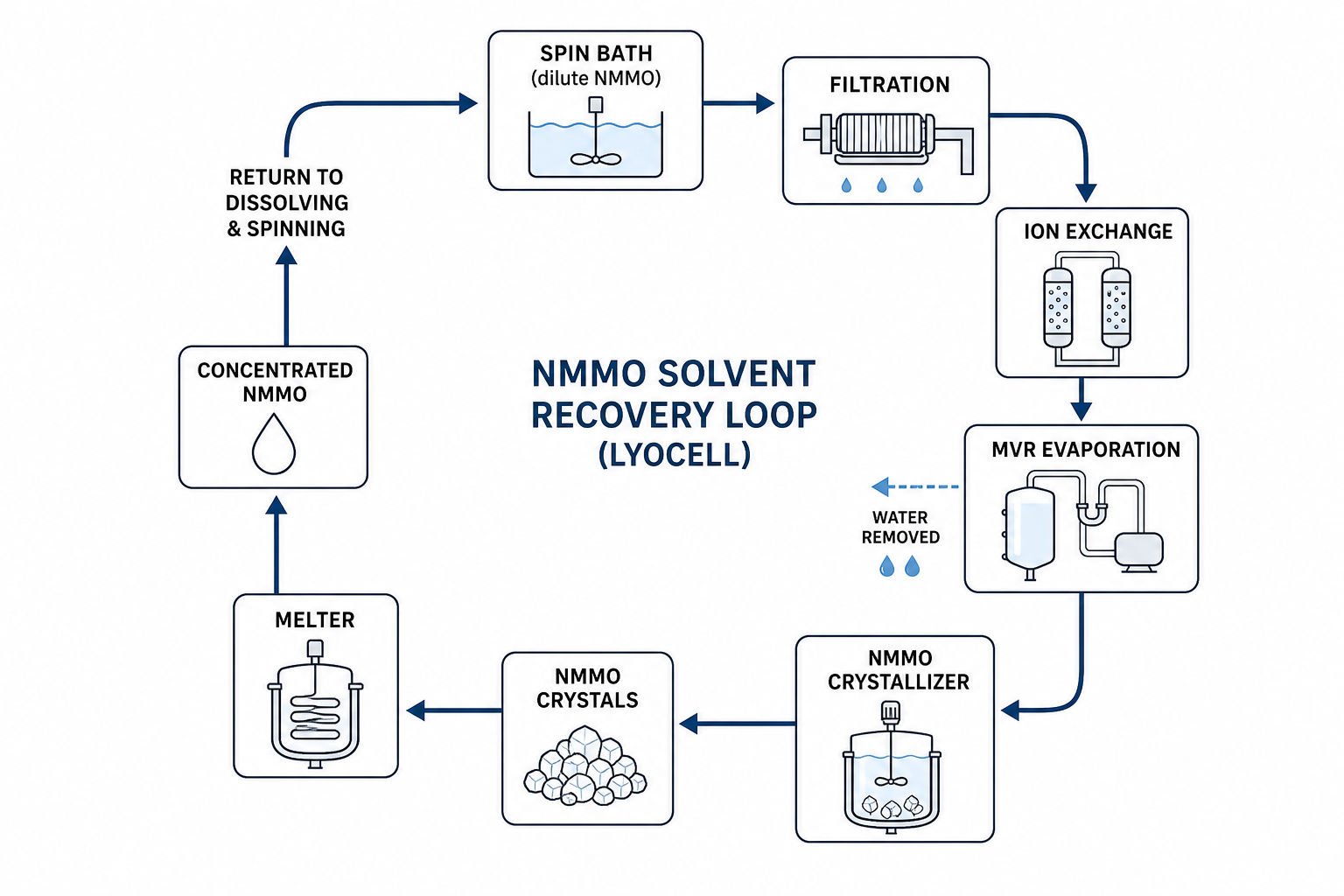
Why crystallization at the end of a recovery loop? Because evaporation alone concentrates everything non-volatile, while crystallization is selective: NMMO crystallizes as a hydrate and leaves thermally stable impurities — inorganic salts, degradation residues — in the mother liquor. Plants fighting stubborn impurity build-up use a crystallization side-loop as a purge-and-polish function, trading a small recycle loss for a hard ceiling on contaminant concentration.
The Thermal Constraint: NMMO Is Heat-Sensitive
The single most important constraint in the loop is that NMMO is thermally unstable at evaporation temperatures. Held hot it degrades — to dimethylamine, morpholine-type fragments and colored bodies — and the degradation is autocatalytic: colored by-products accelerate further degradation and have historically been implicated in the runaway incidents that shaped the industry’s safety standards. Darkening anywhere in the loop is treated by experienced operators as a chemical alarm, not a cosmetic issue.
The consequences are strict. Film temperatures stay low through vacuum operation and short-residence falling-film evaporators rather than pooled boiling. Heat-transfer surfaces must wet uniformly — dry patches run hot and degrade the liquor drying on them. Hot-zone hold-up is minimized, and the control system dumps or dilutes on excursions rather than riding through. Every one is a falling-film discipline, which is why evaporator selection matters more here than in almost any other industry.
Evaporator Technology Selection
| Option | Role in NMMO Service | Strengths | Cautions |
|---|---|---|---|
| Multi-effect falling film (tube or plate) | Workhorse for bulk water removal from dilute wash liquor | Low temperature per effect; proven at very large scale in fiber/pulp duty; steam-efficient | Effect count beyond four raises capital faster than it cuts operating cost |
| MVR mechanical vapor recompression | Energy-optimized concentration where power is favorable | Dramatically cuts live steam demand; steady low-temperature profile suits heat-sensitive liquor | Compressor wetted-path materials and droplet control must respect chloride/amine chemistry |
| TVR thermal recompression | Mid-size plants with suitable steam pressure | Simpler than MVR; fewer rotating machines | Limited temperature lift; larger cooling-water demand |
| Evaporative crystallization polish | Selective impurity rejection; NMMO hydrate production | Hard ceiling on non-volatile impurity build-up | Additional block; mother-liquor recycle must be managed |
Plate-type falling film deserves special mention where plot space or liquor viscosity is a constraint: plate evaporators pack large area into small volume and handle viscosity rise well, and plate falling-film trains built for large evaporative duties are commercially mature. The choice among tube, plate and hybrid layouts properly belongs to a vendor with heat-sensitive-solvent references and pilot data on the actual wash liquor.
Purification: Keeping the Loop Clean
Evaporation moves water; it does not remove what the water carries or what the heat creates. The purification train does three jobs: physical cleaning (filters, hydrocyclones) takes out fiber fines and particulates that would foul evaporator surfaces; decolorization (activated carbon or other adsorbents) pulls colored degradation products before they concentrate; ion exchange (typically anion resin) removes the chromophoric and ionic species that accumulate cycle after cycle. Resin and adsorbent management is a real cost and skill — regeneration chemistry, resin life and breakthrough monitoring decide whether the solvent stays water-white.
The corollary: purification and evaporation must be engineered together. The evaporator sees what purification lets through; purification sees the degradation the evaporator’s temperature profile failed to prevent. Splitting the blocks between two vendors is how plants end up with neither guaranteeing solvent quality.
Materials and the Corrosion Question
NMMO chemistry is not benign to metals, and the loop concentrates chloride and acidic degradation species at exactly the hot points of the evaporator. Wetted-path materials are therefore selected section by section against temperature and accumulating species — the same chloride-versus-alloy discipline used across evaporation and crystallization duty generally, which we cover in detail in our salt and brine corrosion and material selection solution. Condensate from the evaporators also deserves attention: it carries traces of volatile amines and must be polished or re-used where the process tolerates it, rather than discharged untreated.
Energy and Economics
The recovery loop is among the largest energy consumers in a Lyocell plant, so efficiency shows directly in fiber cost. The levers, in descending leverage: scheme selection (multi-effect versus MVR versus hybrid, decided by steam-versus-power economics); effect count and temperature driving force (more effects cut steam but raise capital, diminishing past four); distribution quality and fouling management, which defend the design coefficient over years; and heat integration with the wash water itself. A competent basis also states availability — recovery capacity below spinning capacity idles the plant, so redundancy philosophy is an economic decision.
What a Delivery Program Covers
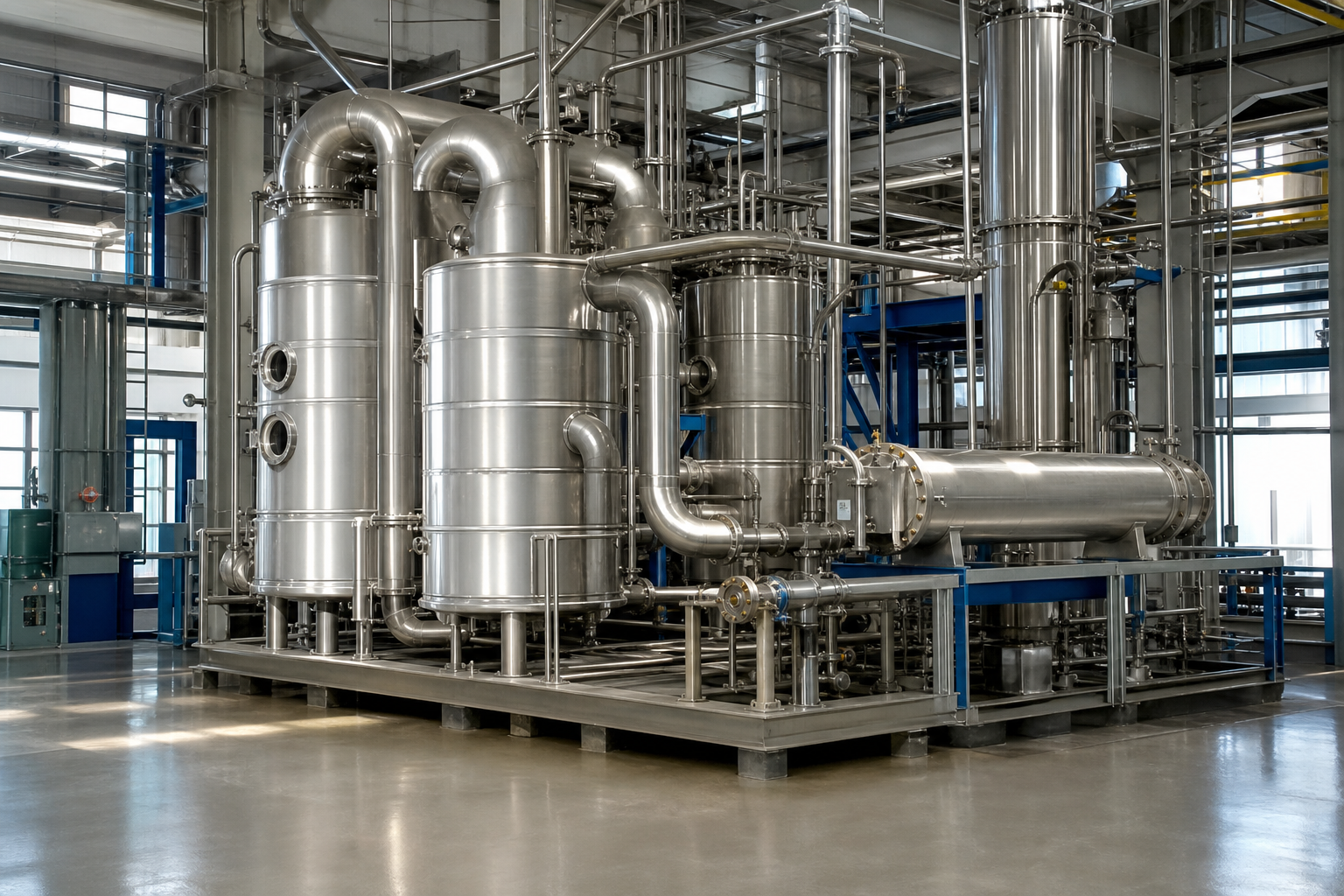
A solvent-recovery project spans process and utility engineering: wash-liquor characterization; purification train sizing; evaporation train design (tube or plate falling-film) with vacuum system and, where selected, MVR compression; the crystallization polish loop if impurity ceilings require it; materials engineering for amine/chloride chemistry; and automation that treats temperature excursion as a safety event. Vendors with heavy-duty evaporation references in pulp, paper and fiber industries — where falling-film trains of several hundred tonnes per hour of water removal are operating — bring the scale experience this duty demands; the same low-temperature evaporation discipline applied to another heat-sensitive biomass-derived liquor is described in our xylose concentration solution. Our falling-film evaporation, MVR and solvent recovery pages detail the underlying technologies, and the pulp & paper industry page covers the adjacent evaporator duty from which this technology descends.
When This Route May Not Fit
This recovery architecture belongs to continuous Lyocell production at industrial scale. Pilot lines and small campaign facilities recover solvent batchwise with far less capital. Plants without the operating discipline for a thermally fragile, autocatalytically degrading solvent should not take on the safety burden that vacuum falling-film service demands. Sites with neither competitive electricity for MVR nor steam infrastructure for multi-effect have no economic evaporator scheme to build on. And where effluent limits on NMMO are loose and solvent prices are low, a simpler partial-recovery loop may clear the permit without closing it.
What Must Be Verified
Verification starts with the wash liquor itself: NMMO concentration, chloride, degradation products, color, and fiber-fines content across batches, since every module is sized from that envelope. Second, thermal-stability screening of the actual liquor — calorimetry to set the safe film-temperature window — because the industry’s runaway history makes this non-negotiable. Third, resin and adsorbent screening with regeneration chemistry on the real stream. Fourth, corrosion testing of candidate wetted materials in amine-chloride service at temperature. Fifth, the vacuum system’s cooling-water basis, and finally the availability-versus-redundancy decision priced against spinning capacity.
FAQ
What recovery rate of NMMO can a modern Lyocell plant achieve?
Well-operated closed loops recover more than 99% of the circulating solvent; published process literature reports rates up to about 99.7%. The balance is lost mainly via effluent traces, purge streams and product carry-over, and each of those is a design target of the recovery system.
Why must NMMO be evaporated under vacuum at low temperature?
NMMO is thermally unstable at evaporation temperatures: held hot it degrades to amines and colored bodies, the degradation can accelerate itself, and severe overheating has caused runaway incidents historically. Vacuum falling-film evaporation with short residence time keeps film temperatures low enough to avoid triggering that chemistry.
Why does NMMO solvent turn brown, and what should a plant do?
Color develops from thermal and oxidative degradation products, and their appearance anywhere in the loop — around ion exchange, after concentration — signals that the solvent chemistry is drifting. The response is corrective: locate the hot spot or contamination source, increase decolorization/ion-exchange capacity, and tighten temperature control before the color compounds into fiber-quality problems.
Is crystallization used in NMMO recovery?
Yes, selectively. Because NMMO forms a crystalline hydrate while many impurities stay in the mother liquor, an evaporative crystallization side-loop acts as a final purification and purge function, capping the concentration of non-volatile degradation products and salts that evaporation alone would merely concentrate.
MVR or multi-effect evaporation for the wash liquor?
Both are proven. Multi-effect falling film is the scale workhorse with the lowest technical risk; MVR cuts live-steam demand sharply where electricity is favorable and its low-temperature profile suits heat-sensitive liquor. The right answer is site-specific — steam vs power pricing, cooling water, and plot plan usually decide it.
To screen this route, share the wash-liquor analysis (NMMO, chloride, degradation products, color), the water load, and the target recovery rate — enough for an initial loop-configuration assessment.