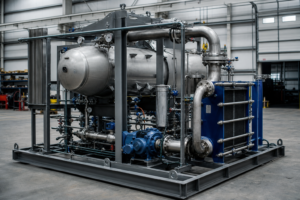
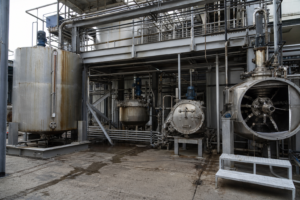
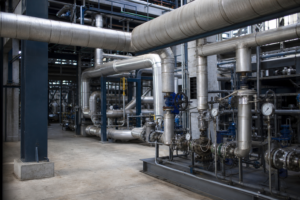
The end stage of a zero liquid discharge (ZLD) train is where the project’s economics are decided: everything upstream — pretreatment, membrane concentration, brine concentration — only defers the cost of the last drop of water, and that cost is set by how you handle mother liquor and crystallize salt. The modern answer is separation crystallization rather than simple evaporation to dryness. Mixed salt generally leaves the plant as fee-charged hazardous waste, while separated NaCl meeting industrial salt standard (GB/T 5462) and Na2SO4 sold as by-product thenardite can be revenue instead of liability. The engineering price of that shift is disciplined mother-liquor management — the impurity-rich liquor that accumulates as concentration proceeds — and correctly chosen crystallizer technology. This page owns the end-stage position: where drying and salt crystallization sit in the ZLD chain, how mixed salt evolves into separated salt, and how salt exits through compliance; mother-liquor management principles are on our mother liquor treatment page and dryer-technology selection on our mother liquor drying solution page.
What ZLD Actually Requires
Zero liquid discharge is a goal-state definition, not a single technology: no liquid waste leaves the plant, because all wastewater is either treated for reuse or converted to solids. The typical process architecture reflects that definition as a cascade. Pretreatment conditions the water and removes scaling and corrosive species. Reverse osmosis or other membrane concentration recovers the majority of the water at low energy cost. A brine concentrator — falling-film or mechanical vapor compression — concentrates the RO reject further, reducing volume by more than 90% and deferring the load on the crystallizer. The brine crystallizer performs final solidification, producing a disposable or saleable solid. Solid handling and disposal close the train.
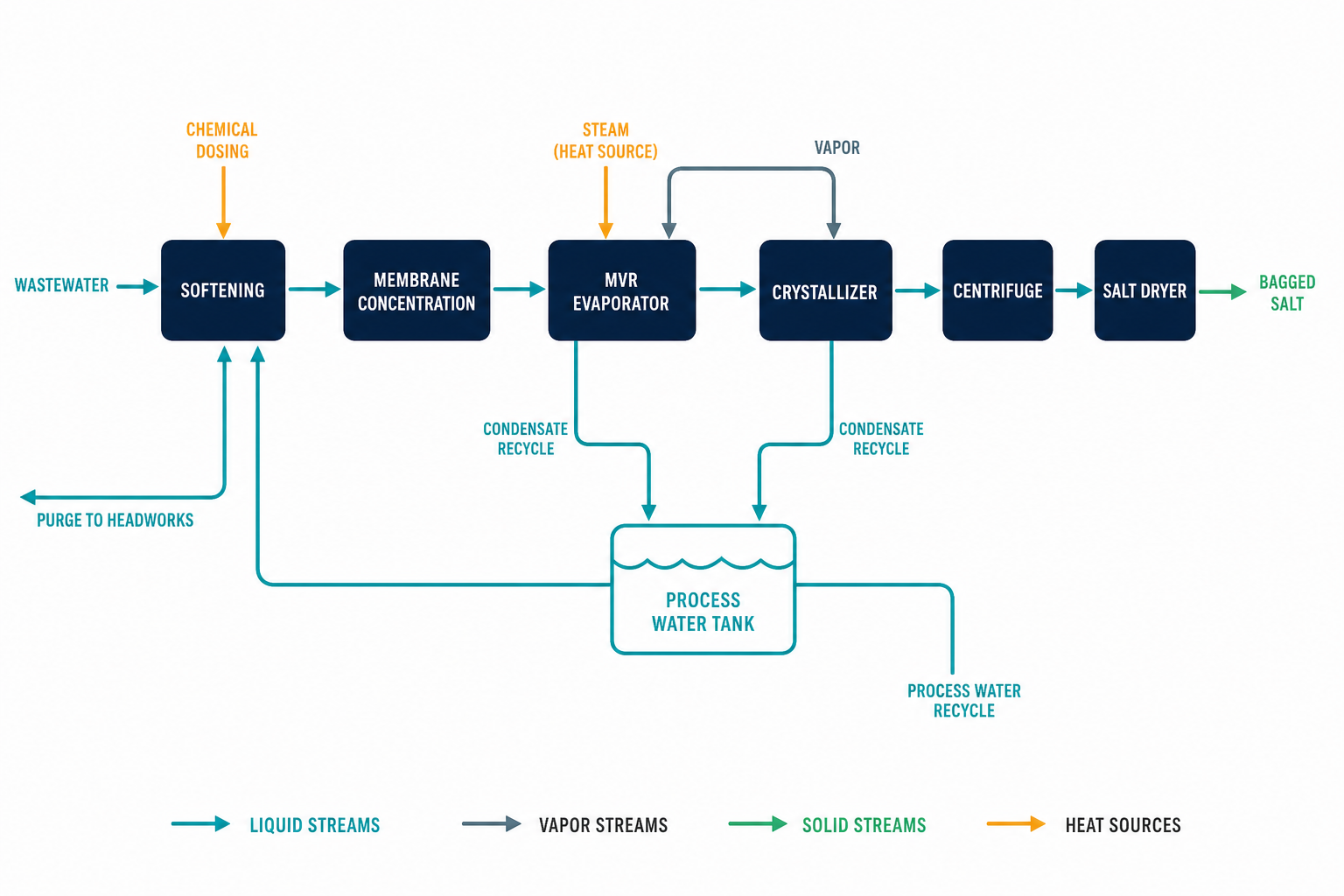
Three forces drive plants into this architecture: tightening discharge regulation, water scarcity (the reuse value of the distillate), and hazardous-waste disposal economics — the gap between what liquid waste costs to haul versus what a solid or a saleable salt costs. ZLD is capital-intensive, and its payback is the sum of water reuse value, avoided disposal fees, and by-product salt revenue, each weighted by project scale and water chemistry.
The Evolution: From Mixed Salt to Separated Salt
Early ZLD installations evaporated wastewater to dryness in single- or multi-effect evaporators and produced mixed salt (so-called “waste salt”). As policy tightened and resource-recovery expectations rose, the industry moved to pre-concentration plus separation crystallization, targeting industrial-grade NaCl and Na2SO4 as distinct products. This is not a cosmetic upgrade: mixed salt is typically disposed of at hazardous-waste rates and struggles to find any outlet at all, while properly separated sodium chloride can meet the industrial salt standard and sell, and sodium sulfate ships as by-product thenardite. Separation directly rewrites the last line of the project’s cost sheet.
Two separation routes dominate. Temperature-gradient separation exploits the differing solubility behavior of the two salts: Na2SO4 solubility changes sharply with temperature (so it crystallizes first on controlled cooling), while NaCl solubility is nearly flat across temperature. Staged temperature control therefore fractionates the salts. Chemical-dosing separation uses selective precipitation agents to pick one salt out of solution. The choice between them is a water-chemistry and opex question — temperature routes need controllable cooling and heating stages, dosing routes add reagent cost and further separation steps.
Three End-Stage Technologies and Where Each Fits
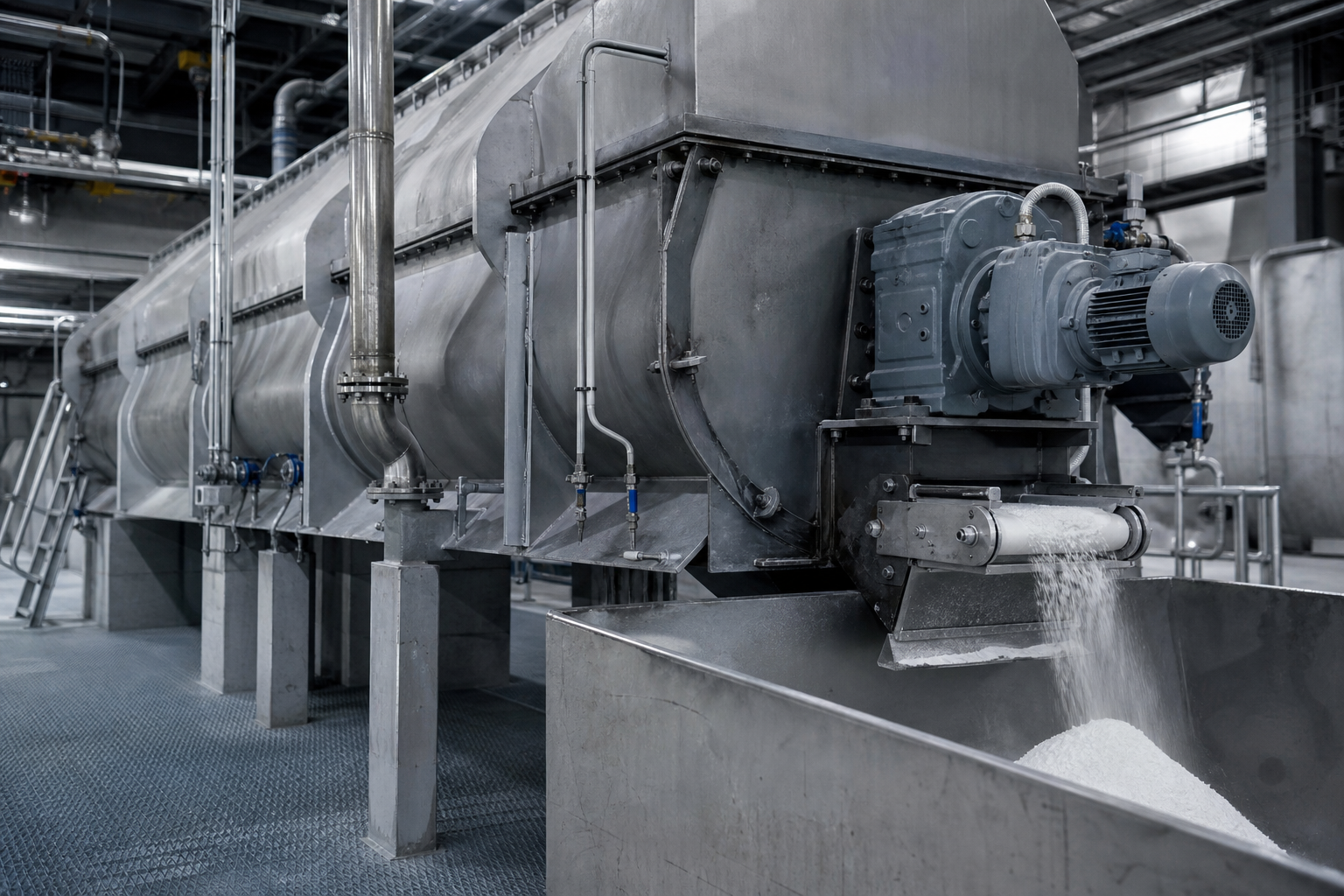
The final evaporation-crystallization duty is contested by three technologies, and the selection logic is a triangle: fouling tendency of the water, value of the salt components, and disposal cost of the fallback.
| Technology | Working principle | Best suited for | Key constraint |
|---|---|---|---|
| MVR circulation evaporation | Mechanical recompression of secondary vapor as the heating source; electricity-driven, roughly 15–30 kWh per ton of water evaporated (industry-published range on low-BPE feeds; 30–50 on high-BPE brines, varying with boiling point elevation) | Large flows at moderate-to-high salt concentration; ZLD end stages where electricity is available | Compressor capital and maintenance; performance degrades at very high boiling point elevation |
| Seed-slurry circulation evaporation | Crystal seeds are suspended in the liquor so supersaturation releases on seed surfaces instead of the heat-transfer surface — fouling is deliberately routed out with the crystals | High fouling-tendency waters | Seed inventory management; slightly more complex solids circuit |
| Mixed-salt crystallization | Evaporate all salts to dryness as a mixed solid; simplest flowsheet and lowest investment | Complex salt matrices with no resource-recovery value | Mixed salt outlet and disposal cost — usually the hard constraint |
The decision rule falls out of the triangle: if the salts have recovery value, separate them; if the water fouls aggressively, use seed slurry; if simplicity is the priority and the salt has no value, crystallize mixed and negotiate disposal. Note that within the concentration train itself, falling-film evaporation suits low-viscosity clear liquors for pre-concentration, while MVR forced circulation suits the high-salt, high-viscosity end duties.
Mother Liquor: The Last Gate of a Separation Plant
Mother liquor is not a design error — it is the inevitable consequence of evaporation: as water is removed, salts and impurities concentrate in the circulating liquor and climb with every pass, until impurity enrichment raises boiling point elevation and decays heat-transfer capacity while rising viscosity drives fouling and foaming. Why mother liquor forms and how the recycle-versus-purge balance is struck are treated in full on our mother liquor treatment page; here we stay on what the end stage does with it.
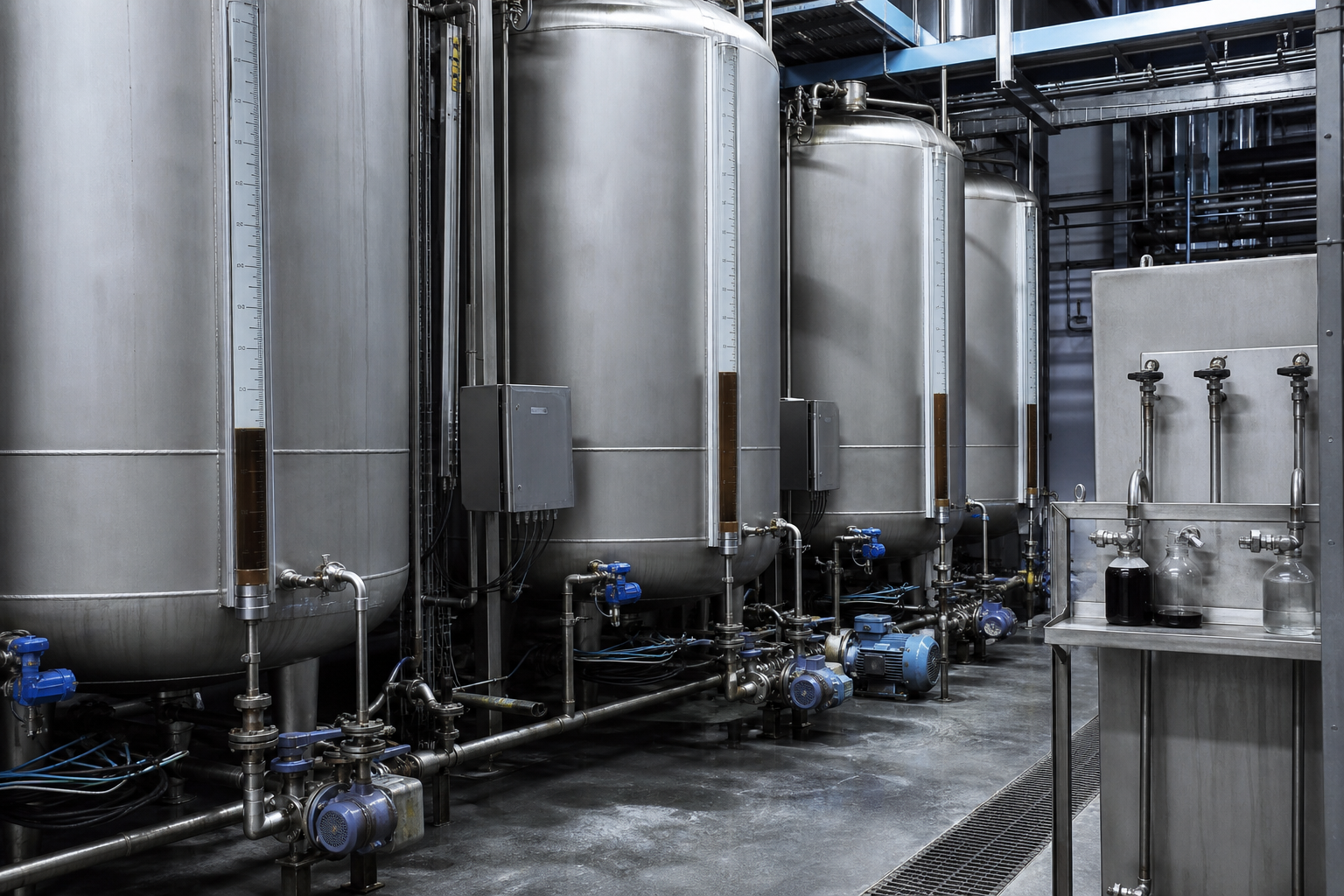
Four disposal strategies exist, and real plants usually combine them.
| Strategy | Mechanism | Trade-off |
|---|---|---|
| Controlled purge and refresh | Bleed a small fraction of mother liquor continuously or on schedule; top up with fresh feed to hold impurity concentration | Simplest and most common; the purge stream still needs a destination |
| Recycle to front of train | Re-inject mother liquor upstream and re-concentrate | Defers the problem; impurities eventually accumulate without a purge |
| Dedicated drying unit | Evaporate the mother liquor to dry solids in a separate dryer | Closes the balance sheet; adds a unit operation sized for the residual load |
| Salt recovery then residue solidification | Crystallize remaining salt, then solidify the final residue | Maximum recovery; most complex flowsheet |
Managing mother liquor is a shared responsibility that should be written into contracts: the designer must build in operating elasticity — buffer volume, purge connections, instruments to track liquor density, viscosity, and impurity-ion trends — and the operator must actually monitor concentrations and execute purges on schedule. The end of a separation train is where high-COD, high-impurity liquor piles up; a dedicated drying step or recycle-to-incineration is the final gate of a salt-separation system.
Choosing the Dryer for Mother Liquor
Three dryer families serve the ZLD end stage — thin-film (scratched-surface) evaporator-dryers for viscous, fouling residual streams; paddle dryers for pastes and sticky salts; spray dryers for large volumes of pumpable, low-solids liquor — selected by feed rheology and solids character. The full five-family comparison table, indirect-versus-direct selection rules and specification/acceptance practice are maintained once on our mother liquor drying solution page; the engineering rule from it: match the dryer to the mother liquor’s viscosity and solids trajectory, not to its name.
Controlling Salt Crystallization Quality
Salt is only revenue if it meets specification, and specification is controlled by crystallization discipline. The master variable is supersaturation: it must be held inside the metastable zone, because excursion into labile conditions triggers nucleation storms and fines that ruin particle size distribution. Crystal suspension density and residence time then set growth conditions and determine the size distribution of the product. Downstream, the salt slurry is dewatered by centrifuge or pusher centrifuge to a wet cake and dried to the target moisture.
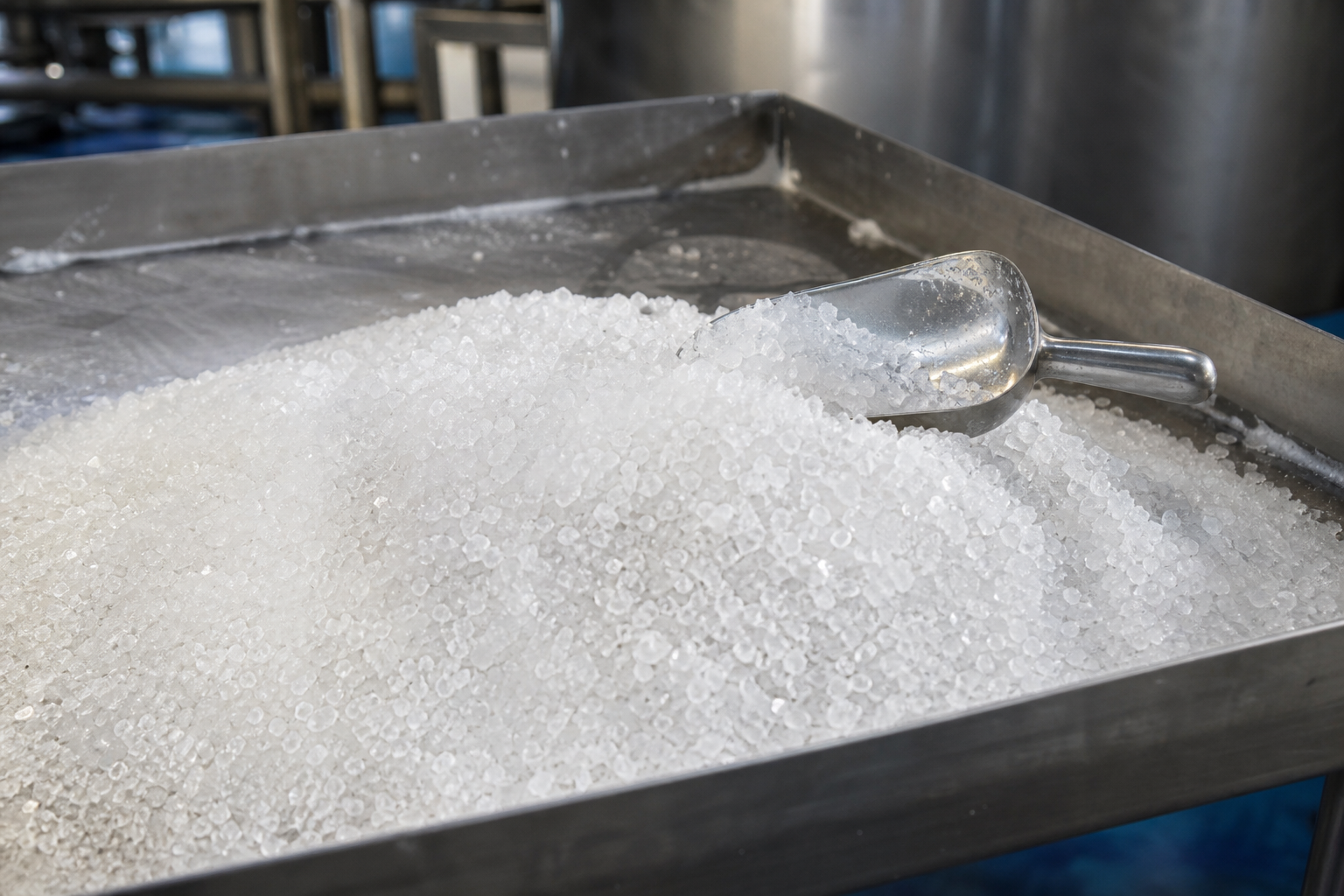
Quality is judged on three axes — particle size distribution, purity, and moisture content — with impurity control depending on upstream pretreatment and the mother-liquor purge strategy. One external field reference (external industry reference, not an EvapCryst delivery): a 600 t/d gasfield-produced-water project running MVR forced-circulation evaporation-crystallization after softening pretreatment produced crystallized salt at GB/T 5462-2015 first-grade industrial wet salt or better, with distillate meeting GB/T 31962-2015 grade C — demonstrating that industrial-grade salt from wastewater is an achievable target, not a laboratory claim.
Crystallizer Configuration: OSLO, DTB, or Forced Circulation
Crystallizer choice follows the same supersaturation logic in different geometries. Forced-circulation crystallizers — the workhorse of high-salt wastewater service — keep supersaturation low by high circulation flow through the heat exchanger with suppressed boiling in the tubes and flash evaporation in the separator; they tolerate suspended solids and fouling loads best. OSLO (fluidized-bed) crystallizers classify crystals in a fluidized zone, growing large, uniform crystals with low secondary nucleation — the choice when particle size commands value. DTB (draft-tube baffle) crystallizers combine a draft-tube impeller with a baffle that separates fines for dissolution and recrystallization, giving controllable size distribution at moderate circulation energy. For mixed wastewater salts, forced circulation is the safe default; for a saleable coarse NaCl fraction, OSLO or DTB pays for itself in product value.
By-Product Salt: Outlets and Compliance
Separated salt exits the plant through one of three doors, and the door must be chosen before the flowsheet is frozen. Resource utilization: salt meeting industrial grade sells into chlor-alkali, soda ash, and other consuming industries — chlor-alkali and soda-ash plants also run brine purification trains that generate their own by-product salt internally. Solid-waste utilization: salt that fails product grade but passes identification as general industrial solid waste can move into bulk comprehensive-utilization channels at lower value. Hazardous-waste disposal: the residual stream after identification, disposed at fee. The compliance reality is that by-product salt from wastewater may require hazardous-waste identification to establish its non-hazardous status, and the identification outcome — not the plant’s ambition — sets the outlet. Design the salt quality target around the strictest plausible outlet, because it is cheaper to over-deliver purity than to requalify a salt later.
When This Route May Not Fit
The separation-crystallization end stage presumes the salts are worth separating. Where mixed-salt disposal is cheap and no recovery value exists — no chlor-alkali or soda-ash outlet within reach, no by-product buyer for thenardite — crystallizing mixed at lowest investment is the honest scope, and the premium spent on separation returns nothing. Where the water volume is small, the end-stage investment (crystallizer, dryer, solid handling) does not amortize and hauling concentrate to a regional ZLD operator wins. Where power is expensive and no waste heat exists, the MVR leg of the triangle weakens against thermal alternatives. And where feed chemistry swings so widely that no stable salt system exists to design around, the separation premise itself fails.
What Must Be Verified
Before the end-stage flowsheet is frozen: the full brine analysis and the NaCl–Na₂SO₄ co-saturation phase behavior for the actual water, because the separation route is chosen from the phase diagram, not from preference; the local hazardous-waste identification rules that decide whether the output salt is a product or a waste — identification outcome, not ambition, sets the outlet; the buyer specification for each target salt grade; the site energy picture that sizes the MVR/thermal leg; and the mother-liquor purge composition the dryer must survive. Verified phase data and identification rules are the evidence base here.
FAQ
Why does zero liquid discharge end with a crystallizer rather than an evaporator?
Because ZLD requires no liquid to leave the site. The upstream brine concentrator removes more than 90% of the volume and produces reusable distillate, but the concentrated brine it discharges is still liquid. The crystallizer performs the final solidification — converting saturated brine into salt crystals plus distilled water — which is the only unit operation that closes the water balance with zero liquid output.
Is separated salt really worth the extra investment over mixed salt?
Usually, yes. Mixed salt is generally disposed of at hazardous-waste rates and can be difficult to place at all, while separated NaCl meeting GB/T 5462 industrial salt grade sells as a product and Na2SO4 ships as by-product thenardite. The decision hinges on salt component value, separation difficulty of the specific water chemistry, and your local disposal costs.
How do I control mother liquor in a ZLD plant?
Track liquor density, viscosity, and impurity-ion trends, and bleed a controlled fraction of mother liquor while refreshing with feed. The bleed stream then goes to recycle, a dedicated dryer, or final solidification after salt recovery. Contractually, the designer should provide the purge connections and operating elasticity, and the operator should execute the monitoring and purging.
What is seed-slurry evaporation and when should I use it?
It is a circulation evaporation process with crystal seeds suspended in the liquor, so that supersaturation releases on the seed surfaces rather than on the heat-transfer surface. Scaling is deliberately guided onto particles that leave the system with the crystal stream. Choose it for high fouling-tendency waters where conventional evaporation fouls its heat exchanger faster than the cleaning cycle can recover.
Which crystallizer type should I choose for sodium chloride?
For mixed wastewater salts under fouling load, forced-circulation crystallization is the default — it tolerates solids and suppresses tube boiling. When a coarse, uniform, saleable NaCl crystal is the target, OSLO (fluidized bed) or DTB (draft-tube baffle) configurations control particle size distribution better and command product value.