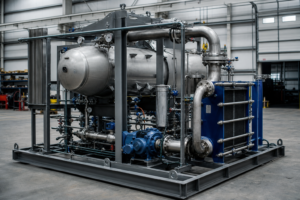
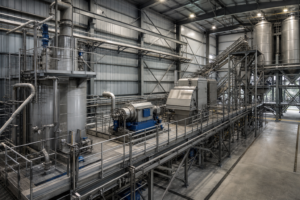
Mother liquor is the concentrated, impurity-loaded liquid that every continuous evaporator must eventually discharge—and what you do with it decides whether your zero liquid discharge (ZLD) project actually closes its water balance. In practice the winning strategy has three layers: recycle the bulk of the mother liquor back to the crystallizer to protect product yield, purge a small controlled stream so trace impurities never accumulate to harmful levels, and terminal-treat that purge in a scraped-surface low-temperature vacuum crystallization system. Field performance reported for this equipment class (external industry reference) shows that this final step converts near-saturated mother liquor—whether discharged from MVR, multi-effect or low-temperature evaporators—into dry crystal salt at ≤15% moisture while recovering 70–90% of the feed volume as clean distillate suitable for reuse or compliant discharge. This article explains how mother liquor forms, why generic drying equipment so often fails on it, what the purpose-built route delivers, and how responsibility for mother-liquor behavior is shared between designer and operator. It is the technology page for mother-liquor management principles; two companion pages carry the adjacent duties — dryer-technology selection and system configuration on our mother liquor drying ZLD solution page, and the end-stage position of drying plus salt crystallization inside the ZLD chain on our ZLD end-stage page.
What Mother Liquor Is—and Why No Evaporator Escapes It
Evaporation is a continuous process, not a one-time cleanup. Distillate is withdrawn continuously, fresh concentrate replaces it, and the water keeps leaving while almost everything dissolved in it stays behind. Every cubic meter of feed carries traces of organics, secondary salts, corrosion products and trace metals that cannot evaporate. Concentration cycle after concentration cycle, these species climb toward saturation in the circulating liquor.
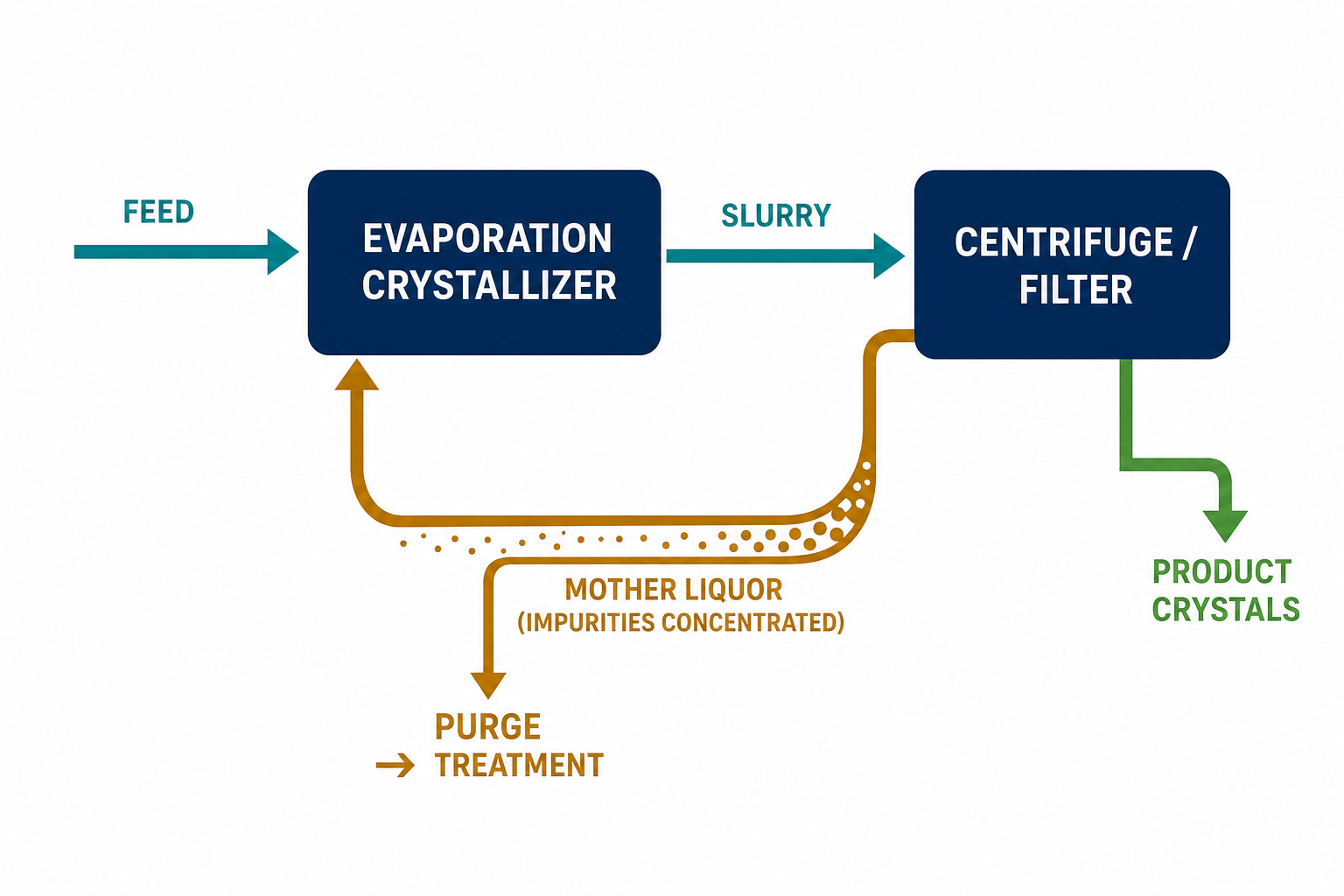
There comes a point where the distillate itself begins to be affected by the accumulated impurities, or where scale starts to form on the heat-transfer surfaces. The circulating liquid at that point is what the industry calls mother liquor: a high-concentration, impurity-rich stream. The standard operating response is to discharge part or all of it from the evaporator, clean the equipment, and restart the campaign. Mother liquor is therefore not an accident or a design flaw—it is the built-in consequence of evaporating water out of impure feed, and any flowsheet that claims full water recovery must contain a box for it.
Water-Quality Profile: Small Flow, Hardest Stream in the Plant
Mother liquor is small in volume compared with the main wastewater flow, but it concentrates everything that flow carried. Its defining features:
- Salt concentration approaching saturation. Most of the “easy” water has already been evaporated; what remains holds dissolved salts at or near their solubility limits.
- Complex composition. Multiple co-salts, organics and trace metals share one brine, so viscosity, crystallization behavior and corrosivity all shift as concentration rises.
- High COD. Organic species that do not evaporate accumulate in proportion to the concentration factor—understanding how COD behaves in evaporation helps predict where those organics will report.
- Difficult treatability. Salinity and toxicity effectively exclude biological and conventional chemical treatment; thermal volume reduction is the default.
| Aspect | Main-process wastewater | Mother liquor |
|---|---|---|
| Relative volume | Large (100% of plant flow) | Small (a fraction of feed after concentration) |
| Salt concentration | Moderate | Near saturation |
| Composition | Relatively predictable | Complex, multi-salt, shifting |
| COD | Variable | High—organics co-enriched |
| Viable treatment | Biological / chemical / membrane | Thermal concentration → drying / crystallization |
A Valuable Concentrate or a Hazardous Waste?
Mother liquor has a double identity that shapes its economics. In some industries the mother liquor is the product: traditional Chinese medicine extracts and tea concentrates, for example, are concentrated precisely so that the rich liquid itself becomes the saleable item. In most industrial wastewater settings—coal chemical, pharmaceutical fine synthesis, surface treatment (illustrative application sectors)—the same physical stream is a hazardous waste, and the management goal is exactly the opposite: minimize mass, maximize water recovery, and dispose of the residue at the lowest compliant cost. Deciding which identity applies to your stream is the first step of any treatment design, because it determines whether the objective is product protection or residue minimization.
The Blind Spot in Many ZLD Flowsheets
Scan a typical water zero-discharge process diagram and you will find pretreatment, membrane concentration, evaporation and crystallization—while the mother-liquor stream sits outside the main flow path and is barely mentioned. Yet the physics of evaporation guarantees its existence: the impurities have to go somewhere, and inside an evaporator they go into an ever-smaller volume of liquid. Plants that leave this stream out of the design usually discover it at commissioning, in the form of emergency tankage, unplanned trucking contracts and repeated evaporator cleanouts. The common default—direct disposal, or one more volume-reduction step followed by disposal as hazardous waste—works, but it is the most expensive way to handle a stream that still contains recoverable water.
Why Generic Drying Equipment So Often Fails on Mother Liquor
Most mother-liquor reduction is still thermal, and the equipment was largely inherited from the general drying industry: drum dryers, scraped-surface dryers, rake (agitated-pan) dryers and spray dryers. Each of these machines was developed for comparatively simple, single-component slurries, filter cakes or powders—not for a near-saturated multi-salt liquor with high COD and a steep viscosity curve. Brought into environmental service, they exhibit well-known adaptation problems: sticky-phase crusting on heated drum walls, spray-nozzle plugging by early crystal nuclei, rake torque overload as liquor passes through its viscous maximum, and heavy energy penalties from atmospheric-pressure operation. The lesson that keeps being relearned: even for mother liquor, equipment must be selected against the material’s specific properties—viscosity curve, crystallization habit, foaming tendency and corrosivity included.
| Equipment | Duty it was designed for | Typical failure mode on complex mother liquor |
|---|---|---|
| Drum dryer | Flowable slurries, dried cakes | Crusting and sticky-phase buildup on the heated wall |
| Spray dryer | Pumpable, nozzle-friendly feeds | Nozzle plugging by nuclei; wall deposits; high heat demand |
| Rake / agitated dryer | Free-flowing wet solids | Torque overload through the viscous maximum |
| Scraped-surface vacuum crystallizer | Near-saturated, fouling liquors (purpose-built) | Continuous blade wiping keeps heat-transfer surfaces active |
The Purpose-Built Route: Scraped-Surface Low-Temperature Vacuum Crystallization
Scraped-surface systems of this type were configured specifically for the stream that MVR, multi-effect and low-temperature evaporators discharge. Near-saturated mother liquor enters a jacketed body held under vacuum; the reduced pressure suppresses the boiling point, so water evaporates at low temperature while inorganic salts crystallize out of a thin, agitated film. Reported performance for this equipment class (external industry references):
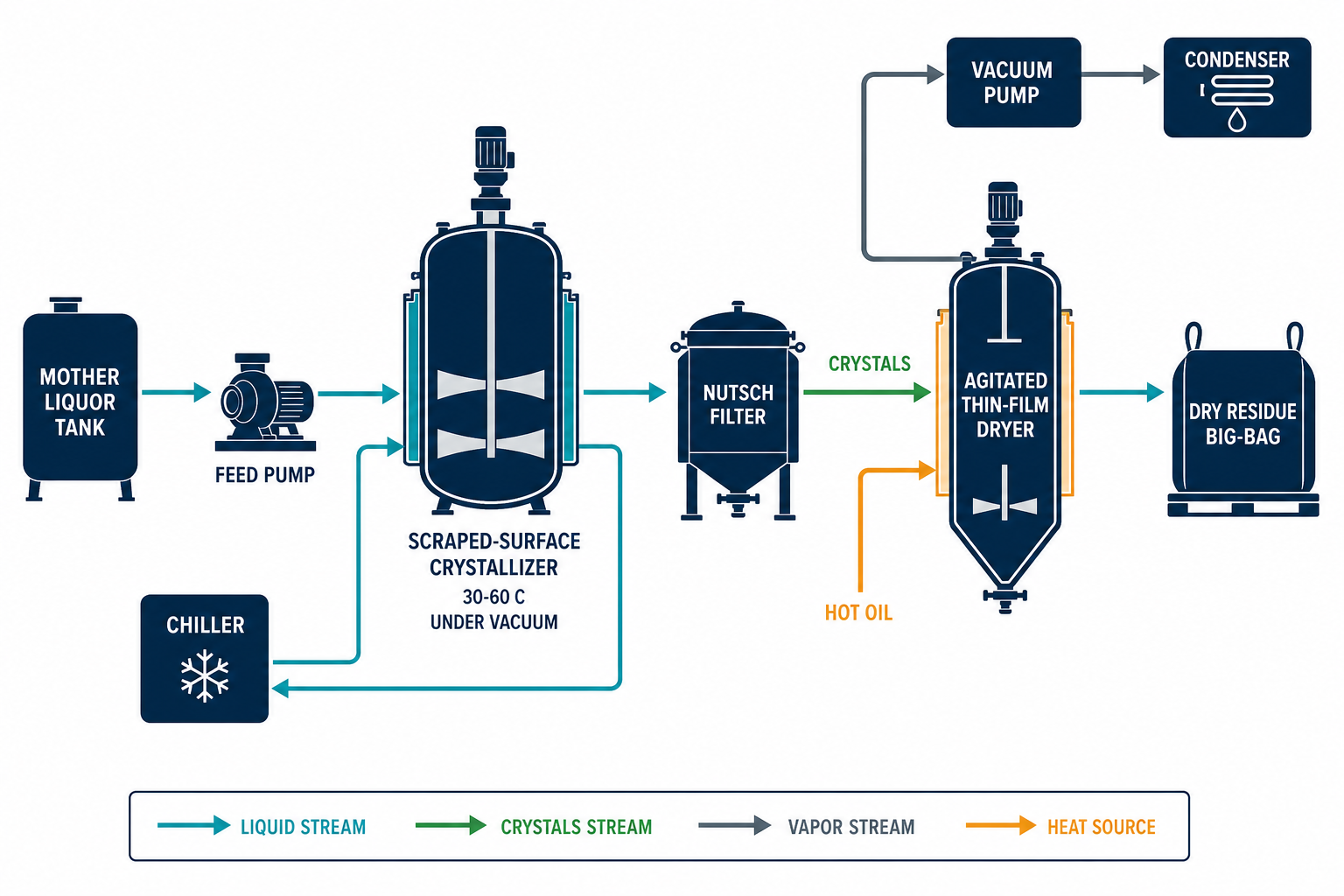
- Dry solid crystal salt with moisture ≤15%—a handleable, free-flowing residue straight from the process.
- Distillate production rate of 70–90% of feed volume, clear and transparent—fit for reuse as plant service water or compliant discharge.
- Substantial removal of inorganic salts, heavy metals and COD, which report to the solid crystal phase.
- Four accepted feed families: low-temperature evaporator concentrate, MVR concentrate, multi-effect concentrate and high-temperature evaporator blowdown.
The decisive engineering feature is the scraping itself. In saturated, fouling liquors, crystals and fines plate onto every heat-transfer surface within hours, and the thermal resistance of that layer throttles capacity long before the operator sees a problem. Continuously rotating blades wipe the process film from the heated wall before a deposit can grow, so a high-viscosity, high-solids liquor keeps exchanging heat at close to design rate. This single mechanism is what allows the equipment class to run where drum, rake and spray dryers degrade, and it pairs naturally with a downstream drying and packing line when the salt has by-product value.
Why Only Dry Solids Complete 100% Water Recovery
An evaporator that stops at a pumpable concentrate has not finished the job: the residual water is still liquid, still mobile, and still needs a pipe, a storage tank, a truck or a discharge permit. Full water recovery—100% of the feed volume reclaimed—is reached only when the last, most concentrated mother liquor is driven all the way to a dry solid residue. Everything the plant saves upstream, in membrane recovery and evaporator steam economy, is banked only at this terminal step. That is why the scraped-surface crystallizer is increasingly specified as the closing unit of a ZLD train rather than an optional add-on.
Recycle Versus Purge: The Operational Balance
Terminal treatment is only half of a sound mother-liquor strategy; the other half is deciding how much liquor to recycle. In crystallization systems that produce a saleable salt, the bulk of the mother liquor returns to the crystallizer loop, because every liter purged carries dissolved product that will never crystallize. Against that stands impurity build-up: trace soluble species that co-enrich with each pass eventually contaminate the crystal product or destabilize operation—viscosity drift, uncontrolled nucleation, foaming. The universal compromise is a large recycle with a small, scheduled purge: recycle preserves the purity and yield of the main product, while the small purge stream—rich in impurities—goes to terminal treatment. The purge ratio is a genuine design variable, set from solubility data and product purity targets, not an afterthought. The purge ratio is typically fixed during process design and fine-tuned against measured product purity during commissioning; an overview of the practice sits on the mother-liquor recovery page (illustrative application).
Where the Dry Residue Goes
Once the mother liquor has been reduced to a solid, three disposal pathways remain open:
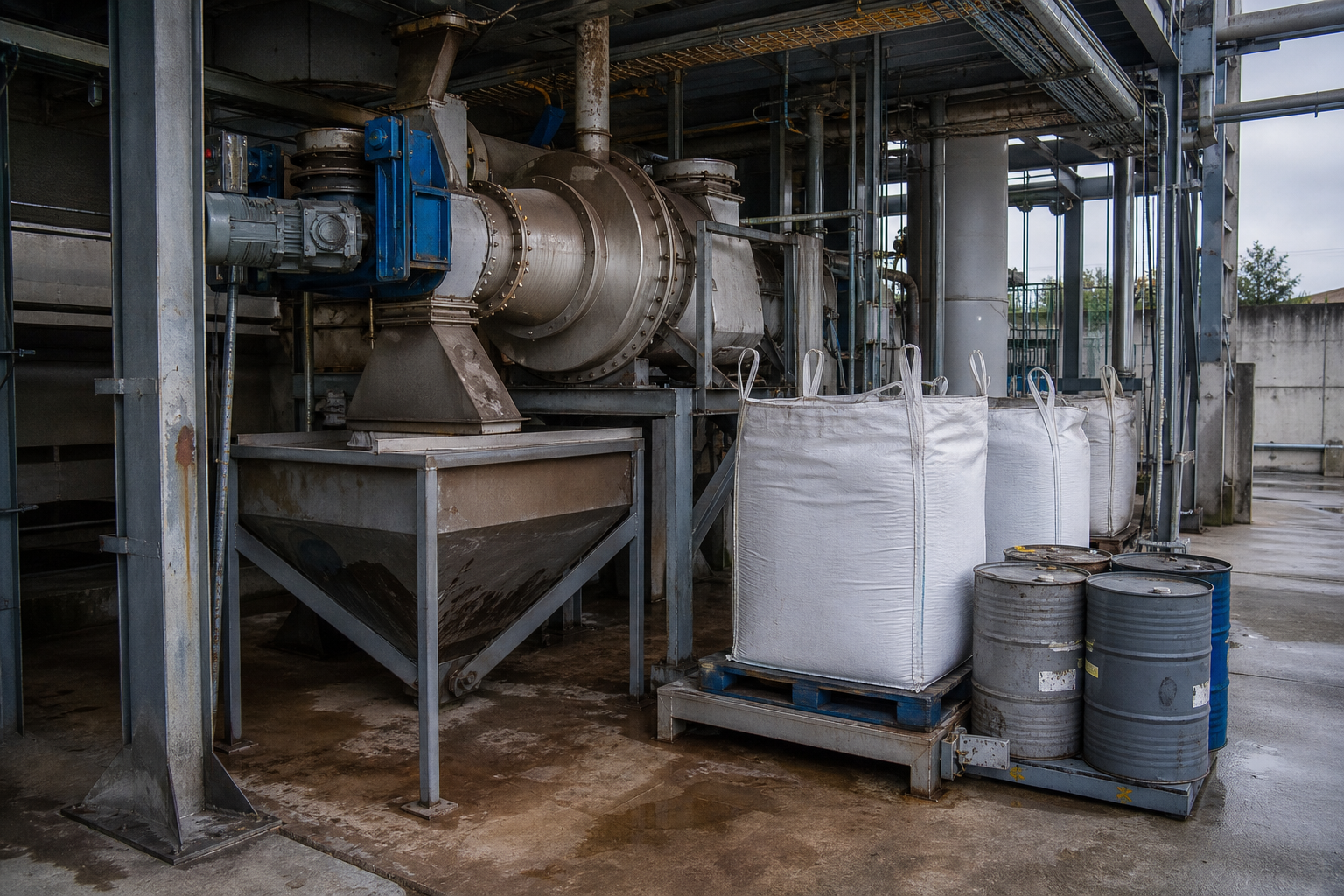
- Landfill—where the separated salt meets inert-waste criteria; typically the lowest-cost route, and because gate fees scale with mass, ≤15% moisture means you are not paying to landfill water.
- By-product recovery—where crystallization discipline (seeding, supersaturation control, crystal washing) yields a salt pure enough to sell; fractional salt separation and resource recovery circuits are the classic enabler.
- Contracted hazardous-waste disposal—the default for heavy-metal or toxic-organic residues; per-ton rates typically run well above landfill, so mass minimization converts directly into cash savings.
Choosing among them is a classification question first and an economics question second—and the answer can change the upstream flowsheet, which is why residue routing belongs in the design phase rather than after startup.
Operating Discipline Is Half the Result
A large share of mother-liquor problems is created in operation, not in design. A recurring finding from MVR system operating reviews is that whether a plant runs well is the joint responsibility of the designer and the operator. The vendor side owes complete technical training, explicitly documented operating and adjustment parameters, and a genuinely detailed manual. The owner side owes accurate design data with nothing withheld, actual operating conditions kept close to the design basis, and qualified technical staff for maintenance and management. Plants with no prior MVR operating experience often engage professional O&M teams shortly after startup precisely because this discipline was missing; the cost of skipping it appears as accelerated fouling, premature mother-liquor discharge and unplanned downtime.
When This Route May Not Fit
The scraped-surface vacuum crystallization route earns its place only when the purge stream justifies dedicated terminal equipment. When the purge volume is very small — a few hundred liters per campaign — a fixed crystallizer with blades, jacket and vacuum system never amortizes, and contracting the purge as liquid hazardous waste is the honest scope. When the liquor’s viscosity curve or sticky-phase behavior is incompatible with a wiped film (stringy polymeric matrices, strongly foaming surfactant loads), other terminal routes serve better. When cheap surplus heat or a flue-gas stream is available at site, a spray-drying or paddle route may beat vacuum low-temperature operation on energy. And when the separated salt has no outlet — no buyer, no landfill acceptance — the product-side economics that offset the investment are absent, and the decision becomes pure compliance cost.
What Must Be Verified
Before this route is fixed, verify: the purge stream’s composition and its campaign-to-campaign swing (salts, organics, metals), because the feed family and materials follow from it; the viscosity-versus-concentration curve and crusting behavior on heated surfaces, which decide whether blade wiping actually keeps the film renewing; the salt system’s phase behavior at the operating temperature, so the crystal form is a design choice rather than a surprise; dust combustibility of the dried solid where organics co-crystallize; and the alloy selection against chloride and pH at concentration. Verified feed data and drying trials on the real purge — not catalog duty descriptions — are the evidence base for this equipment class.
Conclusion
Mother liquor is unavoidable, small in volume and disproportionately important. Treat it as a design variable—not an operational surprise—and the terminal scraped-surface vacuum crystallization step turns the hardest stream in the plant into dry salt at ≤15% moisture plus 70–90% recovered water, while a disciplined recycle-plus-purge policy protects product yield in the meantime. That combination is what converts an evaporation project into a defensible zero-liquid-discharge claim.
Frequently Asked Questions
What exactly is mother liquor in an evaporator system?
Mother liquor is the high-concentration, impurity-rich liquid that accumulates inside a continuously operating evaporator as distillate is withdrawn and feed is replenished. When accumulated impurities begin to affect distillate quality or cause scaling, part or all of this liquid is discharged, the equipment is cleaned, and operation restarts.
Can mother liquor be recycled instead of discharged?
Yes, partially. In crystallization service the bulk of the mother liquor typically returns to the crystallizer loop to protect product yield, while a small purge stream is discharged on a schedule to prevent trace impurities from accumulating. Full recycling is only possible when the feed is essentially impurity-free, which real industrial wastewaters rarely are.
What can scraped-surface vacuum crystallization recover from mother liquor?
Scraped-surface systems of this type deliver dry solid crystal salt with moisture ≤15% and a distillate yield of 70–90% of feed volume (external industry references). The distillate is clear and transparent, suitable for reuse as plant service water or compliant discharge, while inorganic salts, heavy metals and COD are concentrated into the solid phase.
Why do drum dryers and spray dryers often fail on mother liquor?
These machines were inherited from the general drying industry and were designed for simple, single-component materials. Near-saturated multi-salt liquors cause sticky-phase crusting, nozzle plugging and torque overload. Mother liquor is a materials-selection problem first and an equipment-sizing problem second.
Does drying the mother liquor really reduce disposal cost?
Yes, in two ways. Driving the liquor to a solid at ≤15% moisture removes the water you would otherwise pay to landfill or truck, and it minimizes the mass handed to hazardous-waste contractors whose per-ton rates typically far exceed landfill gate fees. If the separated salt is pure enough, by-product sale can turn the residue from a cost into a credit.