Project Parameters
| Parameter | Value |
|---|---|
| Process route | MVR evaporation + crystallization of lithium hydroxide monohydrate |
| Industry | Battery materials — lithium chemicals (export project, Australia) |
| Feed type & key components | Purified lithium hydroxide solution from the lithium chemical plant |
| Evaporation capacity | 15 t/h |
| Construction materials | SS316L wetted parts (indicative; nickel-grade alloys per caustic service assessment) |
Representative process configuration compiled from published industry project data. Indicative values, not a process guarantee.
Project Description
Battery-grade lithium hydroxide monohydrate (LiOH·H2O) is the lithium chemical specified by high-nickel cathode producers, and the Australian battery materials chain sources it against the tightest impurity specification in the lithium chemicals family — magnetic foreign matter, sodium, calcium and carbonate all controlled to parts-per-million levels. The export project context raises the bar further: every lot is certified at the destination, so the plant is engineered for verifiable specification compliance rather than average quality.
The reference configuration is a 15 t/h MVR evaporation and crystallization train. The duty couples two constraints that define the design: the product is a hydrate with a bounded stability window, and the feed is a caustic solution that concentrates toward an aggressive chemistry. Low-temperature MVR evaporation is the technology that satisfies both — boiling under vacuum at reduced temperature concentrates the LiOH solution without driving the monohydrate out of its hydrate stability range, while mechanical vapor recompression supplies the heat electrically at high efficiency.
Process Technology
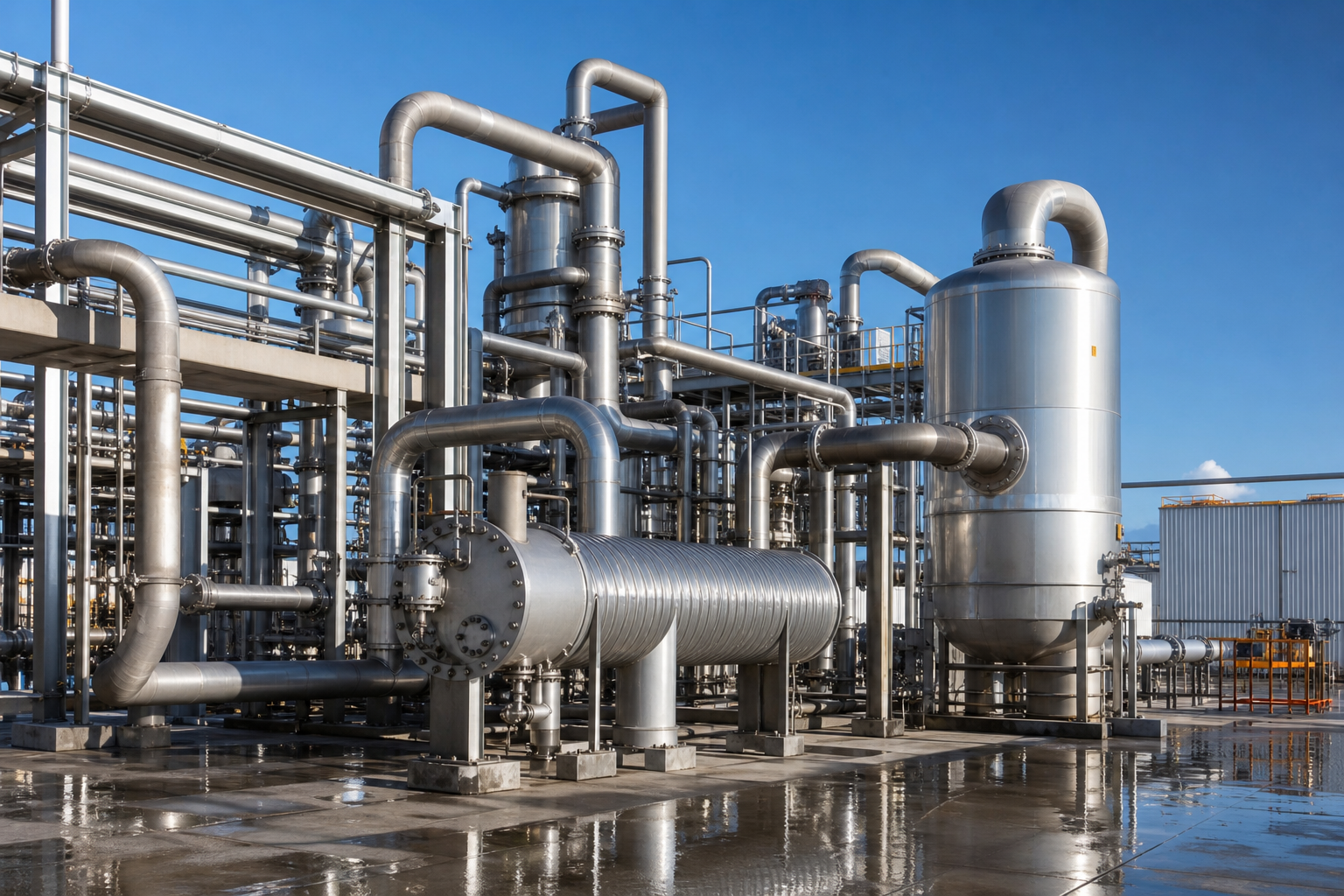
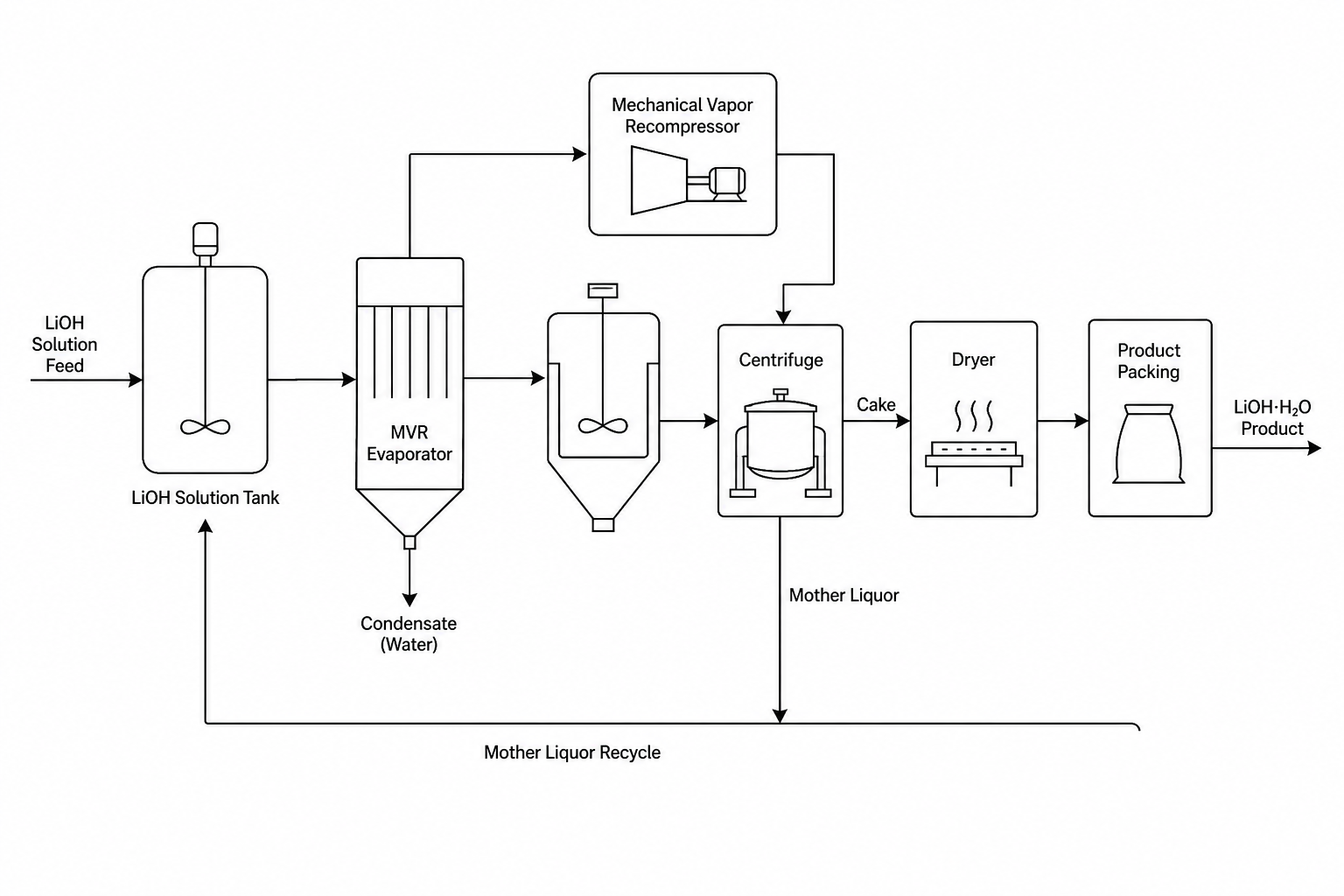
Purified LiOH solution from the upstream lithium plant is received into a polished feed system — the plant’s impurity control begins before the evaporator, because what does not enter cannot contaminate the crystal. Feed filtration and dedicated stainless lines protect the battery-grade envelope against particulate and metallic introduction.
The solution is concentrated in the MVR evaporator operating under vacuum. Reduced boiling temperature is not an energy compromise but a product requirement: concentrated LiOH crystallizes as the monohydrate over a defined temperature window, and temperature excursions above it degrade crystal water control and raise the risk of carbonate pickup from slower, hotter operation. The recompressor takes the low-pressure secondary vapor, raises it modestly in pressure and temperature, and returns it to the heating side — the small temperature lift is exactly matched to the low-delta-T falling-film or forced-circulation service the duty prefers.
Concentrated liquor advances to the crystallizer, where controlled supersaturation grows LiOH·H2O crystals of consistent size for downstream dewatering. Crystallizer operation is the quality-critical step: nucleation rate, crystal residence time and temperature are held within the band that yields a free-flowing monohydrate at specification moisture.
The crystal slurry is dewatered on a centrifuge or peeler under a controlled atmosphere, dried to the monohydrate specification, and packed under sealed, low-CO2 conditions — lithium hydroxide is hygroscopic and carbonates readily, so product handling is engineered as part of the quality system, not as an afterthought. Mother liquor returns to the evaporator feed with a purge controlling sulfate and carbonate accumulation. Condensate from the evaporator is clean hot water reused in the plant.
Equipment Configuration
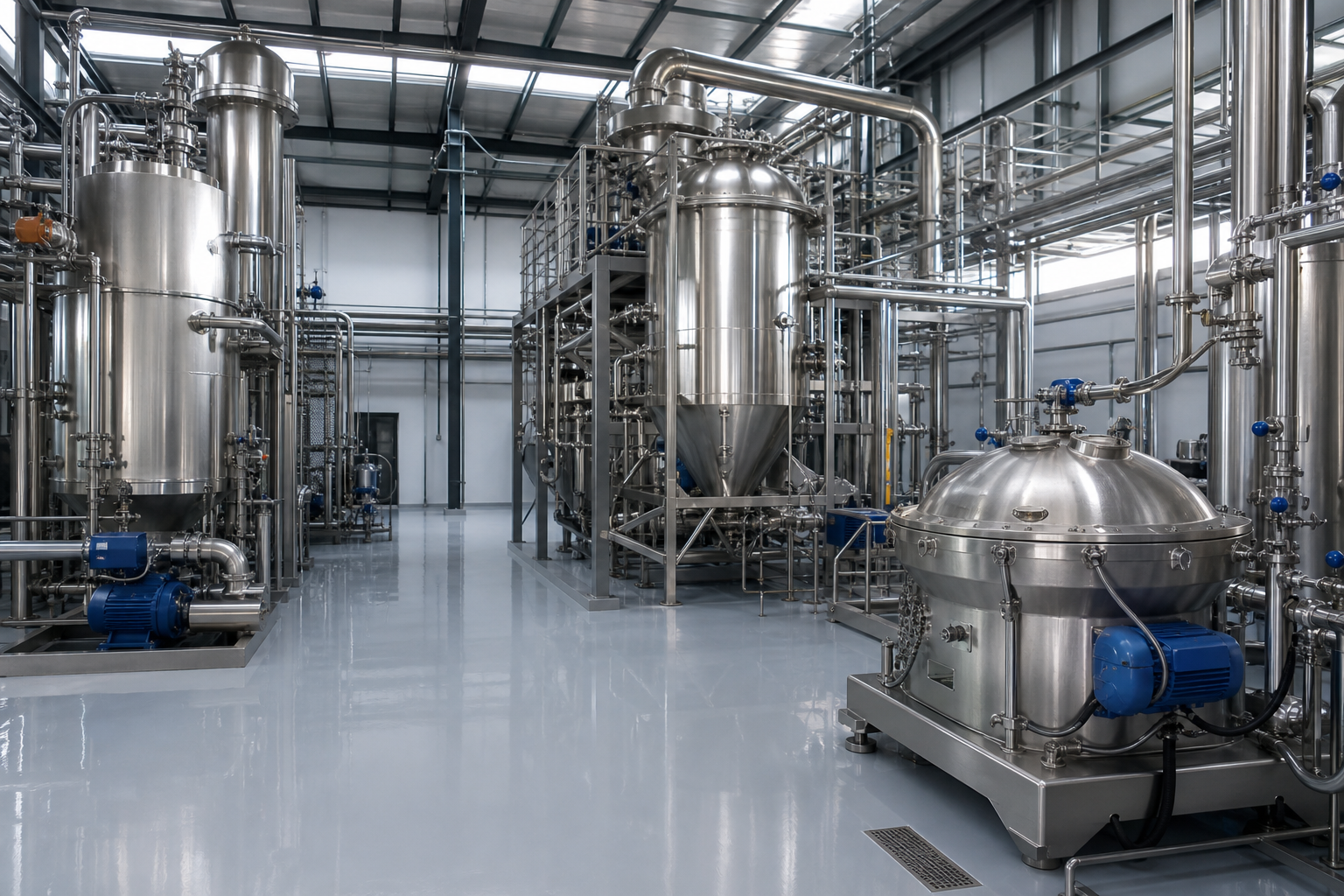
One set of the following equipment is typical for this duty:
- Polished LiOH feed system with dedicated SS piping and filtration
- Vacuum MVR evaporator (falling-film or forced-circulation per licensor practice) with mechanical vapor recompressor
- LiOH·H2O crystallizer with controlled-growth design and tight temperature control
- Centrifuge / peeler with atmosphere control; low-temperature dryer finishing to monohydrate specification
- Sealed product packing station with CO2 exclusion practice; mother-liquor return and purge
- Condensate recovery; DCS control with full batch-quality traceability for export certification
SS316L is the indicative reference wetted material; caustic service at concentration and temperature is assessed per project for nickel-grade alloy upgrades in the hottest zones.
Performance & Outcome
Compiled from published industry project data, indicative: trains of this class produce battery-grade lithium hydroxide monohydrate to export specification with electrically driven evaporation, low-temperature crystal growth, and sealed packing against carbonate pickup. Specific energy and per-lot quality figures are quoted per project.