Project Parameters
| Parameter | Value |
|---|---|
| Process route | Five-effect, seven-body, all-plate falling-film evaporation station |
| Industry | Pulp & paper — cotton linter (refined specialty) pulp |
| Feed type & key components | Cotton linter pulp black liquor; alkali lignin, hemicellulose residues, sodium salts, silica traces |
| Evaporation capacity | 74.7 t/h |
| Region | Xinjiang, Northwest China |
Representative process configuration compiled from published industry project data. Indicative values, not a process guarantee.
Project Description
Cotton linter pulp — the refined cellulose from the short fibers that cling to cottonseed — feeds the specialty end of the paper and cellulose-derivatives industry, and Xinjiang, at the cotton fields, is where its pulp mills stand. The published project behind this configuration is the black liquor evaporation station of such a producer: 74.7 t/h, built as five effects in seven bodies, all of them plate-type falling-film evaporators.
The configuration reads like a specialist’s answer. Seven bodies for five effects means two effects are split into pairs — the standard response when one effect’s vapor load or liquor viscosity outgrows a single body at the site’s plot and maintenance culture. And all-plate construction is the signature choice: plate evaporators pack high heat-transfer area into low volume, and for black liquors their geometry — short liquor paths, generous wall shear, mechanical cleanability — earns its keep on liquors that would challenge tubular trains.
Process Technology
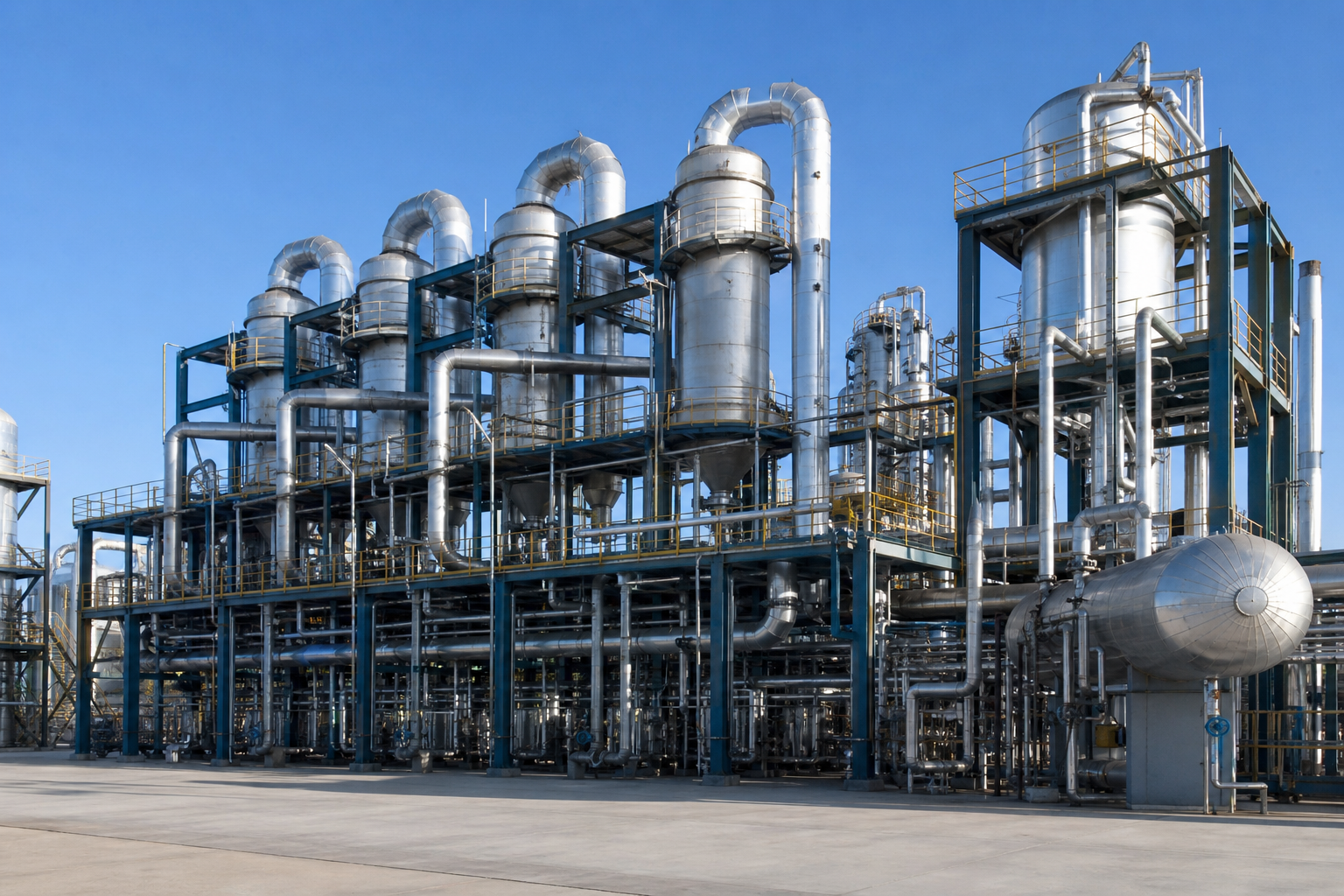
Cotton linter black liquor differs from wood-pulp black liquor in ways the evaporation must respect. The linter cook dissolves less lignin but concentrates cotton waxes, pectins and low-molecular cellulose fines; the liquor’s viscosity rises earlier in concentration, and its fouling is organic-waxy rather than purely mineral. Plate falling-film bodies answer the profile: liquor films down corrugated plate packs with intense wall shear that keeps waxy deposits from adhering, and when a pack does foul, the plate path opens and cleans mechanically — the maintainability argument that decided many Chinese specialty-pulp stations for plate.
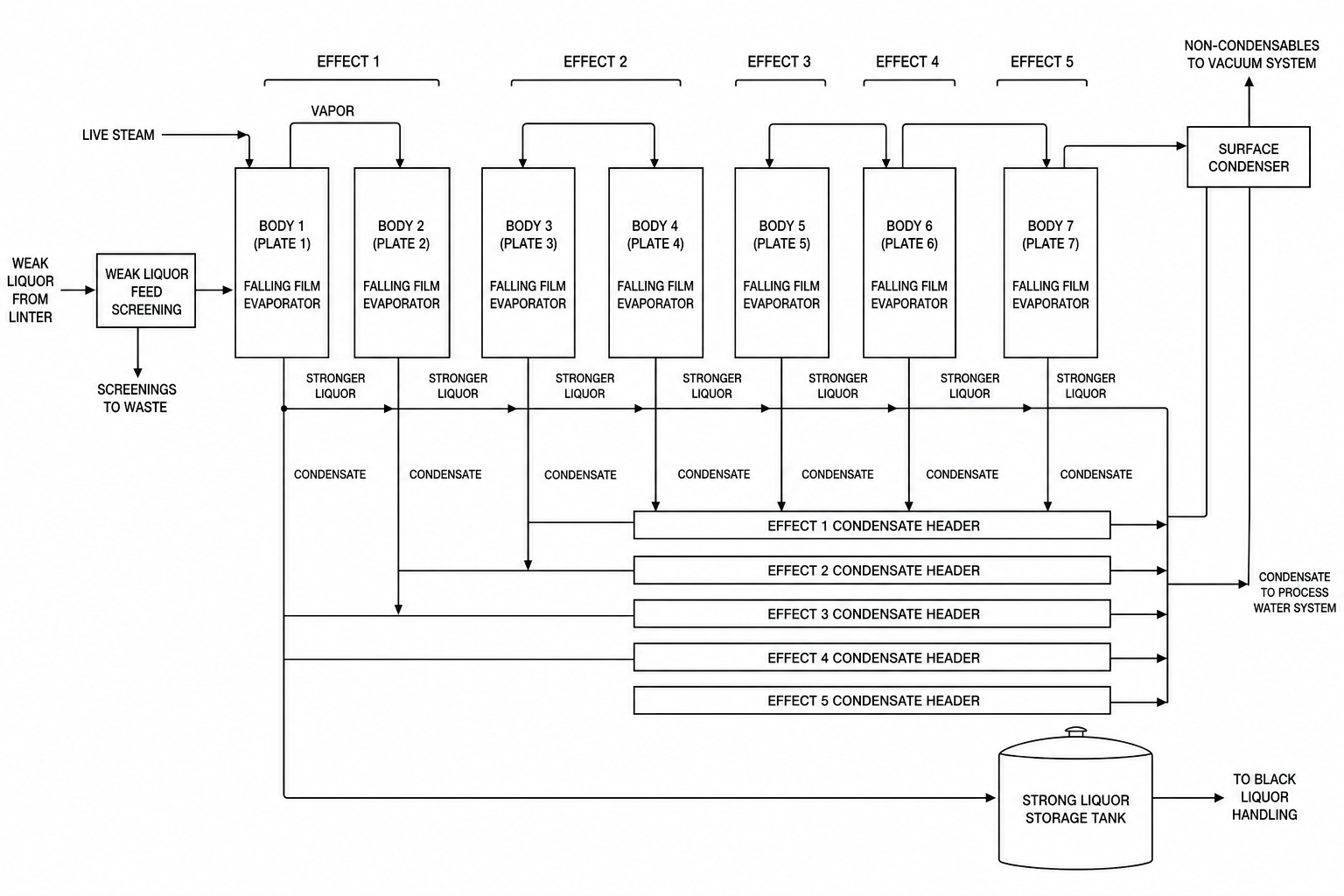
The five-effect chain stages the heat economy: live steam to the first effect, four vapor reuses down the pressure ladder, surface condensation at the tail. Seven bodies distribute the duty: in the published class, the high-vapor-load effects (typically first and second) split into twin bodies, keeping each plate pack inside its vapor-velocity and irrigation limits while doubling the cleanable surface a washing cycle can rotate through. Black liquor stations live and die by washing rotation; seven bodies give the scheduler room.
Liquor routing follows the multi-body logic: weak liquor from the brown-stock washing feeds the later effects in forward-feed fashion, concentrating stepwise; semi-strong liquor flashes forward; the strong liquor finishes in the high-temperature first-effect bodies at firing solids for the recovery boiler or, at specialty-linter mills, at the concentration the alkaline-recovery or sales path requires. Condensate segregates by effect — the clean front condensate to pulp washing, the fouler tail condensate with methanol and foul organics to stripping — the standard black-liquor station discipline.
At 74.7 t/h the station is mid-scale by wood-pulp standards but commanding by linter standards — a measure of how far cotton-region pulp capacity has grown. The published project places all-plate technology at that scale, in Xinjiang, on the industry’s most geographically favored feedstock.
Equipment Configuration
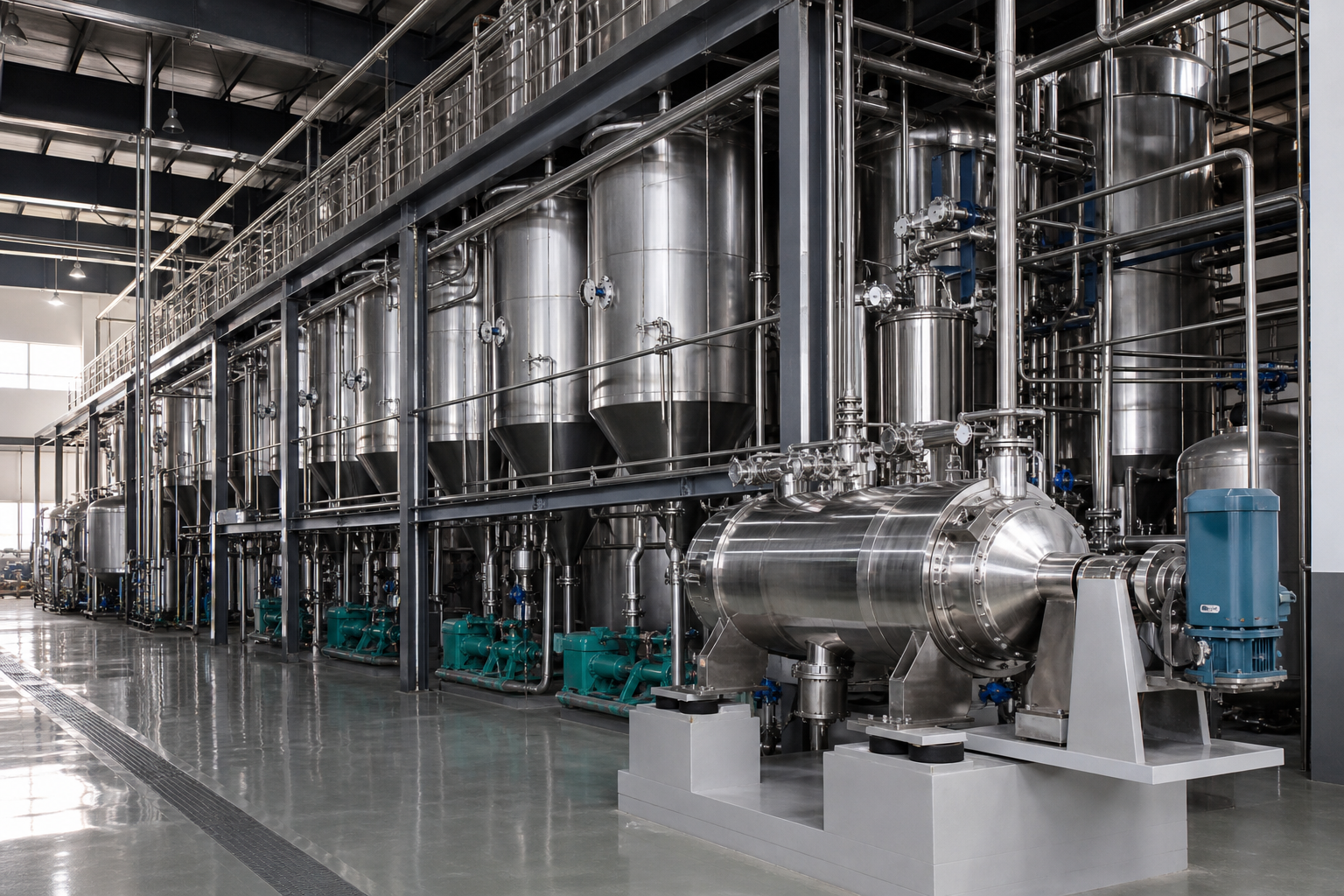
One set of the following equipment is typical for this duty:
- Weak black liquor feed tank with fiber screening
- Five-effect, seven-body all-plate falling-film evaporation station
- Split-body high-load effects with independent plate packs
- Surface condenser and vacuum system
- Segregated condensate headers (clean / foul) with foul-condensate stripping
- Strong-liquor storage at firing / sales solids
- PLC control with body-rotation washing (CIP / mechanical plate cleaning)
Performance & Outcome
Compiled from published industry project data, indicative: all-plate stations of this class evaporate 74.7 t/h of cotton linter black liquor at five-effect steam economy, reaching strong-liquor firing solids with plate-pack cleanability managing the waxy fouling profile. Steam economy and washing-cycle intervals are quoted per project liquor specification.
Simplified PFD
The simplified process flow diagram above shows weak liquor feed, the seven plate bodies across five effects, segregated condensate and strong-liquor discharge.