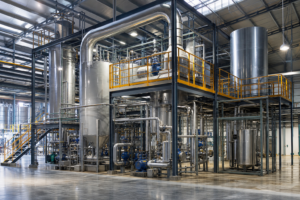
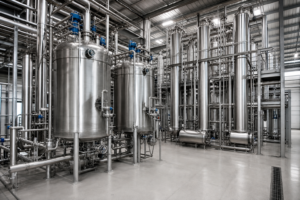
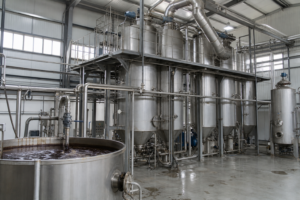
Starch production lines for wheat, corn, cassava, and potato share the same skeleton — raw material preparation, extraction, separation, refining, dewatering, and drying — but they differ sharply in scale, in the separation technology that dominates the flowsheet, and in where evaporation earns its place. Cassava lines run from 100 to 3,000 tons per day, potato lines typically top out near 300 TPD, wheat lines are built around gluten value rather than starch volume, and corn lines carry the heaviest evaporation duty of the four because steep water and gluten liquor must be concentrated before they become sellable products. This guide walks through each line and identifies the engineering decisions that separate a profitable plant from a mediocre one.
What a Modern Starch Production Line Includes
Every industrial starch plant follows the same five-stage logic: clean and condition the raw material, rupture the cell structure that holds the starch granules, wash the starch out of the fiber and protein matrix, refine the starch milk, then dewater and dry it to a marketable moisture level. What changes between crops is which stage dictates the design. In wheat, separation of starch from gluten dominates; in corn, it is steeping and the downstream concentration of steep water; in cassava and potato, it is the speed of extraction after the cells are broken.
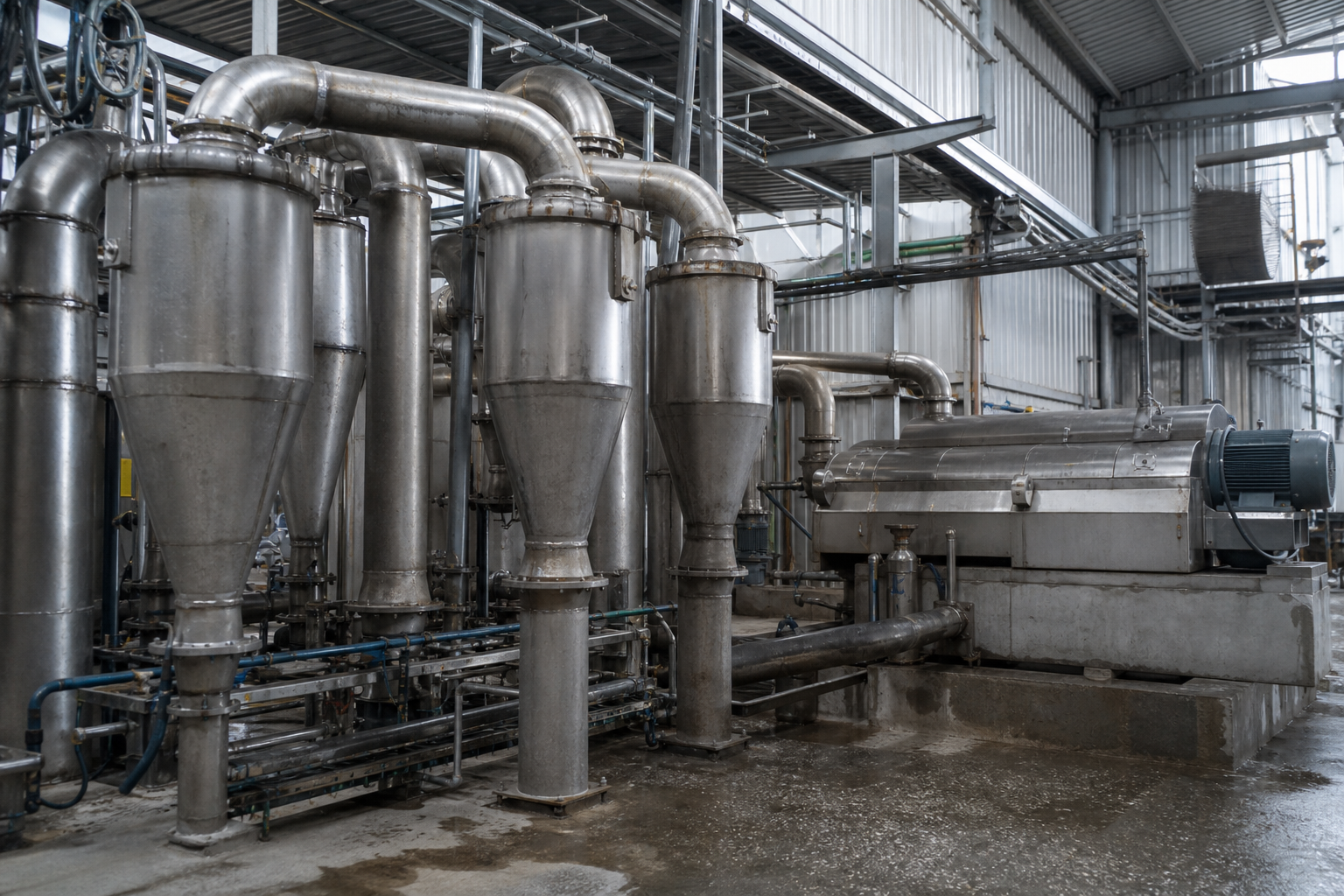
The economics follow the same logic. A starch plant is not really a starch machine — it is a water-handling machine that produces starch as its main stream and several weaker streams (soluble protein, fiber, steep solids, process water) that must either be concentrated into products or treated as effluent. Plants that concentrate those weak streams profit from them; plants that discharge them pay twice, once in lost product value and once in wastewater treatment.
| Raw material | Typical line capacity | Dominant separation step | Main evaporation/drying duty |
|---|---|---|---|
| Wheat (flour-based) | Project-based; e.g. 500 TPD flour feed | Starch–gluten separation (centrifugal) | Gluten drying, starch drying, process-water concentration |
| Corn (wet milling) | Project-based | Steeping + starch–gluten hydrocyclone separation | Corn steep liquor concentration, gluten liquor |
| Cassava (root) | 100 – 3,000 TPD | Rasping + centrifugal screening + hydrocyclone refining | Flash drying; pulp and juice handling |
| Potato (tuber) | 100 – 300 TPD | Cell disruption + multi-stage centrifugal sieves + hydrocyclones | Vacuum dewatering + flash drying; juice protein recovery |
Capacity ranges are industry-reported envelope values for orientation; each line is sized to the regional raw-material supply and the buyer’s product mix.
Wheat Starch Lines: Flour, Gluten, and Process-Water Valorization
Wheat starch is separated from flour, not from the grain, so a wheat starch line always begins with a flour milling stage or with purchased flour. The core process separates the flour into A-starch, B-starch, and vital wheat gluten using centrifugal separators and hydrocyclones, followed by dedicated drying systems for each stream. Because vital gluten commands a substantially higher price per ton than starch, the design target of a wheat line is gluten quality and yield first, starch throughput second.
An external industry reference is the 600,000 t/a wheat deep-processing project in Henan, China, engineered for Hanyong Biotechnology, an edible-alcohol producer (vendor-published project report; not an EvapCryst delivery, and indicative rather than a performance guarantee). Phase 1 combined a 500 TPD flour milling line with a 3 t/d gluten drying system and a 12 t/d starch drying system, delivered end-to-end in 10 months from layout planning through commissioning and training. Phase 2 then added a 5 t/d gluten dryer and a 20 t/d starch dryer — the scale-up ratio between phases shows how strongly the plant’s economics pull toward gluten capacity.
The most underappreciated stream in a wheat plant is process water. The water phase from starch–gluten separation carries pentosans and soluble solids, and in that published Henan project it was deliberately routed as a mixed nutrient solution into alcohol fermentation instead of being discharged (external industry reference). This is a third revenue stream that most line descriptions ignore: when process water is concentrated and valorized, the plant sells three products (starch, gluten, alcohol or other fermentation output) rather than two, and its effluent load drops accordingly. Evaporation is the enabling step — see MVR evaporation systems for the energy economics of concentrating dilute streams that would otherwise cost money to treat.
Corn Starch Lines: Wet Milling and Steep-Water Evaporation
Corn starch is produced by wet milling: the grain is steeped in dilute sulfurous water to soften it and loosen the starch–protein matrix, then de-germinated, milled, and separated over screens, hydrocyclones, and centrifuges into starch, gluten, germ, and fiber. Among the four crops, corn places the largest and most continuous evaporation load on the utility system, because two of its coproduct streams are dilute liquids rather than solids: corn steep water and gluten liquor.
Corn steep water — the spent steep liquor loaded with soluble proteins, sugars, and lactic acid — is concentrated by evaporation into corn steep liquor, a standard commercial feed and fermentation ingredient industry-reported as sold at around 50% dry solids. Field-proven systems for this duty combine two evaporator types in series: a multi-effect or MVR falling-film section, which handles the bulk water removal at high heat-transfer coefficient and low specific energy, followed by a forced-circulation section that manages the viscosity increase and fouling tendency of the liquor at final concentration. Falling film alone struggles in the finishing zone because the product becomes too viscous to wet the tube wall uniformly; forced circulation alone across the whole range would waste pumping energy on thin liquor. Splitting the duty is the correct answer, and it is the pattern used in operating corn slurry concentration plants.
Two failure modes dominate corn steep-water evaporators, and both are manageable with the right configuration. The first is tube-wall fouling (“wall hanging”) as solids content rises, which the forced-circulation finisher counters with high velocity and boiling suppression in the tubes; the second is steam consumption, which multi-effect design or mechanical vapor recompression reduces by reusing vapor heat across effects. For a comparison of the available architectures, see multiple-effect evaporation and forced-circulation evaporators.
Cassava Starch Lines: High-Capacity Extraction (100–3,000 TPD)
Cassava starch lines span the widest capacity range of any starch crop — turnkey plants are built from 100 TPD up to 3,000 TPD — because cassava is processed close to the harvest fields and factory scale follows regional root supply. The flowsheet is short and mechanical: cleaned roots are disintegrated by a rasper into pulp, the pulp passes over centrifugal screens to remove fiber, the crude starch milk is desanded and deslimed, protein is removed in separators, and the starch is refined and concentrated in multi-stage hydrocyclone trains before dewatering on scraper centrifuges and drying in a flash dryer.
The engineering intensity in a cassava plant sits in three places: rasping efficiency (which sets how much starch is freed from the fiber), hydrocyclone staging (which sets final purity), and drying energy (which sets operating cost). Because the line is short, the evaporation duty is modest compared with corn — the big thermal consumer is the flash dryer, not an evaporator. Plants located where roots are cheap but energy is expensive increasingly evaluate MVR-based concentration for the cassava juice stream and pulp-pressing liquor, both to recover soluble starch and to cut effluent volume.
Potato Starch Lines: Beating the Oxidation Clock (100–300 TPD)
Potato starch lines are engineered around a single chemical fact: potatoes oxidize within minutes of rasping. Once the cell structure is broken, enzymatic browning begins, and starch whiteness — a direct pricing parameter — degrades unless extraction and separation happen immediately. This is why potato starch capacity clusters in the 100–300 TPD range: the process must run as a fast continuous cascade from rasper to refiner, and every stage between cell disruption and refined starch milk is a stage where quality is being lost on a clock.
Profitability in potato starch is decided by four parameters, in descending order: starch recovery efficiency, starch whiteness and purity, water and energy consumption per ton of product, and utilization of the pulp and juice by-products. Because starch losses occur continuously at every transfer and wash stage, even a one-point improvement in recovery moves annual output measurably at zero additional feedstock cost. A plant designed around “value recovered per ton of potatoes” rather than “tons of starch per day” makes different equipment choices — tighter water management, faster screening, better pulp dewatering.
Water is the second clock. Potato starch is water-intensive across washing, extraction, separation, and refining, and plants without closed-loop water systems face both high operating cost and regulatory pressure on their effluent. Modern designs recycle process water through the refining stages and concentrate the protein-rich potato juice; the juice stream can be evaporated to recover potato protein concentrate, which converts the largest effluent source into a coproduct. Because potato starch is heat-sensitive, drying is arranged as efficient mechanical dewatering (vacuum filtration or scraper centrifuges) followed by a short-residence-time flash dryer, protecting granule integrity while holding drying energy down.
| Module | Candidate Equipment Types | Selection Rationale | Indicative Operating Envelope |
|---|---|---|---|
| Raw material preparation and extraction | Rasper, steeping tanks, degerminating mill | Set by crop: root disintegration versus wet milling | 100–3,000 TPD roots; steeping at ambient-warm range |
| Separation and refining | Centrifugal separators, hydrocyclone trains, screens | Starch–gluten or fiber split sets final purity | Multi-stage, crop-specific staging |
| Dewatering and drying | Scraper centrifuges, vacuum filter, flash dryer | Mechanical dewatering first protects dryer energy | To ~60% DS mechanically before thermal drying |
| Weak-stream evaporation | Falling film plus forced-circulation finisher; MVR | Concentrates steep water, process water, juice | 20–40 kWh/t MVR indicative |
| Water loop and effluent | Process-water recycle, MVR concentrator, ZLD tail | Cuts water intake and effluent volume | Closed loop toward ZLD where required |
Configuration, materials, and operating ranges depend on the actual feed, crop and seasonality, fouling behavior, site utilities, and project capacity.
Where Evaporation Fits in Every Starch Plant
Evaporation is not one unit operation in a starch plant — it is a family of duties at different points in the flowsheet, each with its own feed character and its own correct evaporator type. The table below maps the standard positions:
| Evaporation duty | Crop / stream | Feed character | Recommended configuration |
|---|---|---|---|
| Steep water concentration | Corn | Dilute to ~50% DS, fouling at finish | Falling film (multi-effect or MVR) + forced-circulation finisher |
| Process-water concentration | Wheat | Dilute, pentosan- and protein-bearing | Falling film; concentrate valorized to fermentation feed |
| Juice / soluble-protein recovery | Potato, cassava | Dilute, heat-sensitive protein | Low-temperature vacuum falling film, MVR economical at scale |
| Effluent volume reduction | All crops | Dilute, variable COD/salinity | MVR concentrator ahead of biological or ZLD treatment |
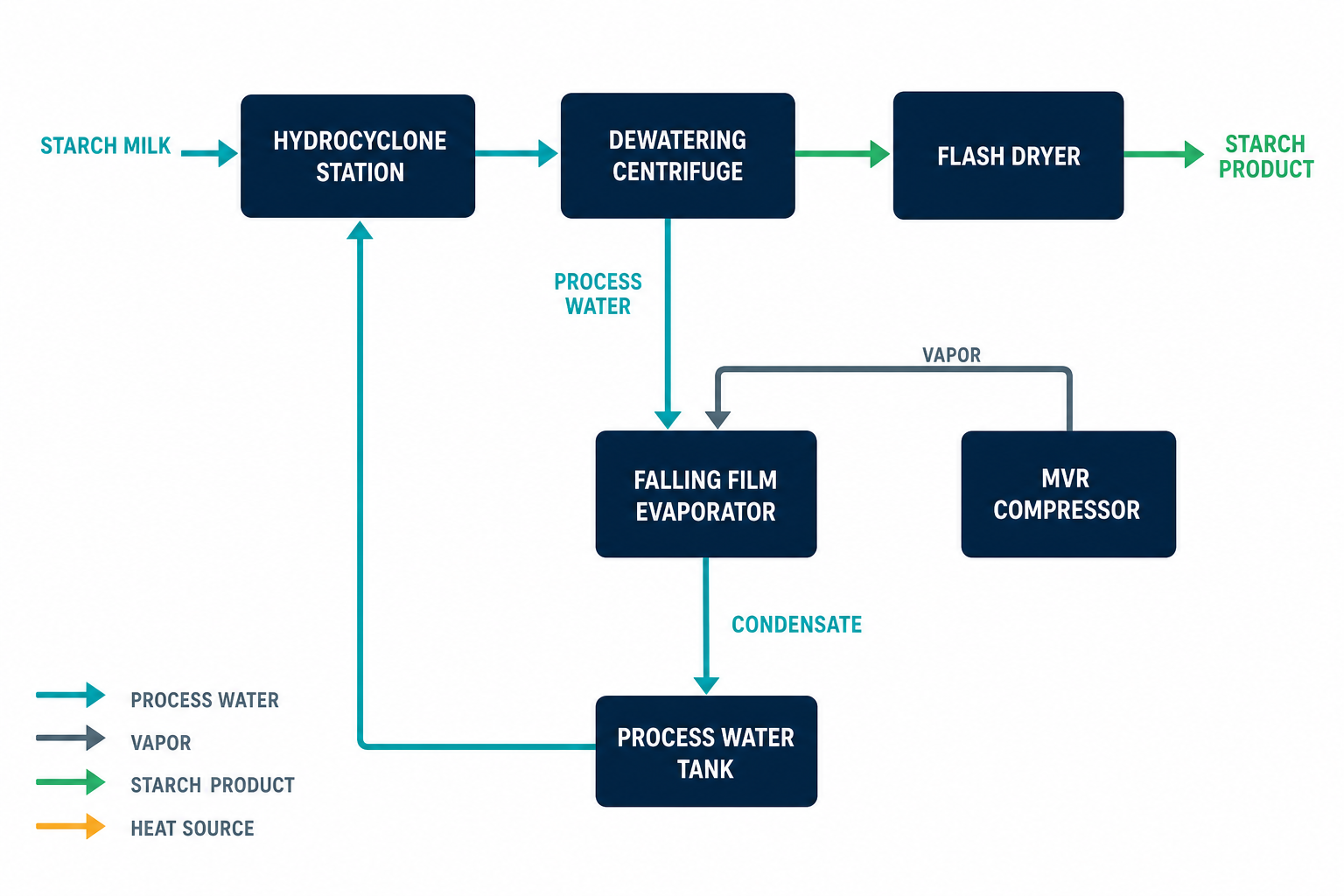
Across these duties, the energy argument is the same. Industry-reported figures: traditional single-effect steam evaporation consumes roughly 600 kWh of steam-equivalent energy per ton of water removed; an MVR system recompresses the vapor and typically delivers the same duty at 20–40 kWh of electricity per ton (published ranges, indicative, not a project guarantee). On a stream of a few tons per hour of evaporation, that difference is a utility-bill line item; on steep water or juice at industrial scale it is the difference between a coproduct that pays and one that is discharged. Detailed performance envelopes are covered on the falling-film evaporator page.
Energy and Water: The Two Levers That Outlast Equipment Choices
Starch plants live for decades, and the two operating costs that compound over that horizon are energy per ton of product and water consumed per ton of product. Both are attacked the same way: mechanical dewatering before thermal drying, vapor recompression before steam, and closed water loops ahead of end-of-pipe treatment. Dewatering starch from 40% to 60% solids mechanically before the dryer removes a disproportionate share of the thermal load, because evaporating a kilogram of water in a dryer costs far more than squeezing it out in a centrifuge.
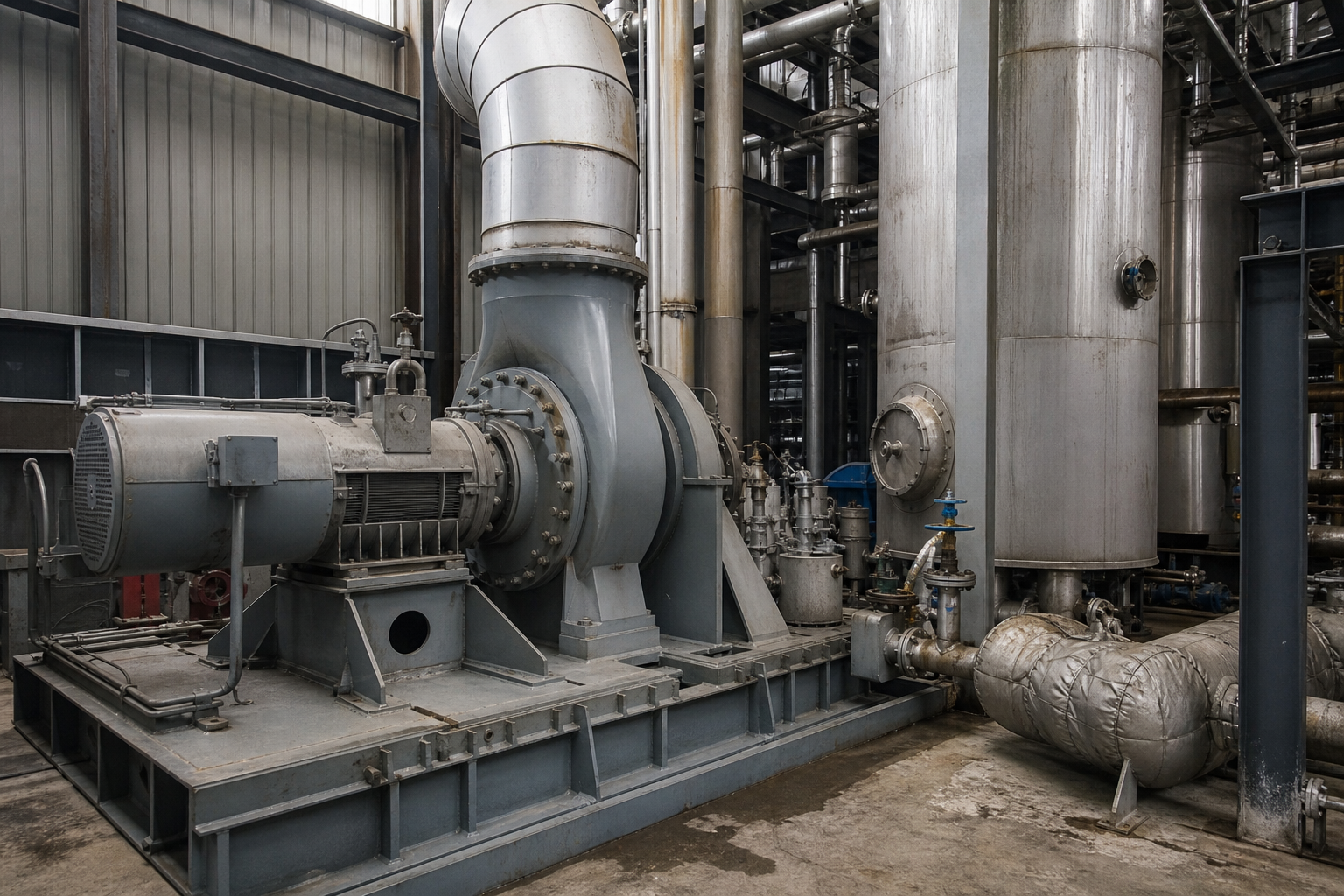
The same hierarchy applies to weak liquid streams. Sending dilute process water to a wastewater plant and paying to treat it is the default; concentrating it with MVR first splits it into a small, valuable solids stream and clean condensate that can return to the process. Where discharge permits are tightening, this approach converges with zero-liquid-discharge practice — the design logic on our ZLD solutions page applies to starch effluent exactly as it does to chemical wastewater.
Scoping a Project: What to Ask Before Ordering Equipment
Capacity is the easiest specification and the least decisive. The questions that determine whether a starch project meets its business case are: what is the starch recovery rate at steady state; what whiteness or purity grade does the line actually hold week after week; how many tons of water and kWh of energy does each ton of finished starch consume; and where do the pulp, gluten, steep solids, and soluble protein streams end up. A supplier who can only quote the main line is quoting half a plant. Integrated scope — process design, separation, evaporation and drying, utilities, and automation under one responsibility boundary, as delivered in the 10-month Henan wheat project cited above (external industry reference) — is what compresses both the schedule and the commissioning risk.
When This Route May Not Fit
Evaporation-led valorization assumes the weak streams have somewhere to go. A starch plant whose pulp, steep solids, or soluble protein have no market outlet should not invest in concentrating them; dewater-and-dispose can be the honest answer where feed or fermentation buyers are absent. Very small lines, a few hundred tons per day of roots with cheap local fuel, may find flash drying plus simple biological treatment cheaper than any recompression capital. Where power is unreliable and biomass steam is cheap, MVR loses its price advantage and multi-effect evaporation driven by waste heat is the better fit. A potato line chasing maximum whiteness should spend capital on extraction speed and water discipline before anything on thermal concentration.
What Must Be Verified
Before a starch project is fixed, verify the numbers that carry the business case. Raw-material supply and its seasonality set achievable capacity, because cassava roots and potatoes are harvest-bound and flour or corn supply sets wheat and corn economics. Starch recovery and whiteness must be benchmarked on the actual raw material, not supplier guarantees, ideally with trial separations. Weak-stream outlets deserve written confirmation: steep-liquor buyers, pulp offtake, fermentation use of process water, or land-application permits. Utilities need auditing: steam or power price, water rights, and effluent limits that decide whether concentration or discharge is the correct default. For potato lines, confirm the oxidation-control cascade can hold whiteness through peak season. Each confirmed number replaces an assumption priced into equipment.
Frequently Asked Questions
What capacity ranges are typical for cassava and potato starch lines?
Turnkey cassava starch plants are built from 100 TPD up to 3,000 TPD, while potato starch lines typically run 100–300 TPD. Potato capacity is capped less by demand than by process chemistry — rapid oxidation after rasping forces a fast, continuous extraction train that does not scale up as freely as cassava’s screening-based flowsheet.
Why do corn starch plants need more evaporation than wheat, cassava, or potato plants?
Corn wet milling produces two dilute liquid coproducts — steep water and gluten liquor — that must be concentrated to become sellable. Steep water is evaporated to roughly 50% dry solids as commercial corn steep liquor. The other crops discharge most of their water mechanically through pressing and screening, so their thermal duty concentrates in drying rather than evaporation.
Which evaporator type should be used for corn steep water?
A two-section system: falling film for the bulk of the water removal, followed by forced circulation for finishing. Falling film gives high heat-transfer coefficients and low energy consumption on thin liquor but struggles with viscosity and wall fouling at final solids; forced circulation handles the fouling zone at the cost of higher pumping power. Using each only in its own regime is the proven configuration.
How is starch whiteness protected in a potato starch line?
By speed. Enzymatic browning starts minutes after rasping, so extraction, fiber screening, and refining are designed as one continuous cascade with minimal residence time between stages. Rapid separation, efficient fiber removal, and closed water management keep oxidation exposure low; whiteness is a pricing parameter, so this design discipline translates directly into revenue.
Can starch plant process water be turned into a product instead of effluent?
Yes. In the 600,000 t/a Henan wheat starch project (external industry reference, not an EvapCryst delivery), process water containing pentosans and soluble nutrients was concentrated and routed to alcohol fermentation as a nutrient solution — a third revenue stream alongside starch and gluten, with a correspondingly lower effluent load. MVR evaporation makes such concentration energetically affordable.
For a first-pass screening of a starch project, send the raw material, target capacity, and intended product mix (starch, gluten, steep liquor, or fermentation outputs); in return you receive an indicative line architecture and evaporation-duty placement, before any detailed engineering.