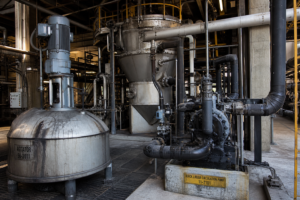
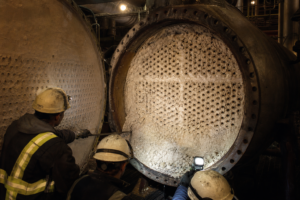
Bagasse-and-wood black liquor concentration at scale is delivered today by seven-effect trains of tube-based falling-film design with integrated condensate handling: the public reference is the evaporation system supplied to Century Pulp and Paper (CPP) at Lalkuan, Uttarakhand, India – a seven-effect plant rated 275 t/h of water evaporation producing 75% dry-solids strong liquor, designed for a furnish of 60% bagasse pulp and 40% wood pulp, commissioned December 2020 at an investment class under EUR 10 million (Valmet published project news – an external industry reference, not an EvapCryst delivery). The design premise: agrifiber black liquor – bagasse’s silica and volatile-organic profile – must be evaporated with the condensate system engineered as deliberately as the effects, because in bagasse service the foul condensate fraction is both larger and more valuable to get right.
What Bagasse Changes About the Evaporation Problem
Bagasse – the fibrous residue after sugar extraction from cane – brings three liquor behaviors that wood does not. Its ash and silica load elevates scaling tendency through the train; its carbohydrate-derived organics widen the volatile fraction that leaves the liquor as vapor, enriching the condensates with methanol, furfurals and odorous reduced compounds; and its seasonal supply (crushing-season bagasse against stored or purchased furnish in the off-season) swings the liquor flow and solids to the evaporators. A train designed around pure wood liquor meets each of these as a surprise; the CPP reference shows the design answer – a seven-effect tube evaporator arrangement engineered explicitly for the 60/40 bagasse-wood mix, with the condensate system integrated rather than appended.
The published scope from the supplier names the parts that matter: main evaporator effect bodies, condenser, integrated foul condensate treatment system, flash tanks, key support structures and vacuum system – plus a foul condensate stripping tower and ICT (internal condensate treatment) system producing cleaner condensate for the mill’s water circuits. The customer’s stated selection logic, from the same release: in an integrated pulp-paper mill the recovery line is the critical-availability bottleneck, and the choice targeted the latest evaporation technology to run alongside existing equipment while lifting overall economics through steam utilization.
Illustrative Duty Envelope for Screening
The envelope below consolidates the published CPP reference with standard practice for agrifiber liquor concentration. It is an illustrative envelope built from published industry material – not a customer dataset, and not a performance guarantee.
| Parameter | Illustrative range | Basis / note |
|---|---|---|
| Evaporation duty | 275 t/h water | Published CPP rating |
| Effect count | Seven | Published configuration |
| Strong liquor dry solids | 75% | Published product specification |
| Furnish design basis | 60% bagasse / 40% wood | Published design mix |
| Investment class | < EUR 10 million | Published comparable-project price |
| Condensate handling | Segregation + foul stripper + ICT | Cleaner condensate to mill circuits |
Process Solution: Seven Effects, Steam Wisely, Condensates Engineered
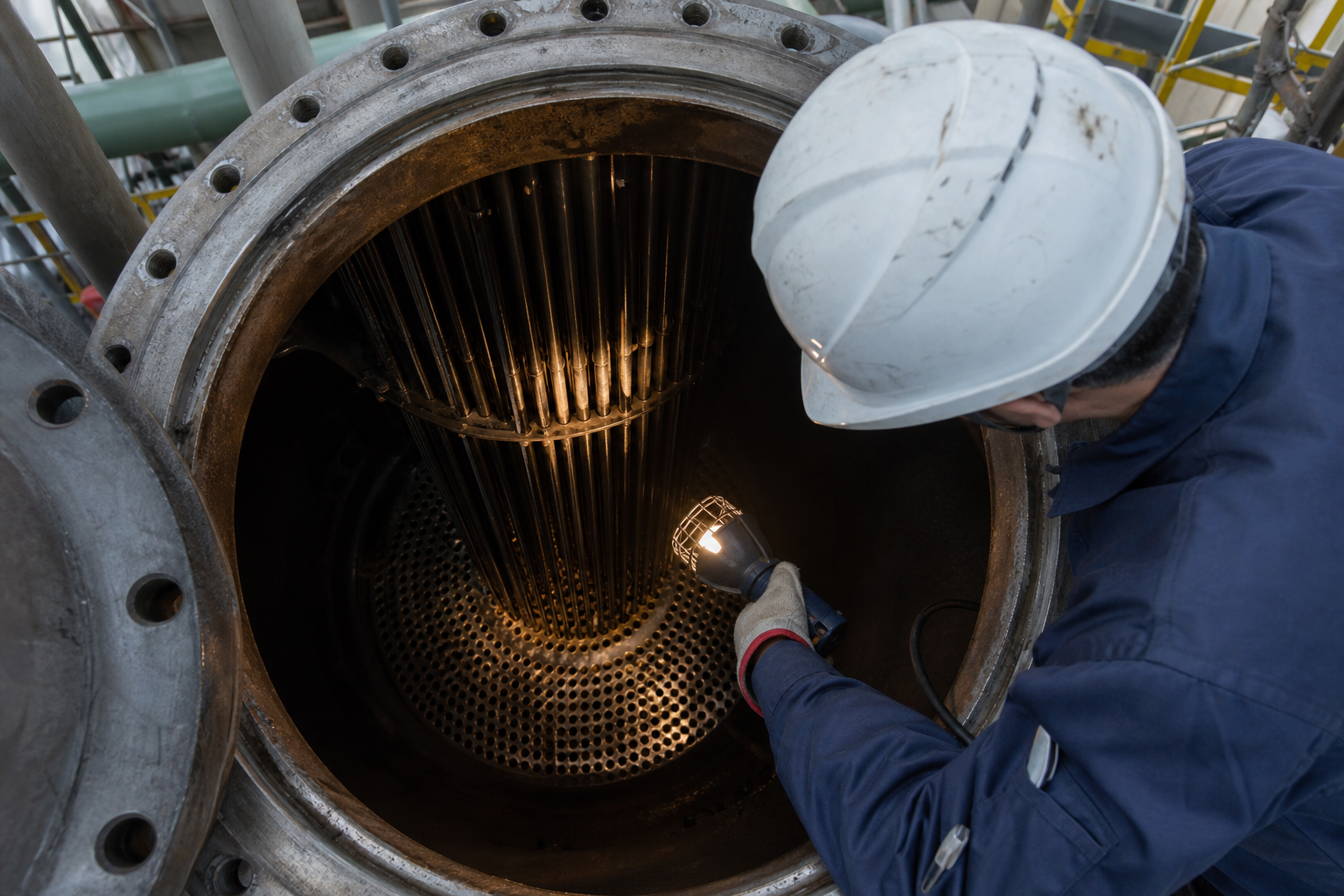
The train’s working principle is vapor economy: live steam (or, in modern arrangements, vapor from the digestion or recovery systems) drives the first effect, and each subsequent effect evaporates under deeper vacuum using the previous effect’s vapor, with the final effect’s vapor condensed against cooling water. Seven effects is the sweet spot for this duty class – each added effect improves steam economy (less live steam per ton of water evaporated) at the cost of more surface and deeper vacuum; beyond seven, the temperature differences available between effects shrink toward unworkable for the fouling and viscosity profile of agrifiber liquor. The tube-based falling-film design keeps liquor film on the heating surfaces at high transfer coefficients through the mid-solids range, with flash tanks balancing the liquor and vapor paths between effects.
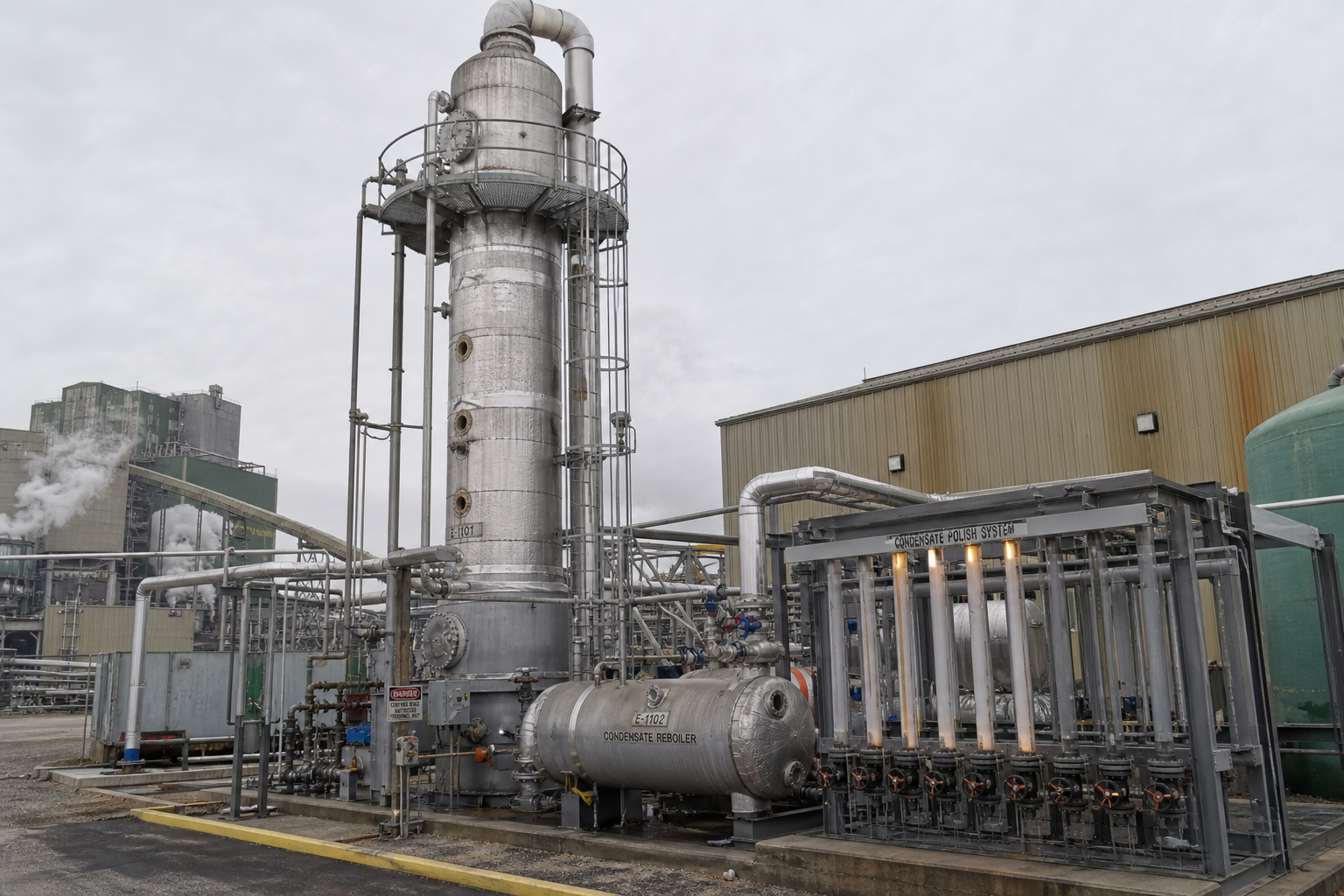
The condensate side is where bagasse mills win or lose. Each effect produces condensate of different character – the early effects’ condensate cleaner, the later and higher-temperature effects’ condensate loaded with methanol, turpentine analogs and reduced sulfur and nitrogen organics. The integrated design segregates these streams, strips the foul fraction in a dedicated tower, and polishes through ICT – delivering condensate clean enough for the mill’s process water circuits. In a water-balanced agrifiber mill this recovered condensate is a primary water source, not a by-product.
The vacuum system closes the train: maintaining the final effects at the design vacuum sets the whole temperature ladder, and its reliability is the train’s availability. The published scope includes it explicitly – a reminder that in seven-effect service the vacuum plant is a process system, not a utility.
Technical Features That Decide Whether the Train Earns Its Rating
Three features carry the engineering weight. The first is furnish-flexible design. A train engineered for a 60/40 bagasse-wood mix is engineered for its extremes – the silica and organic load of the bagasse end and the viscosity of the wood end. Mills whose furnish swings with sugar-season economics need that envelope verified across the swing, not just at the design mix; the reference project’s stated purpose was capacity growth alongside existing equipment, implying exactly such swing operation.
The second is condensate segregation and stripping as a water-supply system. The foul stripper and ICT are not environmental accessories – they are the mill’s clean-water factory. Their design duty grows with the bagasse fraction, and their output spec should be set by the consuming circuits (pulp washing, causticizing, boiler makeup where applicable).
Third is steam-integration economics. The customer’s published rationale – lifting overall plant economics through effective steam utilization – is the real selection driver for effect count. Seven effects against five buys roughly proportional live-steam reduction per ton evaporated; whether that pays at a given mill depends on the marginal value of the steam saved, which for integrated mills is the cogeneration margin.
Process Modules
| Process module | Candidate equipment types | Selection rationale | Module duty |
|---|---|---|---|
| Bulk concentration | Seven-effect tube falling-film train | Steam economy at agrifiber fouling/viscosity profile | Weak liquor to strong liquor (75% DS) |
| Vapor handling | Flash tanks, final condenser | Balance liquor/vapor paths; maintain vacuum ladder | Stable effect-by-effect driving force |
| Vacuum plant | Vacuum system (process-grade) | Sets final-effect vacuum and train availability | Hold the temperature ladder |
| Condensate segregation | Effect-wise segregation piping | Separate clean from foul fractions at source | Protect clean condensate value |
| Foul condensate treatment | Stripping tower + ICT | Recover foul fraction as mill-grade water | Cleaner condensate to circuits |
| Supporting structure | Key support structures, platforms | Large-effect body arrangement | House the island |
Configuration, materials and operating envelopes above are potential considerations only; actual selections depend on liquor chemistry, scaling behavior, steam balance and project capacity.
Expected Performance and Limits
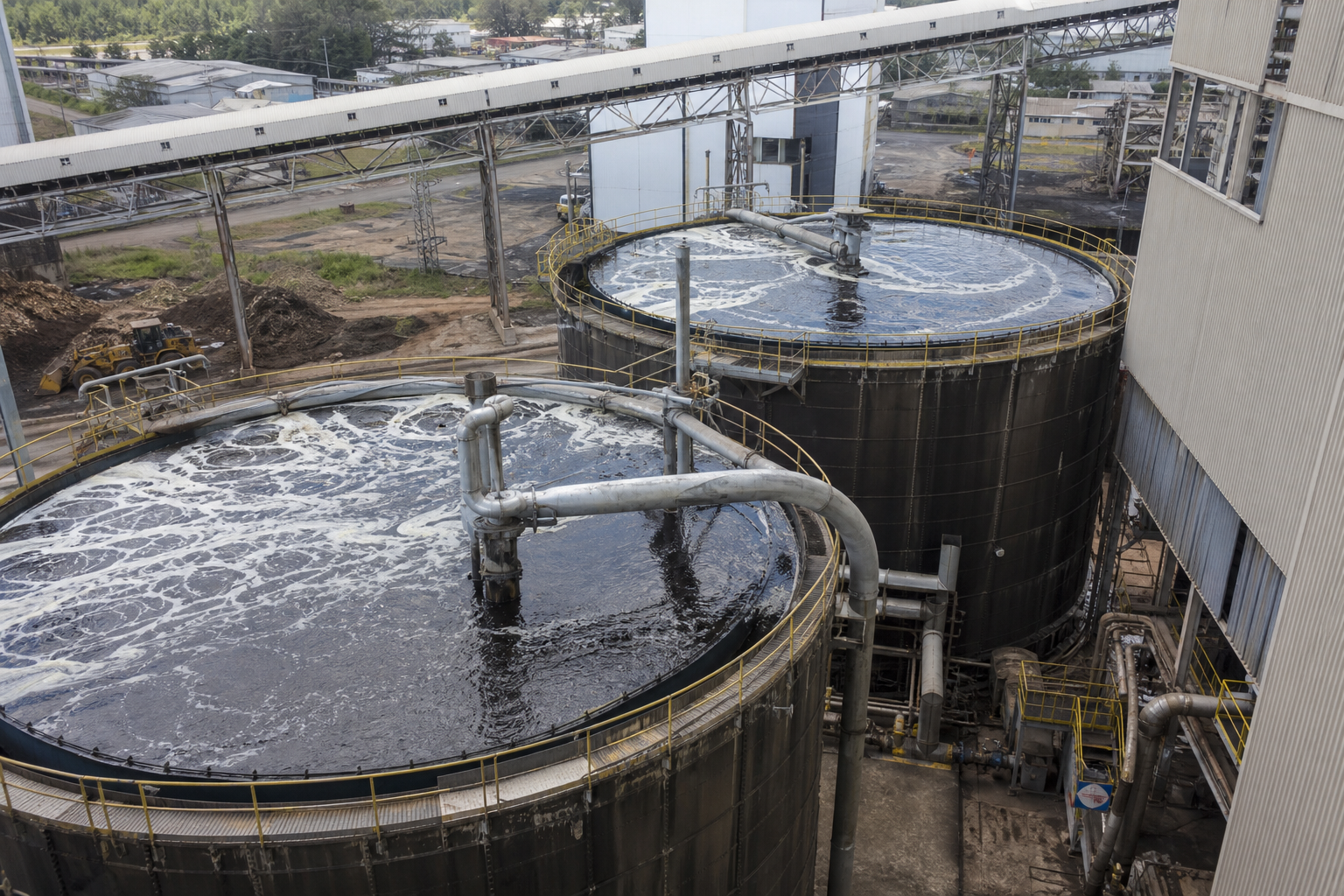
The published reference performance: seven effects, 275 t/h evaporation, 75% dry solids product, engineered for 60% bagasse and 40% wood furnish, running alongside the mill’s existing evaporation equipment for capacity growth, commissioned December 2020, in a comparable-project price class under EUR 10 million (Valmet published project news, Q4 2019 order – an external industry reference; indicative, not a project guarantee, and not an EvapCryst delivery). For the configuration class generally: steam economy improves with effect count along the standard multi-effect curve, and 75% DS from agrifiber liquor represents the mainstream high-solids target (the companion articles document 73-80% practice across chemistry-assisted routes). The practical limits: bagasse silica escalates scaling as the concentration climbs – wash-cycle design and scaling-species management set availability more than thermal design does; the seasonal furnish swing shifts liquor behavior and should be inside the verified envelope; and strong-liquor viscosity at 75% DS from agrifiber furnish demands firing-side temperature management that the liquor heater system must deliver.
Industry References and Validation
One public anchor with full scope transparency: the Valmet-CPP Lalkuan project – seven effects, 275 t/h, 75% DS, 60/40 bagasse-wood design basis, foul condensate stripping and ICT, vacuum system, under EUR 10 million class, started up December 2020, with the customer’s selection rationale on record from mill executives (Valmet published project news; an external industry reference, not an EvapCryst delivery). The companion references in this cluster cover the chemistry-assisted high-solids route, the NPE-control architecture, and the MVR energy overlay that applies to such trains. For your own project, validation effort should concentrate on: a liquor characterization across the full furnish swing (solids, viscosity-temperature, scaling species including silica); steam-balance modeling to price the effect count; condensate characterization effect-by-effect to size the stripper and ICT; and a scaling-assessment and wash-cycle protocol for the mid- and high-solids effects.
Frequently Asked Questions
Why seven effects rather than five or six?
Steam economy. Each effect reuses the previous one’s vapor, so more effects mean less live steam per ton of water evaporated. Seven is where the agrifiber fouling and viscosity profile, the available temperature ladder and the surface cost balance. The customer’s published rationale – economics through effective steam utilization – is exactly this arithmetic.
Is 75% dry solids from bagasse liquor normal?
It is the mainstream target for this furnish class. Wood liquor trains push to 74-80% with chemistry assistance; agrifiber liquor’s silica and viscosity argue for the conservative end of high-solids practice unless scale management is deliberately engineered.
What is ICT – internal condensate treatment?
The polishing stage after foul-condensate stripping: evaporator condensates are segregated, the foul fraction is stripped of methanol and odorous organics in a tower, and ICT finishes it to the quality the mill’s water circuits require. In bagasse service this system is a primary water factory.
Can this train run alongside existing evaporators?
That was the reference project’s exact configuration – the new line lifting capacity in parallel with existing equipment. The integration points are liquor routing, steam supply and condensate destinations, all of which want early coordination in the design.
Does bagasse liquor need different materials than wood liquor?
The corrosion and scaling profile differs more than the materials class does – standard liquor-service materials carry both, but silica scaling and the wider foul-condensate fraction change the duty on wash systems and the stripper. Materials review stays case-by-case on the chloride and thiosulfate assay.
When This Route May Not Fit
If the mill’s liquor flow supports only three or four effects (small nonwood mills, or single-line installations), the seven-effect class over-builds and simpler trains serve better. If the furnish is pure wood with benign chemistry, the bagasse-specific condensate engineering shrinks and the standard wood-liquor architecture applies directly. And if the mill’s steam is so cheap (waste-heat or over-supplied cogeneration) that effect-count economics invert, fewer effects with more steam can price better – run the site’s own steam balance before defaulting to seven.
What Must Be Verified Before Committing
Five items: liquor characterization across the full furnish swing (solids trend, viscosity-temperature curves, scaling species with silica quantified); a site steam balance pricing the effect count; effect-by-effect condensate characterization to size stripping and ICT; a scaling-assessment and wash-cycle protocol for mid- and high-solids effects; and an integration plan for liquor, steam and condensate routing against existing equipment if the new train runs in parallel. These map directly onto the modules above and are the standard screening package we would run before any quote.