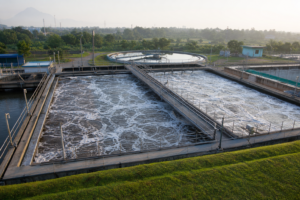
Paper Mill ETP Baseline: Activated Sludge Performance and Upgrade Triggers
The baseline for paper mill effluent treatment is the conventional activated sludge ETP – primary clarifier, aeration tank, secondary clarifier – and the question

The baseline for paper mill effluent treatment is the conventional activated sludge ETP – primary clarifier, aeration tank, secondary clarifier – and the question
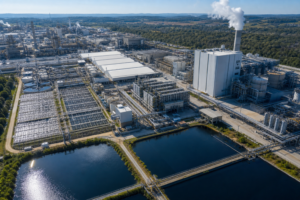
The largest zero liquid discharge project in the paper pulp industry – as documented by its membrane system supplier – runs at 40,000 m³/d
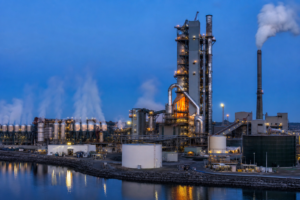
Kraft mill alkali recovery is a five-stage cycle – evaporation, combustion, causticizing, lime reburning and energy recovery – in which multi-effect evaporation is the
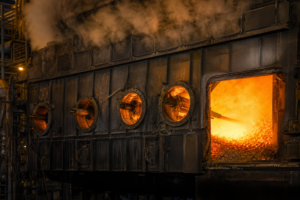
Black liquor is a fuel whose quality is set by an evaporator: every percentage point of dry solids removed from weak liquor is firing
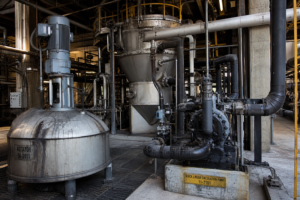
Concentrating black liquor above 65% solids is the point where conventional evaporation stops cooperating – viscosity outruns concentration and sodium salts precipitate onto heat
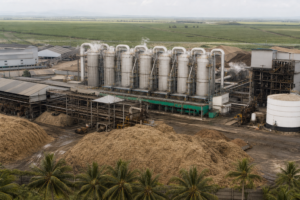
Bagasse-and-wood black liquor concentration at scale is delivered today by seven-effect trains of tube-based falling-film design with integrated condensate handling: the public reference is
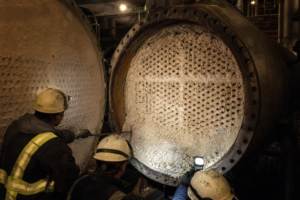
Calcium carbonate scaling in black liquor evaporators is the availability problem of the application: hard, adherent scale on heated surfaces that shuts effects down
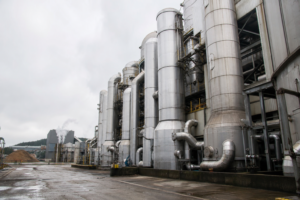
How black liquor evaporation plants lift weak black liquor to firing solids for the recovery boiler, the four engineering challenges that decide performance, and