
MBR Plus Evaporation for Textile Effluent: Biological Front Ends for ZLD Trains
Membrane bioreactors have become the standard biological front end for large textile effluent plants precisely because they produce an effluent the downstream stages –

Membrane bioreactors have become the standard biological front end for large textile effluent plants precisely because they produce an effluent the downstream stages –
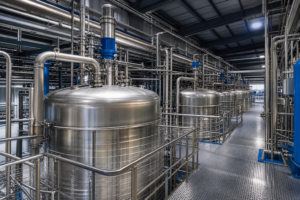
How crystalline MAP is produced: neutralize wet-process phosphoric acid with ammonia, concentrate in falling-film and forced-circulation evaporators, crystallize in FC or DTB/Oslo crystallizers, and
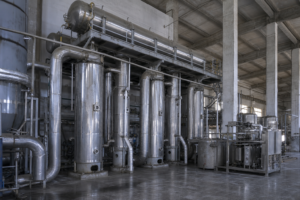
Evaporation systems for starch sweetener plants: five-effect and MVR falling film trains from 10% to 77% solids, the chromatographic 60% DS interface, ion exchange

Zinc sulfate crystallization plants built around DTB crystallizers that switch between monohydrate evaporation mode and heptahydrate cooling mode, with triple-effect or MVR energy supply

Plant protein and biological feed processing solutions: MVR falling film concentration of fermentation broths and protein liquors at 60-80C, viscosity and foaming control, and
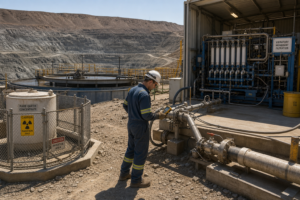
For rare earth operations working ores that carry uranium and thorium, water closure is a radiological design problem before it is a salinity problem:

For rare earth smelting and separation wastewater – the streams that carry salt above 10%, pH below 1, COD in the tens of thousands
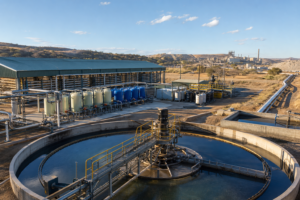
For rare earth mines whose water problem is hardness, silica and moderate dissolved salts at large flow, the workable route before any thermal ZLD
For rare earth separation plants, ammonia nitrogen treatment is not one process but three, selected by concentration: high-strength streams (tens of grams per liter
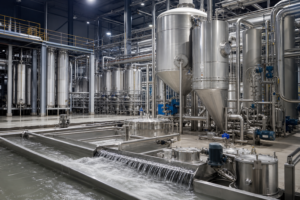
Six-step aluminum sulfate production: acid dissolution, clarification, vacuum or MVR evaporation of the viscous acidic liquor, cooling solidification to the 18-hydrate, crushing and packing