Evaporator availability is won through operating discipline, and the single statistic that explains most downtime is scaling: across externally compiled service records covering 200+ projects, fouling of heat-transfer surfaces is the number-one issue limiting continuous operation. The working system that keeps plants running has six parts — pre-start checks in three passes, four running parameters held on setpoint, temperature discipline around salt crystallization, a sequenced shutdown (never a power cut), tiered maintenance during downtime, and seasonal protection in freezing climates. Applied consistently, this discipline is illustrated by an externally reported 600 t/d gasfield-water plant running continuously beyond 30 days while producing water to GB/T 31962-2015 grade C and salt to first-grade wet industrial salt (GB/T 5462-2015). This guide walks each part in operating order.
The Headline Problem: Scaling Is What Stops Evaporators
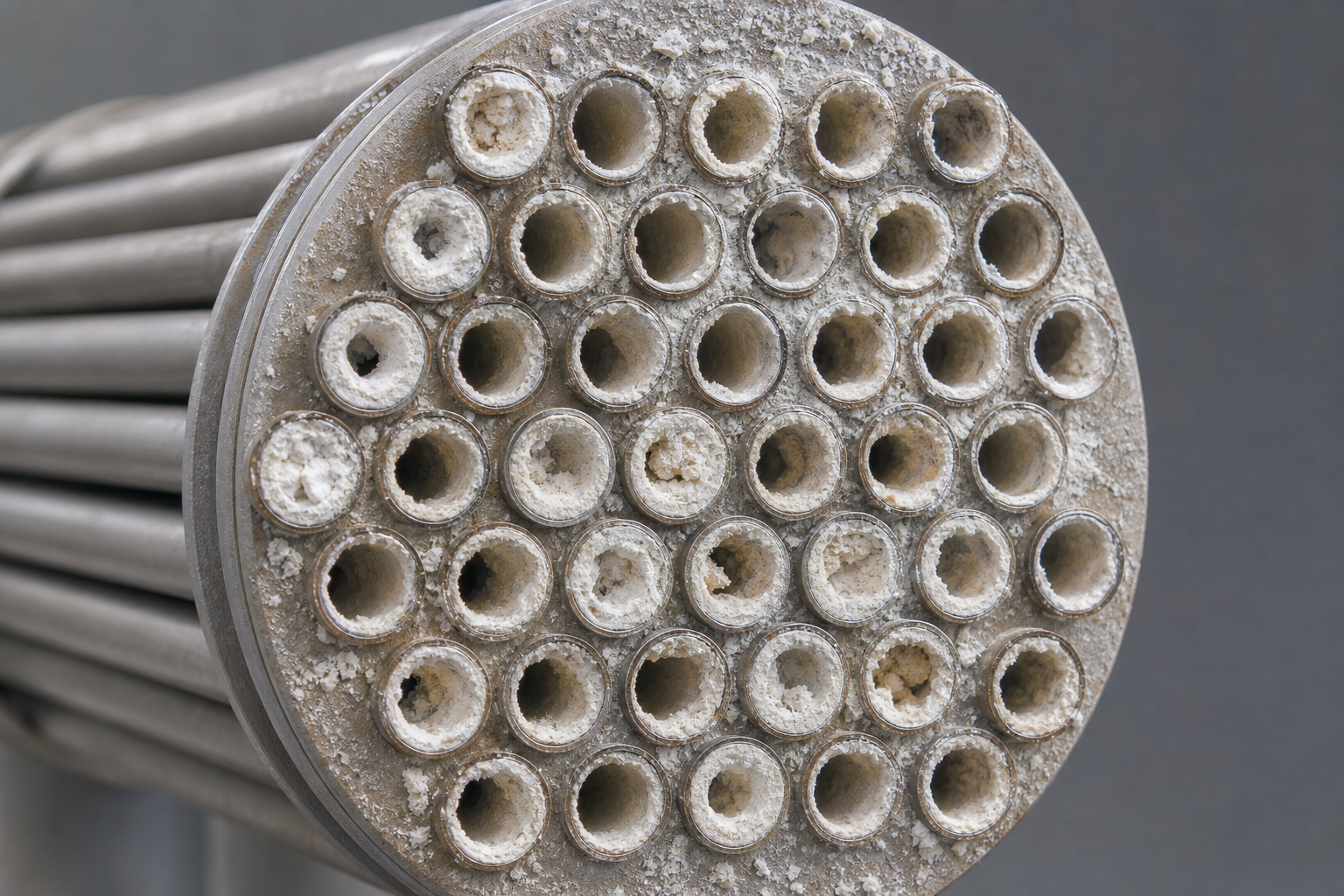
High-salinity liquors carry exactly the species — calcium and magnesium salts, silica — that deposit on hot surfaces as concentration rises. Every millimeter of scale is insulation: heat-transfer coefficient falls, energy per ton of water climbs, and eventually local overheating damages tubing. The defense is layered, and mostly upstream of the evaporator: feed filtration for suspended solids, hardness control by softening (the case below targets 500–1,000 mg/L entering the evaporator), silica management, pH adjustment, and antiscalant dosing. In-service, circulation velocity and stable load are the levers that keep crystals suspended instead of adhering. When scale does form, the response belongs to the cleaning regime — and when symptoms need diagnosis rather than routine, the troubleshooting guide covers the fault tree.
Pre-Start Checks: Three Passes
A start-up after any outage follows three verification passes:
- Machine pass — evaporator body, crystallizer, circulation pumps, and compressor inspected for looseness, abnormal noise, and leakage; vacuum lines confirmed sealed and unobstructed.
- Feed pass — feed filtered to remove suspended solids, colloids, and large-molecular organics; pH adjusted into the 7–9 window that suits mainstream salt crystallization and suppresses acid corrosion; feed concentration and temperature verified against the design basis.
- Instrumentation pass — online temperature, pressure, level, and concentration instruments calibrated; variable-frequency drives and interlock protections proven responsive; cooling and lubrication systems confirmed ready.
Starting on unverified instruments is how small faults become plant trips — the instrument pass is the cheapest of the three and prevents the most expensive failures.
Running the Plant: Four Parameters
- Evaporation temperature 50–100°C — held on setpoint by vacuum adjustment, which sets the liquor’s boiling point; this is the master variable for both thermal economy and product protection.
- Continuous, uniform feed — variable-frequency feed pumps maintain steady flow, preventing concentration surges that unbalance heat transfer.
- Circulation velocity 1.5–3.0 m/s — fluid shear at this level suppresses salt adhesion on tube walls and extends continuous run length; too low invites deposition, too high trades into erosion and pumping cost.
- Compressor watch: three signals — temperature rise, operating current, and vibration monitored in real time, keeping the vapor recompression loop — the heart of an MVR evaporator — loaded within design and never overloaded.
Temperature Discipline
Where the train separates sodium sulfate and sodium chloride, temperature is the separation reagent. Sodium sulfate crystallizes preferentially in the 85–100°C band — its solubility falls as temperature rises — while sodium chloride, only weakly temperature-sensitive, precipitates in the 55–65°C band. Around both sits the supersaturation discipline: hold the liquor in the metastable zone. Pushed too high, nucleation explodes into fine, impurity-occluding microcrystals; too low, growth stalls and throughput drops. Online concentration measurement matches evaporation rate to crystallization rate in real time, and a stable crystallizer level closes the loop. The equipment side of this discipline is covered on the salt separation page.
Shutdown: A Sequence, Not a Switch
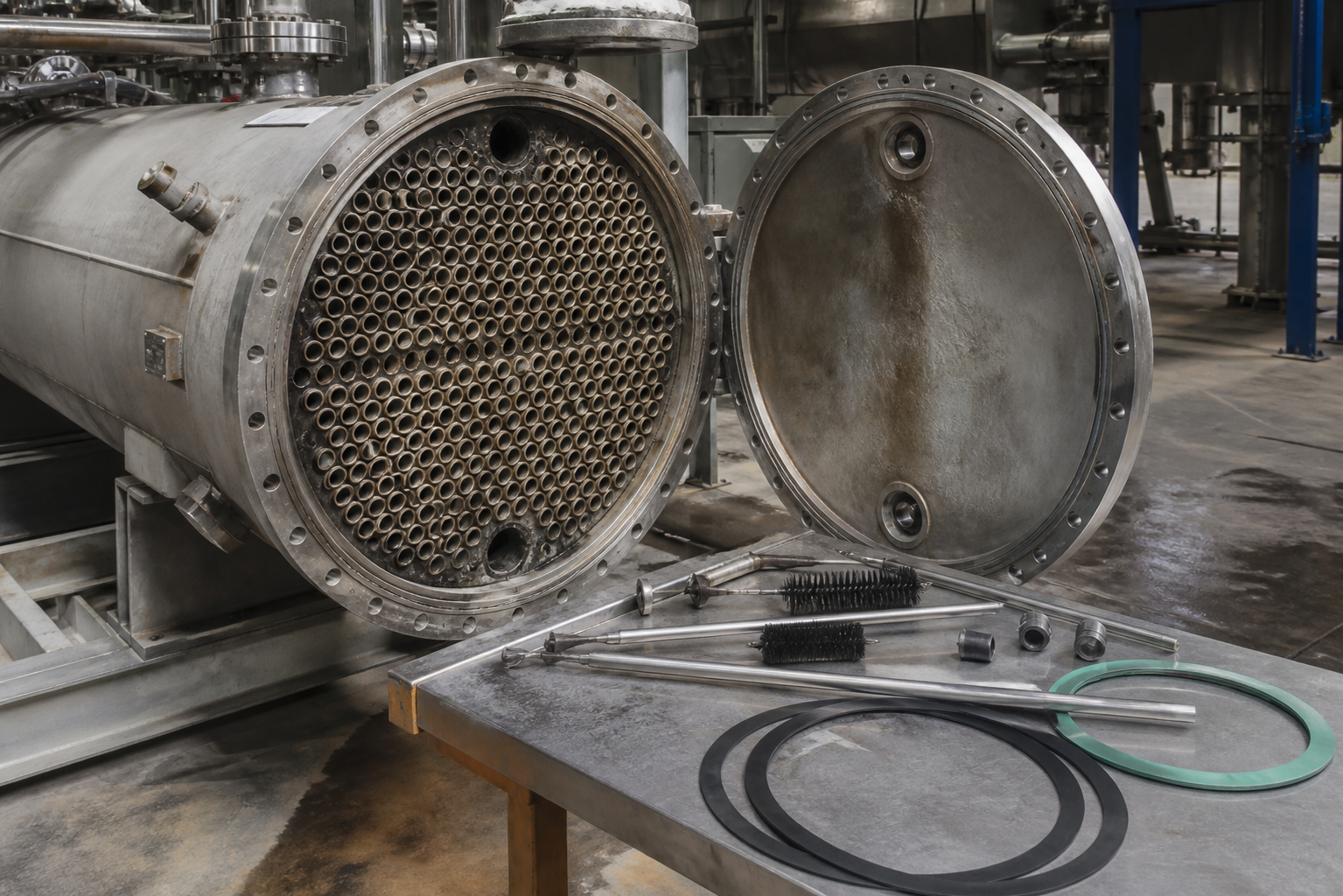
Direct power-off during operation is prohibited — thermal and vacuum transients damage equipment and can freeze concentrated liquor into lines. The correct sequence: stop feed while maintaining circulation; process out residual material; cool down gradually; break vacuum; then shut down compressor and circulation pumps in order; only then cut power. Immediately after shutdown, clean salt deposits from tube walls and the crystallizer before they dry hard. The logic is identical to the stoppage rules in the energy optimization guide: every transient you avoid is efficiency and equipment life retained.
Three-Tier Maintenance During Downtime
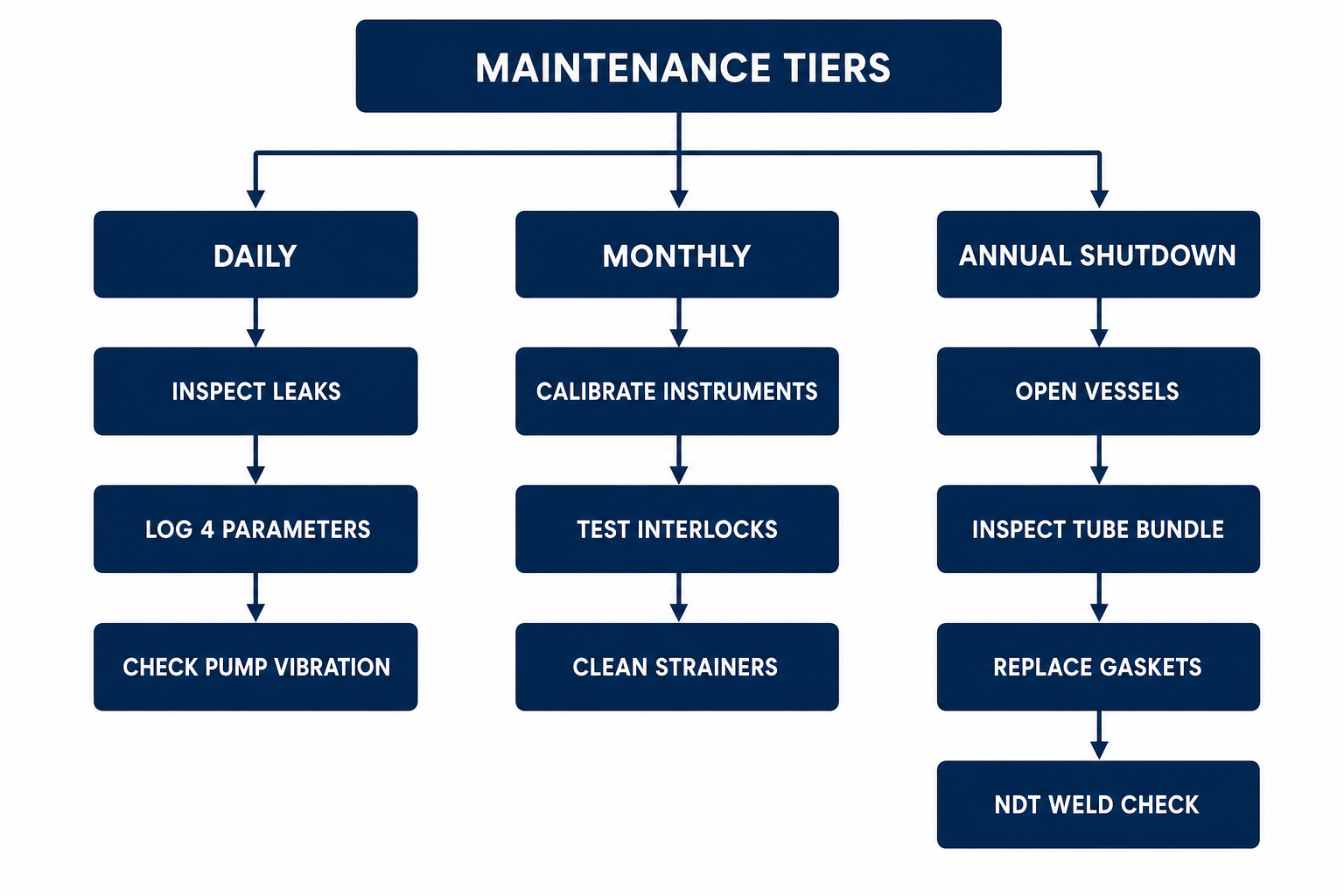
Standby duration defines the maintenance tier:
| Standby period | Scope | Key actions |
|---|---|---|
| Short: 1–15 days | Cleaning and protection; awaiting restart | Drain all liquor from evaporator, tubes, and feed chambers before it dries; flush with circulating clean water and drain dry; inspect valve seals and pump/vacuum-pump oil level and quality; one daily inspection logging static parameters |
| Medium: 15–90 days | Descaling plus component care | Circulate an environmentally compatible cleaning agent through heating sections and lines (rinse thoroughly after to prevent residual corrosion); dedicated overhaul of compressor and pump bearings and seals; pressure-hold testing of the vacuum system with seal repair; full re-inspection every two weeks |
| Long: 90+ days | Systematic preservation | Disassemble and clean strainers, distributors, small heat-exchange components; blow all lines with compressed air; apply anti-rust medium to bare metal; place desiccant in chambers (replaced monthly); power down and wrap control cabinets against dust and moisture; monthly inspection, quarterly full review |
Two governing rules across all tiers: aggressive-duty plants (high salt, high viscosity, crystallizing liquors) shorten the intervals, and every cleaning agent, protective medium, and lubricant must be compatible with the actual construction materials — the selection logic for which is covered in materials and corrosion protection. Maintain a written ledger of downtime durations, maintenance performed, and parts replaced; the accumulated data is how a plant tunes its own schedule instead of inheriting a generic one.
Five Chronic Challenges and Their Countermeasures
| Challenge | Mechanism | Countermeasure |
|---|---|---|
| Scaling | Salts and suspended solids deposit on heat surfaces over long runs | Scheduled cleaning program, antiscalant dosing, strengthened pretreatment |
| Corrosion | Acid/alkaline components attack metal surfaces | Corrosion-resistant materials (stainless, titanium) plus routine inspection and timely replacement |
| Mechanical wear | Compressors, pumps, motors run continuously; misalignment and lubrication failures | Scheduled lubrication and alignment checks |
| Control-system faults | Sensor or control-unit drift degrades efficiency or trips the plant | Preventive maintenance; periodic calibration of temperature, pressure, and flow sensors |
| Feed variability | Composition swings cause uneven evaporation and accelerated fouling | Buffer tanks and adaptive control stabilizing flow and concentration |
A Maintenance Frequency Baseline
A defensible starting schedule (to be tuned by the ledger): descaling and antiscalant treatment monthly to quarterly; corrosion and material-wear inspection quarterly to semi-annually; mechanical lubrication and alignment monthly; instrument calibration and control-software checks monthly; feed-water management as conditions require. Plants running predictive additions — oil analysis and vibration spectroscopy on the compressor, heat-transfer-coefficient trending — typically hold annual maintenance below 1.5% of equipment value while extending run length between cleanings.
Winter Operations
In northern service where temperatures reach −30°C, freeze protection is a hard gate. Equipment must be installed indoors with the equipment room held above 5°C; outdoor installations require insulation on water lines, pumps, pure-water units, and raw and pure water tanks, with heat tracing or antifreeze where needed. Never start frozen equipment. Before long winter shutdowns, blow residual water from condensers and piping with compressed air. Protect stack exits against cold-air back-draft that can freeze condensers. Restart after freezing follows a strict anti-dry-burn sequence: close the fuel valve, verify external and internal water circuits are not frozen (thaw if they are), start with fuel still closed to confirm feed flow, and only then open fuel — order matters. Winter also shifts feed chemistry: as total water volume falls, the industrial-sewage fraction rises, so online monitoring of COD, ammonia nitrogen, total phosphorus, and heavy metals — with a documented contingency plan when limits are exceeded — becomes part of operations.
Case Evidence: 600 t/d Gasfield Water in Deyang
An externally reported Deyang plant treating mixed gasfield-produced water, flowback fluid, and filter-press filtrate at 600 t/d — process: homogenization-sedimentation pretreatment, plate-type MVR forced-circulation evaporation-crystallization, effluent polishing — illustrates operating problems solved at the pretreatment boundary. Four difficulties and their fixes: high metal-ion content caused plate-exchanger scaling — corrected by optimized homogenized aeration (jet aerators with efficient roots blowers); low inlet pH degraded flotation performance — corrected by caustic dosing ahead of flotation and re-optimized PAM injection position and depth; inlet hardness fluctuating around 22,000 mg/L made two-step softening expensive and sludge-heavy — managed by combined two-alkali softening plus compounded antiscalant, holding evaporator feed hardness at 500–1,000 mg/L and greatly extending plate-exchanger cleaning cycles; low-boiling organics carried into the distillate raised its COD — attacked by front-end PAM optimization for stronger flocculation. Results: water meeting GB/T 31962-2015 grade C, crystallized salt at or above first-grade wet industrial salt per GB/T 5462-2015 (sold as a resource), and the evaporation-crystallization system running stably beyond 30 continuous days. Comparable complex-wastewater duty is described under complex wastewater treatment.
FAQ
What is the most common cause of evaporator downtime?
Scaling. Across externally reported 200+ project service records it is the leading limitation on continuous operation. Defense is layered upstream — filtration, softening, pH adjustment, antiscalants — plus in-service circulation velocity of 1.5–3.0 m/s and stable load.
What checks are required before starting an evaporator?
Three passes: the machine pass (body, crystallizer, pumps, compressor — no looseness, noise, or leaks; vacuum lines sealed), the feed pass (filtered, pH 7–9, concentration and temperature verified), and the instrumentation pass (calibrated online instruments, proven interlocks, ready cooling and lubrication systems).
How should an evaporator be shut down?
Never by cutting power directly. Stop feed while circulating, process out residuals, cool gradually, break vacuum, then close compressor and circulation pumps in sequence, and cut power last. Clean salt deposits immediately after shutdown, before they dry hard.
How often should an MVR evaporator be maintained?
Baseline: descaling monthly to quarterly; corrosion and wear inspection quarterly to semi-annually; lubrication and alignment monthly; instrument calibration monthly; feed management as needed. During downtime, apply the three-tier schedule — 1–15 days, 15–90 days, and 90+ days — with deepening scope, and tune intervals from the maintenance ledger.
What hardness should enter the evaporator?
Keep combined calcium and magnesium below about 100 mg/L for MVR service. In the Deyang case, raw hardness near 22,000 mg/L was reduced by two-alkali softening plus antiscalant to 500–1,000 mg/L entering the system — a compromise set by economics that still extended heat-exchanger cleaning cycles substantially.