Choosing between mechanical vapor recompression (MVR) and multi-effect evaporation (MEE) is fundamentally an energy-price decision constrained by four technical factors: boiling point elevation (BPE), heat sensitivity of the product, evaporation capacity, and available utilities. As a rule of thumb, MVR evaporates water on 15–35 kWh of electricity per ton with virtually zero live steam, while a triple-effect MEE typically consumes 0.35–0.4 tons of steam per ton of water evaporated. When electricity is affordable, steam is expensive, the liquor has low BPE, and the plant runs continuously, MVR usually delivers the lowest lifecycle cost with payback in roughly two to four years. When steam is cheap and abundant, capacity exceeds 100 t/h, or the liquor has high BPE, a well-designed multi-effect system remains the more economical choice. This guide compares both technologies across energy, CAPEX, OPEX, and selection criteria so you can run the decision for your own project.
How Each Technology Uses Energy
The two systems attack the same problem—reusing the latent heat in evaporated water—from opposite directions. A mechanical vapor recompression system takes the low-pressure secondary vapor generated in the evaporator, compresses it with a mechanical compressor to raise its pressure, temperature, and enthalpy, then returns it to the heating chamber as the heat source. The latent heat circulates in a near-closed loop; external steam is needed only for startup and small makeup quantities.
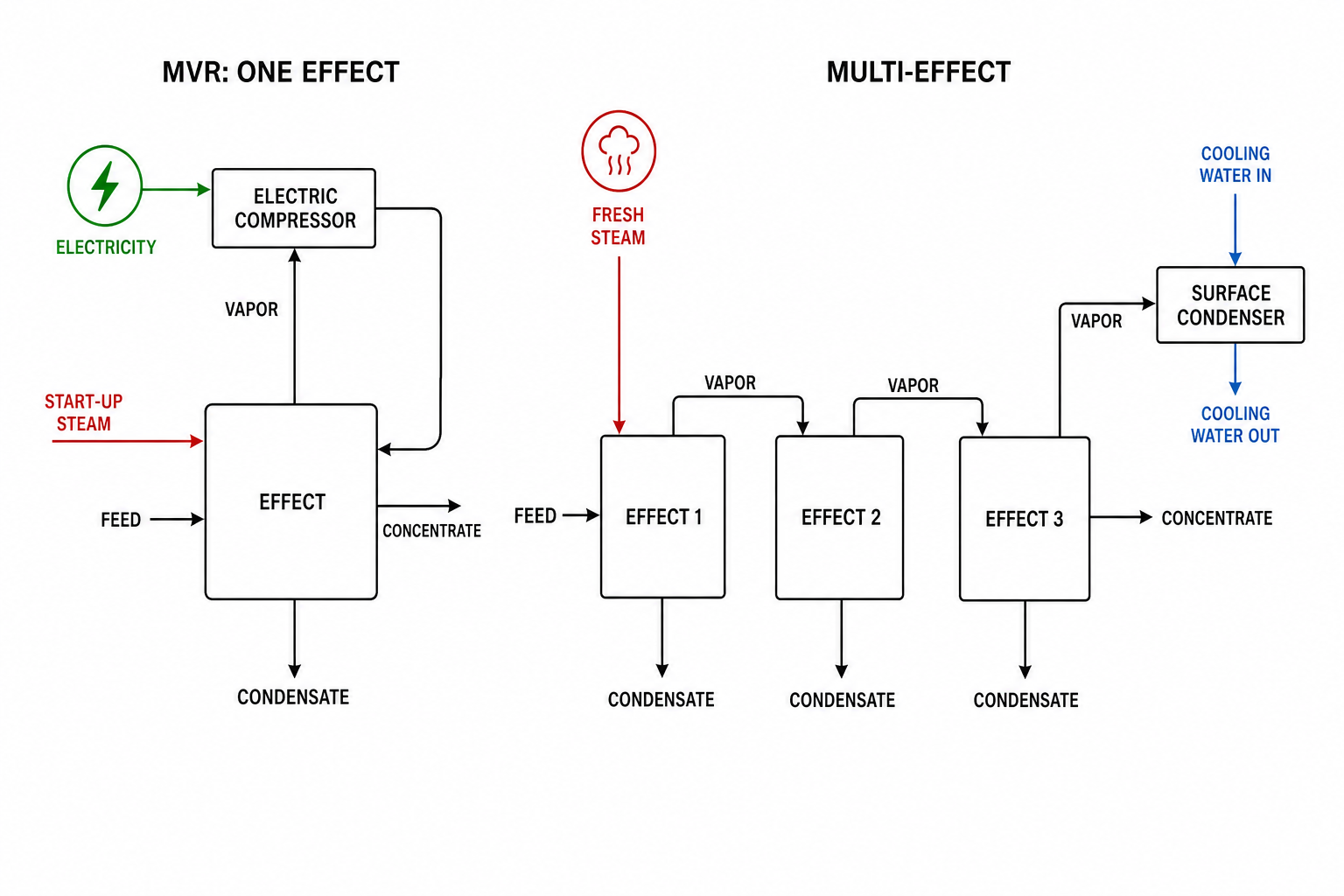
A multi-effect evaporator instead divides the available temperature difference across a train of effects operated at successively lower pressures. First-effect vapor becomes the heating medium of the second effect, second-effect vapor heats the third, and so on until the last effect, where the remaining vapor is condensed. Each kilogram of live steam is therefore reused several times before it leaves the system.
Thermodynamically, MVR is the stronger performer: because mechanical work upgrades vapor quality directly rather than relying on a temperature cascade, a well-designed MVR system behaves like the equivalent of a 20–30 effect evaporator—performance that no practical multi-effect train, typically limited to three to six effects, can match. MVR also recovers more than 90% of the vapor’s latent heat and achieves coefficient-of-performance (COP) values of 15–30, meaning each kilowatt of compressor power moves 15–30 kW of heat (industry-reported ranges).
Specific Energy Consumption: The Numbers That Drive the Decision
The cleanest way to compare the two technologies is per ton of water evaporated. The figures below are typical industrial ranges; actual values depend on compressor efficiency, effect count, BPE, and heat exchanger condition.
| Metric (per ton of water evaporated) | Single Effect | Triple-Effect MEE (with TVR) | MVR |
|---|---|---|---|
| Live steam consumption | 1.1–1.2 t | 0.35–0.4 t | ~0 (startup + small makeup) |
| Electricity consumption | Low (pumps only) | ~5 kWh | 15–35 kWh (compressor-driven; up to 80 kWh in less efficient designs) |
| Cooling water demand | High | High | Reduced by 90% or more (heating chamber doubles as condenser) |
| Equivalent effect performance | 1 | ~3 | 20–30 |
A frequently cited side-by-side benchmark published in external industry literature (16 t/h evaporation capacity) illustrates the trade in absolute terms. The triple-effect plant measured 12 × 18 m in footprint and required 6.6 t/h of fresh steam, roughly 240 kW of electricity, and 600 m³/h of circulating cooling water. The MVR plant of the same capacity measured 6 × 12 m—about half the area—needed only 0.9 t/h of steam (startup and trim), approximately 923 kW of electricity including auxiliary drives such as centrifuges and thickeners, and just 100 m³/h of circulating water.
Translated into money, MVR’s running energy cost typically lands at one-third to one-quarter of MEE’s when electricity and steam are priced at ordinary industrial levels. One documented lithium hydroxide operation (illustrative application, external industry reference) saved $2–3 per ton of product by switching from MEE to MVR. The advantage is not universal, however: a sugar plant with very cheap boiler steam and a huge capacity may still find MEE cheaper—which is exactly why the crossover analysis below matters.
Capital Cost and What Drives It
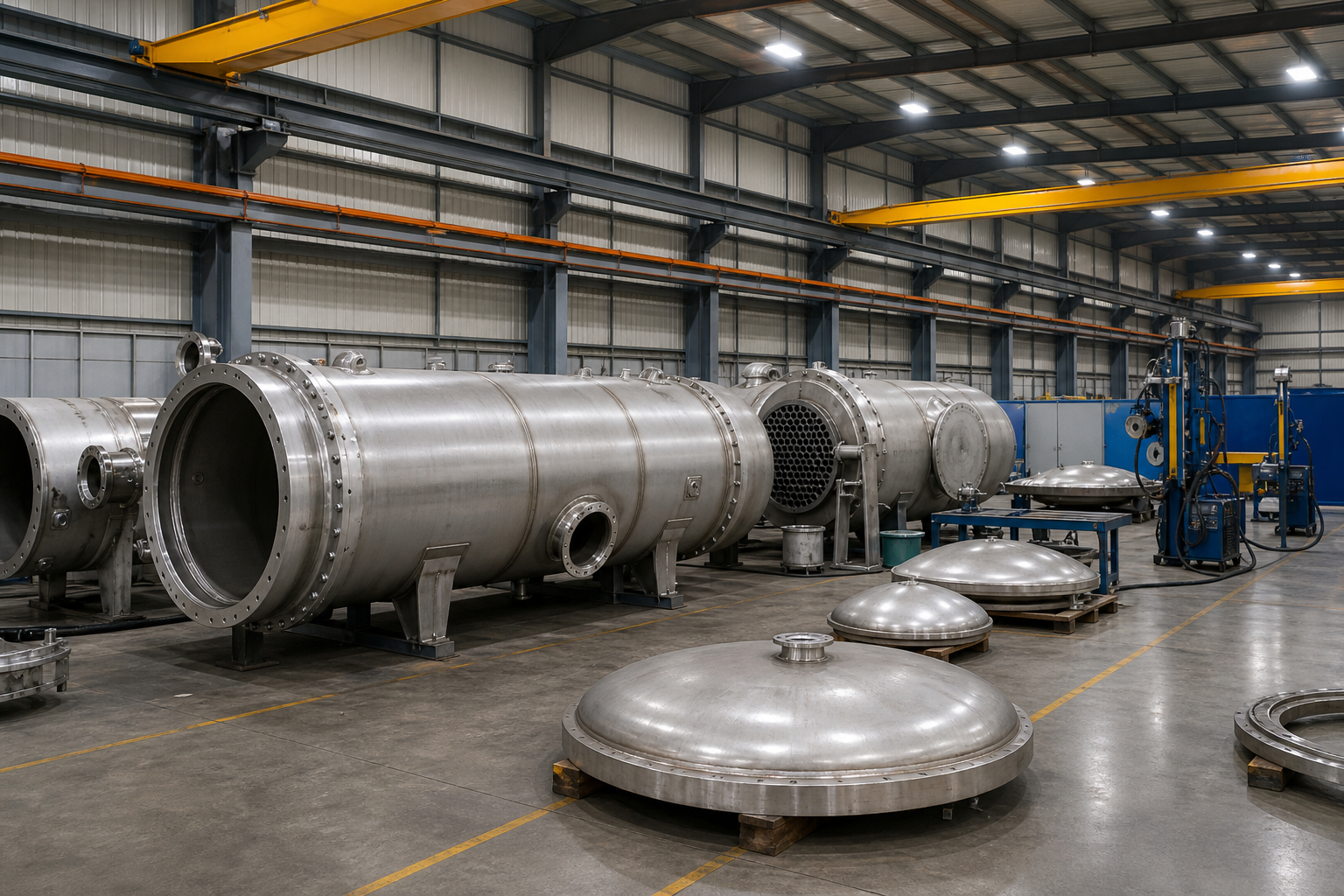
MVR systems carry a 30–50% CAPEX premium over an equivalent multi-effect installation (industry-reported range). The main cost drivers are the vapor compressor and its motor (the single most expensive item, and a precision high-speed machine), the heat exchanger (material grade and area dictated by corrosivity and fouling tendency of the liquor), and the automation package (PLC, sensors, variable-frequency drives).
For budgeting purposes, complete MVR evaporation systems span roughly $150,000 to $1.5 million depending on capacity and configuration (indicative budgeting ranges, not quotations), with large zero-liquid-discharge trains reaching several million dollars. Quotations are structured by capacity tier: small intermittent duties may suit skid-mounted or even rental units, while large continuous duties justify fully customized plants.
Multi-effect systems invert this profile: more effect vessels, inter-effect piping, and a larger condenser and vacuum system mean more steel and civil work, but no expensive compressor. When the steam supply already exists—an installed boiler with spare capacity—the incremental investment for MEE can be very low.
Operating Cost Breakdown
Energy dominates the OPEX of both systems, typically 40–60% of total operating cost, but the composition differs sharply. MVR’s energy bill is almost entirely electricity; MEE’s is almost entirely steam, plus the boiler’s fixed costs—fuel, water treatment, boiler attendants, and inspection—which belong in the total account even though they sit in another department’s budget.
Three further OPEX differences are routinely underestimated:
- Cooling water. Because the MVR heating chamber also serves as the condenser, cooling water demand drops by 90% or more, cutting both water purchase and cooling tower maintenance.
- Maintenance. MVR concentrates its maintenance on the compressor—periodic inspection of bearings, seals, and vibration—while MEE spreads maintenance across more equipment items with more failure points.
- Labor and automation. MVR systems are highly automated and straightforward to operate; MEE trains demand more operator attention across multiple effects.
Hidden costs deserve explicit line items in any MVR budget: electrical capacity upgrades at the site, compressor spare parts, production losses during ramp-up, and gradual energy drift as fouling raises the temperature lift the compressor must deliver. Anti-fouling design and variable-speed control are the two most effective levers for keeping long-run OPEX close to nameplate.
Payback Period and the Energy-Price Crossover
When a plant replaces steam-driven evaporation with MVR, static payback typically falls in the two-to-four-year range. High-intensity operations—more than 6,000 running hours per year—can compress payback to as little as 18 months. The three sensitivity factors, in order of importance, are the price of the steam displaced, the price of electricity consumed, and annual operating hours.
You can reason about the crossover with a simple comparison: convert MVR’s 15–35 kWh/t electricity and MEE’s 0.35–0.4 t/t steam into money per ton at your local tariffs, and compare the difference against the CAPEX premium. MVR wins decisively where electricity is cheap relative to steam (hydro-rich regions, cogeneration sites with surplus power, or anywhere boiler fuel is expensive) and where no boiler exists at all—plants without a steam source often find MVR is the only evaporator that makes sense. MEE wins where coal- or biomass-fired steam is very cheap, where electricity is expensive, or where compressor service support is remote.
Our MVR vs multi-effect energy cost comparison tool and evaporator ROI calculator run this arithmetic with your own tariffs and duty profile.
Selection Criteria Beyond Energy Price
Four liquor and site factors can override the pure energy calculation. The table summarizes the decisive boundaries.
| Criterion | Favors MVR | Favors Multi-Effect |
|---|---|---|
| Boiling point elevation (BPE) | Low BPE, roughly 5–10°C | High and low BPE both workable; BPE above 15–20°C needs two-stage compression or MVR+TVR hybrid if MVR is insisted upon |
| Heat sensitivity | Short residence time, low temperature difference, low-pressure operation protect proteins and APIs | Longer residence and higher temperatures are acceptable |
| Capacity | 5–100 t/h is the ideal window | Above 100 t/h and for batch duties; also fine at very small scale with cheap steam |
| Utilities | Large power supply, little or no steam (no-boiler sites) | Existing boiler with spare steam capacity |
Footprint is a tiebreaker worth noting: MVR plants occupy roughly half the area of an equivalent multi-effect train, which matters in space-constrained facilities. Industry practice also shows a pattern—MEE dominates bulk chemicals and desalination-style duties, while MVR is preferred in pharmaceuticals, food and beverage, lithium-battery chemicals, and ZLD wastewater projects, precisely the applications where heat sensitivity, energy cost, and unattended continuous operation matter most (an indicative industry pattern rather than a rule for every project).
Retrofitting an Existing Multi-Effect Plant to MVR
Plants that already own a multi-effect evaporator do not need to start from scratch. A reconstruction route preserves the existing shells, heat-exchange tubing, and instruments where they remain sound, then adds a vapor compressor and updated controls to run the unit in MVR mode. Documented reconstructions (external industry references) cut operating costs by 40–70%: a gelatin plant reduced evaporation energy by 70%, a chemical wastewater facility by 43%, and an ethanol extraction line by 64%.
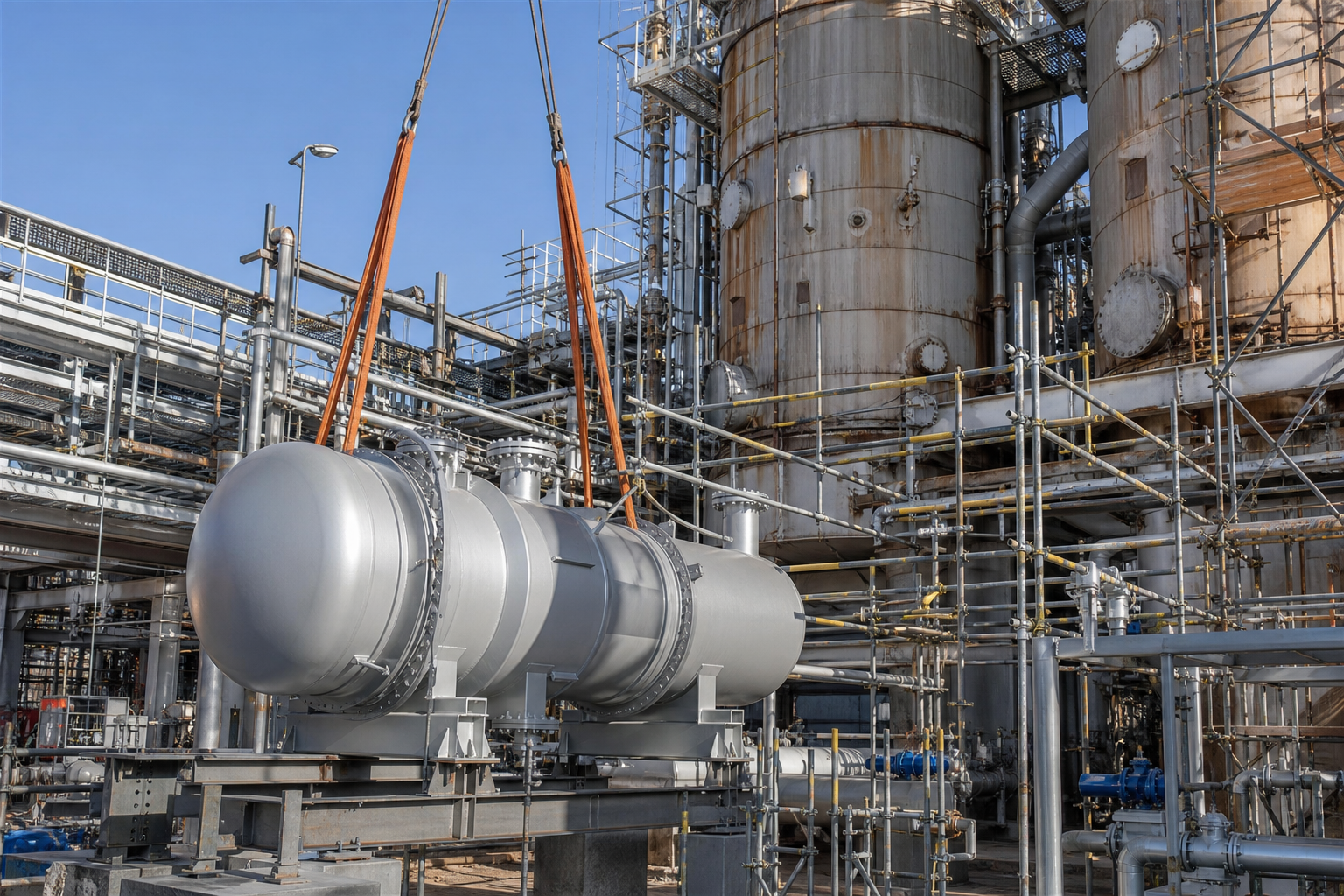
The retrofit path is most attractive where steam supply has become constrained or steam prices have risen sharply since the original installation—it removes the boiler dependency while reusing most of the installed hardware, at lower investment than a new plant. Feasibility naturally depends on the condition of the existing vessels and the electrical capacity available for the compressor. For a structured approach to this route, see the energy retrofit and decarbonization program (illustrative application).
Hybrid Systems and the Carbon Dimension
The two technologies are complements, not substitutes. Hybrid MVR + triple-effect arrangements use MVR for bulk water removal at maximum efficiency and reserve the final effects for concentration and crystallization where purity and crystal quality govern, cutting energy cost by a further 30–40% (reported in hybrid installations) while retaining flexibility in operating mode.
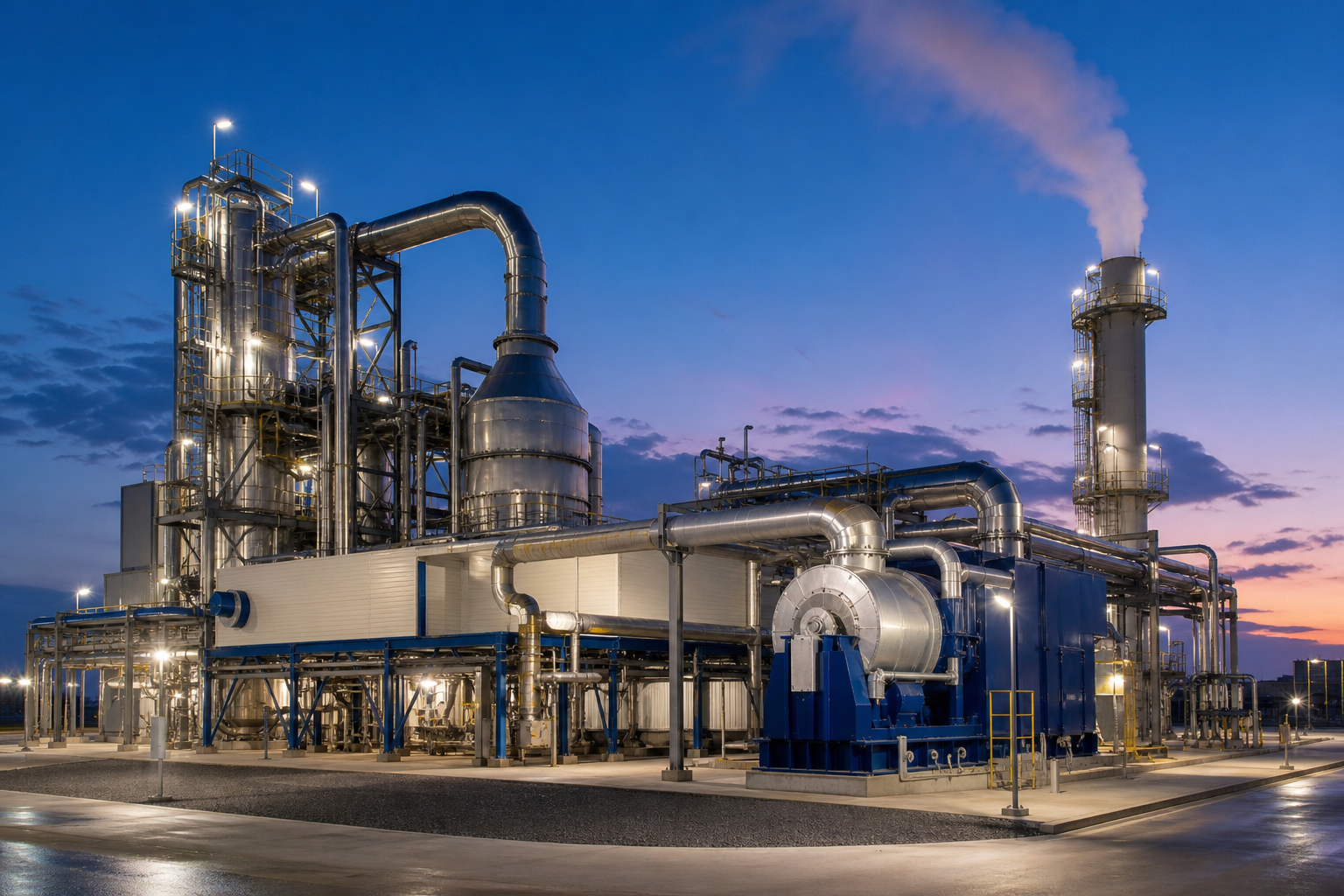
Carbon accounting increasingly favors MVR independent of energy price. One documented 5.1 t/h MVR installation (external industry reference) saves about 710 tons of coal per year and avoids roughly 2,478 tons of CO₂ annually compared with boiler-driven evaporation. As Scope 1 emissions carry more cost—whether through carbon pricing, customer audits, or permitting—MVR’s electric-drive profile converts a large combustion emission into a controllable, increasingly renewable electricity purchase.
Energy Optimization Applies to Both
Whichever route you select, several measures protect the design economics in operation: optimize the evaporation temperature difference (too large wastes compressor power, too small starves heat transfer), apply variable-frequency drives so the compressor tracks load, preheat feed with condensate and distillate heat, insulate shells and piping scrupulously, maintain vacuum and purge non-condensables (their accumulation seriously degrades heat transfer), and run scheduled CIP cleaning to keep heat-transfer coefficients—and therefore energy consumption—from drifting upward with runtime.
Decision Summary
Run the selection in this order: first screen by liquor physics (BPE, heat sensitivity, fouling), then by site utilities (power available? boiler spare steam?), then by duty (capacity and annual hours), and finally by money (local electricity vs steam tariff applied to the specific-consumption table above). The outcome for most continuous mid-size duties with ordinary energy prices is MVR; for very large or batch duties with cheap steam, it is multi-effect; and for plants that already own an MEE train facing rising steam costs, reconstruction to MVR is usually the highest-return move. A deeper treatment of effect design, feed arrangements, and steam economy lives in our companion guide on multi-effect evaporation principles and design.
FAQ
Which is cheaper to operate, MVR or multi-effect evaporation?
It depends on your local energy prices. MVR typically consumes 15–35 kWh of electricity per ton of water evaporated with almost no live steam, while a triple-effect MEE consumes 0.35–0.4 tons of steam per ton. Where electricity is reasonably priced and steam is costly, MVR’s running energy cost is commonly one-third to one-quarter of MEE’s; where boiler steam is very cheap, MEE can remain cheaper overall.
How long does an MVR investment take to pay back?
Typical static payback is two to four years against steam-driven evaporation, driven by the steam price displaced, the electricity price, and annual operating hours. Plants running more than 6,000 hours per year have documented paybacks as short as 18 months.
Can MVR handle high-BPE liquors?
MVR is best suited to liquors with low boiling point elevation, roughly 5–10°C, because BPE consumes the compressor’s temperature lift. For BPE above 15–20°C, the usual answers are two-stage compression, an MVR+TVR hybrid, or falling back to a multi-effect design, which tolerates both low and high BPE.
At what capacity does each technology make sense?
MVR’s ideal window is roughly 5–100 t/h of evaporation. Above 100 t/h—and for batch or small intermittent duties—multi-effect systems are often more economical, especially where steam is already available at low cost.
Can an existing multi-effect evaporator be converted to MVR?
Yes. Reconstruction keeps the serviceable shells, tubing, and instruments and adds a vapor compressor with updated controls. Documented projects cut operating costs by 40–70%, including 70% at a gelatin plant, 64% on an ethanol extraction line, and 43% at a chemical wastewater facility.