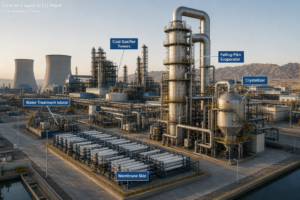
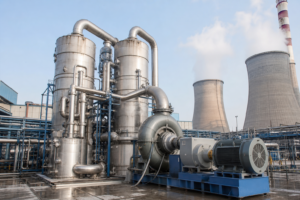
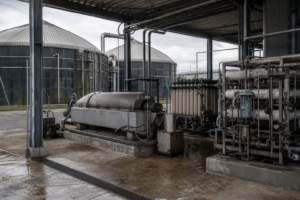
Skid-mounted multiple-effect distillation (MED) occupies the space where reverse osmosis stops being the obvious answer: small and mid-sized plants on islands, offshore platforms, remote sites, and temporary camps, producing a few tens to a few thousand cubic meters of fresh water daily. MED evaporates seawater through cascade effects at a top brine temperature below about 70 °C — the ceiling set by calcium sulfate scale — tolerating feed salinity swings that would blind an RO train, yielding very low-TDS distillate without dosing dependence, and running on low-pressure steam, hot water, or waste heat. Packaged as factory-built skids, they compress field construction to weeks and relocate when the project moves.
Where MED Fits in the Desalination Landscape
Desalination technology choice is governed first by scale and energy context. Large municipal plants almost always select reverse osmosis: seawater RO energy consumption with modern energy-recovery devices sits around 3 to 4.5 kWh per cubic meter (industry-reported range), and at tens of thousands of cubic meters per day that advantage compounds. In the small and mid range the calculus shifts. Evaporative methods are indifferent to feed salinity — seawater at roughly 35,000 mg/L TDS, Arabian Gulf water, or industrial brines all evaporate on the same latent heat — and their distillate quality (single-digit to low-double-digit µS/cm) exceeds membrane permeate without a second pass. Where low-grade heat is available at an oil and gas facility, a power station, or a process plant, MED converts that heat into water at electricity costs of only 1.5 to 2.5 kWh per cubic meter for pumping and auxiliaries (industry-reported range; site value depends on the heat source), a number RO cannot approach once the primary energy is already paid for.
MED also earns selection on robustness. An RO skid depends on disciplined membrane management — cartridges, antiscalant, cleaning cycles — and a feed chemistry upset shows up within hours as flux loss. An MED train has no separable element to foul irreversibly; it trades that for heat-transfer surfaces designed against scale, a solved problem when the temperature discipline below is respected. For lightly manned sites, that asymmetry often decides the bid.
How MED Works, and What Sets the 70 °C Ceiling
An MED plant cascades evaporation through successive effects at progressively lower pressure and temperature. External steam (or hot water) heats only the first effect; vapor boiled there heats the second, and so on down the train, each effect boiling lower because pressure is stepped down. Distillate is collected as the condensate of every effect. The defining metric is the gained output ratio (GOR) — kilograms of distillate per kilogram of motive steam — and GOR tracks effect count: small packaged units run four to six effects at GOR 3 to 5, while large purpose-built plants reach double-digit effects and GORs above 10 (industry-reported ranges).
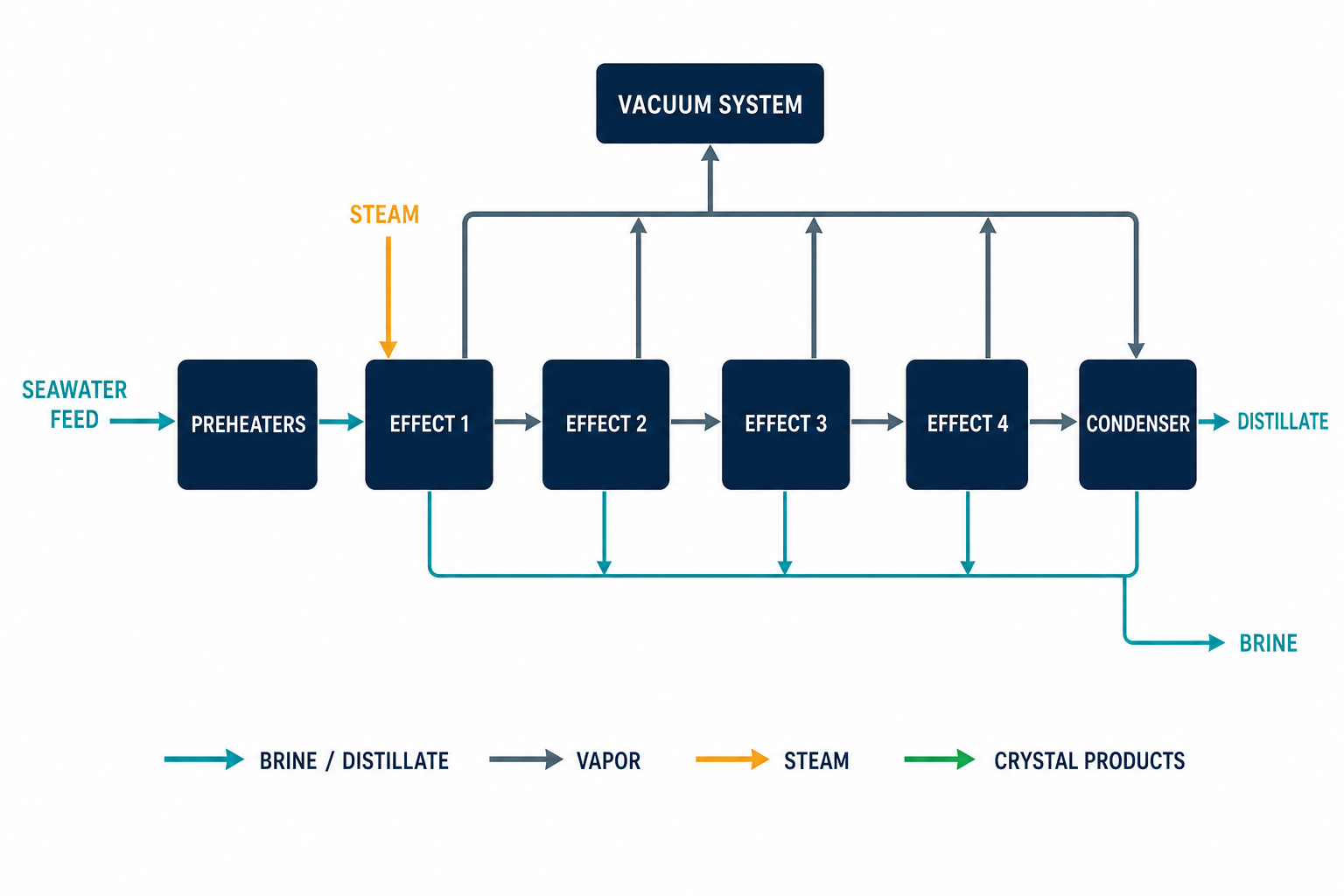
Top brine temperature is the most consequential design number, pinned by calcium sulfate. Gypsum is reverse soluble — less soluble as temperature rises — so above roughly 70 °C on concentrated seawater it deposits rapidly on the hottest first-effect tubes. Low-temperature MED keeps the train top below this ceiling, accepting slightly larger heat-transfer area in exchange for scale-free operation and cheaper materials. Alkaline scales (calcium carbonate, magnesium hydroxide) are managed with mild acid or antiscalant dosing ahead of the first effect. The practical lesson: any proposal claiming aggressive top temperatures is borrowing capacity from your future maintenance budget.
| Parameter | Low-temperature MED | MVC (mechanical vapor compression) | Seawater RO |
|---|---|---|---|
| Primary energy | Low-pressure steam / hot water / waste heat | Electricity (compressor) | Electricity (high-pressure pumps) |
| Typical electricity, kWh/m³ | 1.5–2.5 | Higher — compressor-driven, favored at small scale | 3–4.5 with energy recovery |
| Feed salinity sensitivity | Low — evaporates any brine | Low | High — osmotic pressure and membrane limits |
| Product quality | Very low TDS distillate | Very low TDS distillate | Permeate, TDS set by membrane and recovery |
| Best scale | Mid-size; large with waste heat | Small skids, tens to hundreds m³/d | Mid to very large |
Why Skid-Mounted Delivery Changes the Project
Traditional desalination is site construction: foundations, erected steel, field piping, months of multi-craft labor, and commissioning that discovers errors in sequence. Skid-mounted delivery moves that work into a factory. Evaporator bodies, separators, condensers, pumps, and controls arrive pre-assembled, pre-piped, and pre-wired on transportable modules, with factory leak and function tests done before shipment. Site work reduces to setting skids, tying in seawater, product, and discharge lines, and connecting power — a schedule difference of weeks versus months, and a labor requirement remote sites often cannot otherwise staff.
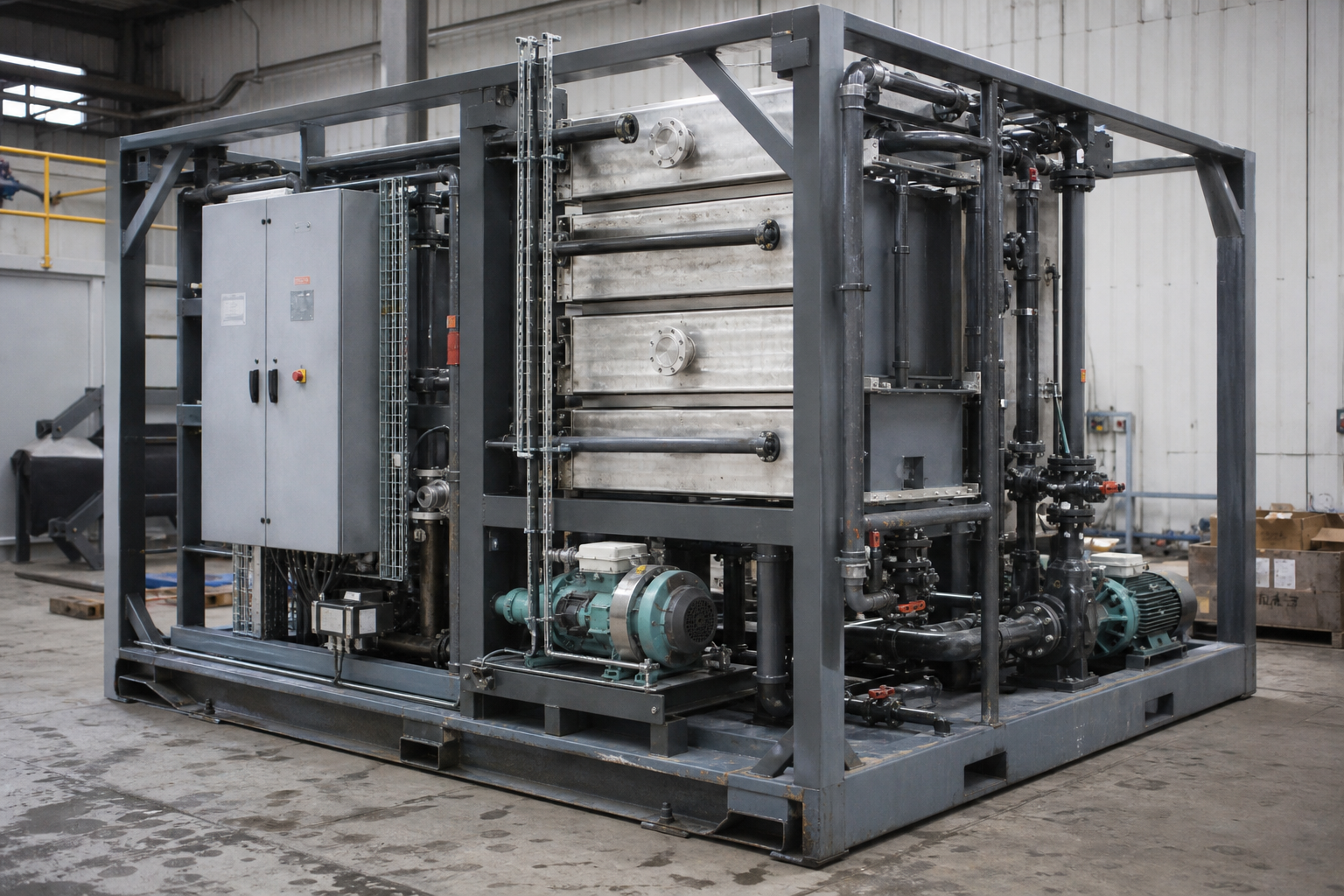
The economics follow from the constraints. Road and container transport bound each module to roughly three-meter width and container-scale lengths, capping single-line capacity of a truly portable unit; larger plants ship as parallel trains installed side by side. Quality moves into the factory too: corrosion-critical seawater welds are executed and inspected under workshop conditions rather than harbor weather. And when the project ends — a camp demobilizes, a platform is decommissioned, a mine moves — skidded plant can be lifted, refurbished, and redeployed, retaining residual value civil-embedded construction never does.
Seawater-Side Engineering: The Part That Determines Service Life
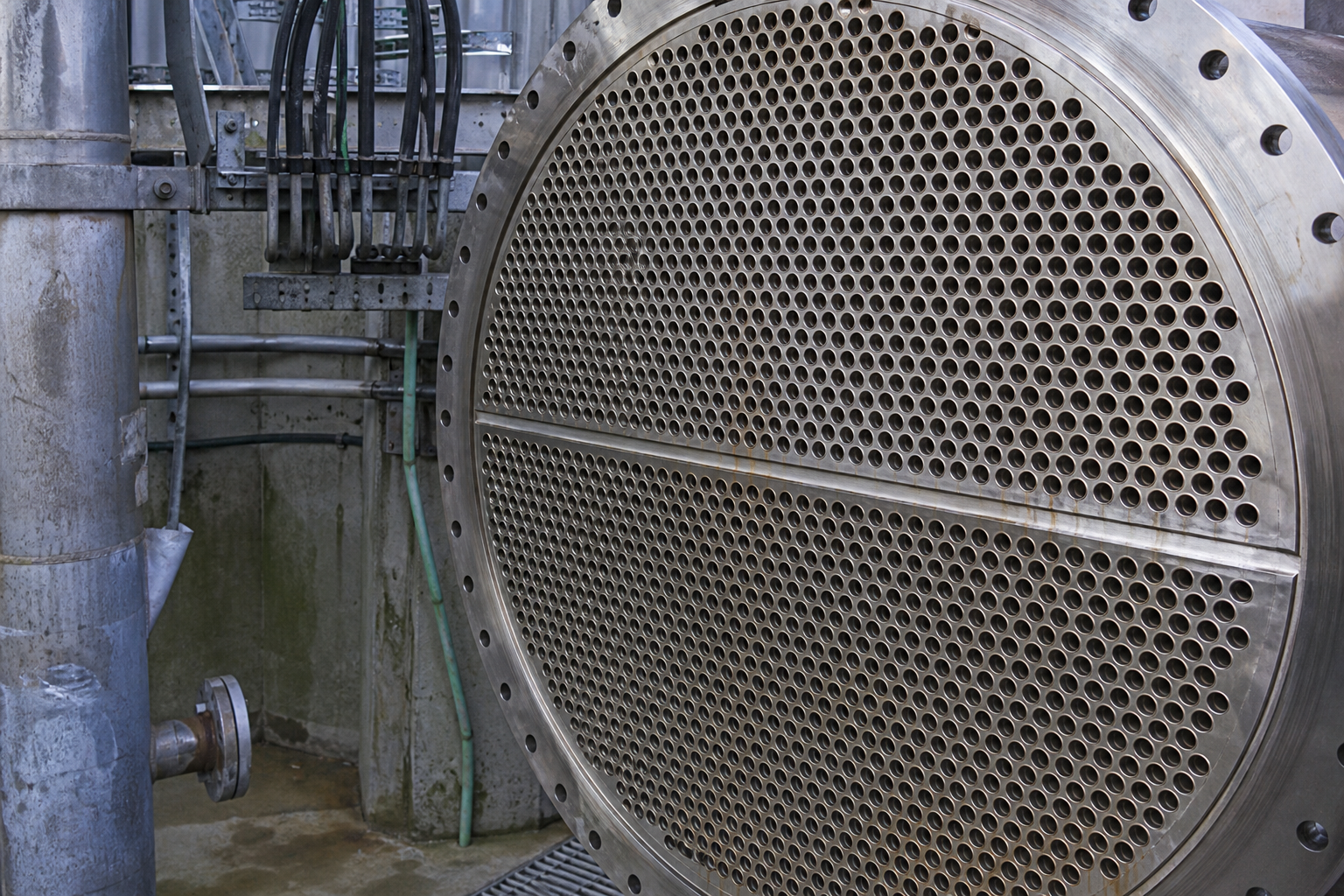
Seawater is aggressive, and MED material selection is a straightforward corrosion exercise with well-known answers — if they are actually specified. Chloride stress corrosion cracking rules out standard austenitic stainless steels in hot seawater; tubing and wetted internals use copper-nickel, titanium, or duplex and super-duplex by temperature duty and economics, while bodies and piping lean on coated steel, duplex, and plastics where temperature allows. Intake design matters as much as alloy: chlorination or UV against biofouling, screening and filtration of solids, and — particular to evaporative plant — antifoam dosing, because seawater organics at the air-water interface entrain droplets and salt into the vapor path.
Brine discharge deserves early permitting attention. An MED train rejects brine at a modest concentration factor — far less extreme than RO reject, since thermal recovery is set by economics rather than solubility walls — and the discharge’s salinity and temperature plume drives the marine permit. Where a salt-production or chlor-alkali outlet exists nearby, brine becomes feedstock rather than discharge, which is why brine management and salt recovery increasingly appear in the same conversation as desalination itself.
Where These Systems Are Deployed
Recurring applications cluster where the grid, logistics, or water chemistry is difficult. Island communities and resorts replace trucked or barge water with a containerized plant sized to demand. Offshore platforms and rigs use evaporative units for potable water and low-TDS boiler makeup, where oil-contaminated or variable seawater punishes membranes. Remote sites — mines, refineries, camps — pair MED with waste heat they already reject. Shipboard applications value tolerance of motion and feed variability. And in process industries the same hardware treats high-salinity wastewater and brines, the adjacent duty described in RO reject evaporation and crystallization.
| Project attribute | Indicative skid-mounted MED envelope | Notes |
|---|---|---|
| Unit capacity | Tens to ~1,000+ m³/d per train | Larger plants ship as parallel trains |
| Top brine temperature | Below ~70 °C | Calcium sulfate scale ceiling |
| Effects / GOR | 4–6 effects, GOR ~3–5 packaged | More effects when waste heat is cheap |
| Motive heat | LP steam, hot water, engine jacket heat | Electric-only duty points to MVC |
| Product quality | Low single-digit to low-double-digit µS/cm | Boiler and process grade without polishing |
Note: envelopes are published indicative ranges, not guarantees; configuration depends on feed salinity, heat source, materials review, and site logistics.
Process Modules and Selection Basis
| Process Module | Candidate Equipment | Selection Basis |
|---|---|---|
| Intake & pretreatment | Screening, filtration, chlorination or UV, antifoam dosing | Feed solids, oil, and biofouling load |
| Heat source interface | LP steam, hot water, or engine jacket heat loop | Available waste heat grade and duty |
| MED effects train | 4–6-effect evaporator bodies below the 70 °C ceiling | GOR target versus heat cost |
| Distillate collection | Effect condensers and product tank | Product quality spec (µS/cm) without polishing |
| Brine reject & discharge | Concentrate discharge or brine-to-salt interface | Marine permit; nearby salt outlet if any |
Note: configurations are indicative; selection depends on actual feed, corrosion review, utilities, and capacity.
Specifying a Skid-Mounted MED Package
Four specification decisions carry most of the lifetime outcome. First, fix the feedwater envelope — maximum salinity, oil, suspended solids — and make the vendor responsible for performance at the worst corner, not the average. Second, state the top brine temperature limit explicitly; it keeps the first effect clean. Third, define the materials matrix by duty (seawater, brine, vapor, product) rather than accepting a generic offer, with weld procedures and inspection records for the seawater circuit. Fourth, negotiate factory test scope — hydro, functional, control-loop checks witnessed before shipment — because discovering a wiring fault on an island is the most expensive place to find it. Delivery format is flexible: single-container units, multi-skid parallel trains for growth, and hybrid RO-plus-MED arrangements where membranes carry base load and evaporation covers peak or difficult-feed periods.
For the enabling technologies in detail, see skid-mounted and modular plant design, MVR evaporation for the compressor-driven variant, and salt separation methods for brine-to-salt routes. Water-loop closure practice is covered under zero liquid discharge system design.
When This Route May Not Fit
Skid-mounted MED is the wrong tool in several situations. At municipal scale with grid power and no waste heat, RO wins on energy per cubic meter. Where the only energy available is electricity, mechanical vapor compression or RO — not steam-driven MED — is the honest comparison set. Where feed is clean, stable seawater and membrane discipline is realistic, RO’s lower capital often carries the day. And where transport limits bite — no road, no container port, no crane capacity — the three-meter module envelope that defines skid delivery can rule the concept out entirely, leaving site-built or no project. Distillate demand below roughly ten cubic meters a day is usually served more cheaply by water logistics than by any thermal plant.
What Must Be Verified
No external case data is embedded in this article, so the validation focus is what must be proven before commitment: a feedwater envelope from actual site sampling — salinity swing, oil, suspended solids — anchoring vendor responsibility at the worst corner, not the average; confirmation of the heat source’s grade, quantity, and continuity, since MED economics live on waste heat that must exist year-round; a discharge and permitting study for the brine stream’s salinity and temperature plume before the marine license path is assumed; a full materials matrix review for the seawater circuit against chloride stress-corrosion rules; and factory-test scope — hydro, functional, control-loop — agreed in the contract, because faults discovered on an island are the most expensive kind.
Required inputs for screening: feedwater envelope (salinity, oil, solids), distillate demand and quality target, available heat source and electricity — enough to outline whether MED, MVC, or RO leads the design.
FAQ
Why is MED preferred over RO for small remote plants?
At small scale, MED tolerates variable and high-salinity feed, produces very low-TDS distillate, runs on waste heat or low-pressure steam with only 1.5-2.5 kWh/m³ of electricity, and needs less membrane-specific operating discipline — decisive for island, offshore, and unmanned sites.
What limits MED’s top operating temperature?
Calcium sulfate (gypsum) scale. Gypsum is less soluble at higher temperature, so above roughly 70 °C on concentrated seawater it deposits on the hottest tubes. Low-temperature MED design accepts slightly larger heat-transfer area to stay safely below this ceiling.
What is GOR and what should I expect from a packaged unit?
Gained output ratio is kilograms of distillate produced per kilogram of motive steam. It tracks the number of effects: packaged skid units typically run four to six effects for a GOR around 3 to 5, while large plants with cheap heat justify more effects and double-digit GOR.
Can a skid-mounted desalination plant be relocated?
Yes — that is a core advantage. Factory-built modules are lifted and shipped like equipment, so when a camp demobilizes or a platform is decommissioned the plant can be refurbished and redeployed, retaining value that site-built civil construction does not.
What materials does seawater MED require?
Hot seawater excludes standard austenitic stainless steel due to chloride stress corrosion cracking. Heat-transfer tubing and internals use copper-nickel, titanium, or duplex/super-duplex alloys by duty; bodies and piping use coated steel, duplex, and plastics where temperature permits.