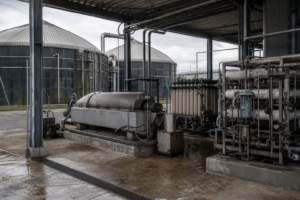
Anaerobic Digester Wastewater Treatment Solution
Digestate liquor treatment: solids removal, ammonia methods matched to N concentration (stripping >2000 mg/L, steam stripping >20000 mg/L), SWRO at 1200 psi to 80%

Digestate liquor treatment: solids removal, ammonia methods matched to N concentration (stripping >2000 mg/L, steam stripping >20000 mg/L), SWRO at 1200 psi to 80%
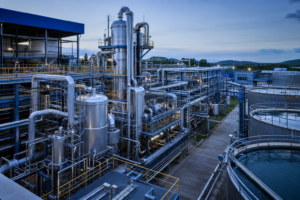
MVR evaporation closes livestock farm manure and flush water to zero liquid discharge: struvite control, ammonia stripping, NPK concentrate to organic fertilizer and condensate
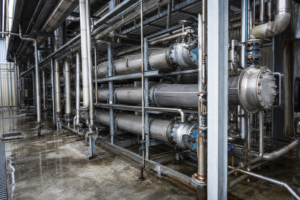
Skid-mounted MED desalination for islands, platforms and remote sites: why low-temperature evaporation beats RO on difficult feed, the 70 C gypsum ceiling, GOR economics,
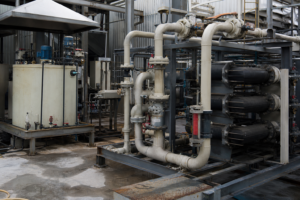
Evaporation-crystallization treatment for fluoride wastewater: why lime precipitation stalls at CaF2 solubility, HF-specific materials (graphite, PTFE), and fluosilicate product recovery with ~90% hazardous waste
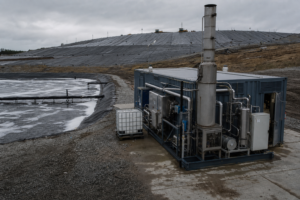
MVR evaporation with forced-circulation crystallization turns landfill leachate concentrate into 85%+ reusable water and solid salt – verified 100 t/d plant at COD above
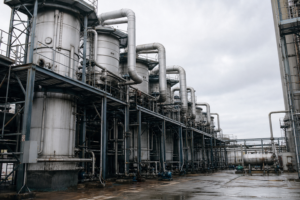
Engineering guide to multi-effect evaporation systems: steam economy by effect count, evaporator configuration selection, salt-driven design constraints, and ZLD integration for high-salinity industrial streams.
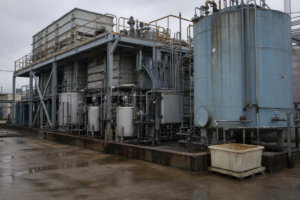
Hazardous waste liquor solutions: class-specific pretreatment for emulsions, acids, heavy metals and organics, then MVR or multi-effect evaporation-crystallization – volume reduction, water reuse and
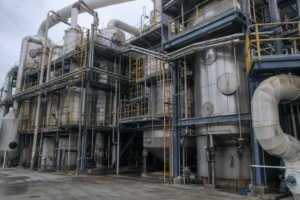
Evaporation-crystallization ZLD for high-salinity wastewater: OSLO/DTB crystallizer selection, mixed-salt separation via ternary phase diagrams, and verified steam, power and crystal-size numbers.
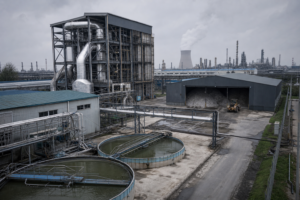
Four-stage industrial park wastewater ZLD: MBR+RO membrane recovery and MVR evaporation-crystallization, with a coal-chemical park case meeting GB 31570-2015.
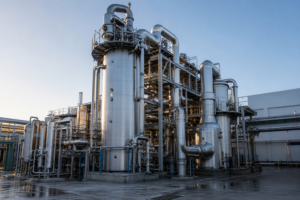
Polysilicon wastewater is a calcium chloride problem: pretreatment, RO, MVR evaporation and crystallization deliver zero liquid discharge and saleable CaCl2 tetrahydrate, proven at a