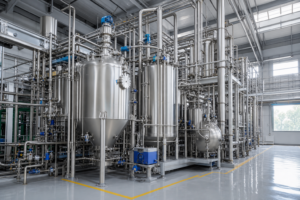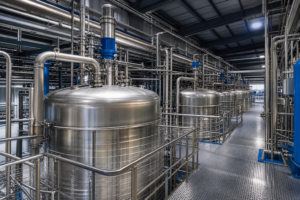
Bisphenol A (BPA) wastewater is treated most effectively by an integrated route — phenol and acetone recovery first, evaporation and crystallization for desalination second, and polishing for reuse — rather than by any single unit operation. The evaporation-crystallization stage is the backbone: operated under vacuum at low temperature with mechanical vapor recompression, it separates the dissolved sodium sulfate or sodium chloride from catalyst neutralization and resin chemistry into a recoverable solid salt, returns clean condensate, and concentrates non-volatile organic residue into a small stream. This page sets out where BPA wastewater comes from, what it contains, and how evaporation-crystallization becomes a compliant, resource-recovering solution.
Where BPA-Bearing Wastewater Originates
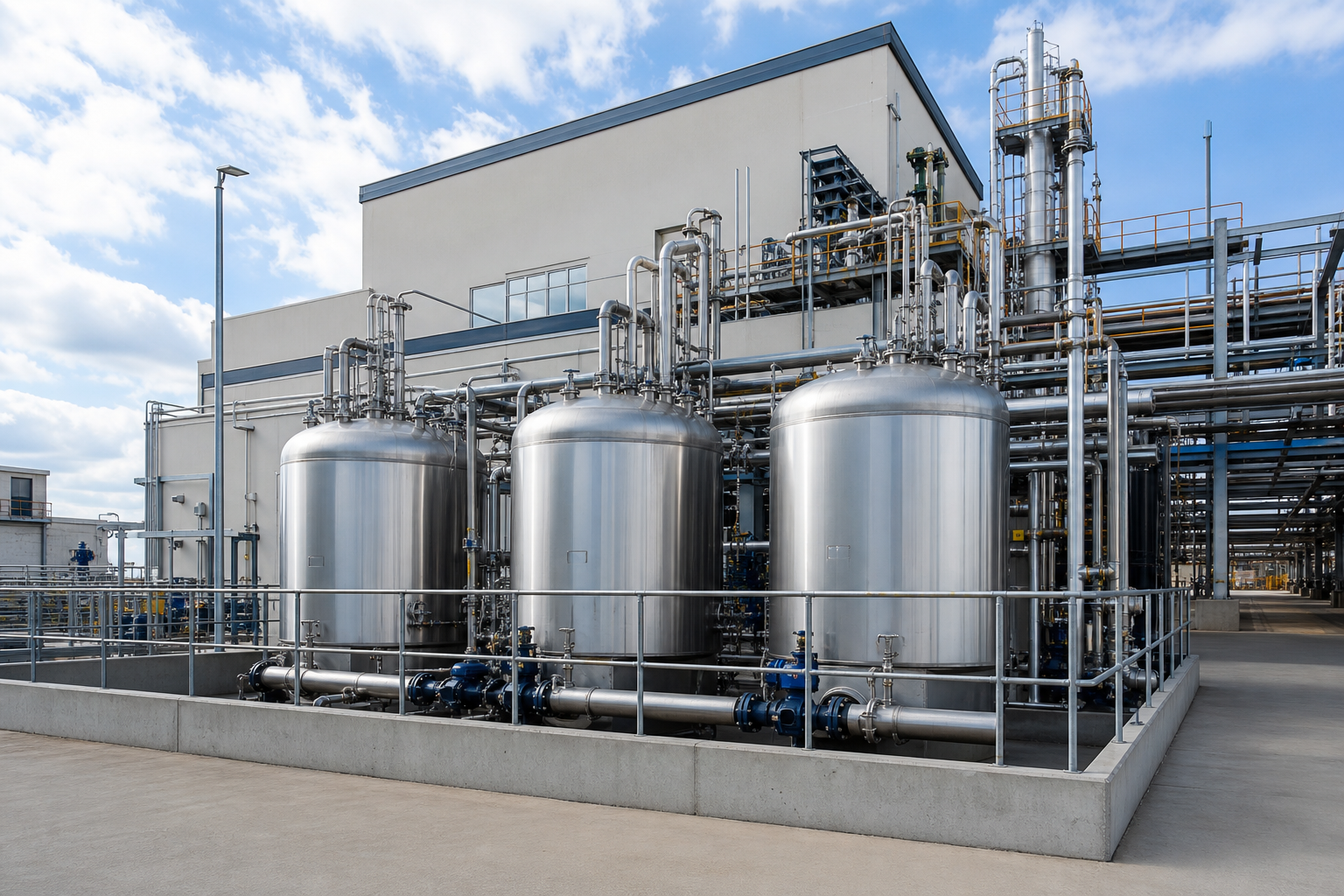
Bisphenol A is produced by acid-catalyzed condensation of phenol with acetone. Three catalyst systems dominate industrially — sulfuric acid, hydrochloric acid with a thiol promoter, and sulfonated ion-exchange resin — each defining the salt load the wastewater plant must crystallize out. The two dominant consumers of BPA generate their own high-salt, organic-laden streams sharing the same treatment logic.
| Source | Indicative drivers of salinity | Organic challenge |
|---|---|---|
| BPA plant (condensation, crystallization, distillation washes) | Neutralized acid catalyst — sodium sulfate from H₂SO₄ routes, sodium chloride from HCl routes; resin routes carry far less | Free phenol, acetone, BPA fines, isomer and tarry by-products |
| Epoxy resin plant (BPA + epichlorohydrin, caustic dehydrochlorination) | NaCl formed stoichiometrically in the caustic stage — indicative several hundred kilograms per ton of resin | Epichlorohydrin, glycerol-based oligomers, surfactants |
| Polycarbonate plant (interfacial phosgenation of BPA salts) | NaCl from the biphasic reaction and caustic scrubbing — indicative hundreds of kilograms per ton of product | Phosgene hydrolysis products, chloroform and methylene chloride losses, phenolic ends |
Note: an illustrative envelope from published literature, not a project datasheet; design starts from the plant’s own water balance.
The common thread: an organic pollutant load (phenol above all) riding on a rising salt background — a combination that defeats conventional biological treatment alone.
Wastewater Characteristics That Drive the Design
- Phenol. Soluble to about 8 g per 100 mL of water at ambient temperature, phenol is simultaneously a recoverable raw material and the stream’s acute toxicity carrier. Discharge limits sit in the low-ppm to sub-ppm range in most jurisdictions, dictating a dedicated recovery step upstream.
- Acetone and other volatiles. Acetone from the reaction and work-up reports to the water and must be stripped or leave with the evaporator’s vapor — with flammability control.
- BPA itself. Low water solubility — a few hundred mg/L — means BPA appears partly as filterable fines and partly as dissolved endocrine-active pollutant that adsorbs or biodegrades only after salt removal.
- Salt. Sodium sulfate (sulfuric-acid routes) or sodium chloride (HCl routes, epoxy, PC) at concentrations that rise through every recycle loop and inhibit biology above roughly 1–2% dissolved solids.
- COD and color. Phenolic and tarry organics produce high COD; color bodies resist conventional oxidation at high salinity.
Treatment Philosophy: Organics Recovery Before Salt Management
Sequencing matters more than unit selection. The economic and compliance logic of a BPA wastewater plant runs:
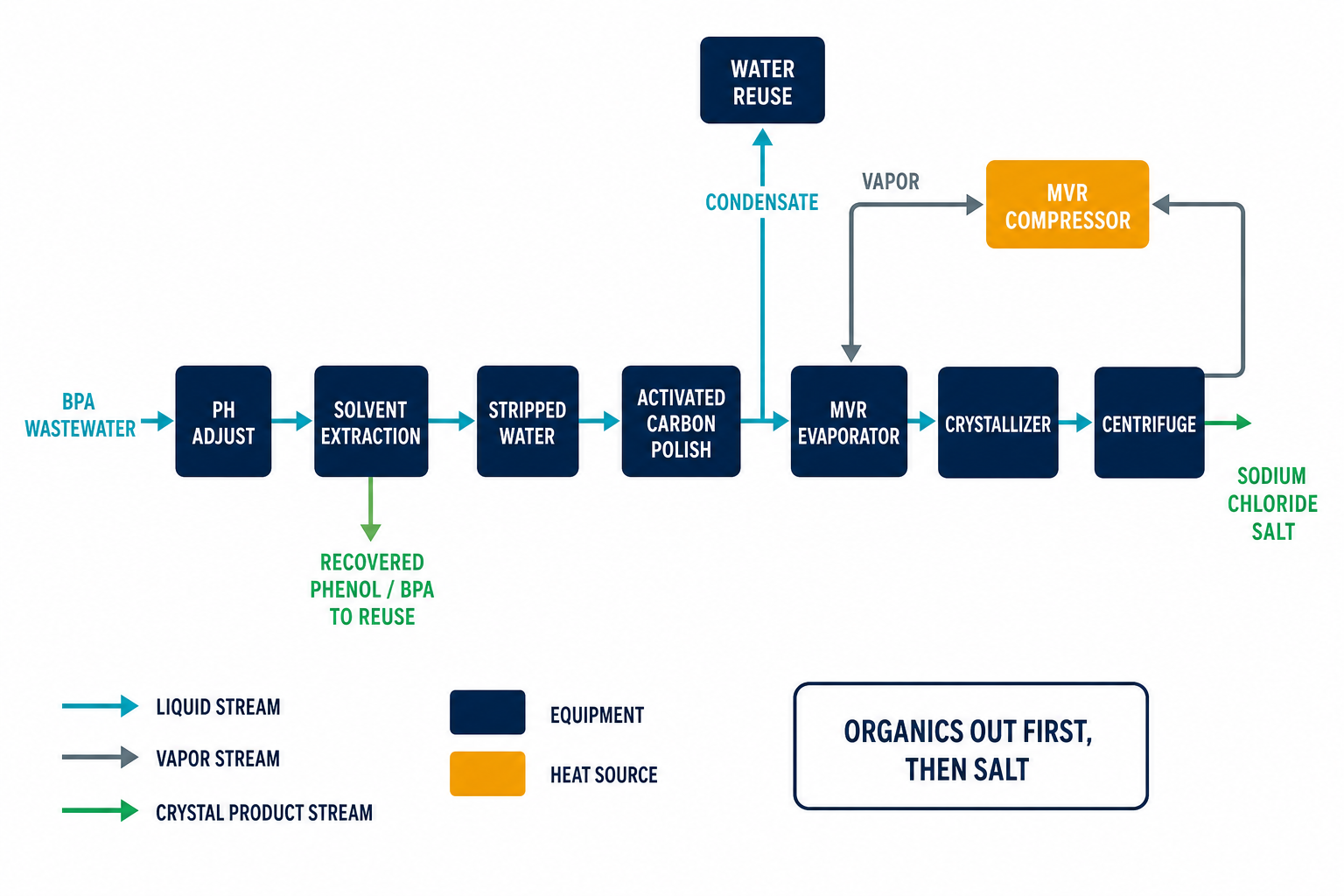
- Phase segregation and solids removal. Keep concentrated mother liquors, wash waters, and scrubber blowdowns in separate drains; screen and filter BPA fines and tars — better handled as recoverable or solid-fuel stream than as dissolved COD.
- Phenol and acetone recovery. Solvent extraction (methyl isobutyl ketone or other established extractants), steam stripping, or polymeric adsorbent resins recover phenol as raw material. Recovery, not destruction, is the first choice — every kilogram extracted is a kilogram the biology never sees.
- Evaporative desalination. The dephenolized, still-salty water enters a low-temperature MVR train: water leaves as clean condensate, salt as crystalline sodium sulfate or chloride, non-volatile organics as a small purge.
- Biological and advanced polishing. The low-salt condensate (bearing stripped volatile traces) and blended low-salt streams pass activated-sludge or MBBR polishing, with advanced oxidation as final barrier where permits demand.
- Reuse. Polished condensate returns to washing, scrubbing, and make-up, moving the plant toward zero liquid discharge.
What Evaporation and Crystallization Actually Do in This Route
The evaporator’s job in a BPA wastewater plant is narrower and more specific than “treat the water”:
- Desalination with by-product recovery. Forced-circulation crystallization converts dissolved Na₂SO₄ or NaCl into a dewatered solid qualifying as industrial by-product rather than hazardous waste — the largest lever on disposal cost.
- Water return. Typically more than 90% of the evaporated mass returns as condensate clean enough for process reuse (industry-reported; entrainment control decides the actual figure), displacing fresh water and shrinking the effluent volume by an order of magnitude.
- COD consolidation. Non-volatile phenolics, oligomers, and color bodies stay in the concentrate: instead of dilute COD spread across thousands of cubic meters, the plant faces a small residue to incinerate, blend to fuel, or oxidize at acceptable cost.
- Enabling biology. Biology downstream sees low salinity and low phenol — the two parameters that would otherwise collapse activated sludge.
Key Engineering Considerations
| Process Module | Candidate Equipment | Selection Basis |
|---|---|---|
| Segregation & solids removal | Separate drains, screens, filters | Keep concentrated liquors out of dilute wash water |
| Phenol & acetone recovery | Solvent extraction, steam stripping, adsorbent resins | Recovery value and toxicity ahead of biology |
| Evaporative desalination | Low-temperature vacuum MVR; falling-film front end, forced-circulation crystallizing end | Organics heat sensitivity; salt supersaturation behavior |
| Polishing | Activated sludge / MBBR, advanced oxidation | Permit limits on phenol, COD, color |
| Salt dewatering & drying | Centrifuge plus dryer | Salt sales specification or disposal class |
Note: configurations are indicative; selection depends on actual feed, salt chemistry, corrosion review, and capacity.
Low-temperature, vacuum operation. BPA wastewater organics polymerize, color, and foul at elevated temperature. Vacuum evaporation at moderate temperature preserves condensate quality and prevents degradation products on heat-transfer surfaces.
Flammability control for volatiles. Acetone in the feed reports to the vapor phase. The vapor system must account for it — inerting, explosion-rated equipment, and condensate monitoring are standard, not options.
Foam management. Phenolic and surfactant-bearing liquors foam. Generous separator sizing, demister mesh, and antifoam dosing keep entrainment out of the compressor and condensate — entrained phenol is the main threat to reuse quality.
Forced circulation for the crystallizing effect. As the salt approaches saturation, the train moves to forced circulation: high tube velocity, suppressed wall supersaturation, slurry tolerance. Falling film is acceptable only on the dilute, clean front end.
Materials. Neutral-to-mildly-alkaline sulfate service is manageable in 316L. Chloride-bearing streams (HCl-route BPA, epoxy, PC) call for 316L minimum with duplex or titanium on the hottest, most concentrated surfaces. Phenol itself is not notably corrosive to stainless; chlorides plus temperature define the envelope.
Sodium sulfate specifics. Where the salt is Na₂SO₄, inverted solubility above the decahydrate transition (near 32 °C) must be engineered around: evaporative crystallization yields anhydrous salt, cooling yields Glauber’s salt needing re-processing. The choice follows the salt’s sales specification.
Salt Quality, Reuse, and Residue Disposal
The salt stream determines the project’s operating economics as much as the energy bill does:
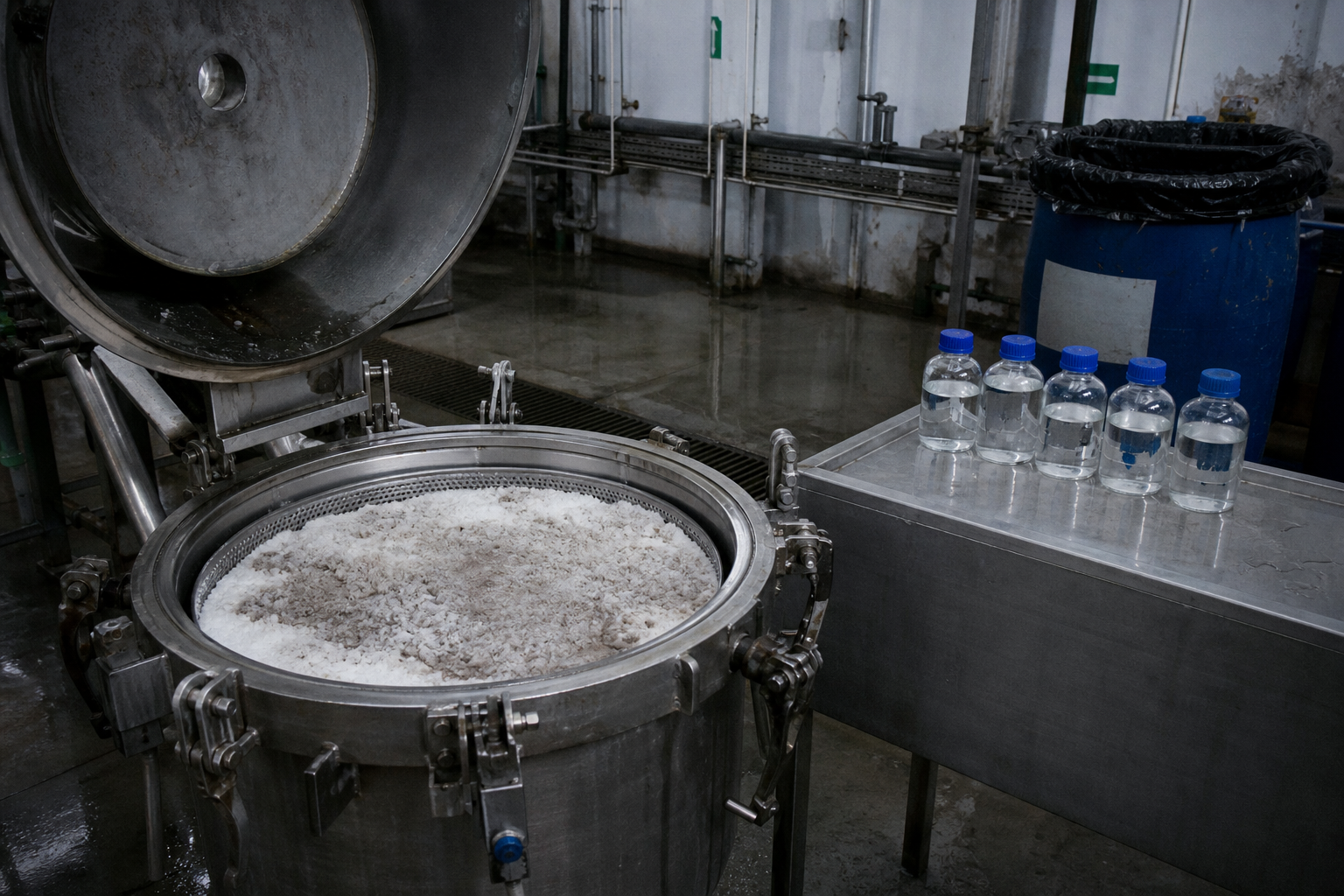
- Industrial sodium sulfate from sulfuric-route plants sells into detergent, glass, and paper applications once phenolic traces and color are controlled by washing and, where needed, re-crystallization.
- Sodium chloride from HCl-route, epoxy, and PC plants can be reused as brine — chlor-alkali feed after deep purification — or disposed of as general solid waste per local classification.
- Organic concentrate (evaporator purge plus crystallizer mother-liquor blowdown) is routed to incineration or hazardous-waste co-processing; keeping it small is precisely the point of evaporation.
Because BPA is endocrine-active under widening regulatory scrutiny, the salt and residue characterization program — phenol, BPA, total organics in every solid output — should be agreed with disposal or sales counterparties during design, not after startup.
Positioning Within a Wider ZLD Program
For plants facing hard discharge limits, the evaporation-crystallization island enables full zero liquid discharge: front-end membrane concentration reduces the evaporator’s duty, the crystallizer closes the loop on dissolved solids, and only solids leave site. The same salt-recovery logic used here — converting a corrosive, organic-laden brine into a characterized solid by-product and clean condensate — is applied across our zero liquid discharge solutions and detailed for adjacent chemistries in our rare earth mining wastewater ZLD solution.
Relevant capability lines: forced-circulation evaporation for the crystallizing effect, concentration and crystallization systems for the salt train, and our chemical and agrochemical industry page for the wider regulatory and application context.
When This Route May Not Fit
The recovery-then-desalination route assumes a salt-and-phenol problem worth recovering from, and some streams do not meet that bar. Very dilute wash waters with trace BPA but little salt belong to conventional biological treatment plus carbon, not to a thermal island at all. Where phenol concentrations are too low for extraction economics but too high for the permit, adsorption or advanced oxidation alone may close the gap more cheaply. Where the salt has no sales or controlled-disposal route in the region, crystallization converts a liquid liability into a solid one without solving it. And where the organic matrix is dominated by thermally polymerizing tars rather than phenol, heat-transfer fouling can erode the economics that justify MVR evaporation in the first place.
What Must Be Verified
No external case data is embedded in this article, so the validation focus is what must be proven before any capital commitment: a stream-by-stream water balance segregating mother liquors, wash waters, and scrubber blowdowns with their separate phenol, acetone, salt, and tar loads; phenol-recovery selection verified against actual liquor chemistry (extraction, stripping, or resin); evaporator fouling behavior checked by bench or pilot concentration runs on the real dephenolized feed over representative campaign samples; the salt’s full characterization — phenol, BPA, total organics, moisture — tested against the intended sale or disposal classification before design freeze; a flammability review of the acetone-bearing vapor path, with the disposal or sales counterparties consulted during design rather than after startup. Each item closes a risk that literature values alone cannot.
Required inputs for screening: stream-by-stream water balance (phenol, acetone, salt, organics), discharge or reuse targets, and salt disposition — enough to outline the route.
Frequently Asked Questions
Can BPA wastewater go directly to biological treatment?
Not at full strength. Phenol is acutely toxic to the biomass above low concentrations, and dissolved salt above roughly 1–2% suppresses biological activity severely. Phenol recovery and evaporative desalination come first; biology polishes the low-salt streams afterward.
What salt does a BPA wastewater plant produce?
It follows the chemistry: sulfuric-acid catalyst routes yield sodium sulfate; HCl-catalyst routes, epoxy resin plants, and polycarbonate plants yield sodium chloride — in the downstream cases, several hundred kilograms per ton of product. Both can be recovered as solids with sale or controlled-disposal routes.
Why is low-temperature vacuum evaporation specified?
Phenolic and tarry organics degrade and foul heat-transfer surfaces at elevated temperature, and volatile organics (including acetone) must be handled under controlled, inerted conditions. Vacuum operation keeps the process gentle, protects condensate quality, and contains the volatile organics in a designed vapor system.
Is the recovered salt clean enough to sell?
Frequently yes, with the right washing and — where the specification demands — re-crystallization. Phenolic traces and color are the critical quality parameters. The salt’s destination (sale, internal brine reuse, or controlled disposal) should be fixed before the crystallizer design is frozen, because it sets the washing regime and purge rates.
How much water can be recovered?
In a well-designed train, typically more than 90% of evaporated water returns as reusable condensate (industry-reported). Combined with upstream segregation keeping concentrated liquors out of dilute streams, effluent volume falls dramatically — the foundation for any ZLD commitment.