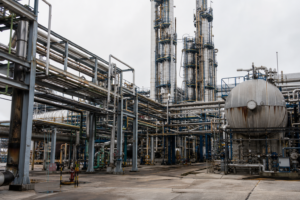
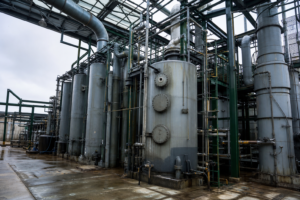
Barium chloride production and recovery is an evaporation-crystallization duty ruled by one physical fact: BaCl2 solubility climbs steeply with temperature, from 31.2 g per 100 g water at 0°C to 59.4 g at 100°C. That single property makes the proven industrial route a combination of multi-effect evaporation followed by staged crystallization — and it rewards designers who get the details right. A supplier-published reference integration — an external industry reference, not an EvapCryst delivery, indicative rather than a project guarantee — combines a triple-effect forced circulation evaporator, flash crystallizer, cooling crystallizer, centrifuge and dryer in one continuous train, reported to deliver high-purity crystals with low steam consumption and stable around-the-clock operation. This page lays out the full process, the design choices between counter-current and forward feed, DTB versus forced circulation crystallization, and the route from acid-leaching liquor to free-flowing product.
Where Barium Chloride Liquor Comes From
Industrial barium chloride is produced chiefly from barite (barium sulfate) via reduction roasting to barium sulfide, followed by leaching and conversion, and in several plants by acid leaching of barium-bearing materials. The output of the leaching section is a purified but dilute barium chloride solution — an illustrative range of a few percent to low-double-digit BaCl2 content in published plant practice, with traces of sulfide, iron and alkaline-earth impurities carried from the ore. The evaporation system’s task is threefold: concentrate this liquor to the crystallization zone, manage the salts that co-crystallize, and deliver a crystal product whose purity and particle size meet the specifications of the pigment, electronics, water treatment and specialty chemical markets that consume barium chloride.
The Solubility Curve Dictates the Flowsheet
| Temperature (°C) | 0 | 10 | 20 | 30 | 40 | 60 | 80 | 90 | 100 |
|---|---|---|---|---|---|---|---|---|---|
| Solubility (g BaCl2 / 100 g water) | 31.2 | 33.5 | 35.8 | 38.1 | 40.8 | 46.2 | 52.5 | 55.8 | 59.4 |
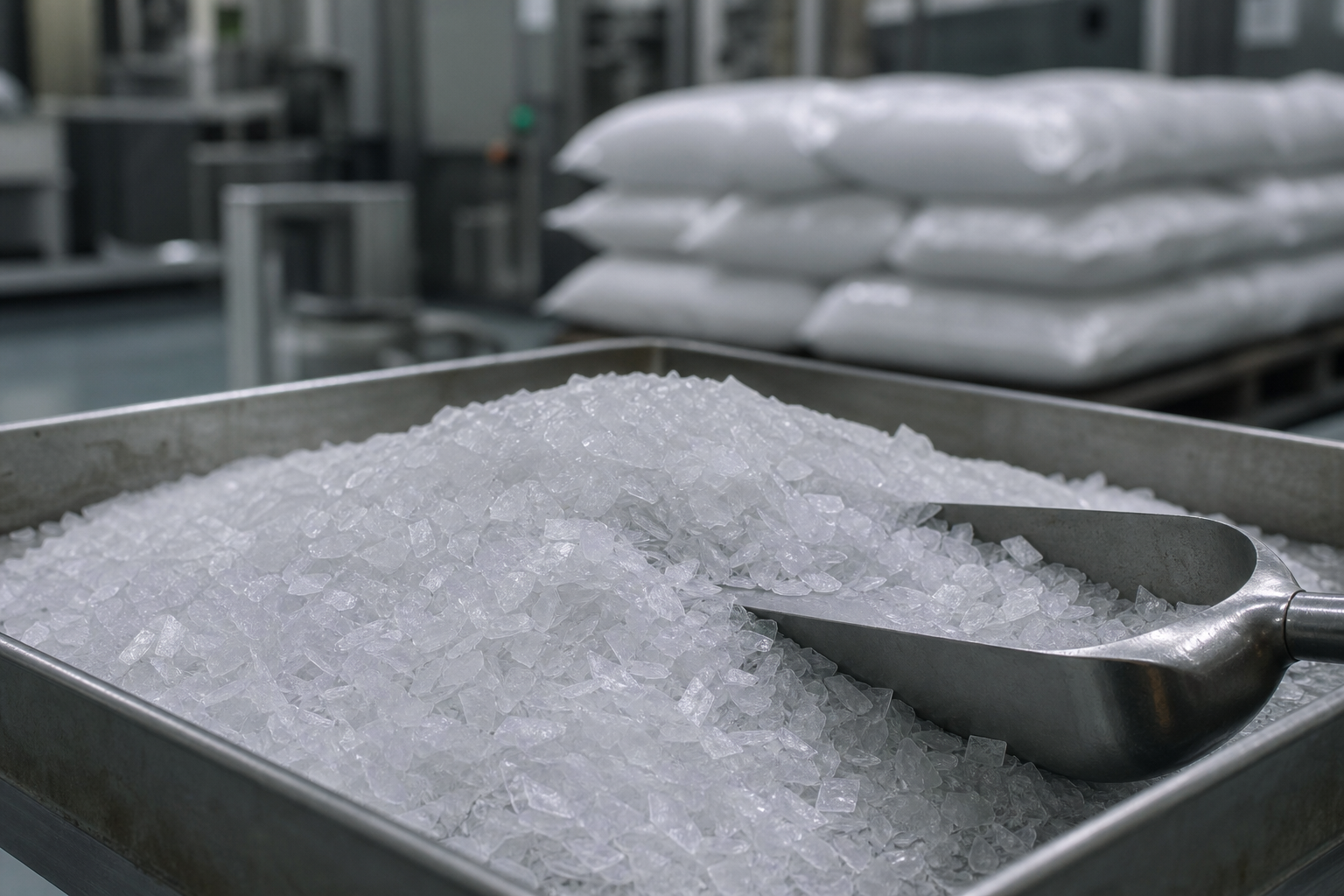
Read as a process instruction, this curve says two things. First, cooling a saturated liquor from 100°C to 20°C releases roughly one-fifth of the dissolved salt as crystals — so cooling crystallization is productive, and evaporative concentration is required to reach saturation in the first place. Second, the near-doubling of solubility across the range means hot concentrated liquor holds far more salt than cold, which is why the reference design discharges the concentrated liquor hot from the first effect and lets a flash crystallizer and cooling crystallizer precipitate salt in controlled stages rather than in one uncontrolled dump.
Process Flow: Evaporation, Flash, Cooling, Separation, Drying
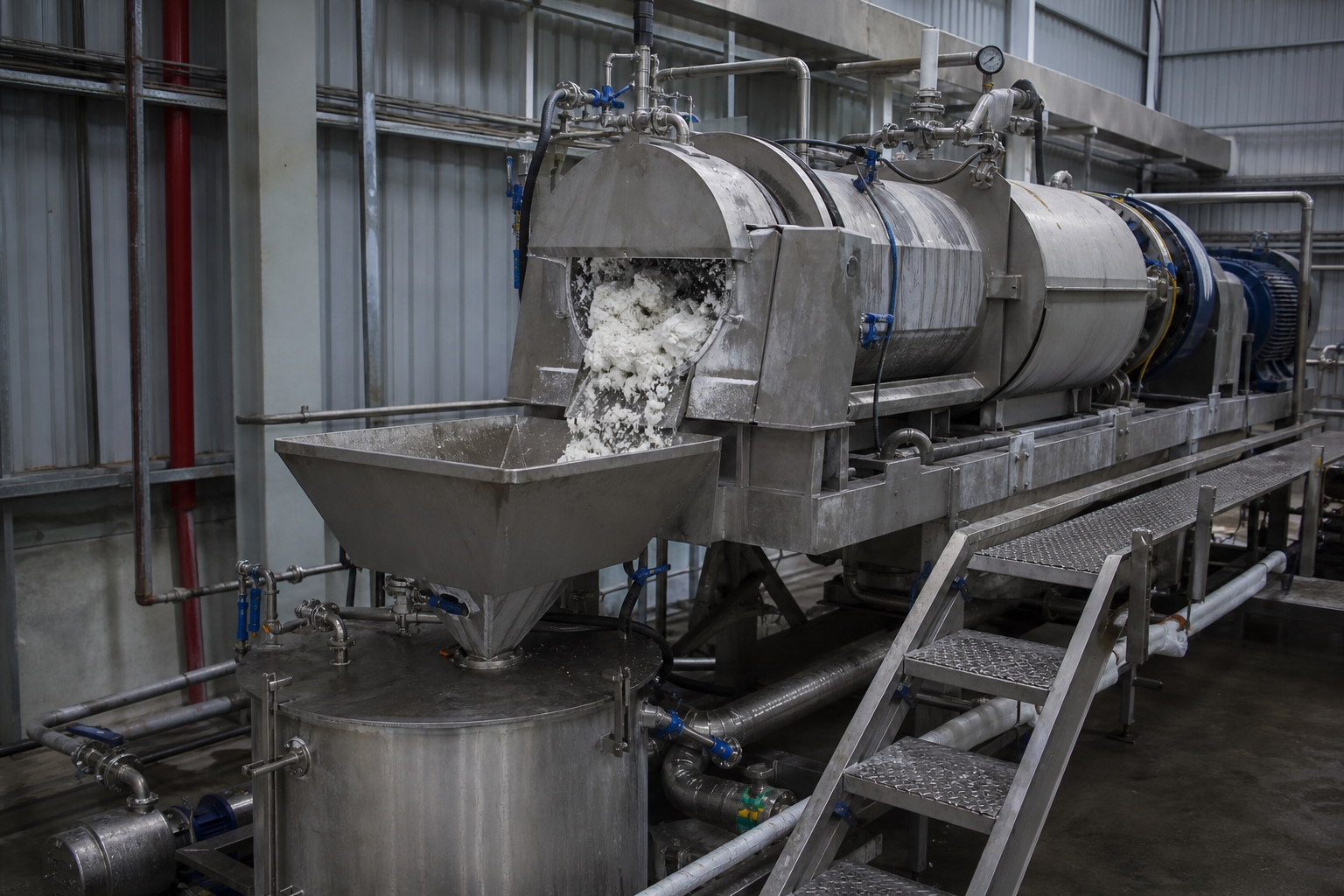
The integrated system in the same published reference runs as a continuous cascade. Purified barium chloride solution feeds a triple-effect forced-circulation evaporator, where it concentrates to the supersaturated state. The concentrated liquor discharges — hot, from the first effect — into a flash crystallizer, where rapid pressure reduction and flash evaporation drive supersaturation higher and trigger nucleation. The slurry then flows to cooling crystallizers, where circulating cooling water removes heat in a controlled profile, growing and aging crystals. A centrifuge separates the crystal slurry, and a dryer finishes the wet cake into free-flowing barium chloride product, while mother liquor recycles to the evaporation feed.
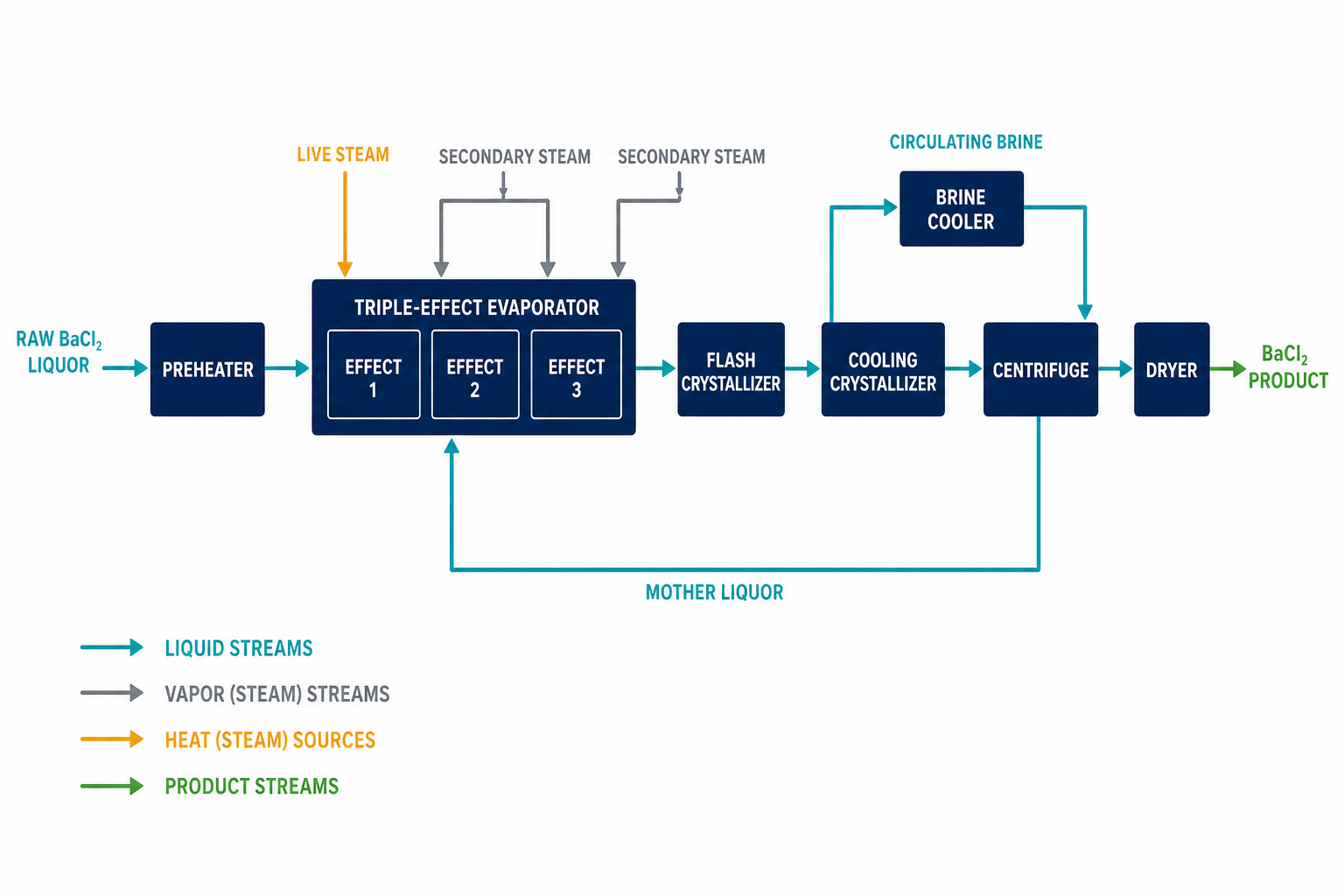
Each stage earns its place. Forced circulation in the evaporator handles the scaling tendency of a concentrating salt liquor and keeps heat transfer stable between cleanings. The flash crystallizer converts pressure into supersaturation without adding heat-transfer surface — nothing to scale. The cooling crystallizer grows the crystals the market wants and recovers the solubility difference the curve offers. And discharging from the first effect rather than the last keeps the concentrated liquor hot and mobile, avoiding viscosity-related handling problems and feeding the flash stage at its best driving force.
| Process Module | Candidate Equipment Types | Selection Rationale | Indicative Operating Envelope |
|---|---|---|---|
| Feed purification tie-in | Polishing filtration; sulfide and iron removal | Sets the ceiling on final product purity | Per leach-liquor specification |
| Triple-effect forced-circulation evaporation | Counter-current FC evaporator train on live steam | Concentrates a scaling salt liquor with stable heat transfer | Low-cost process steam (e.g., ~6 kg/cm² class) where available |
| Flash crystallization | Flash vessel at pressure reduction | Generates supersaturation with no heat-transfer surface to scale | Fed hot from the first effect |
| Cooling crystallization | Cooling crystallizer, FC or DTB type | Harvests the solubility difference as market-grade crystals | Cooling from near 100°C toward 20°C releases roughly one-fifth of dissolved salt |
| Centrifuge & dryer | Pusher or peeler centrifuge; gentle dryer | Delivers free-flowing, intact crystal product | Per moisture and particle specification |
| Mother-liquor loop | Recycle with controlled purge; second-stage concentration | Holds impurities below the crystal-contamination threshold | Na/Ca/Sr/Fe impurity balance |
Configuration, materials, and operating ranges depend on actual feed, temperature, pressure, corrosion review, fouling behavior, utilities, and project capacity.
Counter-Current Multi-Effect Design and Heat Recovery
The evaporation train in the reference system is deliberately counter-current. The feed solution and the heating steam move in opposite directions: liquor passes from the third effect toward the first, while live steam enters the first effect and its secondary vapor cascades forward as the heating medium for subsequent effects, achieving three-stage heat recovery that cuts steam consumption dramatically compared with single-effect operation. Each effect carries an independent vacuum control, with vacuum deepening from first to third effect, so boiling temperatures step down along the train and evaporation proceeds under stable, controlled conditions at every stage.
The payoff of counter-current arrangement is concentrated in the discharge: liquor leaves the system from the hottest effect at the highest concentration with the best fluidity — exactly what the downstream flash and crystallization stages need — while the fresh dilute feed, which tolerates low temperature best, enters where temperature is lowest and heat is cheapest.
Staged Crystallization: Why Flash First, Then Cooling
Supersaturation shock is the enemy of crystal quality and of on-stream time. Dumping hot saturated liquor straight into a cold crystallizer triggers explosive nucleation: a mass of fines, poor filterability, and blockage risk in the crystallizer and piping. The staged design prevents this. The flash crystallizer first raises supersaturation in a controlled step driven by pressure reduction — nucleation begins under gentle, uniform conditions. The cooling crystallizer then completes the driving force with a controlled temperature profile, growing existing crystals and aging the slurry. The result is a coarser, more uniform particle size distribution, better centrifuge performance, and stable continuous operation with minimal blockage risk.
Forced Circulation or DTB: Choosing the Crystallizer for the Product
Two crystallizer families serve barium chloride duty, and the choice follows the product specification. Forced circulation (FC) crystallizers with external heating are the robust default for industrial salt production — simple, forgiving, and tolerant of wide liquor variations. Where the market pays for particle size — the “bold crystal” segment that commands premiums in high-end applications — a Draft Tube Baffle (DTB) crystallizer is the stronger selection. Its integrated draft tube and low-speed axial impeller give gentle, uniform circulation that avoids thermal and mechanical shock to growing crystals, while the baffle zone acts as a fines-destruction stage: small unwanted nuclei are separated and redissolved, and the growth capacity of the liquor is funneled into existing large crystals. The DTB route therefore delivers larger, more uniform crystals with tighter purity control through evaporation-rate and mother-liquor management.
Materials for barium chloride service follow its corrosivity: titanium Grade 2 and super duplex 2507 are the premium selections for hot concentrated duties, with 316L acceptable in milder zones. Vendors offer the same duty in multi-effect steam or MVR configuration — multi-effect where low-cost steam (for example around 6 kg/cm² process steam) is available, MVR where electricity is the rational utility or emission limits are strict — with skid-mounted modular builds for projects that need rapid commissioning.
Utility Selection: Multi-Effect versus MVR for BaCl2
| Configuration | Drive | Best Fit | Capacity Class |
|---|---|---|---|
| Multi-effect steam (triple-effect reference) | Live steam, cascaded effects | Plants with low-cost process steam | Larger trains, continuous duty |
| MVR evaporative crystallization | Electricity, no live steam | High steam cost or strict emission limits | Mid-size trains, steam-free sites |
| Skid-mounted modular | Either, factory-tested | Fast commissioning projects | Compact capacity blocks |
Because barium chloride’s BPE at industrial concentration remains moderate, MVR operates efficiently on this duty; the reference triple-effect design is chosen where steam economics dominate. Both routes feed the same downstream flash-plus-cooling crystallization and drying package.
Mother Liquor Management and Byproduct Recovery
Mother liquor recycling concentrates impurities — sodium, calcium, strontium and iron trace onward from the ore — so a controlled purge is essential to product purity. Purged mother liquor, still rich in barium value, is processed in a second-stage concentration rather than discarded; and where the feedstock chemistry produces it, co-produced calcium chloride is recovered as a sellable byproduct from the process streams. A well-balanced design closes most of the barium inventory loop while keeping impurity levels in the crystallizer below the threshold where they contaminate the crystal or disrupt growth.
Quality Control Points That Decide Product Grade
- Feed purification — sulfide, iron and hardness ahead of the evaporator set the ceiling on final purity.
- Supersaturation profile — flash stage depth and cooling rate control nucleation versus growth balance.
- Crystal washing on the centrifuge removes mother liquor film and its impurity load.
- Drying temperature — gentle, uniform drying preserves crystal integrity and free-flowing behavior.
- Purge discipline — impurity balance in the mother liquor loop keeps product grade stable campaign after campaign.
Related Pages
- DTB crystallizer technology — large-particle crystallization for premium salt grades
- Forced circulation crystallizer technology — the robust default for industrial salt duty
- Multiple-effect evaporation technology — the counter-current triple-effect energy core
- Chemical and agrochemical industry solutions — inorganic salt production systems
- Hydrazine hydrate wastewater MVR salt recovery — another inorganic salt evaporation-crystallization application
When This Route May Not Fit
The full integrated train is not always warranted. Small producers of commodity-grade barium chloride can meet specification with simpler single-effect concentration plus ambient cooling, and the triple-effect counter-current sophistication never repays itself at that scale. Sites with neither cheap process steam nor competitive electricity cannot host either energy route economically. Feedstock matters as much as hardware: high-strontium or high-sulfide barite pushes purification costs to where the route’s margins disappear. If the mother liquor carries too little barium value to justify second-stage concentration, purging it is the honest answer. And because barium salts are toxic, a site without a compliant outlet for residues and purge streams should settle that before any evaporator is ordered.
What Must Be Verified
Validation focus: the leach-liquor analysis across ore campaigns — BaCl2 grade plus sulfide, iron, strontium, calcium, and sodium — since feed purification and the impurity balance follow from it. The solubility behavior should be confirmed on the actual liquor, because trace impurities shift the working curve off handbook values. An impurity-balance calculation across the mother-liquor loop must show which purge rate holds product grade. The corrosion review across the chloride-temperature envelope fixes the titanium, super-duplex, and 316L zoning. Product grade and particle-size targets decide FC versus DTB before sizing, and the steam-versus-MVR choice needs the site’s real utility prices, including the availability of low-cost process steam.
FAQ
Why does barium chloride use evaporation plus cooling crystallization together?
Solubility rises from 31.2 g per 100 g water at 0°C to 59.4 g at 100°C. Evaporation concentrates the liquor to saturation economically, then cooling harvests the solubility difference as crystal yield — neither step alone recovers the salt efficiently.
What does the flash crystallizer do between the evaporator and the cooling crystallizer?
It converts the hot concentrated liquor’s pressure into additional supersaturation through flash evaporation, starting nucleation under controlled conditions so the cooling stage grows crystals instead of generating a surge of fines — protecting particle size and preventing blockage.
Should I choose a DTB or forced circulation crystallizer for BaCl2?
Choose forced circulation for robust industrial-grade production tolerant of liquor variation. Choose DTB when the market pays for large, uniform, high-purity crystals: its baffle zone destroys fines and channels growth into existing crystals.
What materials are used for barium chloride evaporators?
Hot concentrated duty calls for titanium Grade 2 or super duplex 2507; 316L serves milder zones. Chloride content rules out materials with insufficient pitting resistance in the hottest heat-transfer sections.
Is MVR or steam multi-effect better for a barium chloride plant?
Barium chloride’s moderate BPE suits both. The decision is site energy economics: multi-effect where low-cost process steam exists, MVR where electricity is rational or steam unavailable, with skid-mounted modular builds available for rapid commissioning in either configuration.
Planning barium chloride production or recovery? Send the leach-liquor analysis, target product grade and particle size, and site utility prices — in exchange you will receive a first-pass screening of the evaporation-crystallization arrangement, crystallizer type, and materials envelope your duty points to.