Project Parameters
| Parameter | Value |
|---|---|
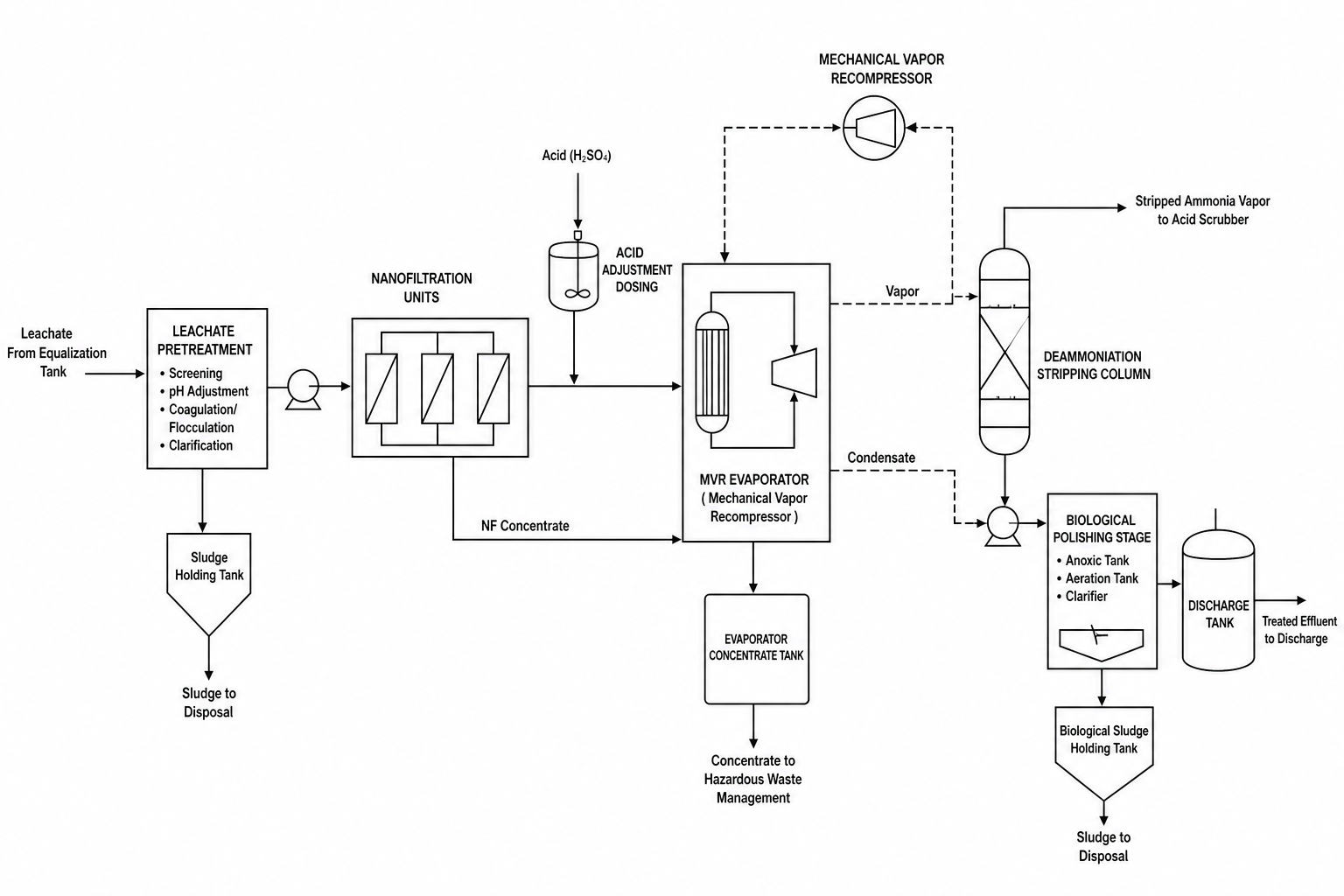
| Process route | Pretreatment + nanofiltration + acid adjustment + MVR evaporation + deammoniation + biological polishing |
| Industry | Hazardous waste landfill leachate, BOO service model (Ji’an, Central China) |
| Feed type & key components | Hazardous waste landfill leachate concentrate; nanofiltration concentrate feeds the evaporator |
| Evaporation capacity | 300 t/d plant throughput |
| Construction materials | Corrosion-resistant wetted parts for ammoniacal chloride service (indicative) |
Representative process configuration compiled from published industry project data. Indicative values, not a process guarantee.
Project Description
A hazardous waste landfill does not make municipal leachate. The waste mass is saltier, the ammonia load is higher, the heavy-metal inventory is real, and the residue stream the treatment plant rejects is classified along with everything else on the site. The reference project at Ji’an in Central China is a 300 t/d BOO plant built against that duty: the service operator owns and runs the facility, and the landfill pays for a compliant water product, not a process.
The feed is leachate that has already been through the site’s front-end concentration: nanofiltration splits the leachate stream, and it is the NF concentrate — the fraction carrying the salt and much of the ammonia — that enters the evaporation train. The plant’s promise is full treatment to discharge criteria, with nothing recirculated back into the waste mass.
Process Technology
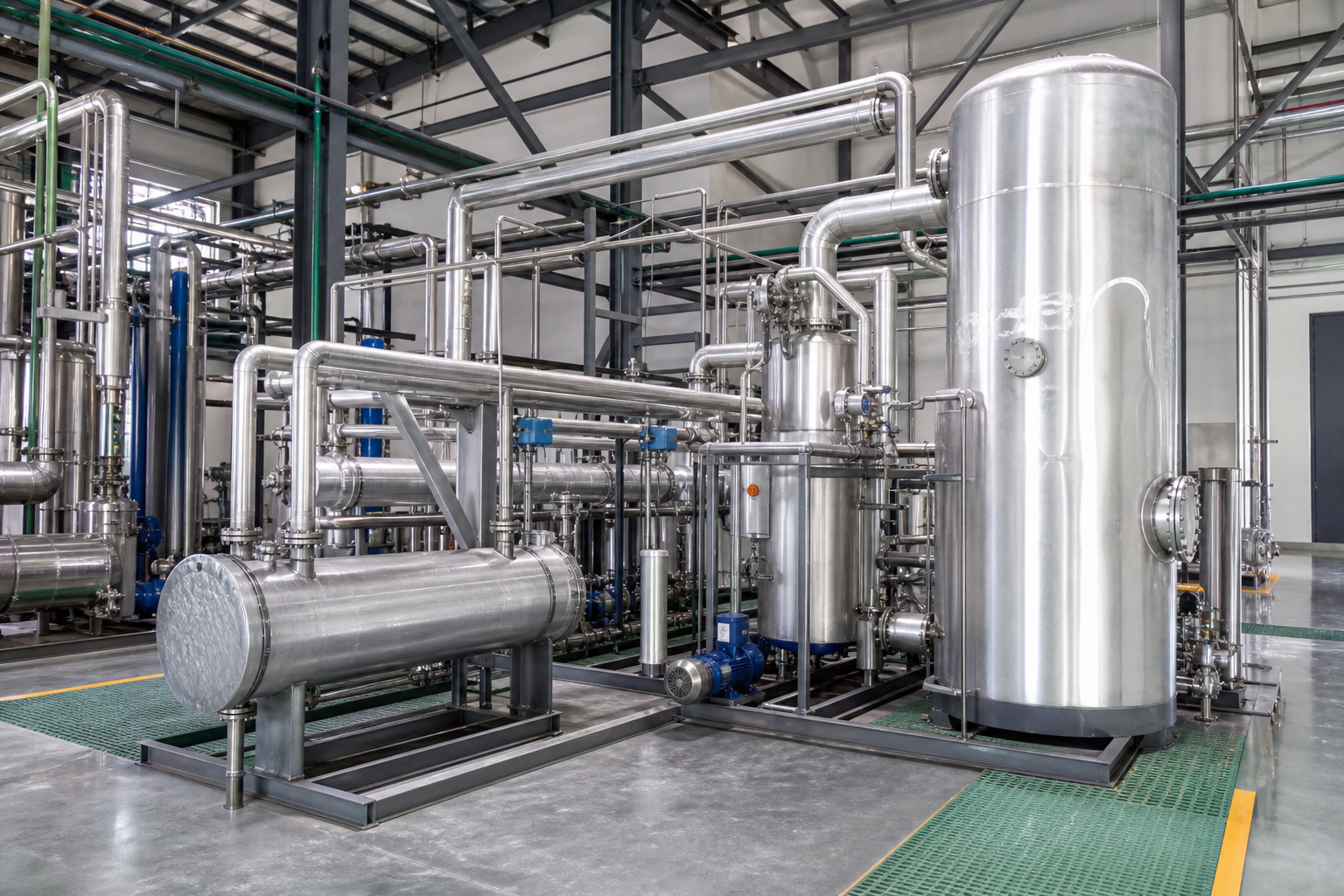
Acid adjustment ahead of the evaporator is the step that makes MVR viable on this feed. Leachate ammonia exists in equilibrium between ammonium ion and free ammonia, and the equilibrium moves toward free ammonia as pH and temperature rise — which is exactly what an evaporator does to a liquor. By acidifying the NF concentrate before the train, the ammonia is pinned as ammonium ion in the liquid phase: it boils off with neither the water nor the odor problems of an unadjusted feed, and reports instead to the concentrated brine where the downstream deammoniation stage is waiting for it.
The MVR train then concentrates the acidified liquor under mechanical vapor recompression — electric drive, vacuum boiling at temperatures managed for the scaling chemistry a hazardous landfill contributes. Water leaves as condensate; the salt, metals and ammonia leave in a concentrated liquor that is not the end of the flowsheet.
Deammoniation strips or converts the ammonia from the concentrated stream in a dedicated stage, producing an ammonia-bearing offgas or product stream handled under the site’s hazardous waste permits. What remains after ammonia removal goes to biological polishing: the residual biodegradable organics from the leachate matrix finish in a compact biological stage, and the combined effluent meets GB 16889 Table 2 limits under the reference configuration — the landfill discharge standard’s tightest table, written for direct discharge to the environment.
Published references for the plant class report stable, low-energy operation under the BOO model: continuous service at the 300 t/d rate, with water out at Table 2 and residues out as classified solids.
Equipment Configuration
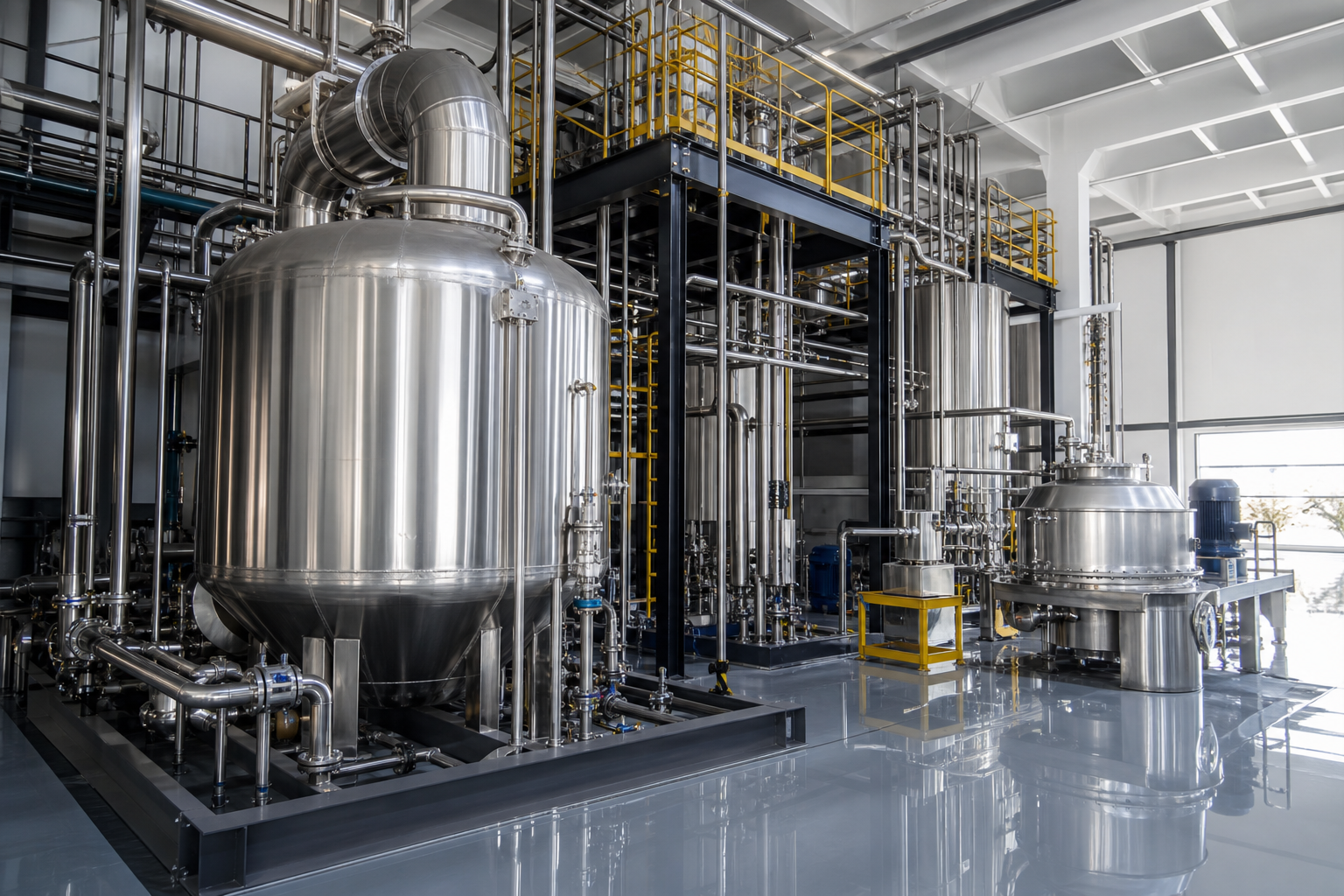
One set of the following equipment is typical for this duty:
- Leachate pretreatment and nanofiltration concentration
- Acid adjustment stage pinning ammonia to the liquid phase
- MVR evaporation train with mechanical vapor recompressor
- Deammoniation stage on the concentrated stream
- Biological polishing to GB 16889 Table 2
- Classified residue handling under hazardous waste permit; DCS control
Performance & Outcome
Compiled from published industry project data, indicative: 300 t/d BOO trains of this class treat hazardous landfill leachate concentrate through acid-adjusted MVR evaporation, deammoniation and biological polishing to Table 2 discharge limits at low specific energy. Ammonia recovery route and residue classification are quoted per site permit.
Simplified PFD
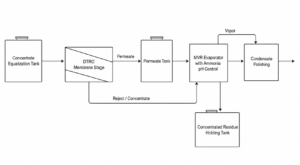
The simplified process flow diagram above shows NF concentration, acid adjustment, the MVR evaporator, the deammoniation stage and biological polishing.