Project Parameters
| Parameter | Value |
|---|---|
| Process route | All-plate falling-film evaporation: ten bodies across seven effects |
| Industry | Pulp & paper — hardwood (broadleaf) kraft pulp |
| Feed type & key components | Hardwood kraft black liquor; alkali lignin, hardwood xylan derivatives, sodium salts |
| Evaporation capacity | 268 t/h |
| Region | East China (Shandong) |
Representative process configuration compiled from published industry project data. Indicative values, not a process guarantee.
Project Description
Hardwood kraft mills run the most scalable pulp chemistry there is — eucalyptus-class fiber cooks fast, and the mills built around it push evaporation stations to sizes that were recovery-boiler territory a generation ago. The published project behind this configuration is such a station at a large pulp producer in East China: 268 t/h of hardwood black liquor, concentrated in ten bodies across seven effects, every body a plate-type falling-film evaporator.
The ten-body seven-effect architecture is scale engineering. Seven effects buy the steam economy a station this size must have — at 268 t/h, each effect of economy is measured in tonnes of steam per hour — and the extra three bodies (ten bodies, seven effects) split the high-load effects into parallel pairs, keeping each plate pack inside its vapor and irrigation limits while multiplying the cleanable surface the washing rotation can work through. It is the same body-heavy logic as the biggest wood-pulp stations, executed in plate.
Process Technology
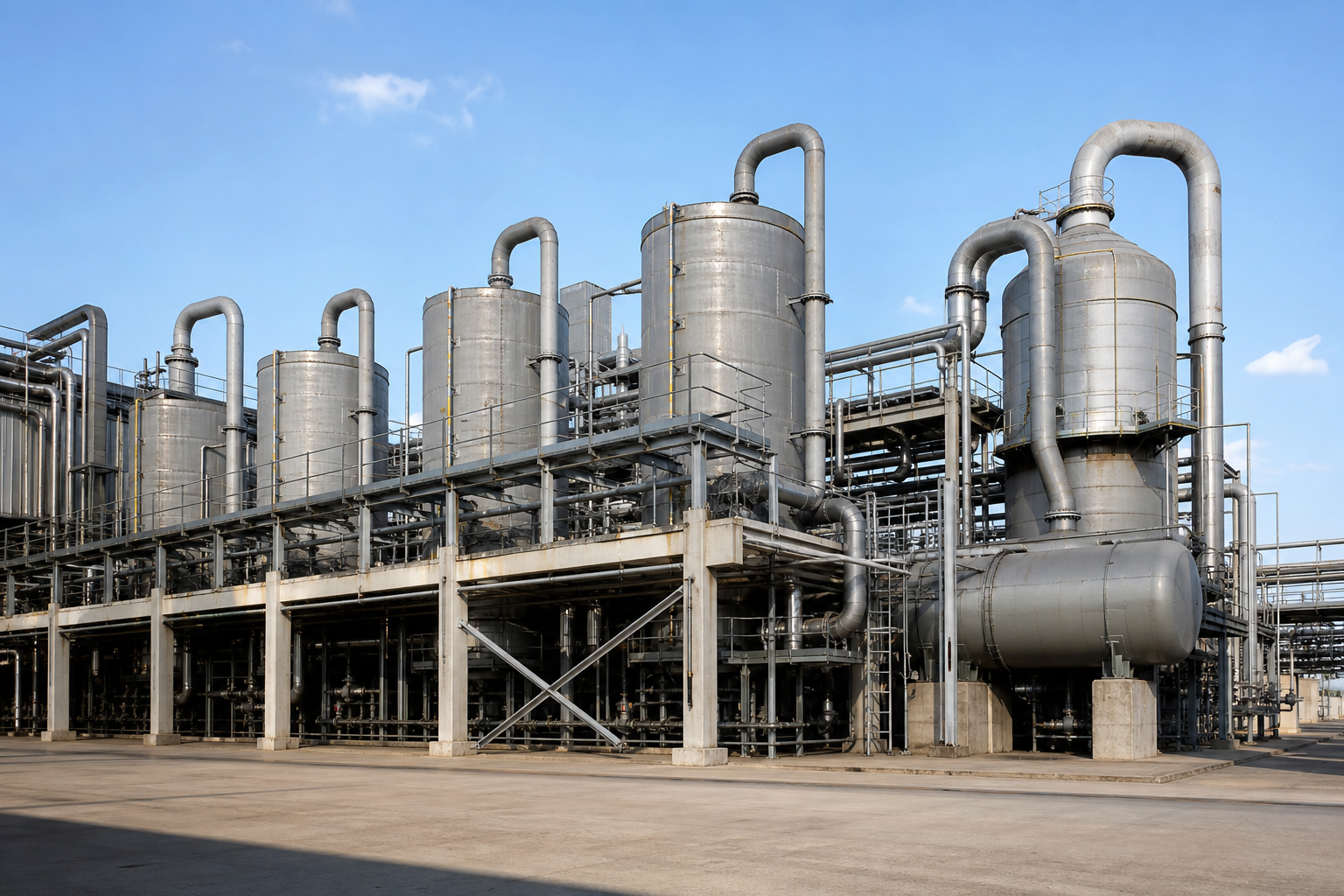
Hardwood black liquor is friendlier than straw liquors but no stranger to fouling: hardwood xylan derivatives and the liquor’s soap fraction (tall oil precursors) lay organic films, and as firing solids climb, the sodium-salt viscosity rises steeply. Plate falling-film bodies manage the profile with short liquor paths through corrugated plate packs — intense wall shear against deposit adhesion — and with mechanical cleanability that keeps a station of this size on its washing calendar without losing an effect at a time.
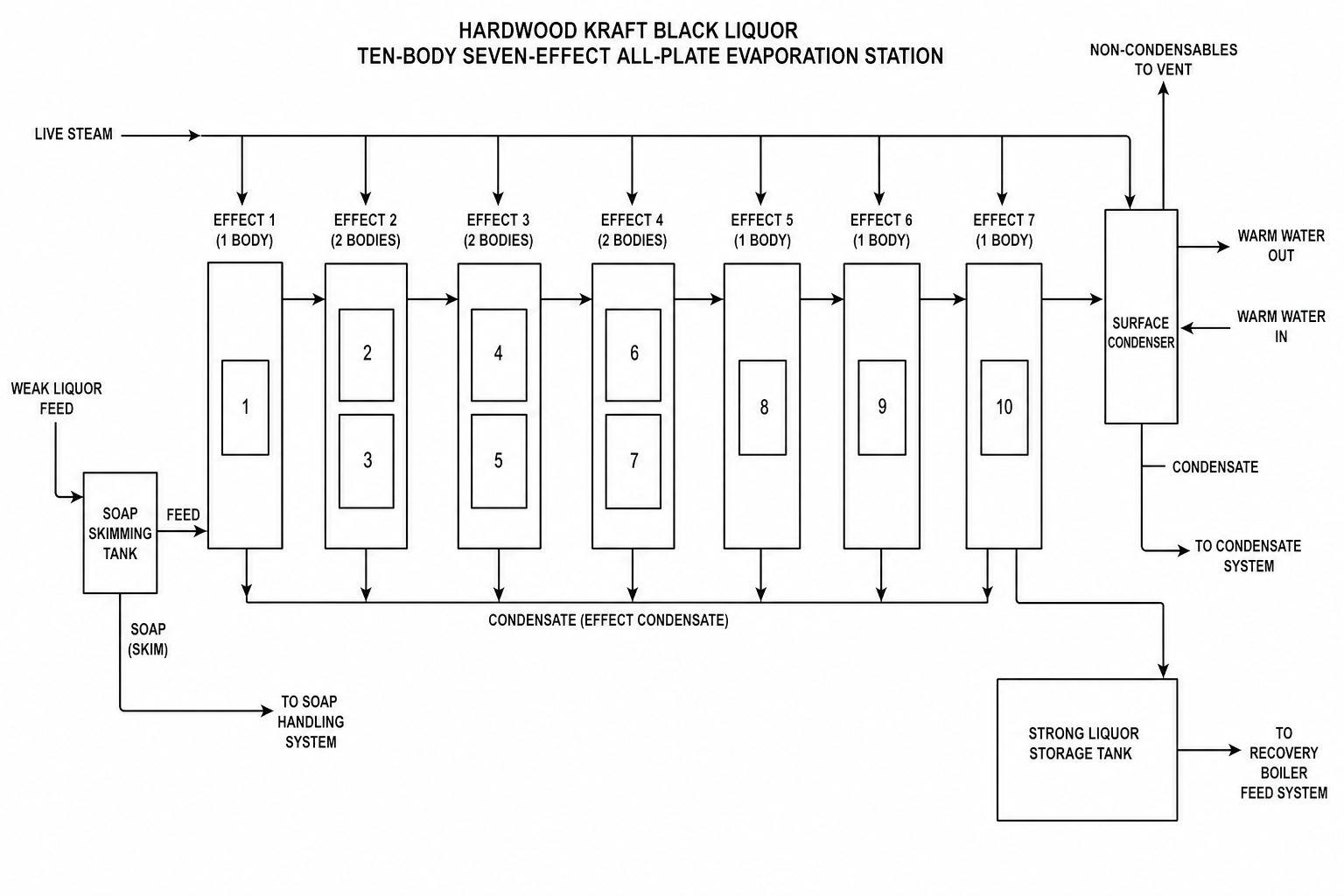
The seven-effect chain ladders the temperature from live steam at the first effect down to surface condensation at the seventh. Weak liquor from brown-stock washing enters the cold end and concentrates through the effects in the mill’s chosen feed scheme; semi-strong liquor flashes forward; the strong liquor finishes in the hottest bodies at the firing solids the recovery boiler’s liquor gun demands. Plate bodies’ high heat-transfer coefficients hold each effect’s temperature difference small — which is exactly what lets seven effects fit inside the liquor’s thermal budget without pushing the first body’s tubes (plates, here) into the fouling temperature band.
Heat recovery closes around the tail: the surface condenser’s warm water feeds the mill’s hot-water circuit, condensate flash recovers into feed preheat, and the condensate segregates by effect — clean front condensate back to pulp washing, foul tail condensate with methanol and turpentine-adjacent organics to stripping. At 268 t/h the condensate system is a water plant in its own right.
Soap removal upstream — the tall-oil soap that hardwood liquor carries — protects the plate packs from the worst of the organic fouling load, and the station’s washing rotation handles what remains. The published project places all-plate technology firmly in the big-mill class: 268 t/h, seven effects, ten bodies, one station.
Equipment Configuration
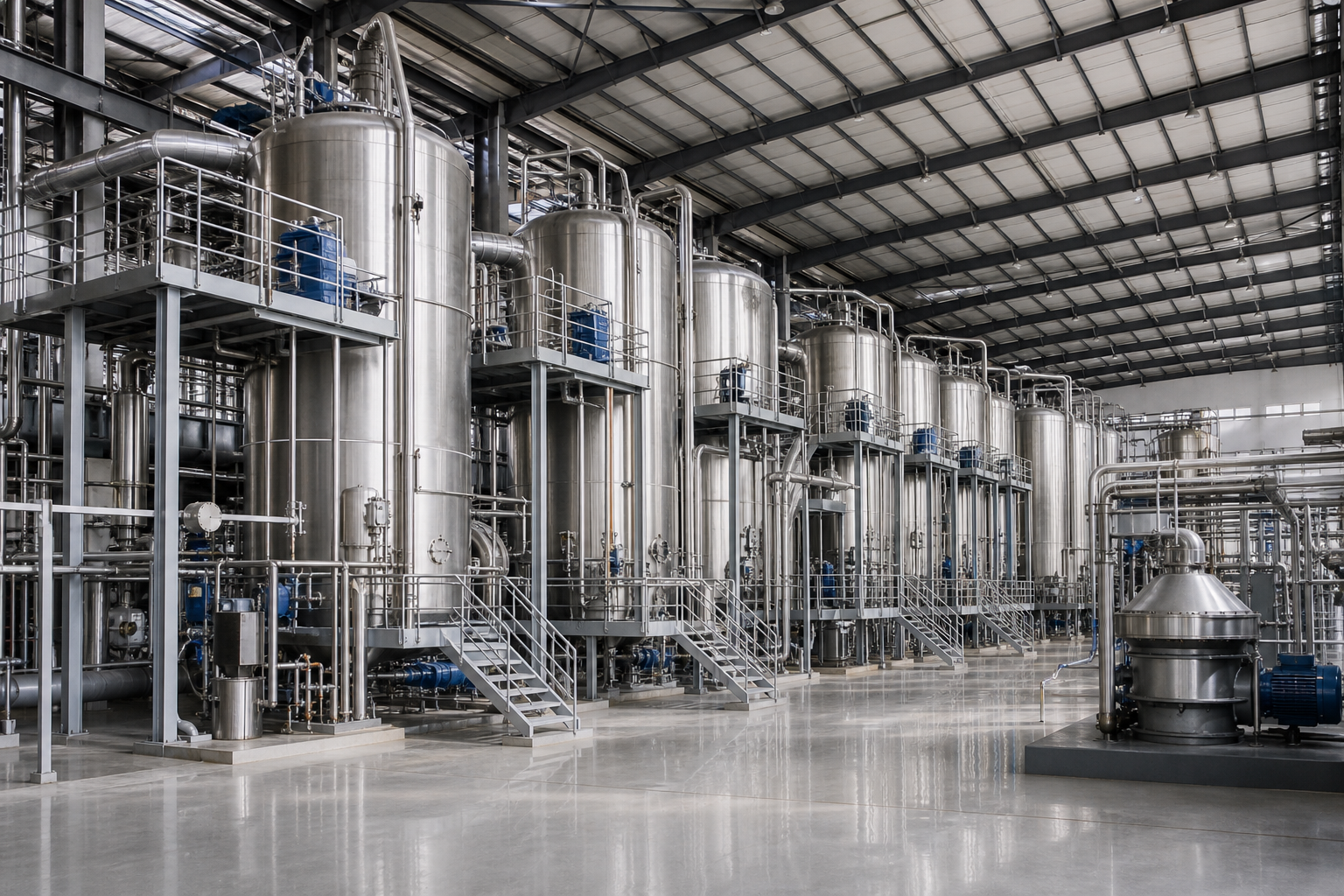
One set of the following equipment is typical for this duty:
- Weak black liquor feed with screening and soap skimming
- Ten-body all-plate falling-film evaporation station across seven effects
- Split-body high-load effects with independent plate packs
- Surface condenser with warm-water heat recovery to the mill circuit
- Segregated condensate headers with foul-condensate stripping
- Strong-liquor storage at recovery-boiler firing solids
- DCS control with body-rotation washing (CIP / mechanical cleaning)
Performance & Outcome
Compiled from published industry project data, indicative: all-plate stations of this class evaporate 268 t/h of hardwood kraft black liquor at seven-effect steam economy, delivering strong liquor at firing solids with plate-pack washing rotation managing the organic fouling calendar. Steam economy and availability are quoted per project liquor specification.
Simplified PFD
The simplified process flow diagram above shows weak liquor feed, the ten plate bodies across seven effects, surface-condensing heat recovery and strong-liquor discharge.