Project Parameters
| Parameter | Value |
|---|---|
| Process route | MVR evaporation + crystallization (battery-grade monohydrate production line) |
| Industry | Battery materials — lithium chemicals (Southwest China, Sichuan) |
| Feed type & key components | Purified lithium hydroxide solution from the lithium conversion circuit, with sodium sulfate by-product duty |
| Plant capacity | 20,000 tpa battery-grade LiOH·H2O |
| Construction materials | SS316L wetted parts (indicative for hydroxide/sulfate service; nickel grades where caustic concentration peaks) |
Representative process configuration compiled from published industry project data. Indicative values, not a process guarantee.
Project Description
Battery-grade lithium hydroxide monohydrate is the high-nickel cathode world’s lithium input, and its specification is unforgiving: 56.5% LiOH minimum, magnetic foreign matter in parts per billion, and impurity ceilings that turn every stage of the plant into a purity exercise. The reference configuration is a 20,000 tonne-per-year battery-grade LiOH plant in Southwest China — Sichuan, the spodumene conversion cluster on the Yangtze utility corridor — where the evaporation and crystallization sections carry the product’s final quality.
The flowsheet’s thermal duty concentrates purified lithium hydroxide solution and crystallizes the monohydrate under strict exclusion of the impurities that would fail the battery specification — sodium, calcium, magnesium and above all the magnetic stainless residues that high-nickel cathode makers reject entire lots over. Everything downstream of purification is therefore a cleanliness problem as much as an evaporation problem, and the plant is engineered around that dual character. A comparable published plant in the same regional cluster runs 15 t/h dedicated LiOH crystallization service, and a 20,000 tpa lithium carbonate sister configuration is published in the same segment.
Process Technology
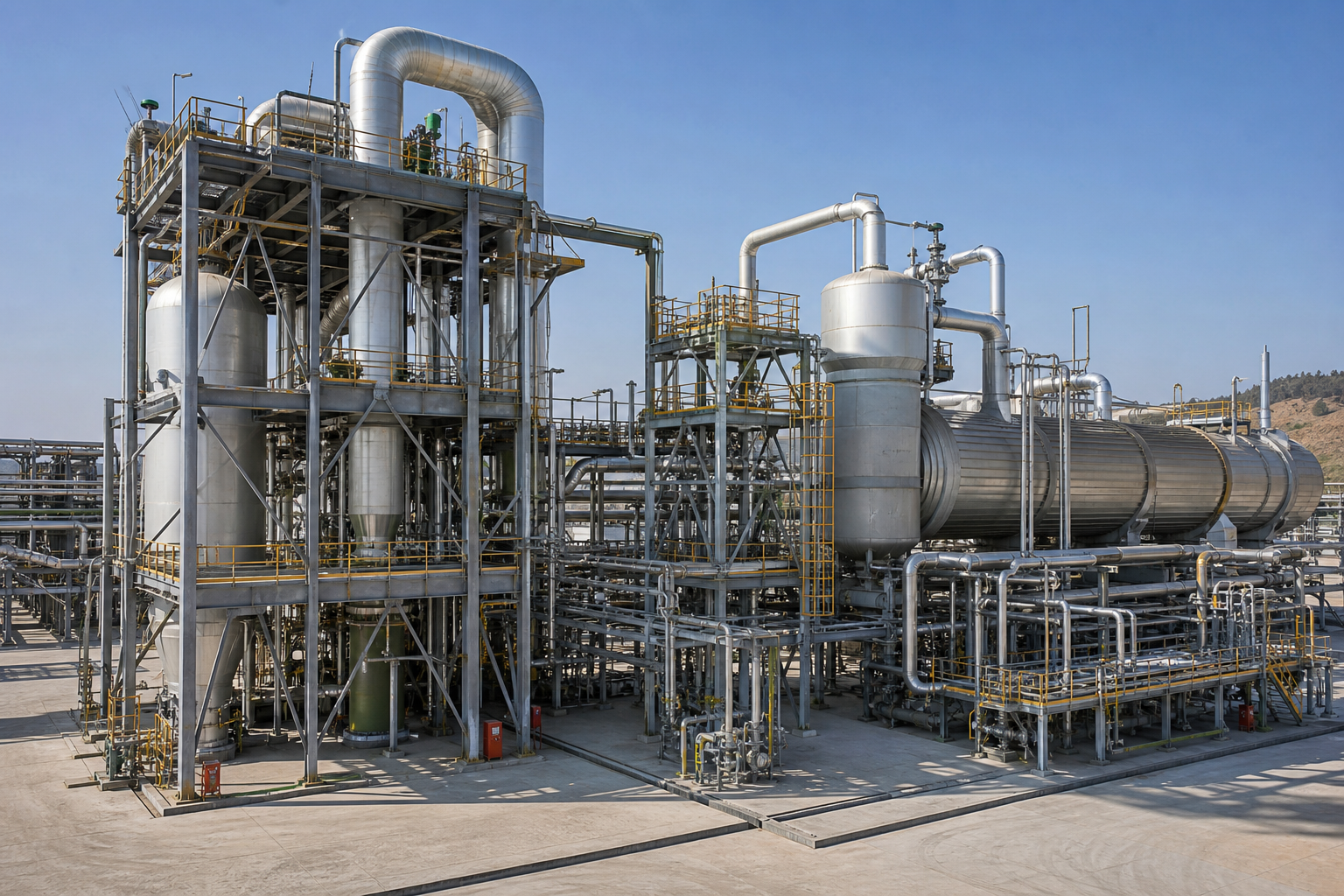
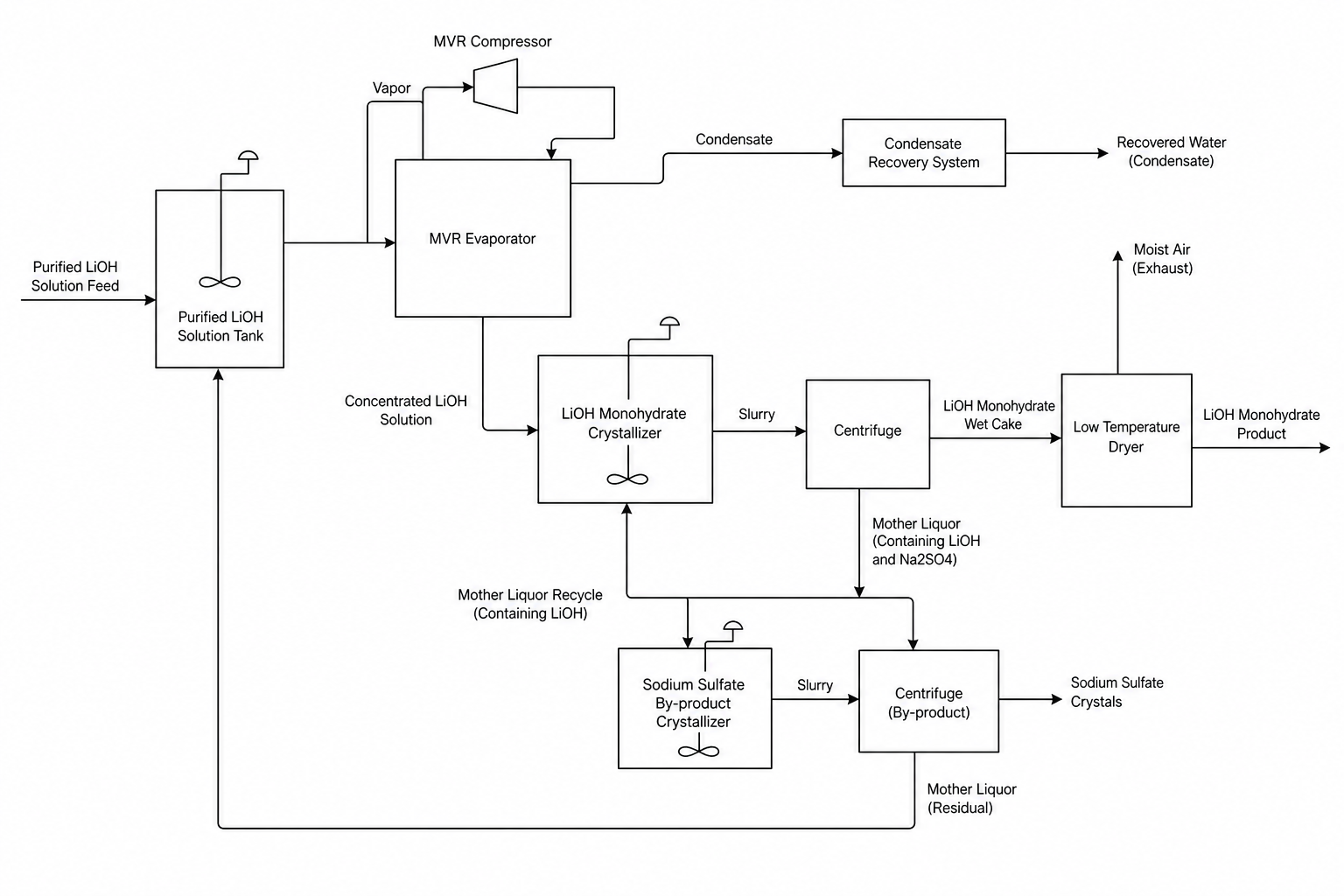
Purified lithium hydroxide liquor from the conversion circuit enters the MVR evaporator train. Mechanical vapor recompression supplies the thermal drive electrically: the compressor lifts the secondary vapor and returns it as heating steam, and the concentration climbs toward the monohydrate crystallization zone without live steam contacting the process — fewer metallic interfaces, fewer contamination paths, steadier operation.
Crystallization is the quality-defining stage. LiOH·H2O crystallizes from the concentrated liquor under tightly controlled supersaturation and temperature; crystal size distribution and mother-liquor purity set the product grade. The crystals are centrifuged under contamination-controlled conditions, dried at low temperature, and handled in the magnetic-particulate discipline battery customers audit — the plant’s material and equipment choices in this section are written by the specification, not by cost.
The sulfate side of the conversion chemistry gets its own train: sodium sulfate solution, the by-product of lithium refining, is crystallized and dewatered as a saleable industrial salt rather than a waste load. Mother liquors recycle with purges that keep the impurity inventory from closing on itself. Condensate returns to the dissolution and washing duties of the front end.
Equipment Configuration
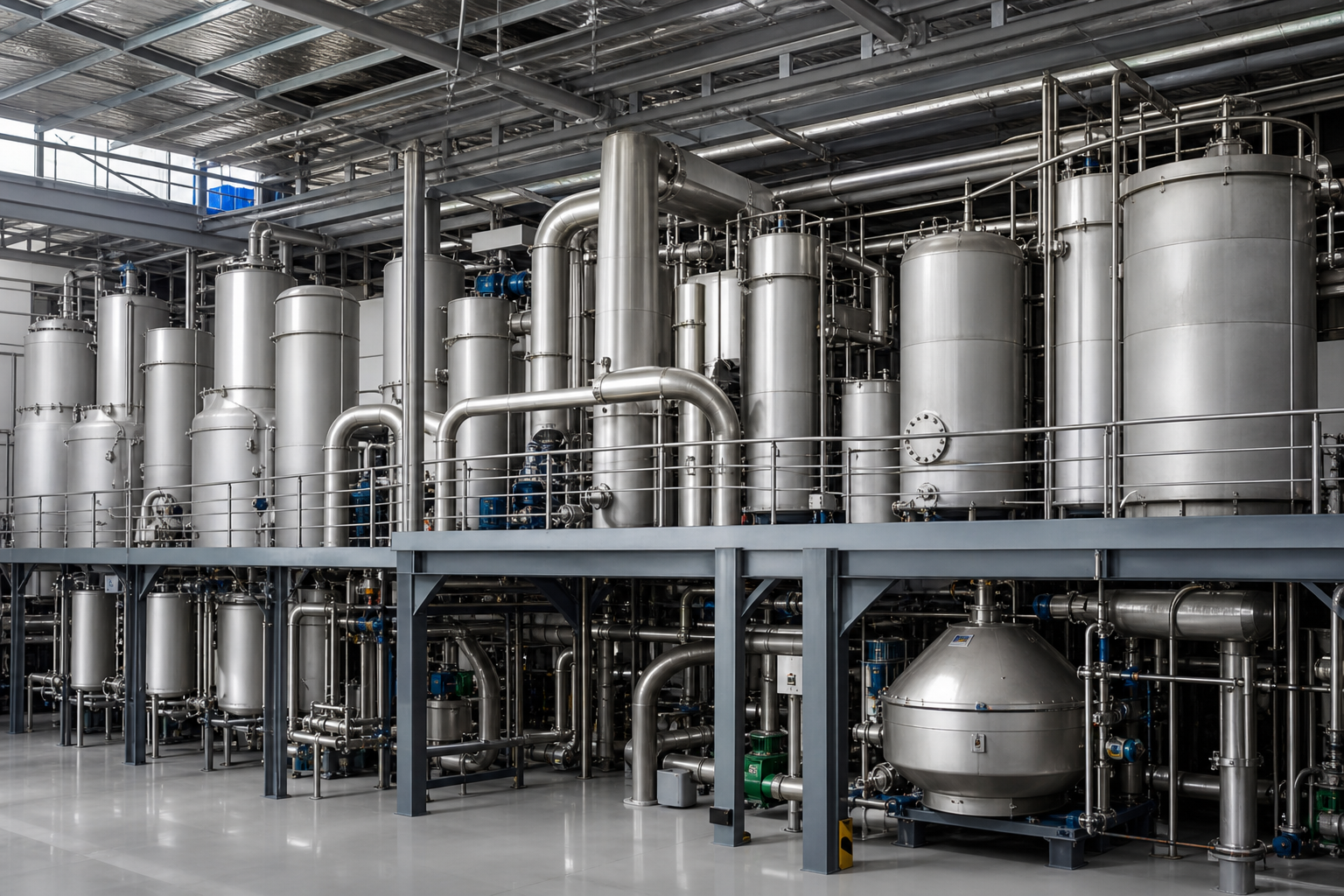
One set of the following equipment is typical for this duty:
- MVR evaporator train for purified LiOH solution concentration
- LiOH·H2O crystallizer with controlled supersaturation and crystal classification
- Centrifuge and low-temperature dryer with contamination-controlled product handling
- Sodium sulfate by-product crystallization and dewatering train
- Mother-liquor recycle with impurity purge management
- DCS control with battery-grade quality data capture
Performance & Outcome
Compiled from published industry project data, indicative: plants of this class produce battery-grade LiOH·H2O on electrically driven MVR energy with by-product sodium sulfate recovery and condensate reuse. Product specification compliance and specific energy are quoted per project flowsheet.
Project economics of this scale are discussed further in Battery Materials Wastewater Treatment & Resource Recovery.