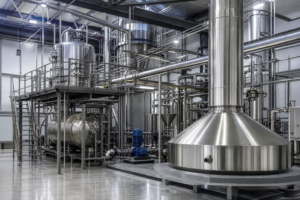
Vanillin Production: Concentration & Drying Solutions
Integrated vanillin concentration, crystallization and closed-loop nitrogen drying systems for solvent-wet, heat-sensitive aroma chemicals – with 5,000 TPA reference practice.

Integrated vanillin concentration, crystallization and closed-loop nitrogen drying systems for solvent-wet, heat-sensitive aroma chemicals – with 5,000 TPA reference practice.
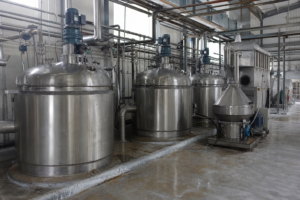
Engineering guide to continuous cooling crystallization of tartaric acid: solubility-driven staging, DTB/Oslo vessel selection, mother-liquor purge strategy, and the failure modes that decide product
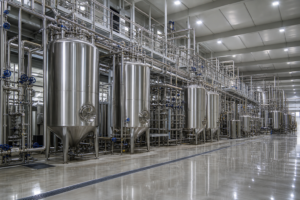
Complete threonine broth downstream train: ceramic membrane clarification, multi-effect or MVR evaporation crystallization to 58-60% solids, two-stage centrifugation, and fluidized bed drying. Reference plants

Bayer-route and precipitation-route aluminum hydroxide: particle engineering controls product value, washing governs sodium residuals, and spin-flash drying converts wet filter cake to powder –

Evaporation and concentration of lithium precipitation mother liquor recovers residual lithium, crystallizes sodium sulfate by-product, and returns clean condensate — the MVR-based route to
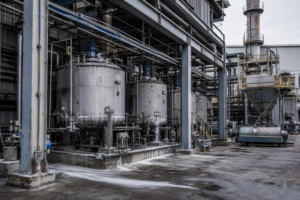
Battery-grade lithium carbonate plants built on MVR evaporation, hot precipitation crystallization, sodium sulfate by-product recovery and rotary drying – 30,000 TPA reference practice.

Ammonium sulfate recovery by MVR evaporation crystallization and neutralization: by-product sources, 1.6-2 mm large-particle crystallization, route selection, drying, and ZLD economics.

Sodium acetate crystallizes by cooling, not evaporation: supersaturation controlled through temperature, concentration, cooling rate and agitation, with continuous operation delivering pharma and food-grade consistency.
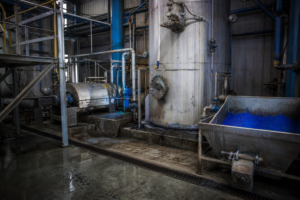
Evaporation and crystallization plants that turn copper sulfate liquors, etch solutions and smelter waste streams into pentahydrate crystal product, reusable water and recovered copper
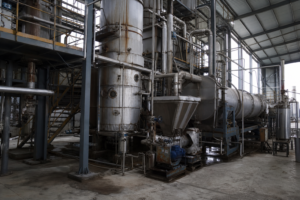
MVR forced-circulation evaporation plus cooling crystallization recovers ammonium chloride from soda-ash coupling and rare-earth wastewater; steam rotary drying cuts cost by $15.57/t with 14.4