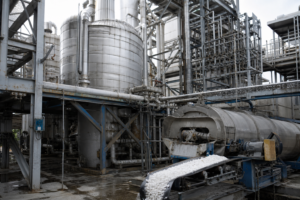
Calcium Chloride (CaCl2) Concentration & Granulation Solutions
Calcium chloride concentration and anhydrous granulation from soda ash distiller waste – high boiling-point-rise evaporation, spray granulation, 600,000 TPA reference practice.

Calcium chloride concentration and anhydrous granulation from soda ash distiller waste – high boiling-point-rise evaporation, spray granulation, 600,000 TPA reference practice.

Continuous cooling crystallization purifies hydroquinone: isomer separation from catechol, oxidation color control, four critical process control points, and photographic-grade polishing routes.
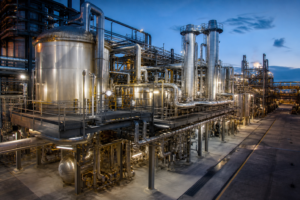
KCl purification by MVR forced-circulation evaporation and DTB crystallization: 34% hot dissolution, BaCl2/EDTA purification, 1.5-2.0% supersaturation control, 0.2-1.5 mm Class I premium potash product.
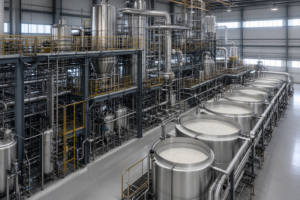
Two-stage fractional crystallization separates NaCl from KCl in mixed chloride brines: evaporation recovers 96-98% pure sodium chloride, flash cooling recovers potassium chloride, and an
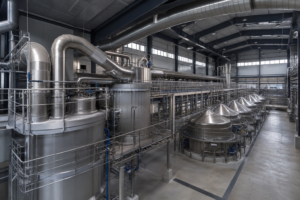
Evaporation and crystallization engineering for the three big fermentation products: lysine dual-route finishing, MSG vacuum pan crystallization, citric acid hydrate/anhydrous control, and MVR economics
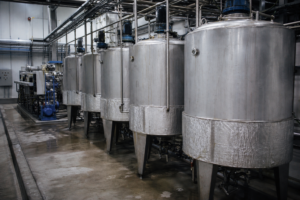
Dry fractionation of coconut oil explained: feed conditioning at 60-70C, programmed cooling crystallization from 40C to 15-25C, membrane filter press separation of stearin and

MVR/TVR evaporation and controlled crystallization systems for allulose (D-psicose) plants: concentrating chromatography eluate, protecting heat-sensitive rare sugar quality, and delivering uniform crystals at 50-100
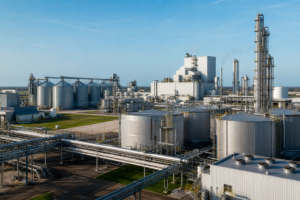
Integrated thin stillage evaporation, DDGS drying and condensate-to-biogas solutions for ethanol plants – process chain, MVR vs multi-effect selection and the numbers that decide

Denim mills close their water loops with a biological-plus-membrane architecture whose published benchmarks come from two sites of one group: a Shunde, China mill
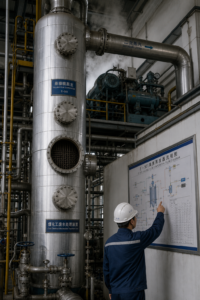
For coal chemical brines where sodium chloride and calcium chloride coexist, scaling control in the falling-film evaporator is not a cleaning-schedule question – it