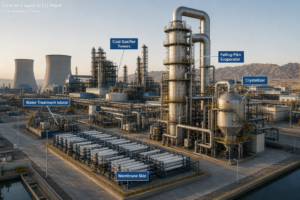
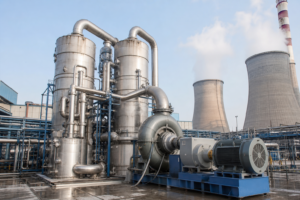
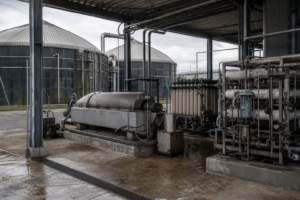
The largest zero liquid discharge project in the paper pulp industry – as documented by its membrane system supplier – runs at 40,000 m³/d on papermaking and pulp wastewater at an Oji Paper site in China, using ozone-coupled biofiltration for COD removal, an integrated UF and reverse osmosis membrane system, electrodialysis reversal concentration, and MVR evaporation crystallization to close the loop. The outputs: clean water returned to the power plant desalination and production water systems, and waste salt supplied to the local transportation authority as snow-melt agent and as chemical raw material – with the supplier reporting stable operation beyond three years (Jiuwu Hi-Tech published material – an external industry reference, not an EvapCryst delivery). The design premise: paper mill ZLD is won or lost on the front half – ozone-biofiltration that makes membrane feed stable – and monetized on the back half – salt that exits as product, not hazardous waste.
Why Pulp and Paper ZLD Starts at the Biofilm
Paper industry wastewater carries the sector’s full diversity: peer-reviewed characterization counts roughly 700 organic and inorphic chemicals in pulp and paper effluents, including adsorbable organic halogens, phenolics, lignin derivatives and color bodies, with COD concentrations that vary by an order of magnitude between mechanical, chemical and semi-chemical pulping routes (Frontiers in Environmental Science, 2022 – an external academic reference). Untreated or conventionally treated, that matrix fouls and degrades every downstream membrane. The published 40,000 m³/d design answers with ozone-coupled biofiltration in the lead position: ozone oxidizes the refractory fraction into biodegradable fragments, the biofilter consumes them, and the membrane stages receive a stable, low-COD feed. It is the same sequence the textile cluster and denim routes use – oxidize what biology cannot touch, then let biology finish – scaled to paper’s loading.
The regulatory and economic context mirrors other water-stressed industrial regions: rising industrial water prices, intake limits, tightening COD/TOC discharge standards, enforcement pressure on reuse rates, and large fresh-water demand with large wastewater discharge – the supplier’s published framing of the application’s drivers. For integrated mills, ZLD converts that pressure into process water supply.
Illustrative Duty Envelope for Screening
The envelope below consolidates the published reference project with peer-reviewed paper effluent characterization. It is an illustrative envelope built from published industry material – not a customer dataset, and not a performance guarantee.
| Parameter | Illustrative range | Basis / note |
|---|---|---|
| Reference scale | 40,000 m³/d papermaking + pulp wastewater | Published largest-in-industry claim |
| Front-end COD polishing | Ozone-coupled biofiltration | Refractory COD to biodegradable, then consumed |
| Membrane block | Integrated UF + RO | Feed stabilization then bulk desalination |
| Concentration stage | Electrodialysis reversal (EDR) | Salt concentration ahead of thermal stage |
| Thermal closure | MVR evaporation crystallization | Electricity-driven ZLD boundary |
| Outputs | Clean water to power plant + production; salt to snow-melt/chemical use | Stable operation 3+ years reported |
Process Solution: Four Blocks from Sewer to Product
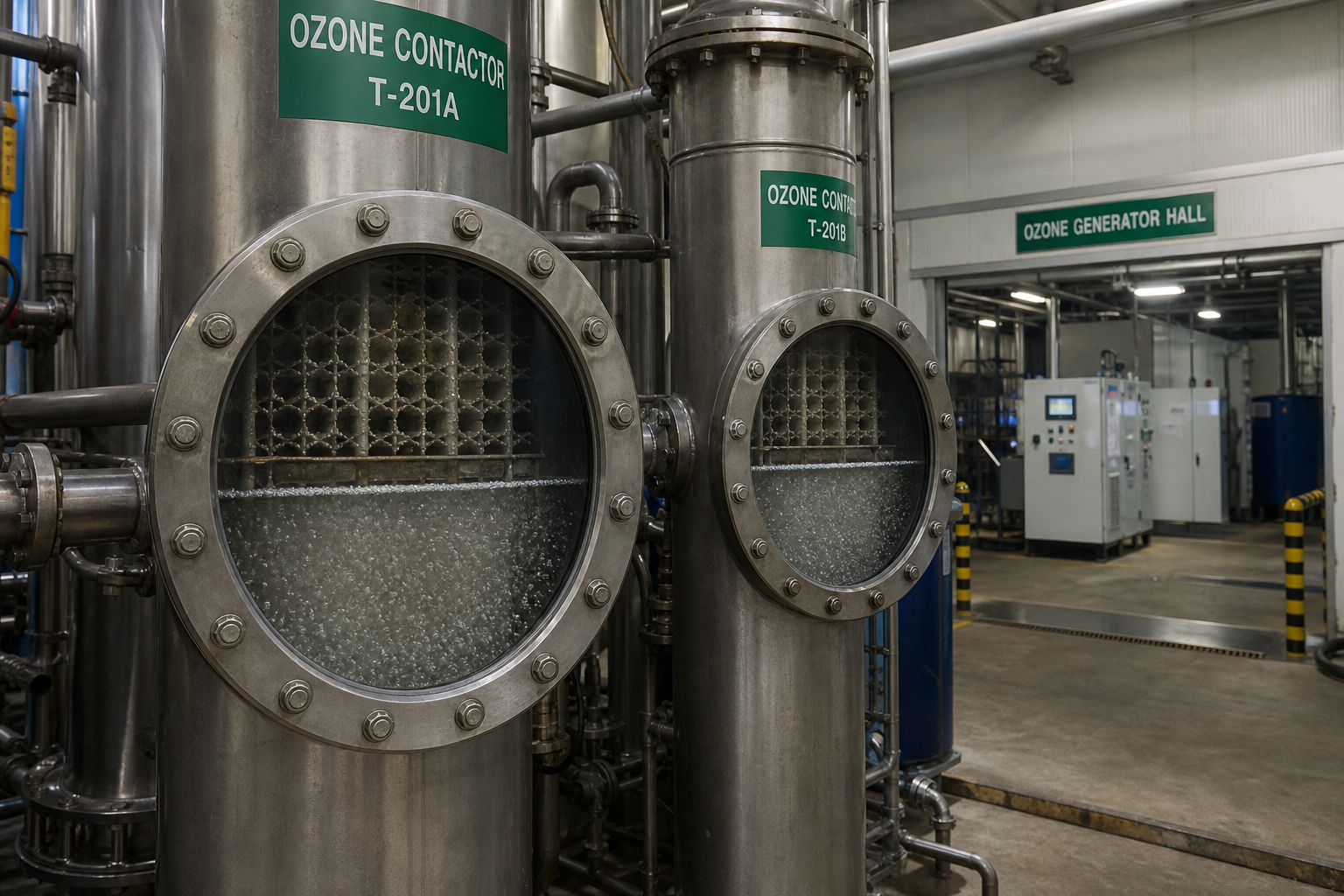
Block one is the biological and oxidation front end: conventional primary treatment (screening, clarification – the peer-reviewed baseline removes ~80% of suspended solids at surface loading rates to 1.4 m³/m²·h) followed by biological treatment and then the ozone-coupled biofilter. Ozone’s documented role in paper effluent is color removal and oxidation of refractory organics; coupling it to a biofilter converts the oxidation products into biomass instead of letting them report to the membranes.
Block two is the integrated membrane system: ultrafiltration for solids and colloid control feeding reverse osmosis for bulk desalination. UF protects the RO; RO recovers the majority of the flow as clean permeate – the published destination is the power plant desalination system and production water, meaning permeate quality displaces raw water intake directly.
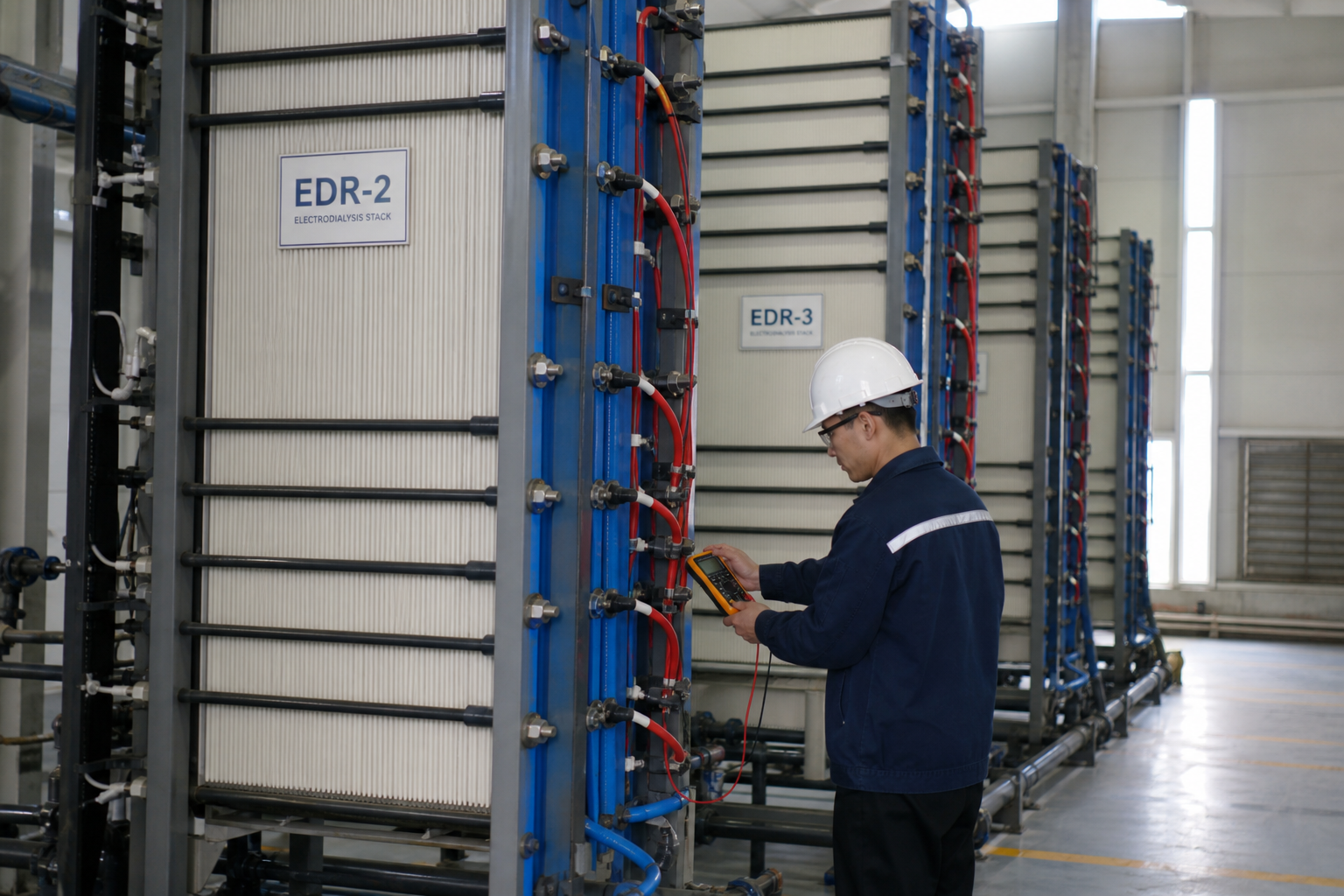
Block three is EDR concentration. Electrodialysis reversal desalinates and concentrates the RO reject (and can treat the brackish mid-stream) by moving ions through selective membranes under an electric field, with periodic polarity reversal managing membrane scaling and fouling. In this architecture EDR lifts the salt concentration of the reject substantially before thermal treatment – the same duty that high-recovery RO plays in other ZLD families, chosen here for its tolerance of the paper effluent chemistry.
Block four is MVR evaporation crystallization: mechanical vapor recompression drives the concentrator and crystallizer on electricity, evaporating the EDR concentrate to dryness in salt form. The distillate returns to the clean-water pool; the salt leaves as solid. The published outlet: waste salt to the transportation bureau for snow-melt use and to chemical raw material applications – a disposal route that is regional and market-specific, but that flips the terminal cost of ZLD from a liability line to a (small) revenue line.
Technical Features That Decide Whether Paper ZLD Holds
Three features carry the engineering weight. The first is front-end stability. The 700-chemical matrix means seasonal furnish changes and grade changes move the membrane feed chemistry; the ozone-biofilter coupling is what absorbs those swings. Published operational stability of 3+ years at 40,000 m³/d is the evidence that the front end, not the membranes or the crystallizer, is where such projects are won.
The second is the EDR selection. In paper effluent service, EDR’s advantages are its insensitivity to non-ionic organics (which plague pressure membranes), its recovery per stage, and its reversible-fouling operation. Its limit is the concentration ceiling – EDR concentrates to a brine that still needs the thermal stage, but shrinks that stage’s duty materially versus feeding RO reject directly.
Third is the salt outlet. Snow-melt agent is a real market in cold-climate Chinese provinces and a non-market elsewhere; chemical raw material use depends on salt purity and consistency. The ZLD architecture does not require a monetized salt outlet – disposal is the fallback – but the economics improve visibly when one exists, and the crystallizer operating discipline (purity control, washing) should be set by whatever outlet the site can actually access.
Process Modules
| Process module | Candidate equipment types | Selection rationale | Module duty |
|---|---|---|---|
| Primary treatment | Screens, primary clarification | ~80% SS removal baseline | Protect downstream biology |
| Biological + oxidation | Biological treatment, ozone-coupled biofilter | Refractory COD converted and consumed | Stabilize membrane feed |
| Solids barrier | Ultrafiltration | RO-grade feed from biologically treated water | Protect RO |
| Bulk desalination | Reverse osmosis | Majority water recovery as clean permeate | Displace raw water intake |
| Brine concentration | Electrodialysis reversal | Ion-selective concentration; organic-tolerant | Shrink thermal duty |
| Thermal closure | MVR evaporator + crystallizer | Electricity-driven ZLD boundary | Salt out, distillate back |
Configuration, materials and operating envelopes above are potential considerations only; actual selections depend on feed composition, temperature, fouling behavior, utilities and project capacity.
Expected Performance and Limits
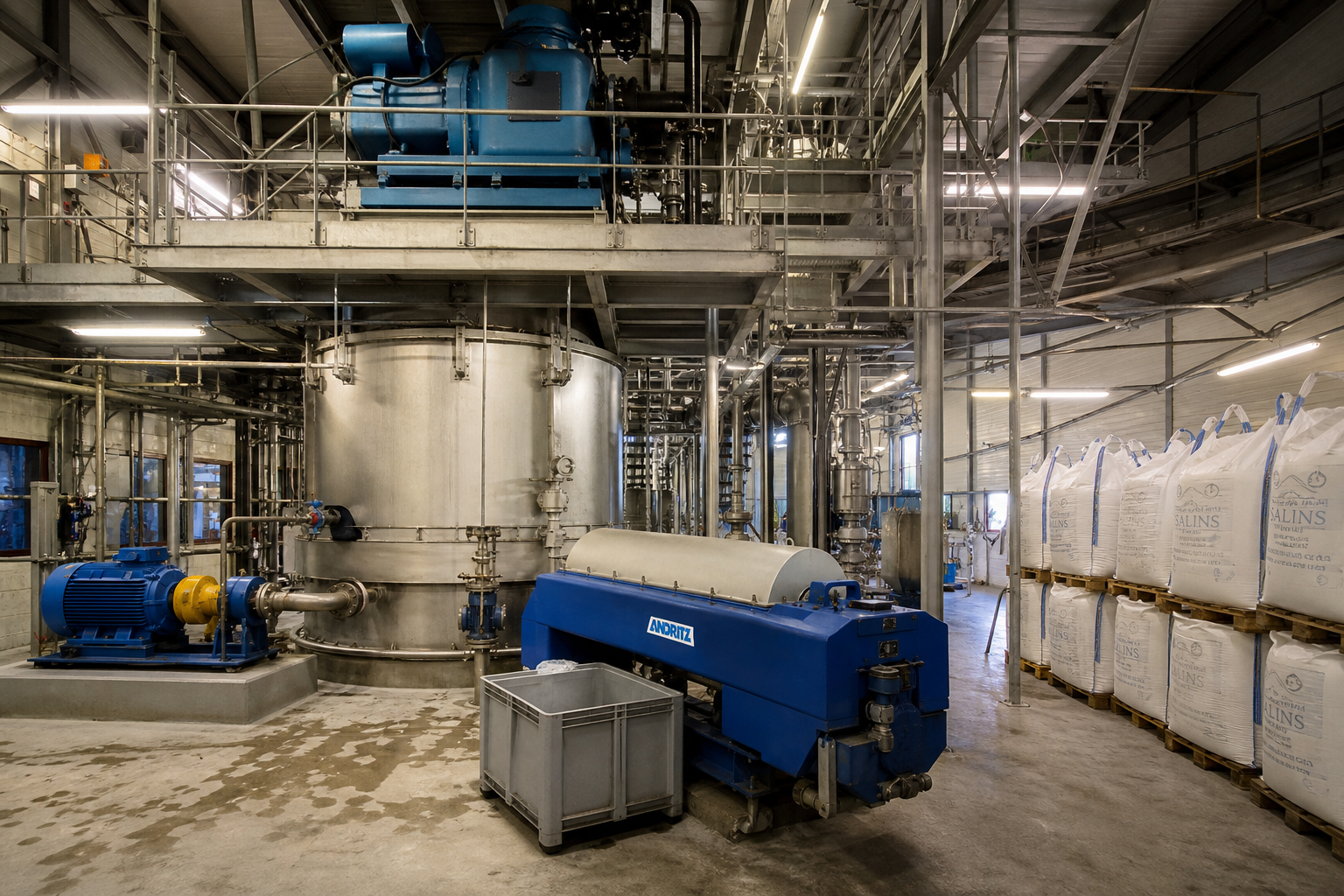
The published reference performance: 40,000 m³/d through ozone-coupled biofiltration, integrated UF/RO, EDR and MVR crystallization at an Oji Paper site in China; clean water supplied to power plant desalination and production systems; waste salt to snow-melt and chemical raw material use; stable operation reported beyond three years; claimed as the world’s largest ZLD project in the paper pulp industry (Jiuwu Hi-Tech published material – an external industry reference; indicative, not a project guarantee, and not an EvapCryst delivery). Against the peer-reviewed baseline for the front half: primary treatment ~80% SS removal, activated sludge as the most common secondary stage, tertiary options spanning coagulation, membrane processes and advanced oxidation (Frontiers in Environmental Science 2022 – an external academic reference). The practical limits: salt monetization is regional – snow-melt demand and chemical-grade buyers exist in some markets and not others, and the fallback is disposal at cost; EDR stages add electrical load that MVR stacks on top, so site power price shapes the OPEX; and mills whose effluent is heavily colored or chlorinated (bleaching sequences with chlorine chemistry) stress the ozone stage’s sizing beyond the published reference’s loading.
Industry References and Validation
Two public anchors. The Oji Paper / Jiuwu project: 40,000 m³/d, ozone-biofilter + UF/RO + EDR + MVR crystallization, salt to snow-melt and chemical use, 3+ years stable operation, developed with the Institute of Membrane Science and Technology of Nanjing Tech University (Jiuwu Hi-Tech published application material; an external industry reference, not an EvapCryst delivery). And the peer-reviewed characterization basis for paper effluent – the 700-chemical diversity, stage-by-stage COD ranges, and the primary/secondary/tertiary treatment ladder (Frontiers in Environmental Science 2022; an external academic reference). For your own project, validation effort should concentrate on: a full effluent profile across grades and seasons (COD fractions – biodegradable, refractory; color; AOX if bleaching is chlorine-based); ozone demand testing for the refractory fraction; UF/RO fouling assessment on the ozonated-biofiltered water; EDR-versus-high-recovery-RO concentration comparison at your chemistry; and a confirmed salt outlet – reuse market or disposal route – before the crystallizer’s purity spec is fixed.
Frequently Asked Questions
Why ozone-coupled biofiltration rather than plain biological treatment?
Because paper effluent’s refractory fraction survives conventional biology and attacks the membranes downstream. Ozone breaks that fraction into biodegradable pieces; the biofilter consumes them. The coupling is what turns an unstable membrane feed into a stable one – the published project’s multi-year stability rests on it.
What does EDR add that another RO stage could not?
Tolerance. Electrodialysis moves ions, not water – non-ionic organics that would foul a pressure membrane largely pass through, and polarity reversal manages the scaling that defeats staged RO on brines. It concentrates the salt stream while shrinking the thermal duty ahead of MVR crystallization.
Is snow-melt salt a real outlet or a curiosity?
Regional and real where winters demand it – the published project supplies a transportation authority. It is a disposal-cost-avoidance outlet with modest revenue, not a profit center. Where no such market exists, the same crystallizer produces salt for disposal, and the ZLD case rests on water and compliance alone.
Does this route apply to black liquor mills?
No – this is the mill’s general effluent (papermaking and pulp washing streams), not kraft black liquor. Black liquor belongs to the evaporation-and-recovery-boiler cycle covered in the alkali recovery and six-effect articles. A mill with both systems runs them in parallel on separate streams.
Why MVR for the crystallizer rather than steam-driven multi-effect?
Electricity-driven duty suits sites where steam is committed to the process or expensive, and paper mills usually have fully-allocated cogeneration. The published project pairs MVR with EDR – both electric – consistent with mills that have power headroom but no free steam.
When This Route May Not Fit
If the mill’s effluent flow is small – non-integrated paper machines without pulping at a few thousand cubic meters per day – the six-block chain cannot amortize and regional treatment or quality discharge remains rational. If the effluent chemistry is extreme (high-color, chlorine-bleaching AOX loads beyond design), the ozone stage’s duty escalates until the front end dominates the project cost. And if water remains cheap and discharge permits genuinely available, ZLD reverts to a water-security investment that must justify itself without regulatory force.
What Must Be Verified Before Committing
Five items: a seasonal, grade-resolved effluent profile (COD fractions, color, AOX, conductivity); ozone demand and biofilter loading testing on the real stream; membrane fouling assessment on the polished feed; a concentration-stage trade study (EDR versus high-recovery RO) at your salt matrix and power price; and a confirmed salt outlet with its purity specification. These map directly onto the modules above and are the standard screening package we would run before any quote.