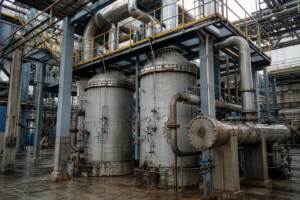
Chlor-Alkali Evaporation Systems: Caustic Soda & Soda Ash
Caustic soda 32%-to-50% falling-film concentration with nickel tubing, forced-circulation soda ash crystallization with scaling control, and MVR retrofits cutting chlor-alkali steam use by up

Caustic soda 32%-to-50% falling-film concentration with nickel tubing, forced-circulation soda ash crystallization with scaling control, and MVR retrofits cutting chlor-alkali steam use by up
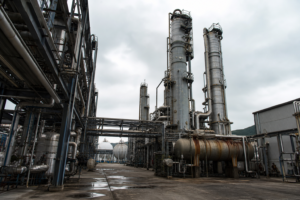
Fossil-to-DMC integrated plants: methanol-based routes, azeotrope-breaking pressure-swing distillation, battery-grade polishing and complex-wide energy integration.
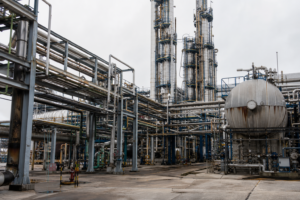
Integrated POM plant solutions covering formaldehyde concentration, trioxane purification, inert powder drying and formaldehyde wastewater closure – engineered as one heat and material balance.
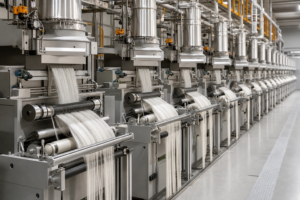
Lyocell economics depend on recovering more than 99% of NMMO: low-temperature falling-film multi-effect or MVR concentration, ion-exchange purification and hydrate crystallization close the solvent
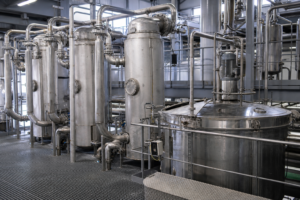
Triple-effect counter-current evaporation with flash and cooling crystallization for barium chloride: solubility-driven process design, DTB versus FC crystallizer selection and byproduct recovery.
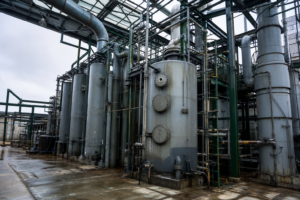
Continuous zinc chloride production: multi-effect falling film evaporation, thermal-oil or molten-salt melt dehydration near 290 C, and flaking of high-purity solid ZnCl2 – engineered
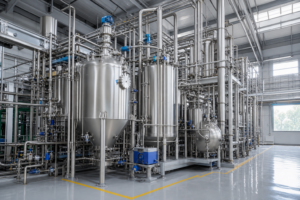
Fumaric acid evaporation and crystallization solutions: recovering saleable acid from mother liquors and saline wastewater by three-effect or MVR concentration into external-circulation crystallizers, with
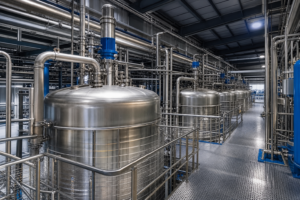
How crystalline MAP is produced: neutralize wet-process phosphoric acid with ammonia, concentrate in falling-film and forced-circulation evaporators, crystallize in FC or DTB/Oslo crystallizers, and

Zinc sulfate crystallization plants built around DTB crystallizers that switch between monohydrate evaporation mode and heptahydrate cooling mode, with triple-effect or MVR energy supply
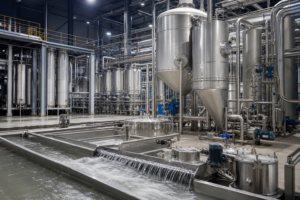
Six-step aluminum sulfate production: acid dissolution, clarification, vacuum or MVR evaporation of the viscous acidic liquor, cooling solidification to the 18-hydrate, crushing and packing