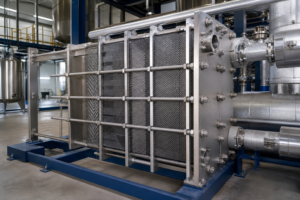
Plate Evaporator (PHE) Selection Guide
Plate evaporator selection across seven parameters: capacity sizing with margin, falling-film vs forced-circulation plates, 316L/duplex/titanium corrosion grades, 30-65C vacuum window for actives, 1.8-2.5 m/s

Plate evaporator selection across seven parameters: capacity sizing with margin, falling-film vs forced-circulation plates, 316L/duplex/titanium corrosion grades, 30-65C vacuum window for actives, 1.8-2.5 m/s

How industrial evaporation works: single-effect vs multiple-effect vs MVR energy performance, vacuum boiling, evaporator types by material behavior, and the concentration endpoint that hands
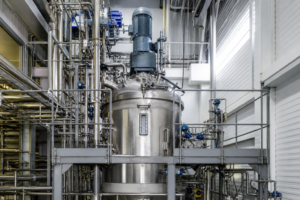
Why 30% of industrial crystallization projects fail at scale-up, the Lab-Pilot-Industrial validation ladder with the 1:10-1:20 pilot sizing rule, DTB/OSLO/FC selection through the scale-up
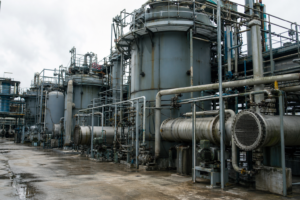
FC, DTB, or Oslo? The complete industrial crystallizer selection guide: crystal size 0.2-0.5 vs 0.5-1.5 vs 2-5 mm, supersaturation methods, DP variant, five-step decision
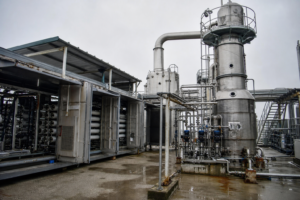
Membrane-evaporation hybrid systems pair RO, UHP RO and MBR pretreatment with right-sized MVR evaporation for Minimal Liquid Discharge: 70x brine volume reduction, 99% water
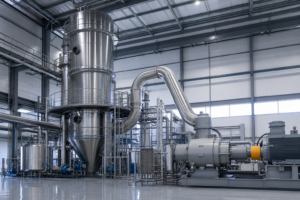
How mechanical vapor recompression works: closed-loop latent heat recovery, nine core components, 20-35 kWh/t energy performance, compressor selection, temperature difference design, and fouling management.
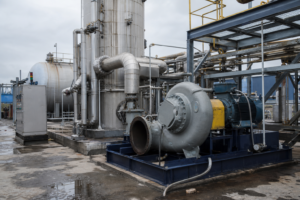
Seven-step MVR evaporator selection: feed characterization, boiling point rise matching, configuration choice, MEE/TVR/MVR economics, materials of construction, scale payback, pilot validation and lead times.
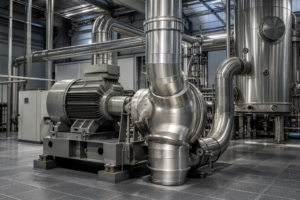
How to select the MVR steam compressor: Roots, centrifugal, integrally geared and axial types compared on flow, temperature lift, BPR coverage, metallurgy, and maintenance.
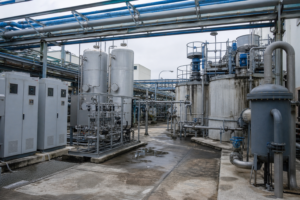
Hydroxyl radicals (•OH) mineralize refractory organics that biology cannot touch: four AOP routes (O3/H2O2, UV/H2O2, Fenton, electrochemical), the numbers behind the chemistry, real performance,
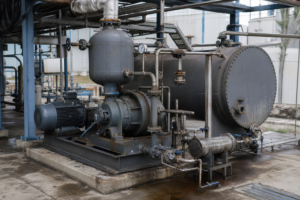
Evaporator vacuum systems explained: liquid-ring pump working principle and sizing, condense-first layout, vacuum equipment compared, VOC condensing, stability control, cavitation protection, and multi-effect and