
DTB Crystallizer: Principle and Application
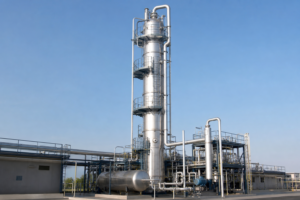
DTB (draft-tube-baffle) crystallizers grow 1.0-3.0 mm uniform crystals with CV under 20% at 10-30% lower energy than forced circulation. Components, six-step cycle, the three

DTB (draft-tube-baffle) crystallizers grow 1.0-3.0 mm uniform crystals with CV under 20% at 10-30% lower energy than forced circulation. Components, six-step cycle, the three
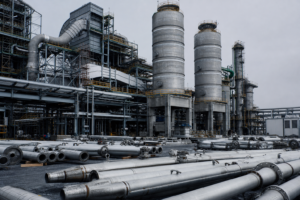
Evaporation plant cost structure explained: CAPEX breakdown, 2026 MVR pricing benchmarks, materials price ladders, OPEX and SEC formulas, payback calculation, hauling economics, rent-vs-buy, and

How the process flow sheet of an evaporation plant is decided: feed and site inputs, material and energy balances, falling-film + forced-circulation combinations, MVR
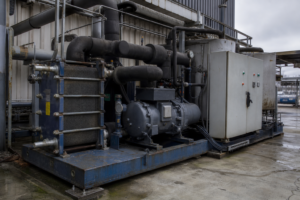
Heat pump evaporators and TVR ejectors cut evaporation energy 30-50% by upgrading heat you already have. Guide covers the refrigeration cycle, TVR vs MVR

An FC (forced-circulation) crystallizer is the industrial workhorse for high-viscosity, fouling-prone and impurity-laden liquors. This guide explains its structure, working cycle, key design parameters,
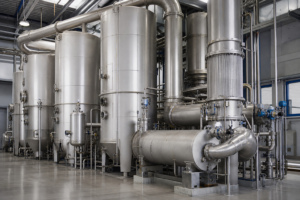
Natural circulation, forced circulation, falling film vs rising film, multi-effect and MVR evaporators compared: heat-transfer coefficients, energy 0.1-1.5 kWh/kg, CAPEX, maintenance, plus a 16

How much COD does evaporation actually remove? High-boiling organics stay in the concentrate while low-boiling organics distill over with the water vapor. A five-point
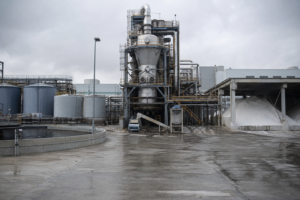
How to select an evaporator for high-salinity wastewater above 10,000 mg/L TDS: MEE vs MVR vs heat pump vs TVR, MVR feed red lines,
MVR ammonia stripping cuts operating cost by 57.5% versus direct steam stripping: on a 65 t/h project, from 32.91 to 13.97 RMB per ton—saving

Forced circulation evaporator explained: pump-driven 2-3.5 m/s loop, no boiling in tubes, anti-scaling mechanism, design parameters, MVR+FC ZLD configuration, applications and limits.