
Multi-Effect Evaporation: Principle and Design Guide
Multi-effect evaporation explained: cascading latent heat, steam economy by effect count, forward vs backward feed, forced-circulation final effects, and design details that decide performance.

Multi-effect evaporation explained: cascading latent heat, steam economy by effect count, forward vs backward feed, forced-circulation final effects, and design details that decide performance.
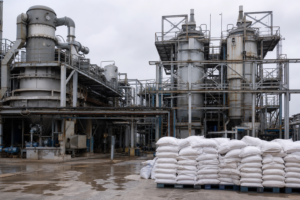
ZLD system architecture explained: pretreatment-evaporation-crystallization chain, MVR brine concentration, seed slurry scaling control to 300,000 ppm TDS, mixed-salt crystallizers, 95-99% water recovery and the
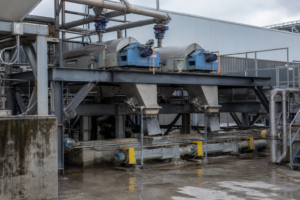
Centrifuge selection decides residual moisture (3-8% on salt), dryer energy and product quality. This guide covers decanter structure, pusher vs peeler vs decanter selection,
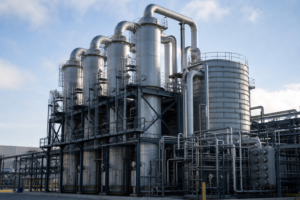
Throughput decides evaporator technology before any vendor talk: below 300 L/h single-effect wins, 300-500 L/h is the MEE transition zone, above 5,000 L/h think
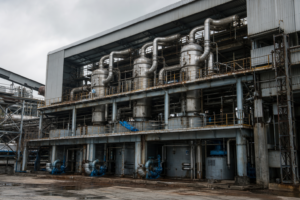
Salt is made by solar evaporation, rock mining, or solution mining, then refined mechanically (97-99% NaCl) or by vacuum recrystallization to PDV grade (>99.5%).
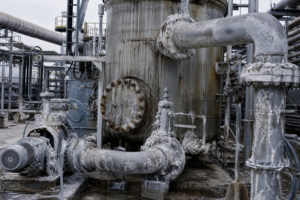
Boiling point elevation erodes evaporator temperature difference, drives MVR compressor sizing, accumulates across MED effects and caps final concentration. Indicative BPE ranges and technology

Evaporator capacity is Q = K·A·ΔT. This guide covers raising the coefficient, temperature-difference losses from BPE to non-condensables, falling film vs forced circulation, plate
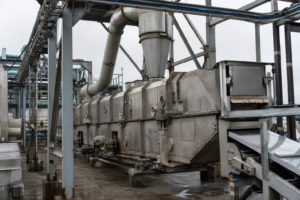
Fluid bed dryers dominate salt and crystal drying — halving drying time — while ANFD closed three-in-one units handle toxic and high-value products. This

Falling film vs rising film evaporator compared: gravity vs vapor-shear film formation, temperature difference needs, residence time, viscosity and fouling limits, MVR fit, and