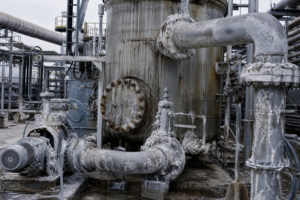
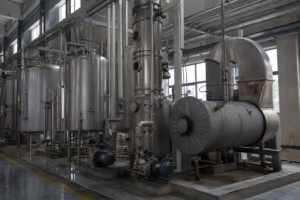
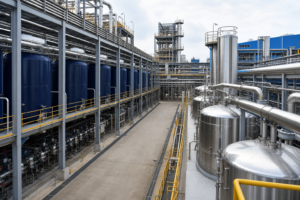
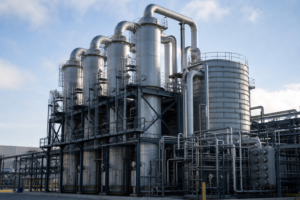
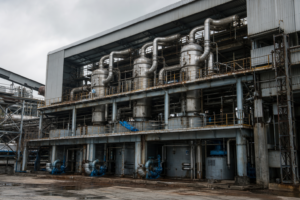
170 t/h MSG & Glutamate Mother Liquor Concentration: Four-Effect Case
Representative configuration of a 170 t/h (2 x 85 t/h) four-effect evaporation train with falling-film and forced-circulation service concentrating glutamate mother liquor at a
Selection logic, retrofit economics and mother-liquor yield — articles from three lines: technology deep-dives on evaporator and crystallizer selection, application solutions for specific wastewaters and process duties, and anonymized project case studies. New articles are published continuously.
Technology ArticlesApplication SolutionsProject Case Studies

Representative configuration of a 170 t/h (2 x 85 t/h) four-effect evaporation train with falling-film and forced-circulation service concentrating glutamate mother liquor at a

Throughput decides evaporator technology before any vendor talk: below 300 L/h single-effect wins, 300-500 L/h is the MEE transition zone, above 5,000 L/h think

Salt is made by solar evaporation, rock mining, or solution mining, then refined mechanically (97-99% NaCl) or by vacuum recrystallization to PDV grade (>99.5%).

Boiling point elevation erodes evaporator temperature difference, drives MVR compressor sizing, accumulates across MED effects and caps final concentration. Indicative BPE ranges and technology

Evaporator capacity is Q = K·A·ΔT. This guide covers raising the coefficient, temperature-difference losses from BPE to non-condensables, falling film vs forced circulation, plate

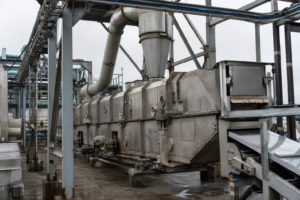
Fluid bed dryers dominate salt and crystal drying — halving drying time — while ANFD closed three-in-one units handle toxic and high-value products. This

Falling film vs rising film evaporator compared: gravity vs vapor-shear film formation, temperature difference needs, residence time, viscosity and fouling limits, MVR fit, and

MVR climbing-film low-temperature evaporation for gelatin and ejiao concentration: 70C reference case, full MVR vs double-effect cost comparison, 70% evaporation cost saving.

Continuous MVR evaporation and crystallization upgrades PMIDA (N-phosphonomethyl iminodiacetic acid) production for the IDA glyphosate route: over 80% energy savings, stable crystal quality and

MVR evaporation and crystallization system for rare earth metallurgy RO reject: ammonium sulfate and chloride salt recovery, condensate ammonia polishing and ZLD compliance.
Send your feed characterization (TDS, COD, main salts, viscosity), throughput and product targets — we respond with a preliminary process route within two business days.