Technology
External and Natural Circulation Evaporators
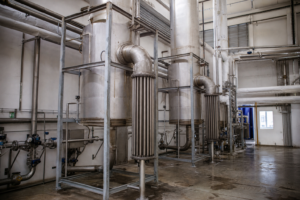
External circulation evaporators run the loop outside the boiling vessel; natural circulation drives it by thermosiphon alone. Design numbers that decide fouling or clean

External circulation evaporators run the loop outside the boiling vessel; natural circulation drives it by thermosiphon alone. Design numbers that decide fouling or clean
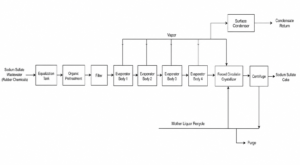
Representative configuration of a 550 t/d (approx. 23 t/h) four-effect forced-circulation evaporation and crystallization system recovering sodium sulfate from rubber chemicals production wastewater in
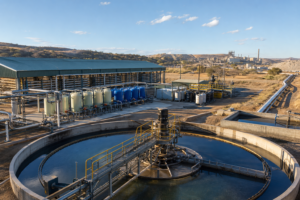
For rare earth mines whose water problem is hardness, silica and moderate dissolved salts at large flow, the workable route before any thermal ZLD

Evaporator sizing from first principles: material balance W=F(1-x0/x1), heat balance Q=Wr, Q=KAdT with four series resistances, effective temperature difference after BPE, a worked 10
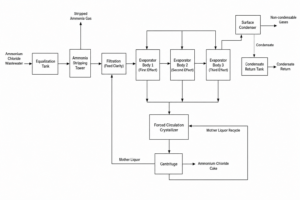
Representative configuration of a 6 t/h triple-effect evaporation and crystallization system recovering ammonium chloride from chemical-plant wastewater in China.
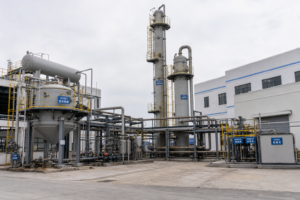
For rare earth separation plants, ammonia nitrogen treatment is not one process but three, selected by concentration: high-strength streams (tens of grams per liter
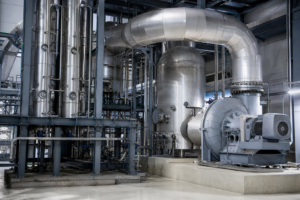
Cut evaporator energy cost 65-86%: steam economy basics, MVR vs TVR vs multi-effect comparison with COP and payback, 100 t/d full cost model, multi-effect
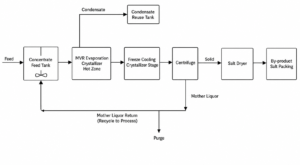
Representative configuration of a 32 m3/h sodium sulfate crystallization train at a Chinese wastewater plant, combining MVR evaporation crystallization with freeze crystallization and drying
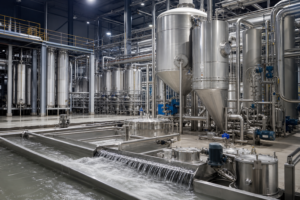
Six-step aluminum sulfate production: acid dissolution, clarification, vacuum or MVR evaporation of the viscous acidic liquor, cooling solidification to the 18-hydrate, crushing and packing
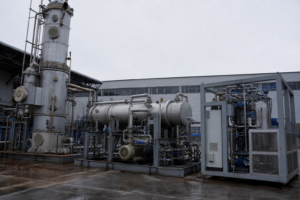
How to select an evaporator: the 5-step method, wastewater characterization (BPE, chloride, fouling), material grades, TDS bands, and the MEE vs TVR vs MVR